





Written by: Aaron Rovner, Founder, Saas Hero | Last updated: August 9, 2026
Key Takeaways for DevTech Marketing Budgets
- DevTech marketing agencies typically charge $1,250–$25,000+ per month depending on channel count, service scope, and specialization level.
- Percentage-of-spend billing and 12-month lock-in contracts create misaligned incentives and inflate total costs for B2B SaaS teams.
- Flat-fee retainers with month-to-month terms eliminate hidden cost drivers and keep agency incentives aligned with client pipeline results.
- Red flags in proposals include vanity metric reporting, bait-and-switch staffing, and percentage-of-spend models that reward higher ad budgets regardless of ROI.
- SaaSHero offers transparent flat monthly retainers starting at $1,250 with month-to-month terms, and you can schedule a discovery call to get pricing tailored to your DevTech marketing needs.
Average DevTech Marketing Agency Costs in 2026
Monthly retainer costs vary significantly by service type, channel count, and client stage. The table below presents 2026 benchmarks for the service categories most relevant to B2B SaaS and DevTech teams.
| Service Type | Monthly Retainer Range (2026) | Typical Scope |
|---|---|---|
| SEO (SMB/startup) | $1,000–$7,500 | Technical SEO, on-page, basic content |
| SEO (mid-market B2B tech) | $3,500–$12,000 (or up to $25,000 for growth-stage SaaS) | Senior strategist, 6–12 long-form pages/mo, analytics |
| DevTools content retainer | $5,000–$11,000 | 4–10 technical articles/mo, light distribution |
| Full-service DevTools (strategy + DevRel + demand gen) | $7,500–$25,000+ | Multi-channel, DevRel, community, demand gen |
| Generalist B2B digital marketing | $5,000–$20,000 | SEO, PPC, social, email, generalist execution |
| Growth marketing (B2B specialist) | $7,500–$25,000 | Paid media, CRO, pipeline-focused reporting |
While retainers cover ongoing execution, many DevTech teams also need one-time deliverables that fall outside monthly scope. Project-based fees follow a separate scale. A technical SEO audit typically costs $500–$15,000 depending on site size and provider, with agency work for mid-sized sites often $2,000–$7,500 and enterprise properties reaching $25,000–$30,000+. Project-based DevTools campaigns such as state-of-the-industry reports, interactive content, or developer experience audits can vary significantly in cost depending on scope. Full demand generation builds covering strategy and asset creation also vary in cost based on the extent of the work.
Hourly rates for specialist roles reflect tight supply. Technical SEO specialists often bill between $100 and $300 per hour. Growth marketing consultants typically charge between $100 and $300 per hour. Senior strategists and fractional CMOs typically charge $150–$450 per hour in major markets.
Several factors push DevTech retainers above generalist baselines:
- API documentation writers and technical content specialists command premiums because writing on topics like competitive positioning or channel partner enablement requires genuine technical understanding.
- Channel count is the strongest single cost driver, and each additional channel adds its own dedicated strategy, execution, and reporting workstream.
- Industry specialization means niched agencies charge 2.3x more per hour than generalists with equal output for SaaS-focused firms.
- AI search optimization (GEO/AEO for ChatGPT, Perplexity, and Google AI Overviews) is frequently billed separately at $900+ per month.
- Hidden costs outside the quoted retainer, such as ad platform spend, third-party tool subscriptions, onboarding fees, and creative production, commonly add 20–40% to the real monthly commitment.
These cost drivers explain the range of pricing, but the billing structure itself often shapes value more than the headline number.
How DevTech Marketing Agencies Structure Pricing
Many agencies use percentage-of-spend billing, charging 10–20% of monthly ad spend. This structure creates a direct incentive to recommend higher budgets regardless of pipeline results. DevTech-specialist agencies instead tend toward flat retainers or hybrid retainer-plus-outcome structures, which pair a stable monthly base fee with an outcome bonus when results are measurable and attributable.
Fragmentation across multiple specialist vendors carries its own cost. Splitting a sub-$50,000 monthly budget across four to six specialists routinely absorbs 20–40% of total spend in coordination overhead, meetings, handoffs, and duplicated work.
Three buyer scenarios show how these structures translate to real budgets.
Bootstrap founder ($500K–$2M ARR, $5,000–$10,000/mo ad spend): A single-channel paid search program managed at a flat retainer usually fits best at this stage. For this budget level, the Dedicated Campaign Manager tier covers up to $10,000 in ad spend at a price point below a junior hire and without the 12-month commitment typical of traditional agencies. The primary negotiation lever is prepay, and a 6-month prepay reduces the retainer by approximately 20%.
Series-B VP of Marketing ($5M–$10M ARR, $50,000+/mo ad spend): Multi-channel programs with CRM-integrated reporting become the standard. Multi-channel or full-service campaigns run $10,000–$20,000 per month or higher at specialist agencies. SaaSHero’s Full Marketing Team tier covers this band at $4,500 per month for $50,000+ in spend across one channel, with multi-channel pricing scaling to $5,750–$7,000 per month. The main negotiation lever is reporting scope, and insisting on Net New ARR and pipeline reporting rather than impressions and CTR keeps incentives aligned.
Post-Series-A scale-up (freshly funded, aggressive Q1 targets): Speed of deployment matters more than cost efficiency at this stage. A generalist agency at $5,000 per month typically requires 3–6 months to understand a B2B tech company’s market and sales process. A specialist often begins execution in 2–4 weeks. The key negotiation lever is scope definition, and locking in competitor conquesting landing pages and CRM tracking as explicit deliverables in the first 30 days prevents the ramp-up delay that erodes post-funding momentum.
Red Flags in DevTech Marketing Agency Proposals
Several structural features in agency proposals reliably predict misaligned incentives and inflated costs.
- Percentage-of-spend billing. An agency earning 15% of a $50,000 monthly budget makes $7,500. Recommending a budget increase to $60,000 raises their fee to $9,000 with no additional work required. SaaSHero identifies this as giving the agency a clear incentive to spend as much as possible, which makes it nearly impossible to generate enough revenue to properly staff an adequate team when clients reduce spend.
- 12-month lock-in contracts. Long contracts shift all performance risk onto the client. Month-to-month GEO retainers typically cost 10–20% more per month than annual retainers because agencies price in churn risk, and that premium represents the cost of accountability rather than a reason to accept a 12-month handcuff from an unproven partner.
- Vanity metric reporting. Proposals that lead with impressions, clicks, and CTR as primary KPIs signal that the agency cannot connect spend to revenue. This same disconnect often appears in scope definitions, and agencies that cannot measure revenue impact tend to manage risk by capping deliverables, quoting 10 articles per month but adding word-count limits or charging extra for DevRel time that was implied in the original proposal.
- Bait-and-switch staffing. Agencies face different internal costs for junior versus senior staff, which creates strong financial pressure to assign juniors regardless of what was promised during the sales process.
SaaSHero’s model addresses each of these directly. Flat monthly retainers tiered by ad-spend band remove the percentage-of-spend incentive entirely. Month-to-month terms mean SaaSHero re-earns the engagement every 30 days. Reporting anchors to Net New ARR, pipeline value, and Sales Qualified Leads rather than platform-level vanity metrics. Senior strategists remain hands-on with a maximum of 8–10 clients per manager.

Book a discovery call to see SaaSHero’s full pricing matrix and confirm which tier fits your current ad spend and channel mix.
DevTech Marketing Pricing FAQs
How much should a B2B SaaS company budget for a DevTech marketing agency in 2026?
Budget depends on company stage and channel scope. Founder-led teams running a single paid channel can engage a specialist agency for $1,250–$3,500 per month at the retainer level, plus a one-time setup fee of $1,000–$2,000 for tracking and strategy build. Series-A and Series-B companies running multi-channel programs with CRM-integrated reporting should budget $4,500–$7,000 per month for a full marketing team retainer. These figures cover management fees only, and ad platform spend is separate and budgeted independently based on target pipeline volume.
Who owns the ad accounts, content, and creative assets at the end of an engagement?
Asset ownership terms vary by agency and should be confirmed in writing before signing. With SaaSHero, clients retain full ownership of all ad accounts, landing pages, creative assets, and tracking configurations. Because SaaSHero operates on month-to-month terms, no contractual barrier exists to transitioning assets if the engagement ends. This creates a meaningful distinction from agencies that build campaigns inside agency-owned accounts, which effectively hold the client’s historical data and optimization work hostage to contract renewal.
How long does it take to see measurable results from a DevTech marketing program?
Paid search and paid social campaigns can generate qualified pipeline within the first 30–60 days once tracking is configured and landing pages are live. Technical SEO and DevRel content programs operate on longer timelines, typically 3–6 months before organic traffic compounds meaningfully. SaaSHero’s case study with TestGorilla demonstrates an 80-day payback period on marketing spend, which is achievable for well-structured paid programs with strong offer-market fit. Organic and content-led programs should be evaluated on a 6–12 month horizon.
What is the difference between a flat-fee retainer and a percentage-of-spend model for paid media management?
A flat-fee retainer charges a fixed monthly amount regardless of how much is spent on ad platforms. A percentage-of-spend model charges a percentage, typically 10–20%, of the monthly ad budget as the management fee. The practical difference is incentive alignment. Under a flat-fee model, the agency’s recommendation to increase or decrease budget is based solely on performance data, because their fee does not change within the spend band. Under a percentage-of-spend model, every budget increase also increases the agency’s revenue, which creates a financial incentive to recommend higher spend independent of results. SaaSHero uses flat monthly retainers tiered by spend band for this reason.
Can a DevTech marketing agency work alongside an existing in-house marketing team?
Most Series-A and Series-B companies pair an in-house team with a specialist agency. An in-house team typically owns brand, product marketing, and content strategy, while a specialist agency owns paid media execution, technical SEO, and performance reporting. SaaSHero is explicitly structured for this model, integrating into client Slack or Google Chat channels, attending internal planning calls, and operating as an extension of the team rather than a separate vendor. The agency’s maximum of 8–10 clients per senior manager supports the communication cadence required for genuine collaboration rather than monthly report delivery.
Conclusion: Choosing a DevTech Marketing Partner in 2026
DevTech marketing agency pricing in 2026 ranges from $1,250 per month for a single-channel founder-stage retainer to $25,000+ per month for full-service DevRel and demand generation programs. The primary cost drivers are channel count, specialist seniority, and whether the agency charges a flat fee or a percentage of spend. Percentage-of-spend billing, 12-month lock-in contracts, and vanity metric reporting are structural features that inflate cost and misalign incentives, and all three are avoidable.
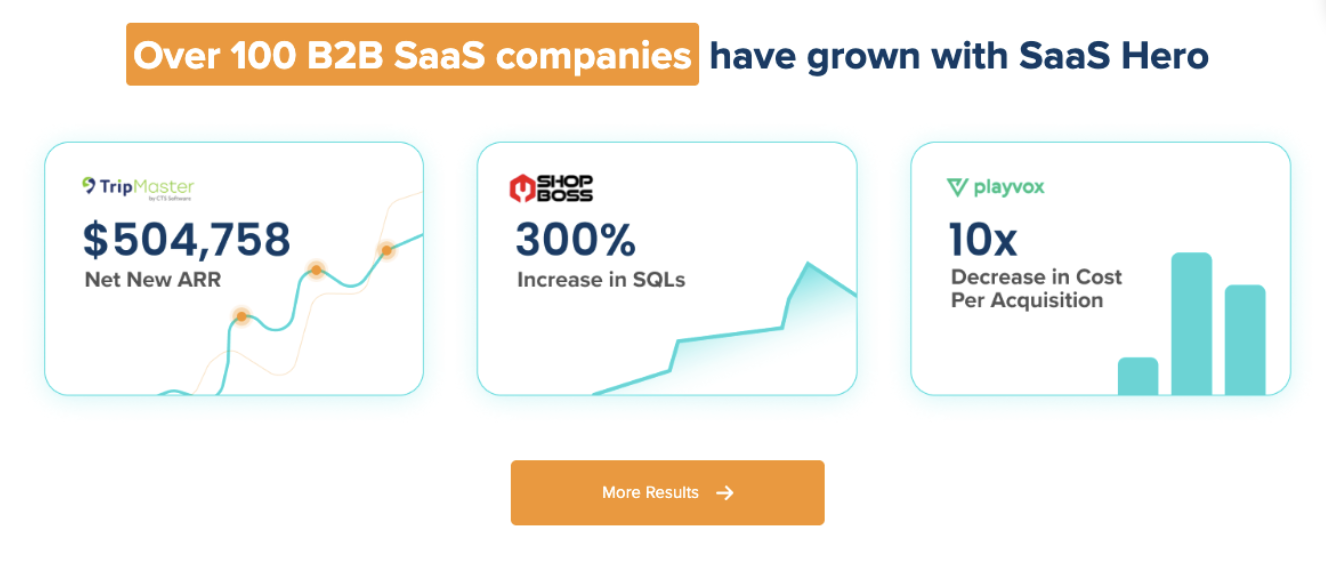
SaaSHero’s flat monthly retainer, month-to-month terms, and Net New ARR reporting framework are designed specifically to eliminate those misalignments for B2B SaaS and DevTech teams. The pricing is published, the contracts are flexible, and the performance record, including $504,758 in Net New ARR for TripMaster, a 10x decrease in cost per lead for Playvox, and a $70M Series A for TestGorilla, is documented.
Book a discovery call to get a transparent pricing proposal aligned to your ad spend, channel mix, and growth stage.