Written by: Aaron Rovner, Founder, Saas Hero | Last updated: September 3, 2026
Key Takeaways
Growth marketing agency lock-in comes from contract terms, pricing models, and asset ownership that make switching costly and disruptive.
The seven most common complaints are trapped budgets, misaligned pricing, bait-and-switch staffing, vanity metrics, lack of ownership, long-term auto-renewing contracts, and poor communication.
A detailed contract audit that covers minimum spend, termination notice, auto-renewal, asset ownership, data portability, non-compete clauses, and fee structures sets you up for a clean exit.
Negotiation tactics such as requesting shorter notice periods, proposing transition plans, and using evaluation conversations can shorten or escape unfavorable terms.
Trapped Budgets. Minimum spend clauses set a floor on monthly ad spend or retainer size, with financial penalties for reducing it. When campaigns underperform, you cannot pull back without triggering a fee. Budget stays deployed against a program that is not working.
Misaligned Pricing. Percentage-of-spend fee structures create a built-in conflict of interest. The agency’s revenue rises when your budget rises, whether or not it should. Every recommendation to scale carries an undisclosed financial interest. Every recommendation to cut costs reduces the agency’s revenue. A flat retainer removes that conflict entirely. When the data supports scaling, the recommendation to scale does not cost the agency anything.
Bait-and-Switch Staffing. Senior strategists pitch the work, then junior, overworked staff handle the day-to-day execution. By month three, the people in your account are not the people who won it. Large agency economics depend on this model, and proposals rarely disclose it clearly.
Vanity Metrics. Reporting centers on surface-level platform statistics such as clicks, impressions, CTR, and cost per lead. Business outcomes like qualified pipeline, sales-accepted opportunities, and Net New ARR receive less attention. A dashboard that improves while pipeline stays flat does not signal reporting success. It signals a measurement failure.
Lack of Ownership. The agency controls your ad accounts, tracking configurations, creative files, and landing pages. When you leave, you lose access to the assets the program relied on and you start from scratch. This switching cost is structural and keeps the relationship sticky regardless of performance.
Long-Term Contracts with Auto-Renewal. Twelve-month terms with automatic renewal clauses and 60- or 90-day opt-out windows keep you locked in after you decide to leave. Missing the opt-out window by a week can commit you for another year.
Poor Communication and Lack of Proactivity. You set the agenda, chase status updates, and spot problems in the account before the agency does. The most repeated complaint in agency relationships focuses on ownership of the thinking, not raw competence. When you generate the test ideas and follow up on creative, you have hired a vendor and gained a direct report you cannot exit quickly.
How to Audit Your Current Contract for Lock-In Clauses
Start with your signed agreement and work through each item in a structured way. Capture every finding in writing so you have a record for any negotiation or dispute.
Minimum Spend. Identify clauses that require a minimum monthly ad spend or retainer and note any penalties for reducing it. Record the exact dollar threshold and the penalty structure.
Termination Notice. Confirm the required notice period, such as 30, 60, or 90 days, and any penalties for early termination before the term ends. Calculate your total financial exposure if you terminate today.
Auto-Renewal. Check whether the contract renews automatically at the end of the term and record the opt-out deadline. Many contracts require written notice 60 to 90 days before renewal, which often passes unnoticed.
Asset Ownership. Determine who owns ad accounts, creative files, landing pages, and campaign data when the engagement ends. If the contract does not address this, expect the agency to treat silence as ownership.
Data Portability. Verify your right to a full export of campaign data, dashboards, and historical performance. A right to data that depends on the agency’s cooperation creates risk.
Non-Compete or Exclusivity. Look for clauses that restrict you from working with another agency on similar channels or strategies during or after the term.
Fee Structure. Examine the pricing model closely. A percentage-of-spend arrangement ties the agency’s revenue to your budget size, not your results. A per-channel fee means adding or moving budget triggers a contract conversation. Both structures create incentives that can work against your interests.
SaaS Hero: Trusted by Over 100 B2B SaaS Companies to Scale
Negotiation Tactics to Escape or Shorten Terms
Once you document your contract’s lock-in clauses, you hold the information you need to negotiate. Aim for a mutual agreement that lets you transition cleanly while preserving professional goodwill.
Request a Shorter Notice Period. Propose reducing the required notice period from 90 days to 30 days. Explain that your pipeline commitments move quickly and your business needs more agility. Present this as a reasonable adjustment.
Negotiate a Transition Plan. Offer to pay a reduced retainer for a defined transition period, usually 30 days, while the agency hands over accounts, files, and access. The agency receives a clean exit, and you secure the cooperation you need.
Use the Evaluation Conversation. Schedule a formal meeting to share your concerns and state clearly that you are evaluating other options. Agencies that want to keep the relationship often offer better terms or agree to a mutual parting rather than enforce a contract you intend to exit.
A script that has worked in practice:
“We value the work we’ve done together, and our business needs have evolved. We’d like to discuss a transition plan that allows us to move our accounts in-house over the next 30 days. We’re prepared to honor our notice period, and we need your full cooperation on the asset handover.”
Keep every communication in writing. An email thread creates a record, while a phone call does not.
How to Ensure You Own Your Accounts, Data, and Creative
Asset ownership shapes the success of any agency transition. Treat the following assets as mandatory items that must be requested and transferred before you consider the transition complete.
Request these assets in writing:
Ad platform accounts such as Google Ads, LinkedIn Ads, Meta, Microsoft Ads, and any others under management
Google Tag Manager container access and all conversion tracking configurations
Analytics properties such as GA4 and Google Search Console
Reporting dashboards such as Looker Studio and any custom BI views
Creative files, including original design files, not only exported images
Landing page files and hosting access
CRM integration configurations and any custom fields or lifecycle stage definitions the agency created
Follow these steps to transfer ownership:
Submit a formal written request for ownership transfer and list each asset specifically.
Provide new account details, including email addresses and account IDs, where access should be granted.
Confirm access to each platform independently. Do not rely on a verbal confirmation that the transfer is complete.
Verify data integrity immediately after transfer. Check that historical campaign data, conversion history, and audience lists remain intact before you remove the agency’s access.
Back up everything before you start the transition. Download campaign data exports, creative files, and dashboard configurations as soon as you gain access. Once an agency’s access is revoked, recovering data that was not exported in time often becomes impossible.
Red Flags and Green Flags in New Agency Proposals
Structural details in a proposal matter more than presentation quality. A polished deck and strong case studies do not reveal whether the next relationship will repeat the same lock-in patterns.
Watch for these red flags in a new agency proposal:
Contract terms of 12 months or longer with automatic renewal clauses
Percentage-of-spend pricing that ties the agency’s revenue to your budget size
Per-channel pricing that turns channel testing into a contract negotiation
Vague or missing language on who owns accounts, data, and creative at termination
Reluctance to offer month-to-month or shorter initial terms
No clear answer to who will be in your account in month six
Look for these green flags that signal a structurally aligned partner:
Flat retainer tied to total ad spend rather than channel count
Month-to-month or short-term options with a clear explanation for any longer commitment
Explicit contractual language confirming that the client owns all accounts, data, and creative during and after the engagement
CRM-connected reporting that focuses on pipeline, CAC, and payback period instead of only platform metrics
A documented proactive communication cadence rather than a reactive one
Why Month-to-Month and Flat-Fee Models Reduce Lock-In Risk
Lock-in models and flexible models differ at the level of incentives, not goodwill. When an agency’s fee rises with your budget and falls when you consolidate channels, the channel-mix recommendation and the invoice move together. Transparency cannot fully resolve that conflict because it lives in the pricing architecture.
A flat retainer tied to total monthly ad spend removes both conflicts at once. Adding a channel, moving budget between channels, or shutting down a weak channel does not change the fee. The recommendation and the invoice separate, so channel mix becomes a question of evidence, not revenue protection.
Contract Term
Lock-In Model
Flexible Model (e.g., SaaSHero)
Pricing
Percentage of ad spend or per-channel fee
Flat retainer tied to total monthly ad spend
Contract Length
12+ months with auto-renewal
Month-to-month or 6-month terms
Asset Ownership
Agency holds accounts and data; client restarts on exit
Client owns all accounts, data, and creative during and after the engagement
Reporting
Platform metrics such as clicks, CPL, and impressions
CRM-level outcomes such as pipeline, CAC, and payback period
SaaSHero works on a flat retainer tied to total monthly ad spend, with no per-channel fees and no percentage-of-spend component. Every asset built during an engagement, including ad accounts, landing page files, creative, dashboards, and tracking configurations, belongs to the client throughout and transfers in full at the end of any engagement, for any reason.
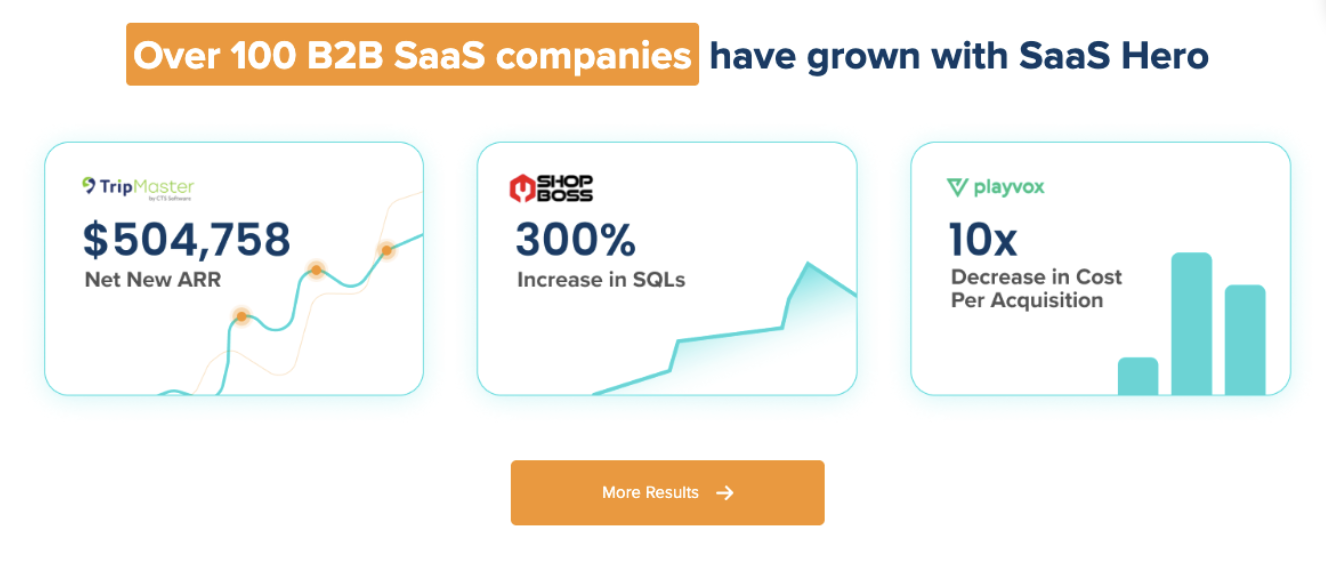
TripMaster adds $504,758 in Net New ARR in One Year
A 30-Day Action Plan to Exit Your Current Contract
Week 1: Audit. Pull your contract and work through the audit checklist. Inventory every marketing asset, including ad accounts, creative files, tracking configurations, dashboards, and landing pages, and document who has access to each. Record the termination notice period, auto-renewal date, and any early termination penalties.
Week 2: Communicate. Request a formal meeting with your agency to discuss your concerns and your plans. Share your concerns in writing before the meeting and state clearly that you are evaluating options. This conversation often reveals more flexibility than the contract suggests.
Week 3: Negotiate. Use the tactics above to negotiate exit terms or a transition plan. Propose a reduced-fee transition period in exchange for full cooperation on asset handover. Capture any agreed terms in writing before the meeting ends.
Week 4: Execute. Submit formal written notice that follows your contract terms. Request ownership transfer of all assets in writing and list each one specifically. Confirm access, verify data integrity, and back up everything before you remove the agency’s access. Start your new partnership with a provider whose contract terms you have already checked against the red-flag checklist.
Over 100 B2B SaaS companies have grown with saas here
FAQ
Are digital marketing agencies worth it?
For B2B SaaS companies with established product-market fit and a meaningful paid media budget, the right agency relationship can produce measurable pipeline at a defensible cost. The value of an agency depends on whether its structure aligns incentives with your outcomes. An agency paid on a percentage of your ad spend earns more when your budget grows, regardless of efficiency. An agency that does not own or influence your landing pages cannot take full accountability for conversion rate. An agency that reports on clicks and CPL instead of pipeline and CAC steers effort toward the wrong signal. The structural design of the relationship, not creative quality or case studies, drives most of the value.
In most cases you can, but the cost and complexity depend on your contract. Early termination clauses vary widely. Some require payment of the remaining contract value. Others require only the notice period fee. Some allow exit without penalty under conditions such as material breach or failure to meet defined performance benchmarks. Start by reading your contract carefully and documenting the exact termination language. Then request a meeting with your agency to discuss your situation before you invoke any formal clause. Many agencies agree to a mutual exit or a shortened transition rather than enforce a contract against a client who has clearly decided to leave. If the agency holds firm, consult a contracts attorney before you sign anything or make payments.
What should I do if my agency holds my accounts hostage?
Begin by checking your contract for asset ownership language. If the contract is silent or ambiguous, you may have a basis for a legal claim to the accounts, especially if they were created under your company’s name or funded by your budget. Send a formal written request for ownership transfer, list each asset specifically, and set a reasonable deadline for compliance. If the agency refuses, escalate to the platform directly, since Google, LinkedIn, and Meta each provide processes for resolving account ownership disputes. Document every communication. If the dispute remains unresolved after platform escalation, a contracts attorney can advise on your options. For future engagements, require agencies to create accounts in your name or under your MCC, with explicit contractual language confirming your ownership.
How do I choose an agency that will not lock me in?
Evaluate the contract structure before you review creative work. Ask directly about contract length, notice period, and what happens to your accounts and files if you part ways. A transparent partner will answer all three questions clearly. Look for a flat retainer instead of a percentage-of-spend or per-channel fee, because the pricing model shapes whose interests the channel-mix recommendation serves. Confirm in writing that you will own all ad accounts, tracking configurations, creative files, and dashboards during and after the engagement. Ask who will be in your account in month six, focusing on the team that runs the work rather than the team that pitches. Request a reference from a client who left the agency, not only clients who stayed, because offboarding behavior reveals the agency’s values.
You Can Exit a Lock-In Agency Relationship
Agency lock-in stems from structural choices, and structural changes solve it. Audit your contract using the checklist above, document your findings, and negotiate from a position of information rather than frustration. Protect your assets before you start any transition, and evaluate your next partner on contract terms and incentive alignment before you review creative portfolios.
The agency model that prevents lock-in by design relies on a flat retainer, client-owned assets, CRM-connected reporting, and a team that brings the agenda instead of waiting for one. SaaSHero operates on that model, with a flat fee tied to spend and every asset owned by the client from day one and handed over in full at the end of any engagement, for any reason.
Includes unlimited revisions as well as custom written copy (from a human, not ChatGPT). We’ll send a first draft in Figma and you can request as many edits as you’d like. We won’t ever activate any landing pages until you give us the final OK