




Written by: Aaron Rovner, Founder, Saas Hero | Last updated: July 28, 2026
Key Takeaways for B2B SaaS Leaders
- Capital efficiency and strong unit economics now determine survival for B2B SaaS in 2026, so the fractional vs full-time marketing leadership choice directly affects runway and pipeline velocity.
- Full-time CMO hires carry a 42% failure rate within 18 months and a $400K–$700K+ year-one TCO, while fractional CMOs typically deliver 40–70% cost savings with faster ramp times and no equity dilution.
- The four-stage ARR framework shows fractional CMOs fit best from pre-seed through $10M ARR, with full-time leadership justified mainly above $10M–$15M ARR when team size and board reporting demands exceed fractional bandwidth.
- Hybrid and embedded models bridge the gap for $3M–$10M ARR companies that need strategic direction without full-time overhead, often delivering measurable CAC reductions and pipeline improvements within 60–90 days.
- Book a discovery call with SaaSHero to get a clear fractional vs full-time recommendation tailored to your ARR stage in 30 minutes.
Four-Stage ARR Framework for Marketing Leadership
The fractional vs full-time decision aligns with four clear ARR stages. Each stage brings specific realities around team size, budget, and strategic focus.
- Pre-Seed / Pre-PMF (under $1M ARR): Founder-led marketing with a fractional advisor or growth generalist. No CMO-level hire is justified.
- Early Growth ($1M–$5M ARR): A fractional CMO sets strategy and architecture. One or two in-house generalists execute. A full-time CMO hire remains premature.
- Growth Stage ($5M–$10M ARR): A fractional CMO or embedded model supports an expanding in-house team. Hybrid structures become viable. A full-time VP of Marketing may be appropriate at the upper end.
- Scale Stage ($10M–$15M+ ARR): A full-time VP of Marketing or CMO becomes justifiable when team size, execution complexity, and board reporting demands exceed what fractional bandwidth can support.
How B2B SaaS Marketing Leadership Evolves by Stage
At the 0–$2M ARR stage, B2B SaaS companies should hire one marketing generalist who runs experiments across CRM setup, paid search, content, and attribution tracking rather than a specialist or executive. The fractional CMO role at this stage stays advisory and focuses on positioning and ICP clarity while most budget funds experiments.
Senior marketing leadership (Head of Marketing or fractional CMO) typically becomes necessary for B2B SaaS between $5M and $15M ARR. However, ARR alone does not determine the right timing.
The primary trigger for moving from fractional to full-time leadership is execution debt, which is the growing backlog of unfixed issues, rather than ARR alone. This inflection point appears when the team’s weekly shipping cadence of meaningful changes cannot keep pace with identified opportunities. Many B2B SaaS companies reach that stage between $10M and $20M ARR, when teams grow and require dedicated functional leaders.
2026 Cost and ROI Comparison: Fractional vs Full-Time
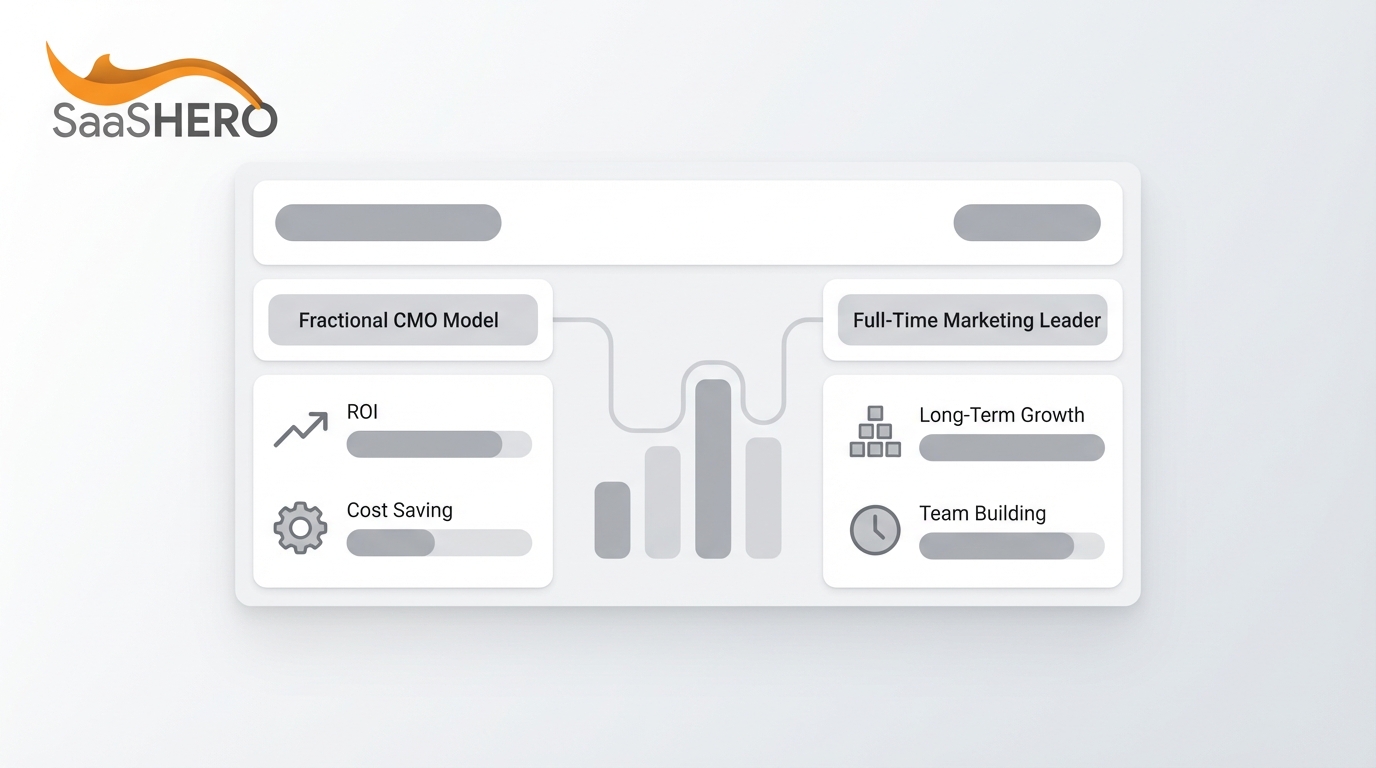
The table below compares the two models on annual cost, ramp time, and documented revenue impact using 2026 compensation data. All figures reflect B2B SaaS companies in the $1M–$15M ARR range.
| Role | Annual Cost Range (Total Cost of Ownership) | Ramp Time | Revenue Impact Benchmarks |
|---|---|---|---|
| Fractional CMO (10–20 hrs/week) | Monthly retainer typically ranges from $5,000–$25,000, equating to $60,000–$300,000 annually, with no benefits, equity, or recruiting fees | Typically around six weeks to demonstrate measurable value, often structured via a 30-60-90 day plan | 29% average revenue growth for companies using them, along with typical CAC reductions of 10-30% and revenue growth often appearing after 4-6 months |
| Full-Time CMO / VP Marketing | $400,000–$700,000+ year-one TCO including salary, benefits, recruiter fees, equity, and ramp | 3–6 months | 42% failure rate within 18 months with significant costs for failed hires |
Fractional CMO arrangements save 40–70% compared to full-time at equivalent experience levels. For a $5M ARR company spending 15% of revenue on marketing, that cost gap directly extends runway or funds additional demand-generation programs.
When a Hybrid or Embedded Model Fits Best
The hybrid model works best under the following conditions:
- The company is at $3M–$10M ARR with a 2–5 person marketing team that needs strategic direction but not full-time executive overhead.
- A full-time VP of Marketing search is underway and a fractional leader is bridging the gap.
- The company needs a single owner for marketing outcomes but not a full-time senior executive yet.
- Execution capacity exists in-house but strategic prioritization is absent, which causes latency between identifying a needed change and deploying it that stretches into weeks.
SaaSHero’s embedded model is purpose-built for this scenario. Instead of acting as a black-box agency or a detached strategy consultant, SaaSHero operates as an extension of the client’s team, sits in Slack, reports on Net New ARR, and connects ad spend directly to CRM revenue data. This structure reduces the translation loss that appears when separate parties own strategy and execution without shared accountability.

Book a discovery call with SaaSHero to see how the hybrid model fits your stage.
Three SaaS Scenarios and the Right Leadership Model
The following anonymized scenarios reflect common SaaSHero client archetypes across the $1M–$15M ARR range.
Scenario 1 — The Bootstrapped Founder ($1.5M ARR): A founder runs Google Ads on weekends with no marketing hire. Pipeline is inconsistent and CAC is unmeasured. A fractional CMO at $8,000–$10,000 per month provided ICP definition, channel prioritization, and a demand-gen architecture within the first 30 days. A full-time CMO hire at this stage would have consumed 30–40% of ARR in year-one TCO with a 3–6 month ramp before any strategic output.
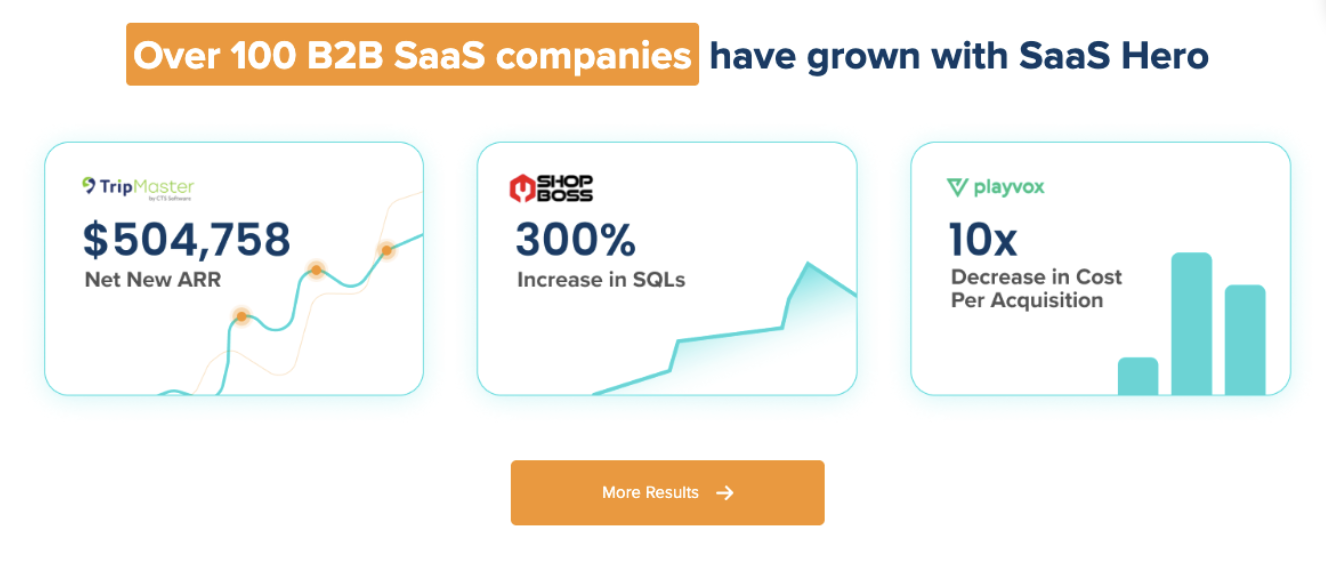
Scenario 2 — The Frustrated VP ($7M ARR): A VP of Marketing receives agency reports showing impressions and CTR while the CEO demands pipeline and CAC data. The agency’s percentage-of-spend billing model incentivized budget increases regardless of efficiency. Transitioning to SaaSHero’s flat-fee embedded model with HubSpot CRM integration shifted reporting to Net New ARR and SQL volume, which gave the VP board-ready metrics within 60 days. A comparable fractional engagement cut CAC by 30% within 60 days and extended runway by five months.
Scenario 3 — The Post-Funding Scaler ($12M ARR, Series A): A marketing lead holds aggressive Q1 pipeline targets and a $30,000 per month ad budget but has no time to hire and onboard a three-person in-house team. SaaSHero’s full marketing team tier provided immediate paid search and LinkedIn Ads execution across two channels, competitor conquesting landing pages, and weekly pipeline reporting. The team activated within two weeks instead of the 3–6 months a full-time CMO search would require.

10-Item Decision Checklist for Boards and Investors
Use this checklist to frame the fractional vs full-time decision for stakeholders and investors.
- Is year-one total cost of ownership for a full-time hire (salary, benefits, recruiter fees, equity, and ramp) below 15% of current ARR? When a single executive role consumes more than 15% of revenue, it creates unsustainable burn that threatens runway, which makes fractional leadership the capital-efficient default.
- Does the company have a documented ICP, positioning statement, and channel strategy? When these foundations are missing, a fractional CMO should define them before any full-time execution hire.
- Is the marketing team at five or more people with dedicated functional leads? Below this threshold, a full-time CMO has little team to lead and limited leverage.
- Is ARR above $10M with a board requiring weekly executive-level marketing reporting? This combination usually becomes the primary trigger for a full-time hire.
- Is CAC payback currently under 18 months? A healthy LTV:CAC ratio is 3:1 or higher and pipeline coverage should be at least 3x next-quarter quota. Fractional leadership can establish these benchmarks before a full-time hire is justified.
- Has the company experienced a failed full-time marketing hire in the past 24 months? The direct and indirect cost of a failed hire at growth-stage SaaS typically runs $400,000–$700,000.
- Does the current marketing function require daily cross-functional collaboration with product, sales, and customer success for the next 12 or more months? This level of operational intensity forms the strongest argument for a full-time hire.
- Is the company in a repositioning, new-market entry, or sales-marketing misalignment situation? These situations are primary fit indicators for fractional CMO engagement.
- Can the company access a fractional CMO with direct B2B SaaS experience at the relevant ARR stage? Generic fractional executives without SaaS-specific domain knowledge carry execution risk comparable to a full-time hire.
- Is equity dilution a concern? Standard fractional CMO engagements include no equity dilution, so total cost of ownership essentially equals the retainer fee itself.
Frequently Asked Questions
What is the typical 2026 fractional CMO retainer range for $5M–$15M ARR B2B SaaS companies?
For B2B SaaS companies in the $5M–$15M ARR range, fractional CMO retainers in 2026 typically fall between $8,000 and $18,000 per month depending on engagement depth. Advisory arrangements covering 2–4 days per month run $8,000–$12,000 per month. Operating roles covering 6–10 days per month, which include strategy ownership, team leadership, and board-level reporting, run $12,000–$18,000 per month. Annualized, a mid-market engagement costs $96,000–$216,000 with no benefits, payroll taxes, recruiting fees, or equity obligations. This cost profile contrasts with a year-one total cost of ownership of $400,000–$700,000 or more for a full-time CMO at the same stage.
At what ARR threshold do most companies switch from fractional to full-time marketing leadership?
A common transition point appears between $10M and $20M ARR, when marketing teams grow and require dedicated functional leaders such as a Head of Demand Gen or Head of Content reporting to an executive. ARR alone does not serve as the primary driver, because execution debt, team size, and board reporting complexity provide stronger indicators. Companies with fewer than five marketers, no documented ICP, or a sales cycle under 30 days are rarely ready for a full-time CMO regardless of ARR. A fractional CMO can act as an effective bridge at the $10M–$15M stage and provide senior leadership without full-time commitment until the organizational conditions justify a permanent hire.
How much faster do fractional CMOs ramp compared with full-time hires?
Fractional CMO ramp time is typically around six weeks to demonstrate measurable value, often structured via a 30-60-90 day plan. Full-time CMO hires usually require 3–6 months to reach equivalent strategic output, during which time pipeline generation, positioning work, and channel improvements are often stalled or delegated to junior team members. For a company with a 90-day board reporting cycle or an aggressive Q1 pipeline target, this ramp-time advantage alone can justify the fractional model. Most clients of fractional CMOs observe measurable improvements in pipeline quality and marketing efficiency within 60–90 days of engagement.
What measurable revenue impact have companies seen with fractional versus full-time leaders?
Documented outcomes from fractional marketing leadership engagements in B2B SaaS include a 20% reduction in CAC payback and a 25% boost in pipeline velocity within six months for a company growing from $2M to $5M ARR. Another company saw a 30% CAC reduction within 60 days and extended runway by five months. A seed-stage startup achieved a 4x increase in Monthly Recurring Revenue within nine months after using a fractional CMO to build CRM infrastructure and drip campaigns. One firm recorded a 15% lift in pipeline velocity after a fractional RevOps lead resolved a 40% MQL-to-SQL qualification bottleneck. At the platform level, companies using fractional CMOs report the growth and efficiency gains cited in the cost comparison above. Full-time CMO hires, by contrast, carry the high failure rate noted earlier, with significant costs associated with failed hires.
Conclusion: Match Leadership Model to ARR, Team, and Runway
For B2B SaaS companies between $1M and $15M ARR, the fractional CMO model delivers senior marketing leadership at the significant cost savings detailed earlier, with the faster ramp mentioned earlier, no equity dilution, and no severance risk. The full-time hire becomes the right answer when ARR exceeds $10M, the marketing team reaches double digits, and daily cross-functional leadership demands exceed what fractional bandwidth can support.

By 2027, Gartner projects that 30% or more of midsize enterprises will have at least one fractional executive on retainer. This shift reflects the capital-efficiency expectations now embedded in SaaS board conversations. The core decision centers on whether your current ARR stage, team size, and pipeline targets justify the full-time alternative.
SaaSHero’s embedded model offers a practical starting point for founders and revenue leaders who need senior-level strategy and paid-media execution without full-time overhead. Month-to-month engagements, flat-fee pricing, and reporting anchored to Net New ARR rather than vanity metrics position SaaSHero as a direct alternative to both the traditional agency and the premature full-time CMO hire.