




Written by: Aaron Rovner, Founder, Saas Hero
Key Takeaways
- Competitive takeout campaigns reach high-intent prospects who research competitor pricing, alternatives, and reviews, and they outperform generic keyword strategies on ROI.
- The 8-step playbook, which covers auditing competitors, mapping intent, building dedicated pages, and multi-channel PPC, consistently hits sub-90-day CAC payback.
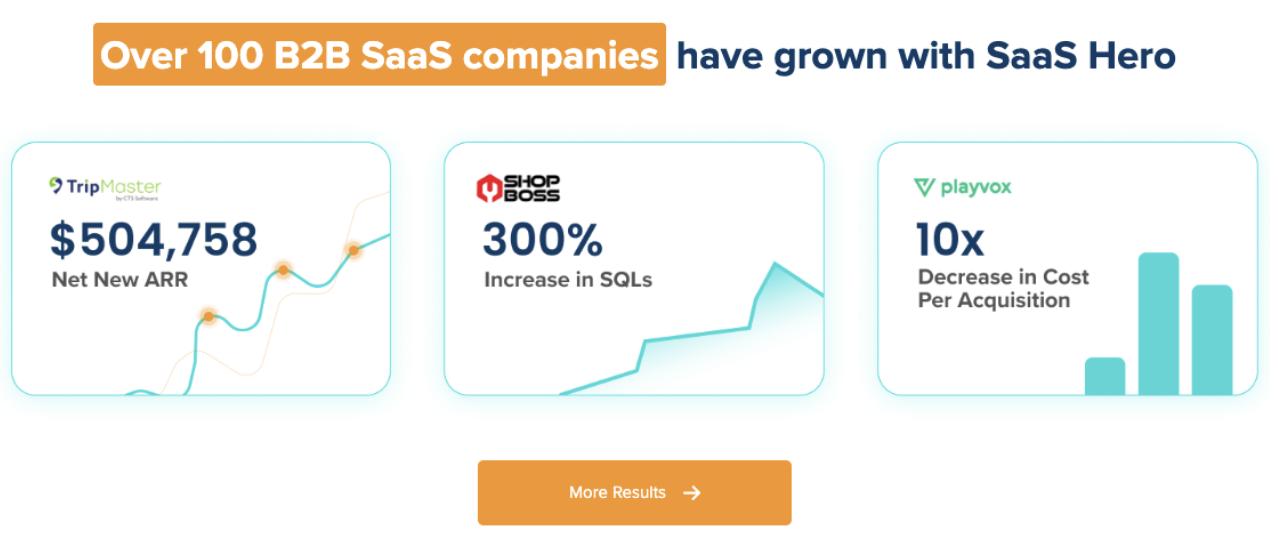
- Real outcomes include $504k Net New ARR for TripMaster, 80-day payback for TestGorilla, and 10x lower CPL for Playvox through precise intent targeting.
- Winning programs rely on strong negative keyword hygiene, CRO with comparison tables and incentives, and CRM-integrated tracking for revenue attribution.
- Avoid agency pitfalls with SaaSHero’s flat-rate pricing and B2B SaaS expertise, and schedule a discovery call to launch your campaign.
1. Executive Summary & Competitive Takeout Framework
Competitive takeout demand generation campaigns use three psychological triggers that shape B2B SaaS purchase decisions.
- Pricing Anxiety: Prospects researching competitor costs feel budget pressure and compare options closely.
- Frustration Signals: Users searching for alternatives show dissatisfaction with current tools.
- Validation Seeking: Review-focused searches reveal prospects in active evaluation stages.
The 8-step competitive takeout playbook creates measurable ARR growth through structured competitor targeting.
- Audit Competitors: Identify 5 to 10 direct rivals with meaningful search volume.
- Map Intent Signals: Group search queries by pricing, complaint, and review intent.
- Build Dedicated Pages: Publish competitor-specific landing pages with clear comparison tables.
- Implement Negative Hygiene: Exclude brand-only searches to focus on evaluative queries.
- Launch Multi-Channel PPC: Run Google Ads and LinkedIn campaigns at the same time.
- Improve Conversion Rates: A/B test messaging, offers, and page elements.
- Track with CRM Integration: Connect ad clicks to closed-won revenue attribution.
- Scale with Incentives: Add migration bonuses and switching resources.
This framework turns competitor research traffic into qualified pipeline and often reaches CAC payback in under 90 days. For deeper implementation detail, review our detailed conquesting methodology.
2. Competitive Takeout Definition and Real-World Examples
Competitive takeout campaigns focus on prospects who research specific competitors by bidding on branded keywords paired with evaluative modifiers. This strategy captures high-intent traffic during the consideration phase, when switching motivation peaks.
Three proven competitive takeout examples highlight how this methodology performs in practice.
|
Client |
Strategy |
Outcome |
vs. Generic Approach |
|
TripMaster |
Transit software conquesting |
$504k Net New ARR |
Generic: Vanity CTRs |
|
TestGorilla |
HR tech pricing campaigns |
80-day CAC payback |
Generic: Long sales cycles |
|
Playvox |
CX platform complaint targeting |
10x lower CPL |
Generic: High acquisition costs |
Each campaign targeted a specific competitor weakness. TripMaster focused on feature gaps in transit management. TestGorilla highlighted pricing transparency in HR assessment tools. Playvox addressed customer service complaints in contact center software.
Competitive takeout extends far beyond simple keyword bidding. Effective programs require deep competitor analysis, intent-specific messaging, and dedicated conversion experiences that remove switching friction.
3. Intent Psychology and High-Converting Landing Pages
B2B SaaS competitive takeout campaigns work best when landing pages align with the exact search intent. Three primary intent categories drive competitor research behavior.
Pricing Intent: Searches for “[Competitor] pricing” or “how much does [Competitor] cost” show budget-conscious prospects comparing total cost of ownership. These users respond to transparent pricing tables, TCO calculators, and clear value statements that justify any premium.
Complaint Intent: Queries like “[Competitor] alternatives” or “cancel [Competitor]” signal frustrated users who feel pain with current tools. These prospects engage with problem and solution messaging, migration incentives, and case studies from successful switchers.
Review Intent: Searches for “[Competitor] reviews” or “[Competitor] vs [Your Company]” reveal prospects who want validation and social proof. These users need G2 badges, customer testimonials, and feature comparison matrices that highlight your unique strengths.
Effective B2B SaaS alternative landing pages follow a consistent structure that supports these intents.
- Hero Section: Direct headline that names the competitor comparison and a clear primary CTA.
- Comparison Table: Side-by-side feature matrix that highlights meaningful differentiators.
- Trust Signals: Customer logos, security certifications, and platform badges.
- Switching Resources: Free migration tools, data import help, and contract buyout offers.
- Social Proof: Testimonials and stories from customers who switched from that competitor.
Legal compliance requires factual comparisons, no competitor logos, clear advertiser identification, and respect for trademarks. Improve your conversion rates with professionally designed landing page optimization services.

4. PPC Structure, Negative Keywords, and Channel Mix
B2B SaaS competitive conquesting needs precise campaign structure across search and social channels. Google Ads captures the highest search volume for competitor queries, while LinkedIn supports account-based targeting of competitor customers.
Campaign setup starts with detailed keyword research that identifies competitor brand terms combined with evaluative modifiers.
- Pricing Keywords: [competitor] pricing, [competitor] cost, [competitor] price.
- Alternative Keywords: [competitor] alternative, [competitor] vs, replace [competitor].
- Problem Keywords: [competitor] problems, [competitor] issues, [competitor] complaints.
Negative keyword hygiene protects budget and improves efficiency. Exclude the competitor’s brand name alone, such as “Salesforce,” to avoid paying for navigational searches. Users who search only the brand usually want login pages, not alternatives.
Bidding strategies should prioritize competitor pricing intent campaigns, because these queries show immediate purchase consideration. Start with manual CPC bidding to control costs during the learning phase. Shift to target CPA once you have enough conversion data.
LinkedIn ABM campaigns extend your reach by targeting job titles at competitor customer companies. Use company targeting to reach decision-makers at organizations that use specific competitor tools, then promote educational content that explains switching benefits.
Coordinated multi-channel execution amplifies results. B2B sales-led teams achieve 5x ROAS minimum when search and social campaigns share consistent messaging and unified conversion tracking.
5. Conversion Strategy, Incentives, and Measurement
Conversion rate optimization turns competitive traffic into qualified pipeline through structured testing and clear persuasion principles. Seven core heuristics guide B2B SaaS landing page improvements.
- Relevance: Landing page messaging mirrors ad copy and search intent.
- Clarity: Visitors understand the value proposition within five seconds of page load.
- Trust: Security badges, customer logos, and testimonials appear above the fold.
- Friction: Forms use minimal fields and a simple conversion path.
- Urgency: Limited-time offers or scarcity messaging appear where they make sense.
- Social Proof: Customer success stories and usage statistics support claims.
- Mobile Experience: Responsive layouts work smoothly on every device.
SaaS migration incentives lower switching barriers and speed up decisions. Effective incentives include free data migration, extended trials, contract buyout support, and dedicated onboarding. These offers address the main objections that keep competitor customers from moving.
Revenue attribution depends on tracking that connects ad clicks to closed-won deals. Pass GCLID (Google Click Identifier) into CRM systems such as HubSpot or Salesforce, then optimize campaigns based on ARR instead of vanity metrics.
Key performance indicators focus on business outcomes.
- Net New ARR: Revenue from prospects who were previously unknown.
- CAC Payback Period: Time required to recover acquisition costs.
- Pipeline Velocity: Speed from first touch to closed-won deal.
- Competitive Win Rate: Share of deals won against targeted competitors.
Track these metrics through integrated dashboards that connect ad platforms with CRM data. Learn how full-funnel measurement supports optimization with our proven results methodology.
6. Common Competitive Campaign Mistakes and Agency Risks
Many B2B SaaS competitive campaigns underperform because of predictable execution errors and misaligned agency incentives. Common pitfalls appear across most failing programs.
- Generic Landing Pages: Sending competitor traffic to the homepage instead of focused comparison pages.
- Weak Negative Keywords: Spending budget on navigational searches without purchase intent.
- Vanity Metric Focus: Optimizing for clicks and impressions instead of pipeline and revenue.
- Legal Missteps: Using competitor logos or making unsupported claims in ad copy.
- Poor Tracking: Missing attribution links between campaigns and closed deals.
Traditional agencies often make these problems worse. Percentage-of-spend pricing encourages higher budgets instead of efficiency. Junior account managers rarely have the B2B SaaS experience needed for advanced competitor targeting. Long contracts reduce accountability for performance.
SaaSHero removes these agency risks with transparent flat-rate pricing, senior-led account management, and month-to-month agreements that keep performance front and center. Our focus on B2B SaaS supports deeper understanding of your market and buyer psychology.
Avoid costly mistakes and speed up your competitive takeout success. Review our transparent pricing structure that aligns agency incentives with your revenue growth goals.
7. SaaSHero Case Studies and Documented Results
Three detailed case studies show how professionally managed competitive takeout campaigns perform in real B2B SaaS environments.
|
Client |
Vertical |
Strategy |
Outcome |
|
TripMaster |
Transit Software |
Multi-channel conquesting |
$504,758 Net New ARR |
|
TestGorilla |
HR Technology |
Pricing-focused campaigns |
80-day CAC payback |
|
Playvox |
CX Platform |
Complaint-based targeting |
10x lower cost per lead |
TripMaster’s results came from deep competitor analysis in transit management, which surfaced feature gaps and pricing advantages that resonated with municipal transportation buyers. The campaign produced 650% ROI and 20% conversion rates from paid search traffic.

TestGorilla used competitive campaigns to prove strong unit economics that supported a $70M Series A raise. The 80-day payback period showed investors that marketing spend produced predictable and scalable returns.
Playvox reached dramatic cost efficiency by rebuilding campaigns around competitor complaint keywords, which cut cost per lead by 10x and increased lead volume by 163%. This outcome illustrates the power of precise intent targeting over broad keyword strategies.
SaaSHero’s experience across B2B SaaS verticals such as HR Tech, Transportation, CX, and Cybersecurity supports nuanced competitor positioning. More than $30M in managed ad spend provides platform expertise and scale advantages that drive these results.
8. FAQ
What are competitive takeout campaign examples in B2B SaaS?
Competitive takeout campaigns reach prospects who research specific competitors through branded keyword bidding with evaluative modifiers. Examples include bidding on “Salesforce pricing” to promote your CRM alternative, targeting “Zoom alternatives” for video conferencing tools, or capturing “HubSpot vs [YourCompany]” searches. TripMaster’s transit software conquesting campaign, which generated $504k in Net New ARR, used this approach with dedicated comparison pages and switching incentives.
What does competitive takeout mean in demand generation?
Competitive takeout in demand generation describes strategies that capture prospects who actively research competitor solutions. Teams identify high-intent signals such as pricing searches, complaint queries, and review research, then serve targeted messaging that positions their product as the stronger alternative. This approach focuses on the consideration phase, when switching motivation peaks and purchase decisions sit close.
Why do competitive campaigns work well for B2B SaaS companies?
B2B SaaS buyers conduct extensive research before purchase, which creates many chances to intercept competitor traffic. The subscription model means that winning a competitor’s customer adds recurring revenue, not a single transaction. SaaS switching costs also tend to be lower than hardware or services, so prospects feel more open to alternatives when they see clear value and migration support.
How does SaaSHero pricing work for competitive campaigns?
SaaSHero uses transparent flat-rate monthly retainers from $1,250 to $7,000, based on ad spend levels and channel mix, which removes percentage-of-spend conflicts. Setup fees range from $1,000 to $2,000 and cover campaign architecture, competitor analysis, and tracking. Landing page design costs a $750 flat fee, and creative assets start at $300 for five ad variations. Month-to-month agreements protect you from long-term contract risk and keep performance accountable.
What are competitor pricing intent campaigns?
Competitor pricing intent campaigns focus on prospects who search for specific competitor pricing terms such as “[Competitor] pricing,” “how much does [Competitor] cost,” or “[Competitor] vs [YourCompany] price.” These campaigns send traffic to comparison pages with transparent pricing tables, total cost of ownership calculators, and value messaging that supports any premium. This strategy captures budget-conscious prospects who actively compare solutions during the purchase decision.
9. Conclusion and Next Steps for Competitive Takeout
Competitive takeout demand generation campaigns offer one of the most efficient paths to Net New ARR growth in a capital-constrained 2026 environment. The 8-step playbook, from competitor audit through scaled incentive programs, gives your team a repeatable system for intercepting high-intent prospects during evaluation.
Success depends on B2B SaaS buyer insight, strong tracking infrastructure, and dedicated landing pages that remove switching friction. Generic agencies rarely bring the vertical depth or technical skill needed to execute these campaigns at a high level.
Move competitor research traffic into your pipeline with a structured plan. Book a discovery call with SaaSHero’s senior strategists to design your competitive takeout campaign and accelerate predictable, scalable revenue growth.