




Written by: Aaron Rovner, Founder, Saas Hero | Last updated: September 2, 2026
Why Transparent Pricing Strategy Consulting Works
- Transparent pricing strategy consulting uses fixed-scope, fixed-fee projects focused on packaging, pricing models, and monetization velocity.
- Traditional consulting models create conflicts of interest that work against GTM outcomes, while transparent models align consultant incentives with delivery and results.
- A transparent pricing engagement delivers clear outputs such as willingness-to-pay validation, value metric alignment, packaging architecture, sales enablement assets, and execution roadmaps within 1–8 weeks.
- Transparent pricing consulting often costs 50–70% less than traditional firms while providing named deliverables, published pricing, and post-delivery support that traditional models rarely include.
The Problem: Traditional Consulting Pricing Undercuts GTM Performance
Traditional consulting models that rely on hourly billing, percentage-of-spend retainers, and “contact us for pricing” create structural conflicts of interest that work against your GTM outcomes.
Hourly billing inverts the relationship between skill and pay. The faster a consultant solves your problem, the less they earn. Percentage-of-spend retainers reward larger budgets regardless of whether scaling is the right strategic call. Hidden pricing extends sales cycles and erodes trust. The Gartner B2B Buying Experience Study (2025) found that 71% of B2B decision-makers rate price transparency as “very important” or “crucial” for supplier selection, up 24 percentage points since 2022.
The structural result is predictable. Most pricing strategies fail during implementation, not analysis. The initial analysis represents roughly 30% of the total value. The remaining 70% comes from execution support, which traditional engagements often exclude or treat as an add-on.
A transparent engagement closes this gap by baking execution support, clear deliverables, and fixed fees into the scope from day one.
What a Transparent Pricing Engagement Actually Delivers
A transparent pricing strategy consulting engagement for B2B SaaS go-to-market defines scope, deliverables, fee, and timeline upfront so your team can plan with confidence. Based on public market data from leading transparent pricing firms, a standard engagement includes:
- Willingness-to-Pay Validation: Customer interview synthesis and data-backed price-point recommendations grounded in your actual customers.
- Value Metric Alignment: Identification of the exact unit of consumption or growth, such as active seats, data processed, or API calls, that scales customers’ bills alongside their realized ROI.
- Packaging & Tier Architecture: Design of clean three-tier models where feature gates explicitly map to distinct buyer personas and willingness-to-pay thresholds.
- Sales Enablement Assets: Battle cards, quoting guidelines, and margin-protection discount matrices for your commercial team.
- Execution Roadmaps: A concrete 90-day implementation plan with clear transition steps for legacy or pilot cohorts.
The table below shows how timelines and costs vary by engagement type so you can calibrate expectations before you commit:
| Engagement Type | Typical Timeline | Typical Cost Range |
|---|---|---|
| Pricing diagnostic / audit | 1–3 weeks | A strategic diagnostic typically costs $5,000–$15,000 |
| Packaging & tier strategy | 4–8 weeks | $25,000–$60,000 |
| Enterprise contract & negotiation playbook | 3–5 weeks | $15,000–$35,000 |
| Customer base re-pricing & grandfathering strategy | 4–6 weeks | $20,000–$50,000 |
| Full pricing transformation (boutique firm) | 8–12 weeks | $35,000–$75,000 |
| Full pricing transformation (Big 4 / MBB) | 3–12 months | $80,000–$200,000+ |
Value Metric Alignment as the Core of Monetization
A value metric is the unit you charge for that scales naturally as the customer receives more value. HubSpot charges for contacts, Twilio for API calls, and Slack for active users. Research from Price Intelligently (now part of Paddle) found that companies with a well-aligned value metric grow at roughly double the rate and see half the churn of companies with misaligned value metrics.
Per-seat pricing is collapsing in the age of AI. A single user with an AI assistant can deliver the output of a five-person team, which breaks the link between seats and value. Companies such as Salesforce and Intercom now restructure pricing as AI features make seat counts less relevant. A transparent pricing consultant validates your value metric against customer willingness-to-pay data and delivers a metric that reflects how customers experience value.
Packaging & Tier Architecture That Drives Expansion
Three tiers usually perform best for B2B SaaS pricing. Week One Labs’ 2026 SaaS pricing guide recommends a healthy tier mix of approximately 25% Starter, 60% Growth, and 15% Business. If Starter exceeds 40% of customers, expansion revenue is likely left on the table.
A well-designed middle tier captures 60–70% of paying customers. If another tier dominates, pricing is misaligned with the market. McKinsey research consistently shows that a 1% price improvement produces roughly a 12% operating profit lift for a typical software business. Pricing therefore becomes the highest-leverage marketing decision many B2B SaaS companies never make deliberately.
Feature gating rules from Week One Labs recommend gating features that scale with company size, such as SSO, audit logs, and advanced reporting. Core product value stays available across tiers so customers experience the main job of the product without friction.
Motion Integration: Pricing That Matches Your GTM
Your pricing model must integrate with your go-to-market motion, whether product-led, sales-led, or hybrid. A transparent engagement minimizes procurement friction by structuring the pricing page, interactive calculators, and discounting governance rules so they work together.
Fubyte’s 2026 B2B SaaS pricing guide warns that pricing strategy fails when sales incentives conflict with packaging. Discount authority levels, approval workflows for non-standard deals, and guardrails for multi-year contracts must all be defined explicitly. The pricing strategy stack has five layers: value metric, packaging, GTM motion, expansion mechanics, and operational systems such as CRM, CPQ, billing, and usage data. If your value metric does not align with customer outcomes, churn and discount pressure become constant problems.
This is where the choice of consulting model matters. The right partner connects these layers instead of handing over a static deck.
Transparent vs. Traditional Consulting: How They Compare
| Attribute | Transparent Pricing Consulting | Traditional Consulting |
|---|---|---|
| Pricing model | Fixed-fee, published rates | Hourly billing or percentage-of-spend retainers |
| Fee disclosure | Published on website or provided upfront | “Contact us for pricing” |
| Deliverables | Named, scoped, with defined acceptance criteria | Vague (“strategy deck,” “recommendations”) |
| Timeline | 1–8 weeks, stated upfront | 3–12 months, often open-ended |
| Incentive alignment | Delivery and outcomes | Billable hours and larger budgets |
| Post-delivery support | Often included or offered as a defined retainer | Rarely included, new engagement required |
PMI found that 52% of projects experience scope creep, with average cost overruns around 27%. Under hourly billing, the client absorbs that risk. Under fixed-fee, the consultant absorbs it. Fixed-fee pricing rewards shipping the defined deliverable on the defined date. If you want a partner whose incentives favor delivery instead of billable hours, SaaSHero fits that model.
What GTM Consulting Covers in a Transparent Model
GTM, or go-to-market, consulting helps B2B companies align pricing, packaging, sales motion, and marketing channels to maximize revenue velocity. For B2B SaaS, GTM consulting focuses on how you bring a product to market, including pricing strategy, value metric selection, tier architecture, channel strategy, and sales enablement. Transparent GTM consulting packages these services into fixed-scope engagements with published pricing so you know exactly what you receive and what it costs.
What GTM Consultants Charge and How Transparency Changes It
GTM consultant costs vary by firm type and scope. Based on 2025–2026 market data, traditional firms often structure fees as follows:
| Consultant Type | Hourly Rate (traditional) | Project Fee Range |
|---|---|---|
| Independent consultant (former VP Pricing) | $300–$500/hour | $15K–$40K |
| Boutique pricing firm (2–5 partners) | $400–$700/hour | $35K–$75K |
| Big 4 / MBB strategy practice | $600–$1,200+/hour | $80K–$200K+ |
10Louder’s 2026 B2B consulting rate benchmarks show project-based strategy engagements commonly range from $25,000 to $150,000. Ongoing monthly retainers typically run $8,000 to $25,000 per month. Transparent firms such as Monetizely deliver actionable pricing strategies in four weeks at the 50–70% cost advantage mentioned earlier compared with legacy firms. They achieve this by using fixed fees instead of open-ended hourly billing.
How to Choose a Transparent Pricing Consultant
Use this checklist to evaluate any pricing strategy consultant against the principles of transparency:
- Verify published pricing. Confirm that the firm publishes rates or provides a fixed-fee quote before a discovery call. Firms that hide prices behind “pricing on request” cause sales teams to spend 40% of discovery calls disqualifying people who could have self-selected out in three minutes on the website.
- Demand named deliverables. A transparent engagement specifies deliverables concretely, such as “a 20-page written report with five prioritized recommendations.” 58% of consulting clients want pricing upfront before they commit to an engagement.
- Confirm the timeline in writing. Standard transparent engagements run 1–8 weeks. Anything longer without a phase-end deliverable signals scope risk.
- Check the incentive structure. Look for fixed fees instead of pricing that scales with your spend or the consultant’s hours. Fixed-fee structures align incentives with delivery.
- Ask about post-delivery support. As noted earlier, most strategies fail during implementation. Confirm whether the engagement includes execution support or ends with a deck.
- Request a change-order policy. Scope creep is the primary risk in consulting. A transparent firm documents how it handles out-of-scope work.
- Evaluate the methodology fit. Strong consultants ask detailed questions about your specific market, customer base, and competitive situation before proposing an approach. They adapt their method to your context.
- Check references from 12–18 months post-engagement. Ask whether the strategy was implemented and what changed in revenue metrics after adoption.
Why SaaSHero Fits a Transparent GTM Motion
SaaSHero applies the transparent, outcome-driven approach described in this guide and extends it beyond pricing strategy into full go-to-market execution.
The SaaSHero model operates on four principles:
- Flat-fee, spend-based retainer. SaaSHero uses a fixed monthly retainer indexed to total ad spend under management. The team never charges a percentage of spend or per-channel fees. When SaaSHero recommends increasing a budget, the data supports scaling and the recommendation stays separate from the invoice.
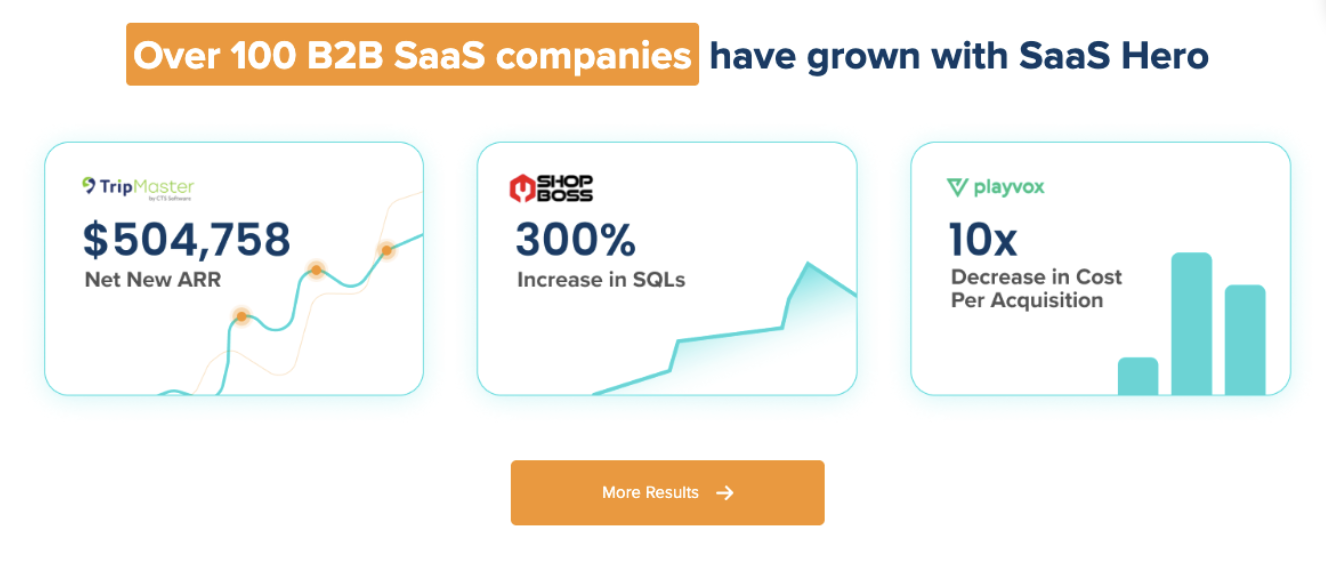
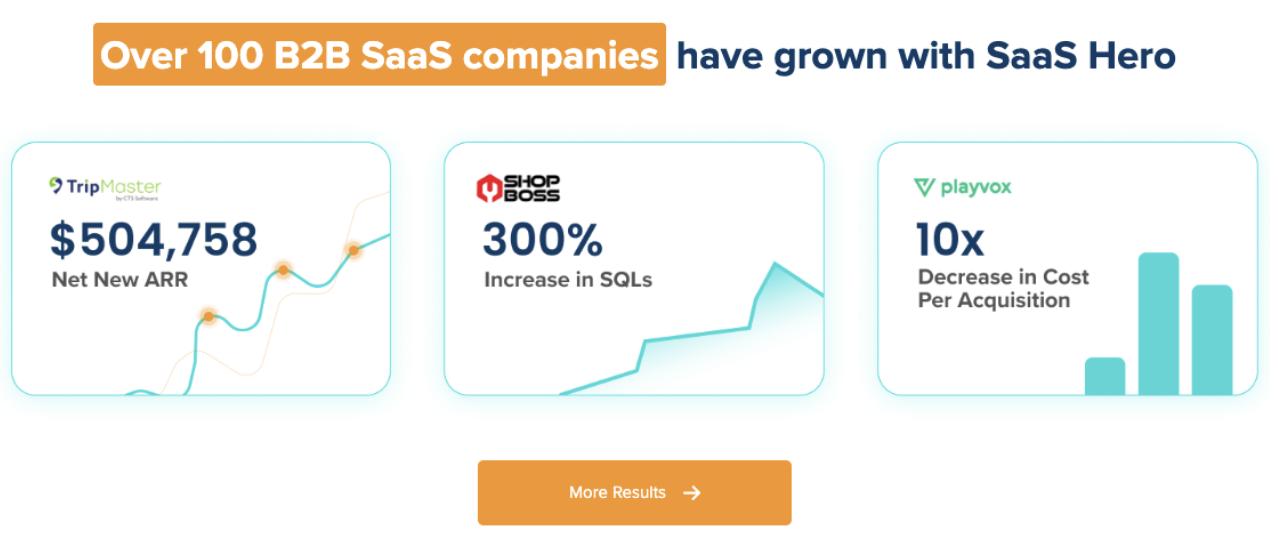
- Full-funnel ownership. One team owns paid media, creative, landing pages, and reporting so the GTM motion stays integrated. SaaSHero has managed over $60M in lifetime ad spend and served more than 100 B2B companies. About 20 full-time specialists deliver execution across paid media, creative, landing pages, and reporting.
- CRM-revenue optimization. SaaSHero focuses on CRM outcomes such as qualified pipeline, lifecycle stage progression, and closed revenue instead of form-fill counts. This discipline makes pricing strategy measurable in market.
- Published entry point. Growth Team starts at $4,000 per month. Prospects see the starting point upfront without hidden retainers or “contact us for pricing” walls.
Many pricing consultants hand you a strategy and step away. SaaSHero owns both strategy and execution across paid media, creative, landing pages, and reporting so your pricing and packaging actually convert. When your value metric, tier architecture, and GTM motion align, SaaSHero ensures the market experiences that alignment.
Conclusion
Transparent pricing strategy consulting for B2B SaaS go-to-market replaces opaque retainers and hourly billing with fixed-scope, fixed-fee deliverables that align consultant incentives with your revenue outcomes. You know the cost, timeline, and deliverables before you sign, and the consultant’s incentive centers on delivery.
A pricing strategy only creates value when executed well. SaaSHero operates as an outsourced inbound growth team for B2B companies, owning strategy and execution across paid media, creative, landing pages, and reporting while optimizing against CRM revenue data instead of surface-level lead counts. With a flat-fee, spend-based retainer that removes common conflicts of interest, SaaSHero acts as a transparent partner for your B2B SaaS go-to-market.

Ready to align your pricing strategy with a growth team that owns the outcome? Start the conversation with SaaSHero.
Frequently Asked Questions
How does transparent pricing consulting differ from a traditional consulting retainer?
A transparent pricing consulting engagement publishes its fees, names its deliverables, and states its timeline before you sign. The consultant’s fee stays fixed regardless of hours spent, which means their incentive is to deliver the defined scope efficiently. A traditional consulting retainer typically bills hourly or charges a percentage of spend, which creates a structural conflict of interest because slower work and larger budgets increase the consultant’s revenue. Transparent engagements also define acceptance criteria for each deliverable so both parties agree on what “done” means before work begins. Traditional retainers often keep deliverables vague, which makes accountability for outcomes difficult.
How can I tell if my B2B SaaS company is ready to hire a pricing strategy consultant?
Clear signals include wide variation in average contract value across similar customers with no rationale, frequent discounting without a defined policy, or an upcoming launch of a new product tier or market segment. Low net revenue retention below 100% also signals a need for pricing work because customers churn or contract faster than they expand. Pricing that was set at founding and never validated against willingness-to-pay data creates similar risk. For mid-market B2B SaaS companies between $5M and $50M ARR, pricing decisions usually offer the highest leverage, as pricing is the highest-ROI lever available to these operators. If executive disagreement on pricing blocks a product launch or fundraise, outside expertise often pays back quickly.
What should a pricing strategy engagement deliver so the work does not sit unused?
A well-scoped engagement should produce concrete documents such as a willingness-to-pay analysis with specific price-point recommendations, a packaging and tier architecture with feature gate rationale, a 90-day implementation roadmap with named owners and milestones, a sales enablement package with discount authority levels and objection-handling guidance, and a migration plan for existing customers. The most reliable way to avoid shelf-ware is to include post-delivery implementation support as a defined deliverable. That support can take the form of structured weekly advisory calls and deliverable reviews over a set period. References from companies that implemented the strategy 12–18 months after the engagement ended provide additional proof of execution.
How does pricing strategy consulting connect to go-to-market execution?
Pricing strategy and GTM execution operate as a single system. Your pricing model shapes which buyer personas can self-qualify on your pricing page, how sales positions tiers in competitive deals, how expansion mechanics appear in the CRM, and how paid media campaigns frame value to cold audiences. A pricing strategy that does not integrate with your GTM motion creates friction at every stage. Sales teams discount to compensate for confusing tiers, paid campaigns drive traffic to a pricing page that does not convert, and the CRM cannot track expansion revenue because packaging does not map to deal stages. The most effective pricing engagements treat the value metric, packaging, GTM motion, expansion mechanics, and operational systems as one connected architecture. Execution then reinforces that architecture through messaging, landing pages, and sales enablement assets.
What are the most common mistakes B2B SaaS companies make when hiring a pricing consultant?
Common mistakes fall into five patterns. Teams select based on proposal polish instead of pricing outcomes, which rewards consultants who excel at winning RFPs rather than improving performance. Leaders accept vague deliverables such as “strategy decks” without named documents or acceptance criteria, which creates scope risk. Companies skip implementation support even though analysis represents roughly 30% of the value and adaptation during rollout represents the remaining 70%. Teams also launch too many simultaneous changes, which makes attribution impossible, and they forget to align sales compensation with the new pricing model. When compensation stays tied to the old structure, sales behavior follows the old architecture regardless of the new strategy.