





Written by: Aaron Rovner, Founder, Saas Hero | Last updated: September 5, 2026
Why EdTech Marketing Feels Broken
If you are a VP of Marketing at a B2B EdTech company, the frustration is familiar. The board wants pipeline numbers, the sales team says leads are garbage, and you are doing the work of three people. The problem is not your effort. EdTech marketing operates under structural conditions no other B2B vertical faces.
The global EdTech market is projected to grow by $170.8 billion between 2025 and 2029 at a 15.9% CAGR, yet the average school district uses more than 2,000 EdTech tools annually, and 67% of educational software licenses go unused. Growth is real. Winning a share of it is structurally hard. Here are the 7 pain points that kill growth and how to solve each one.
If you would rather skip straight to a diagnosis of your own funnel, get a free funnel diagnosis from SaaSHero.
Pain Point 1: Extended Sales Cycles That Break Standard Funnels
Institutional EdTech deals have sales cycles of 6–18 months, driven by multi-stakeholder decision-making, budget cycle alignment, and formal procurement processes including RFPs. K-12 district-level deals run 6–12 months with typical budgets of $50K–$500K+, while state-level contracts can take 12–36 months. Higher-ed institutional cycles run 9–18 months with buying committees of 8–15 stakeholders. Standard demand-gen funnels built for 30-day cycles collapse under this weight.
How to Shorten Long EdTech Sales Cycles
- Align marketing to the budget calendar. In K-12, January–March is the prime awareness window, April–June is the conversion push with RFPs and pilots, and July–August is the closing period with use-it-or-lose-it budget dynamics. Fewer than 10% of EdTech companies align campaigns to the buying window. Aligning your campaigns to this buying window gives you a rare advantage over competitors who spend when buyers cannot purchase.
- Implement lifecycle marketing with lead scoring by deal tier. School-level deals under $25K close in 1–3 months with principal authority; district-level deals of $50K–$500K+ take 6–12 months with procurement committee and board approval. Most K-12 districts publish RFPs 60–120 days before the contract start date, so scoring systems should escalate leads 90+ days before typical expiration windows. Treat each tier as a different motion with its own timing and nurture depth.
- Deploy ABM with nurture tracks that support internal champions. Deals with an internal faculty champion close 38% faster and win 2.1x more often. Build nurture sequences that give champions risk coverage, clear talking points, and artifacts they can share internally.
Once you align to the budget calendar and support champions, the next challenge is the people who control that budget. Buying committees rarely act as a single unit.
Pain Point 2: Multi-Stakeholder Buying Committees with Conflicting Priorities
K-12 district procurement involves evaluation committees of 5–7 members representing teachers, IT directors, curriculum specialists, and purchasing departments, each scoring vendors using standardized rubrics. In higher ed, 57% of failed higher-ed software deals died at the academic senate vote, not at the CIO, and the average institutional software purchase touches 6.7 stakeholders and 2.3 governance bodies. The person who uses your product is almost never the person who buys it.
How to Win Complex EdTech Buying Committees
- Create persona-specific messaging for each stakeholder. Teachers evaluate on outcomes and time saved, IT approves on security and integration, administrators decide on budget and strategic fit, and procurement writes the cheque on compliance and process. Teachers need classroom success stories. IT needs HECVAT, SOC 2, and SSO documentation. Administrators need ROI and efficacy data they can defend.
- Address the safety psychology. Education buyers optimize to avoid regret, blame, and exposure rather than to maximize innovation. Education buyers prioritize safety and proven results over innovation. Every piece of marketing should reduce perceived risk through proof, support, and stakeholder reassurance.
- Build for the AI governance committee. EDUCAUSE’s 2026 research found that for AI-enabled EdTech, decision-making authority sits with institution-wide leadership (59%), IT (53%), and AI governance committees (38%). Treat this group as a defined buying center with its own content and enablement.
After you map the people and their psychology, compliance becomes the next barrier to progress.
Pain Point 3: Privacy and Compliance Constraints (FERPA/COPPA)
Most K-12 products are subject to both FERPA and COPPA simultaneously, FERPA for education records and COPPA for children’s personal data. The FTC’s amended COPPA Rule became effective June 23, 2025, with full compliance required by April 22, 2026, expanding personal information to include biometric identifiers and requiring separate verifiable parental consent for third-party sharing. Over 40 states have enacted student privacy laws with varying requirements. The stakes are real. COPPA violations carry civil penalties up to $53,088 per violation, and California’s CPPA issued a $1.1 million fine against PlayOn Sports in March 2026 for using student data for targeted advertising.
How to Turn Compliance into a Trust Advantage
- Build trust through transparent data practices. Lead with compliance certifications, including SOC 2, FERPA, COPPA, and state-specific laws, in sales materials and content marketing. Leading EdTech brands put accessibility audits, data governance policies, and compliance certifications front and center.
- Market within FERPA/COPPA constraints. School consent under COPPA does not cover advertising, profiling, or commercial reuse, and separate verifiable parental consent is required for those uses. Avoid using student data for retargeting. Focus marketing on teachers and administrators as professionals.
- Own the compliance narrative. ADA Title II and COPPA 2.0 compliance now function as mandatory buyer criteria, yet leading with compliance transparency still builds institutional partner trust that competitors skip. Create dedicated content around data governance and regulatory readiness.
Once compliance is clear, you still need to stand out in a crowded AI-driven landscape.
Pain Point 4: AI-Driven Market Saturation
There are now over 2,800 AI education startups globally as of January 2026, an 18x increase since January 2023, and 62% of all 2025 EdTech VC funding, roughly $4.2 billion, went to AI-focused companies. The average school district uses more than 2,000 EdTech tools annually. Generic AI features are easily replicated, and strategic AI integration aligned with actual user value separates growing EdTechs from those that fade.
How to Stand Out in an AI-Crowded EdTech Market
- Differentiate through niche problem-solution positioning. The most successful AI tools solve specific pain points, such as multilingual learning, special education administration (IEPs), or personalized scaffolding in complex subjects, rather than offering broad-purpose feature bundles.
- Lead with outcomes instead of technology. “Our AI personalizes learning” loses to “Schools using our platform saw 23% higher completion rates in the first semester.” Shift content from feature lists to outcome-led messaging that highlights measurable impact.
- Acknowledge AI tradeoffs publicly. Seventy percent of middle and high school students worry AI erodes their critical thinking, and brands that acknowledge these tradeoffs publicly earn more institutional trust. Emphasize the human elements such as teacher support, community, and professional development.
Navigating AI saturation while proving ROI is exactly the kind of structural problem SaaSHero solves for B2B EdTech companies. See how SaaSHero approaches AI-saturated EdTech growth.
Pain Point 5: Difficulty Proving ROI Across Fragmented Attribution
B2B education customer acquisition cost (CAC) averages $1,424 for higher education. The average institutional software purchase in higher education touches 6.7 stakeholders and 2.3 governance bodies. GA4’s default 90-day lookback is shorter than the median 280-day B2B sales cycle, which means last-click attribution systematically understates every upper-funnel channel. EdTech businesses using multi-touch attribution models saw 15–25% better marketing ROI compared to those relying on last-click attribution.
How to Make EdTech Attribution Reflect Real ROI
- Implement CRM-connected attribution. To make your ad platforms optimize for revenue, connect them to your CRM and feed lifecycle stage events, such as qualified pipeline and closed revenue, back into the platforms. This shifts optimization away from form fills and toward outcomes that matter.
- Report on pipeline and revenue impact. Track marketing-sourced pipeline, which is total value where marketing was the first touch, and marketing-influenced pipeline, which is total value where marketing touched the account at any point. High-performing B2B organizations source 40–60% of total pipeline from marketing.
- Use position-based (U-shaped) attribution as a pragmatic default. Give 40% credit each to first and last touch and spread the remaining 20% across the middle. Set the attribution lookback window to at least 1.5 times the median sales cycle.
Pain Point 6: Reaching the Right Person in a Fragmented Market
There are approximately 13,500 school districts in the United States, which defines your entire addressable universe for K-12 EdTech. In higher ed, only 22.9% of R1 research universities are highly centralized in IT, while 84.8% of private colleges are highly centralized. Educators do not buy technology, they buy outcomes. The person who uses your product is almost never the person who buys it.
How to Reach Real EdTech Decision-Makers
- Use intent data and targeted ABM. Leadership transitions are the single highest-velocity signal for new vendor relationships, and a district with a new superintendent plus an expiring contract is a top-tier prospect. Track real-time signals such as published RFPs and new superintendent hires.
- Target by institution type. For higher ed, tailor outreach by centralization. C-suite and CIO outreach is highly efficient for private colleges, while department-level outreach is needed for R1 research universities.
- Build a teacher ambassador program. Ninety-two percent of teachers discover new tech through free versions, which makes a freemium bottom-up approach highly effective. Stipends of $1,500–$4,000 per year build a distributed leadership model.
Pain Point 7: Low Post-Sale Adoption and Retention
Most EdTech apps lose 73–96% of users within their first 30–90 days, and free MOOC completion rates sit around 12–15%. As noted earlier, 67% of licenses go unused, yet the deeper problem is why this happens. EdTech contracts renew annually, and when marketing stops after the initial sale, companies leave more than 70% of their lifetime value on the table.
How to Drive Adoption and Renewals in EdTech
- Implement post-sale marketing and customer success alignment. Allocate at least 25% of marketing effort, including people and programs, to customer marketing rather than focusing solely on acquisition. Begin renewal conversations 90 days before contract expiry with fresh data, a product roadmap, and early-renewal incentives.
- Use in-product messaging and lifecycle campaigns timed to behavior. Completing the first lesson within 48 hours of signup is the single highest-leverage activation event in EdTech. Trigger win-back campaigns the moment engagement drops, rather than on a fixed 30-day timer.
- Design for zero-touch Day 1 access. If a teacher cannot log in on Day 1, they revert to old lesson plans. Winning them back mid-semester is nearly impossible. Automated rostering, Single Sign-On, and LMS integration (Canvas, Schoology, Google Classroom) are make-or-break factors in adoption depth.
Key Takeaways for EdTech Marketing Leaders
- EdTech sales cycles run 6–18 months for institutional deals, so align marketing to procurement calendars and funding cycles to spend when buyers can purchase.
- Buying committees of 4–15 stakeholders require persona-specific messaging for teachers, IT, administrators, and procurement, each with different priorities and definitions of safety.
- FERPA and COPPA compliance now function as baseline criteria, and leading with security certifications and transparent data practices builds institutional trust.
- AI saturation rewards outcome-led messaging and niche problem-solution positioning, because generic AI features are easy to copy.
- Proving ROI requires CRM-connected attribution and reporting on pipeline and revenue impact, and multi-touch attribution delivers 15–25% better marketing ROI than last-click.
- Retention sits squarely within marketing’s remit, so allocate at least 25% of effort to post-sale customer marketing and begin renewal conversations 90 days before contract expiry.
- Limited resources demand clear prioritization and specialized partners, and the most common EdTech marketing failure is a small team trying to run everything in-house.
The SaaSHero Solution for EdTech Growth
EdTech marketing is structurally harder than any other B2B vertical. The seven pain points above, including extended sales cycles, multi-stakeholder committees, privacy compliance, AI saturation, attribution complexity, reaching the right person, and retention, reflect structural conditions that require specialized strategies.
SaaSHero is the outsourced inbound growth team for B2B companies. One team owns strategy and execution across paid media, creative, landing pages, and reporting, so you do not have to manage the agency. With over $60M in ad spend managed and 100+ B2B companies served, SaaSHero builds campaigns against CRM revenue data rather than form-fill counts. The team of approximately 20 full-time specialists includes in-house designers and copywriters, and nothing is outsourced.
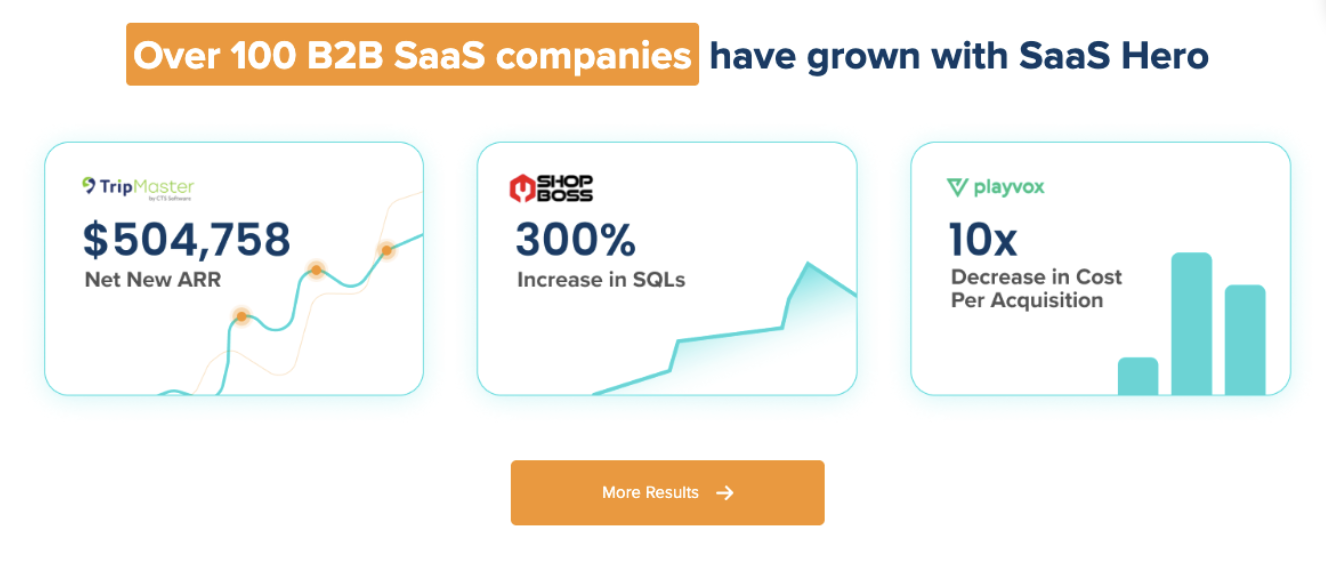
SaaSHero’s approach directly addresses the pain points discussed here. Long EdTech sales cycles require CRM-connected attribution that survives a board meeting, and SaaSHero builds that foundation. Multi-stakeholder buying committees require persona-specific creative and landing pages, and SaaSHero owns both. Fragmented attribution requires a single source of truth tied to pipeline, and SaaSHero delivers it in Looker Studio dashboards connected to your CRM instead of a monthly PDF of platform metrics.

For more on EdTech-specific growth strategy, see our related guides on EdTech Marketing Challenges: 9 Solutions for 2026, EdTech Marketing Strategies: The 2026 Playbook, and EdTech Paid Advertising Strategies That Drive Real ROI.
Talk with SaaSHero about building an EdTech growth engine that delivers qualified pipeline.