





Written by: Aaron Rovner, Founder, Saas Hero
Key Takeaways
- EdTech companies in 2026 need 80-day CAC payback periods to stay efficient as acquisition costs rise and dark funnels expand.
- Traditional agencies deliver speed but create lock-ins and misaligned fees, while in-house teams provide control with $180k+ costs and hiring delays.
- Hybrid models like SaaSHero achieve 650% ROI through B2B SaaS expertise, flat-fee pricing, and immediate execution.
- Core metrics include LTV, Net New ARR, and revenue attribution across Google, LinkedIn, and AI-driven channels.
- Optimize your EdTech growth by requesting a free marketing audit to evaluate whether a hybrid model fits your stage and budget.
Executive Summary: Choosing Your EdTech Growth Engine
Traditional agencies deliver immediate expertise but sacrifice control, while in-house teams offer alignment at the cost of speed. SaaSHero’s hybrid model resolves this trade-off by combining agency-level execution with in-house accountability, achieving 650% ROI through B2B SaaS specialization. The fundamental trade-offs break down across expertise, cost structures, and speed-to-results.
Expertise favors agencies and specialized hybrids. Cost structures favor lean hybrids, since in-house teams can exceed $180,000 annually compared with SaaSHero’s entry point. Speed-to-results favors hybrids that start execution immediately instead of waiting through hiring cycles.
The following comparison shows how each model performs across these dimensions.
| Model | Pros | Cons | Annual Cost | ROI Potential |
|---|---|---|---|---|
| Traditional Agency | Immediate expertise, proven systems | Lock-in contracts, percentage fees | $120k-$300k | Variable |
| In-House Team | Full control, long-term alignment | Slow hiring, expertise gaps | $180k+ | Delayed |
| SaaSHero Hybrid | B2B SaaS specialization, flat fees | Month-to-month requires performance | Starting at $15k | 650% |
Key metrics for evaluation include Customer Acquisition Cost (CAC), Lifetime Value (LTV), Net New Annual Recurring Revenue (ARR), and payback periods. Decision frameworks should reflect stage-specific needs, budget constraints, and required growth velocity.
How EdTech Buyer Journeys Shape Your Marketing Model
EdTech marketing spans complex buyer journeys across Google and LinkedIn ads, G2 review platforms, and dark funnel touchpoints where attribution becomes difficult. The 2025–2026 shift favors revenue tracking over vanity metrics, which requires stronger measurement systems and cleaner data.
In-house generalists often lack domain-specific knowledge of EdTech sales cycles, B2B2C complexity, and seasonal demand patterns. Agencies usually bring this expertise, yet traditional percentage-fee models encourage budget inflation instead of efficiency. SaaSHero resolves both problems through B2B SaaS-only focus, senior-led execution, and platform-agnostic strategies such as competitor conquesting and negative keyword refinement for qualified traffic.

The platform mix demands skill across Google Ads for high-intent search, LinkedIn for decision-maker targeting, and emerging channels like AI-powered review aggregation. Effective programs connect these channels to CRM tracking, attribution modeling, and pipeline reporting so every dollar of ad spend ties back to closed-won revenue.
Key Strategic Decisions and Trade-offs for EdTech Teams
Traditional EdTech Agencies: Speed with Contract and Fee Friction
Agencies provide immediate access to specialized expertise and proven campaign frameworks. Performance marketing agencies serving EdTech companies often charge several thousand dollars per month for strategy and management, separate from media spend. This structure delivers faster ramp-up and established testing processes.
However, many traditional agencies impose 6–12 month contracts and percentage-of-spend billing that reward higher budgets, not better efficiency. Reddit discussions frequently describe agency “ghosting” and burnout from account managers handling 30 or more clients at once, which erodes quality and responsiveness.
In-House Teams: Control with Higher Cost and Slower Ramp
In-house teams provide complete control over strategy and execution, with deep institutional knowledge and long-term alignment. Teams develop proprietary expertise tailored to the company’s specific value proposition and customer base.
The cost structure creates real constraints. A full-time performance marketing director’s annual cost includes salary, benefits, and infrastructure. In-house teams typically face 3–6 months of hiring and onboarding delays before meaningful output. These delays reduce speed during critical growth phases.
The next table compares core cost components across in-house, agency, and SaaSHero models so you can see how these trade-offs play out financially.
| Cost Component | In-House Annual | Agency Annual | SaaSHero Annual |
|---|---|---|---|
| Base Management | $150,000+ | $120,000+ | $15,000 |
| Benefits & Overhead | Varies | $0 | $0 |
| Tools & Training | $50,000–$100,000+ annually (tools alone $50,000–$100,000) | Included | Included |
| Total Annual Cost | $250,000+ | $120,000+ | $15,000+ |
SaaSHero aligns incentives through flat monthly retainers and flexible agreements, which removes pressure to inflate budgets. Explore how flat-fee pricing eliminates budget inflation risk in your growth plan.

Current Approaches and How EdTech Marketing Is Evolving
Stage-based adoption patterns reveal clear preferences across company maturity levels.
- Bootstrap Stage: DIY efforts often break down because EdTech attribution is complex and sales cycles are long.
- Series A: Traditional agencies provide initial scale but create dependency on percentage-fee models.
- Post-Funding Growth: Hybrid models support rapid scaling without hiring delays or rigid contracts.
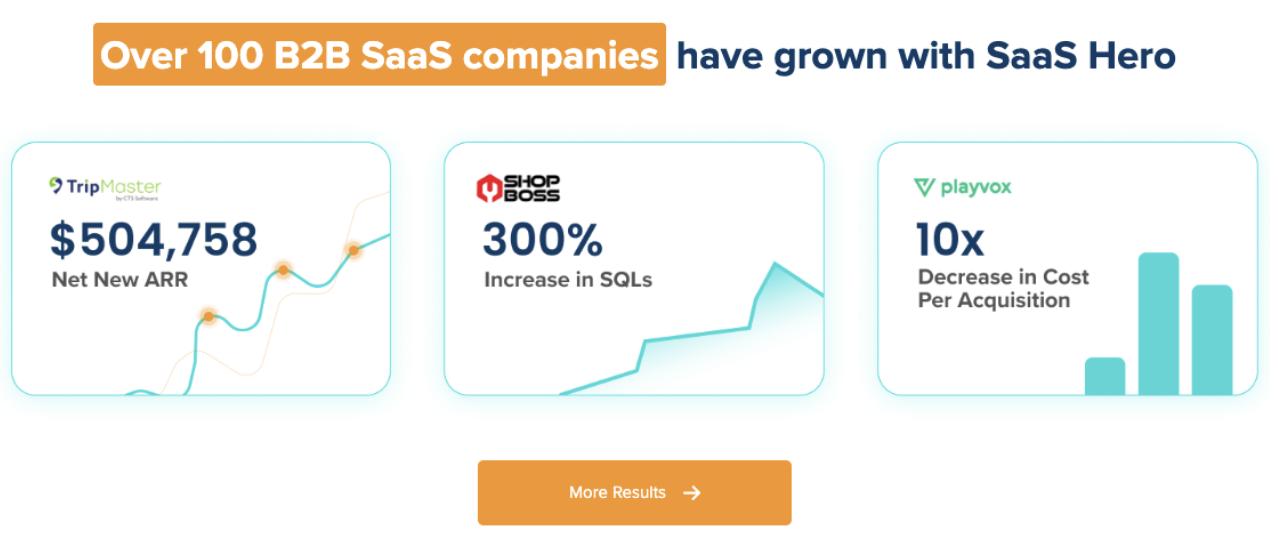
By 2026, teams increasingly rely on AI-assisted conversion rate testing and revenue-focused reporting. SaaSHero supports this shift through competitor page strategies and ARR attribution methodologies, demonstrated in case studies such as generating $504,758 Net New ARR for TripMaster, a transit software company.

Modern practices include Slack integration for real-time collaboration, CRM-connected attribution tracking, and landing page optimization tailored to EdTech buyer personas. Platform-agnostic strategies then allow teams to shift spend across Google, LinkedIn, and AI-powered discovery channels based on revenue impact instead of surface-level metrics.

Readiness, Maturity, and Recommended Implementation Paths
Maturity level strongly influences which model fits best, as shown in the table below.
| Maturity Level | Recommended Model | Key Metrics | Expected Outcome |
|---|---|---|---|
| Low (Pre-Series A) | Hybrid/Agency | Lead volume, basic CAC | Foundation building |
| Medium (Series A/B) | SaaSHero Hybrid | Pipeline value, payback period | Scalable growth |
| High (Series B+) | In-house + Agency | Net New ARR, LTV optimization | Market leadership |
Implementation typically starts with a CAC audit, then moves into competitor conquest page development, followed by Slack integration for seamless collaboration. SaaSHero manages onboarding with attribution setup, campaign architecture, and reporting dashboard configuration so teams can act on revenue data quickly.
Common Pitfalls and How to Diagnose Your Situation
In-house teams often struggle with expertise gaps in B2B SaaS attribution, competitor analysis, and platform execution. These gaps encourage over-reliance on vanity metrics such as impressions and click-through rates that lack clear pipeline correlation.
Agency pitfalls usually stem from percentage-fee structures and weak EdTech specialization. This specialization gap leads generic agencies to apply e-commerce tactics that favor volume and speed to complex B2B sales cycles that require nurturing and qualification, which produces high lead counts but poor revenue conversion.
Use the following diagnostic questions to evaluate your current setup.
- Is your CAC payback period exceeding 80 days?
- Do you have CRM tracking that connects ad clicks to closed revenue?
- Can your team execute competitor conquesting campaigns?
- Are you optimizing for pipeline value or only lead volume?
SaaSHero addresses these issues through flat-fee transparency, B2B SaaS specialization, and revenue-focused optimization strategies.
Illustrative Scenarios and EdTech Team Archetypes
Overwhelmed Founder ($500k ARR): The CEO manages Google Ads on weekends while building product. SaaSHero’s Dedicated Campaign Manager at a low monthly rate provides immediate relief without hiring delays or long contracts, which frees time for product and sales.
Frustrated CMO ($5M ARR): The VP of Marketing receives vanity metric reports while the CEO demands pipeline accountability. Moving to SaaSHero’s Full Marketing Team at $4,500/month delivers HubSpot integration, revenue attribution, and boardroom-ready reporting that defends marketing budgets.
Post-Funding Scaler ($10M+ ARR): A Series A startup must deploy $30,000 per month efficiently. SaaSHero’s competitor conquest strategies and instant team activation deliver results like the TripMaster case mentioned earlier, providing investor-grade metrics without internal hiring cycles.
FAQ
What are the typical costs for EdTech agency vs in-house marketing teams?
In-house marketing directors cost a substantial amount annually when you include benefits and overhead. Traditional EdTech agencies charge several thousand dollars monthly for retainers plus percentage fees in some cases. SaaSHero’s flat retainer model ranges from $1,250–$7,000 monthly depending on spend levels and channel count, which keeps costs predictable and avoids percentage-based inflation.
Which approach is best for EdTech startups?
Early-stage EdTech companies usually gain most from hybrid models that provide immediate expertise without the multi-month recruitment timeline mentioned earlier. Pure in-house approaches move slower, while agencies deploy faster but may misalign incentives. SaaSHero combines agency speed with in-house-style alignment through flexible agreements and integration via Slack and shared reporting dashboards.
How does SaaSHero differ from traditional EdTech marketing agencies?
SaaSHero focuses exclusively on B2B SaaS and uses flat monthly retainers instead of percentage-of-spend pricing. This structure removes the incentive to push higher budgets regardless of efficiency. The flexible engagement model requires ongoing performance, while many traditional agencies rely on 6–12 month contracts.
What ROI can EdTech companies expect from different marketing approaches?
SaaSHero case studies show 80-day payback periods for B2B SaaS clients, which supports the level of return highlighted earlier. In-house teams often see delayed ROI because of hiring and learning curves, while traditional agencies vary widely based on specialization and incentive alignment. Revenue-focused optimization consistently outperforms vanity metric improvement.
How quickly can different models scale marketing efforts?
Agencies and hybrids scale immediately with pre-built teams and established processes. In-house scaling faces the same hiring delays discussed above, plus additional onboarding time. SaaSHero activates quickly with senior-led execution, competitor conquest campaigns, and integrated attribution tracking within roughly 30 days of engagement.
Conclusion and Practical Next Steps for EdTech Leaders
The EdTech agency versus in-house decision depends on company stage, budget, and required growth speed. SaaSHero hybrid models often deliver stronger ROI through B2B SaaS specialization, aligned incentives, and revenue-focused execution. Flat-fee pricing reduces budget inflation risk, while flexible agreements maintain continuous performance accountability.
Immediate next steps include a CAC audit, an attribution system review, and a competitive landscape analysis. Get a free assessment of your current marketing setup to determine whether SaaSHero’s methodology fits your growth stage and budget.