




Key Takeaways
- Most SaaS landing page heuristic analyses take 4-8 hours with one evaluator, and full websites take 1-2 days with three evaluators.
- Three evaluators typically uncover 75-85% of usability issues, which matches Nielsen Norman Group’s recommended balance of depth and efficiency.
- The process usually breaks into preparation (10%), independent evaluation (60%), and reporting (30%), with AI tools cutting time by about 30%.
- SaaSHero’s 3-evaluator methodology delivers full CRO audits in under one day and includes a prioritized roadmap for conversion gains.
- Many clients see 20% or higher conversion lifts without A/B testing delays, so schedule a discovery call with SaaSHero to confirm your specific timeline.
Heuristic Evaluation Timelines for SaaS Teams
Heuristic evaluation timelines depend mainly on project scope, evaluator count, interface complexity, and team experience. This framework adapts Nielsen’s usability principles specifically for SaaS conversion performance.
- Small landing page: 4-8 hours (1-3 evaluators)
- Mid-size website: 1-2 days (3 evaluators recommended)
- Large SaaS application: 3-7 days (5+ evaluators)
- Enterprise platform: 1-2 weeks (specialized team)
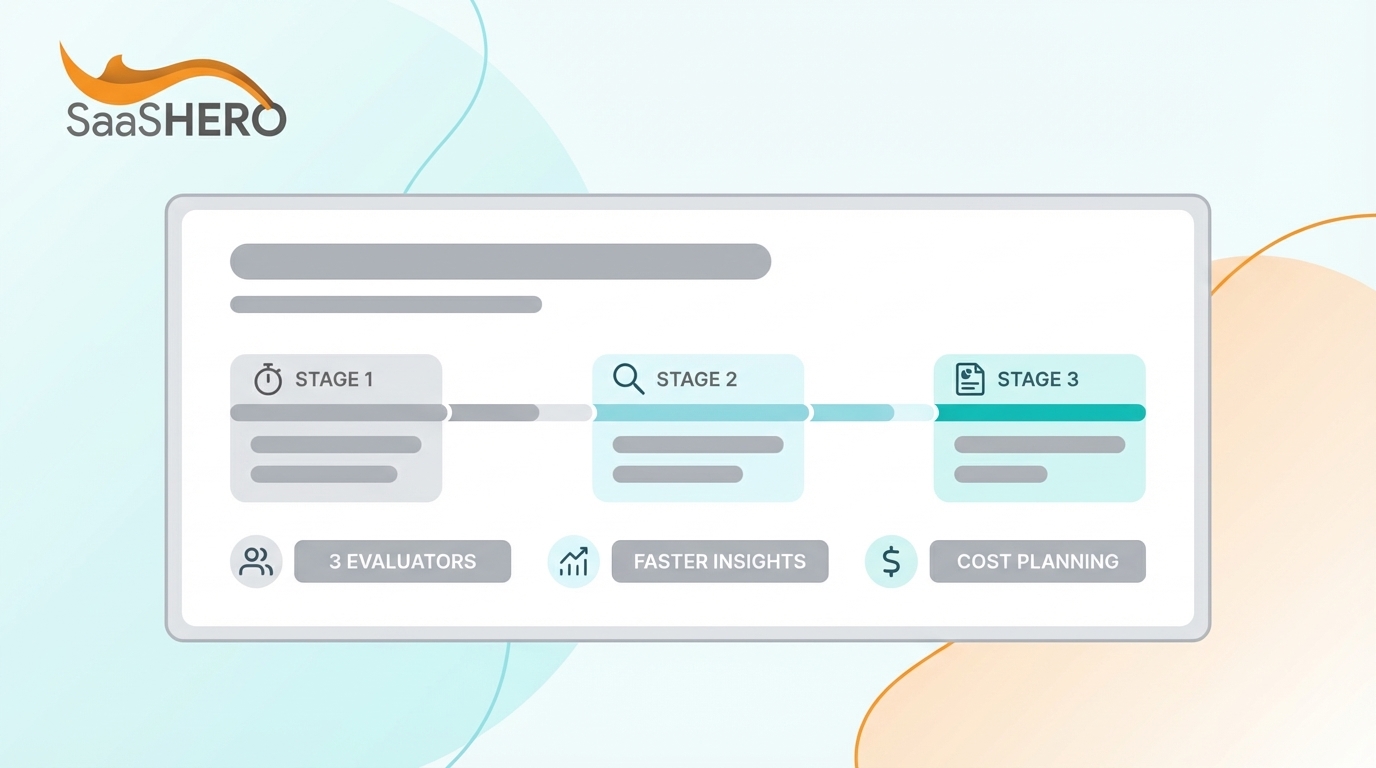
The evaluation process usually allocates 10% of time to preparation, 60% to independent evaluation, and 30% to synthesis and reporting. SaaSHero applies a 3-evaluator Heuristic Analysis model for most SaaS projects.

| Project Size | Time Range | Evaluators | SaaS Example |
|---|---|---|---|
| Landing Page | 4-8 hours | 1-3 | PetDesk signup flow |
| Website | 1-2 days | 3 | Shop Boss product pages |
| Application | 1 week | 5+ | innQuest dashboard |
Six Factors That Shape Your Heuristic Timeline
1. Project Scope: Landing pages take 2-4 times less effort than full applications because they have focused flows and fewer interface elements. A single conversion-focused page often finishes in 4-8 hours, while complex SaaS dashboards with several user roles can stretch to 1-2 weeks.
2. Number of Evaluators: Three to five evaluators identify 75-85% of usability issues, while solo reviews miss about 30% of critical problems. SaaSHero’s 3-evaluator model balances coverage, speed, and cost.
3. Interface Complexity: Enterprise SaaS platforms with multiple roles, deep navigation, and intricate workflows usually add 2-3 days compared with simple lead generation sites.
4. AI Tool Integration: Advanced AI tools like Baymard’s UX-Ray reached about 95% accuracy in heuristic evaluations as of February 2026. Experienced teams using Figma plugins and automated analysis often cut manual review time by roughly 30%.
5. Team Experience: Senior UX professionals typically work twice as fast as junior analysts because they recognize patterns and use mature frameworks. SaaSHero’s focus on SaaS products speeds up discovery of conversion opportunities.
6. Reporting Requirements: Simple issue lists take 2-4 hours, while full roadmaps with priorities and implementation notes can require 6-8 hours. SaaSHero uses standardized templates to deliver actionable roadmaps in about 2 hours.
| Approach | Time (Landing) | Time (App) | Accuracy |
|---|---|---|---|
| DIY Solo | 1-2 days | 2 weeks | 65-70% |
| Agency Team | <1 day | 3-7 days | 85-90% |
| AI-Assisted | 2-4 hours | 1-2 days | 75-95% |
Three Stages of a SaaS Heuristic Evaluation
Stage 1: Preparation and Setup for SaaS Flows
Preparation sets the scope, defines user flows, and locks in evaluation criteria. Professional UX teams anchor evaluations to specific personas and high-impact conversion flows to protect ROI.
For landing pages, preparation usually takes 1-2 hours and covers stakeholder input and task definition. SaaSHero trims this to about 30 minutes with SaaS-specific frameworks and persona templates.

Stage 2: Independent Evaluation of the Experience
The core evaluation stage reviews the interface against clear heuristic principles. Industry guidance favors a two-pass method, with one pass for the journey and a second pass for a detailed checklist.
Each evaluator usually spends 3-5 hours on a landing page, checking relevance, clarity, trust, and friction. SaaSHero’s parallel 3-evaluator workflow often surfaces 20 or more critical issues while still finishing most projects the same day.
Stage 3: Synthesis and Reporting for Stakeholders
The final stage merges findings, removes duplicates, and ranks recommendations by business impact. Well-structured teams can complete an entire heuristic evaluation in a single afternoon when the process runs smoothly.
Comprehensive reporting usually takes 2-4 hours for landing pages and 4-8 hours for complex applications. SaaSHero delivers prioritized roadmaps in under 2 hours by using proven templates and severity scoring.
| Stage | Hours (Small) | Hours (Large) | SaaSHero Efficiency |
|---|---|---|---|
| Preparation | 1-2 | 2-4 | 30 minutes |
| Evaluation | 3-5/person | 5-8/person | 3 evaluators parallel |
| Reporting | 2-4 | 4-8 | 2 hours prioritized |
SaaSHero’s 3-Evaluator Method in Practice
SaaSHero has tailored heuristic evaluation for B2B SaaS with a 3-evaluator method that balances speed and depth. The team focuses on seven core principles: relevance, clarity, trust, friction, urgency, social proof, and mobile responsiveness.
Client results show how this works in real environments. The innQuest hospitality platform received a complete CRO audit that uncovered major relevance and navigation gaps. PetDesk’s landing page review helped drive a 305% conversion rate lift. TripMaster’s full-site audit supported $504,758 in net new ARR within 12 months.

SaaSHero’s month-to-month retainer starts at $1,250 per month for ad spend up to $10,000 and includes CRO services. This structure avoids long contracts and supports continuous improvement based on live performance data.
| Monthly Spend | Retainer (1 Channel) | Includes CRO |
|---|---|---|
| Up to $10k | $1,250/month | Yes |
| $10k-$25k | $1,750/month | Yes |
| $25k-$50k | $2,250/month | Yes |
Why Heuristics Move Faster Than A/B Tests
Heuristic evaluations surface actionable ideas in hours or days, while A/B tests often need weeks or months for significance. SaaS teams that need quick wins get clear direction for high-impact changes without waiting for traffic or long test windows.
Evaluator Best Practices and Cost Planning
The most efficient range for SaaS heuristic analysis is three to five evaluators, which reveals 75-85% of usability issues. Solo reviews miss about 30% of critical problems, and teams larger than five usually add cost without matching gains.
Costs vary by approach. DIY reviews only consume internal time but often take three times longer and still miss key issues. Professional agencies usually charge $1,000-$5,000 for full evaluations, while AI-assisted tools lower cost but can trade some accuracy for speed. SaaSHero’s setup fee ranges from $1,000 to $2,000 and covers the initial audit and strategy.
For budgeting, plan 6-8 hours for a landing page using a proven method and 1-2 weeks for complex applications. Many teams recover this investment within 30-60 days through conversion gains. Book a discovery call to get a tailored timeline and cost for your product.

Common Planning Pitfalls and Real-World Scenarios
Teams most often underestimate reporting time, which can quietly double the total project when they need detailed recommendations. Solo evaluations also create risk because they miss about 30% of critical issues, which undermines conversion goals.
Common scenarios include founders who need fast landing page improvements, where SaaSHero often delivers within one day. VPs of Marketing frequently request full application audits to reduce CAC, which usually complete within a week and include prioritized roadmaps.
Enterprise teams also face scope creep, where evaluations expand beyond the original plan. Clear boundaries and phased workstreams keep timelines on track while still covering the highest-impact areas.
Next Steps for Faster SaaS Conversion Wins
Heuristic analysis timelines usually range from 4-8 hours for SaaS landing pages to 1-2 weeks for complex applications. Three-evaluator teams offer a strong balance of speed and thorough coverage.
The investment produces immediate, practical insights for conversion gains without the long waits that come with traditional testing. For the fastest path to results with SaaS specialists, book a discovery call with SaaSHero and turn heuristic findings into measurable ARR growth in 2026.
Frequently Asked Questions
How long does a typical heuristic evaluation take for SaaS companies?
Most SaaS heuristic evaluations finish in 1-2 days for standard projects. Landing pages usually take 4-8 hours with a single evaluator, while full website reviews need 1-2 days with a three-person team. Complex SaaS applications can extend to about one week, depending on user flows and interface depth. This timing includes preparation, independent evaluation, and reporting.
What makes SaaS heuristic evaluations different from general website audits?
SaaS heuristic evaluations focus on conversion patterns that matter to software sales cycles, such as trial signup flows, pricing clarity, comparison tables, and onboarding. Evaluators also consider SaaS metrics like Monthly Recurring Revenue, Customer Acquisition Cost, and churn, which shape the recommendations. Generic website audits often overlook these revenue drivers.
How many evaluators should be involved in a heuristic evaluation?
The most effective range is three to five evaluators. This group size usually uncovers 75-85% of usability issues while keeping costs manageable. Solo reviews miss about 30% of critical problems because of bias and limited perspective, and larger groups face coordination overhead without matching gains in issue discovery.
What are the costs associated with professional heuristic evaluations?
Professional heuristic evaluations typically cost between $1,000 and $5,000, depending on scope and agency expertise. SaaSHero includes heuristic analysis inside its CRO retainers, which start at $1,250 per month for ad spend up to $10,000, plus a $1,000-$2,000 setup fee. This model supports ongoing optimization instead of a single audit. DIY reviews only cost internal time but often take three times longer and miss important conversion opportunities.
Are heuristic evaluations faster than A/B testing for identifying optimization opportunities?
Heuristic evaluations usually run much faster than A/B testing for spotting optimization ideas. Teams receive actionable insights in hours or days, while A/B tests often need weeks or months to reach statistical significance. SaaS companies that need rapid improvements gain clear direction for high-impact changes without waiting for traffic or long test durations.