




Key Takeaways
- Choose pricing models that align agency incentives with your pipeline and net new ARR, not with how much you spend on ads.
- Favor agencies that report on SQLs, pipeline, ARR, and unit economics instead of vanity metrics like clicks and impressions.
- Work with B2B SaaS specialists that integrate tightly with your CRM and RevOps model and avoid long, inflexible contracts.
- Expect senior-led execution, shared experimentation roadmaps, and clear contribution to revenue, not just activity.
- SaaSHero focuses on predictable, revenue-centered growth for B2B SaaS companies. Book a discovery call to evaluate your current approach and growth opportunities.

1. Choose Pricing Models That Protect Your Pipeline
A percentage-of-spend pricing model ties agency revenue directly to your ad budget. That structure encourages higher spend, even when efficiency and CAC are moving in the wrong direction.
This model often produces:
- Pressure to increase budgets without proof of incremental pipeline
- Campaigns bloated with low-intent keywords and audiences
- Focus on activity instead of net new ARR and payback periods
Look for flat monthly retainers, ideally in clear spend bands. That approach:
- Aligns recommendations with performance data, not agency revenue
- Makes incremental budget increases easier to justify with CAC and LTV
- Creates a more predictable cost structure for finance and RevOps
Insist on regular reporting that ties media spend to CAC, LTV, payback period, pipeline value, and net new ARR instead of surface-level engagement metrics.
2. Replace Vanity Metrics With Revenue Metrics
Enterprise SaaS marketing succeeds when it owns pipeline and ARR impact. An agency that celebrates impressions, clicks, or raw MQL counts without clear links to SQLs and opportunities distracts from real performance.
Warning signs include:
- Dashboards that stop at traffic, CTR, or CPC
- No view of SQLs, opportunity creation, or closed-won deals by channel
- Inability to explain how campaigns affect win rate or sales cycle length
Effective partners anchor their reports in metrics that revenue leaders use, such as:
- SQLs and opportunity value by campaign and channel
- Pipeline velocity and win rate by source
- Direct ARR influence and CAC payback by channel
Ask every agency to show how it tracks a prospect from first touch to closed-won, using your CRM as the source of truth. Book a discovery call if you need help auditing your current reporting.
3. Use Flexible Contracts That Keep Agencies Accountable
Long, inflexible contracts shift risk to your team. A 6-to-12-month lock-in before you see results reduces your ability to respond to poor performance or market changes.
Rigid agreements often:
- Lower urgency to deliver impact in the first 60 to 90 days
- Limit your ability to reallocate budget to better-performing channels or partners
- Delay necessary strategic changes when markets or goals shift
Favor agencies that work on month-to-month or short initial terms. This structure:
- Forces regular performance reviews and clear expectations
- Aligns the agency’s revenue with your ongoing satisfaction
- Supports faster pivots when campaigns or markets change
Ask for retention data, and pay attention to client stories that highlight performance and flexibility rather than reliance on contracts.
4. Work With Agencies That Specialize In B2B SaaS
B2B SaaS buying cycles differ from e-commerce or local services. Enterprise deals span months, involve multiple stakeholders, and rely on demos, pilots, and expansion revenue.
Generalist agencies often:
- Misdirect spend toward low-intent traffic that never reaches a demo
- Ignore key SaaS metrics such as churn, MRR, and expansion ARR
- Miss the nuance between demo requests, free trials, and POCs
Specialist B2B SaaS agencies usually:
- Understand long sales cycles and complex deal structures
- Align messaging with specific funnel and opportunity stages
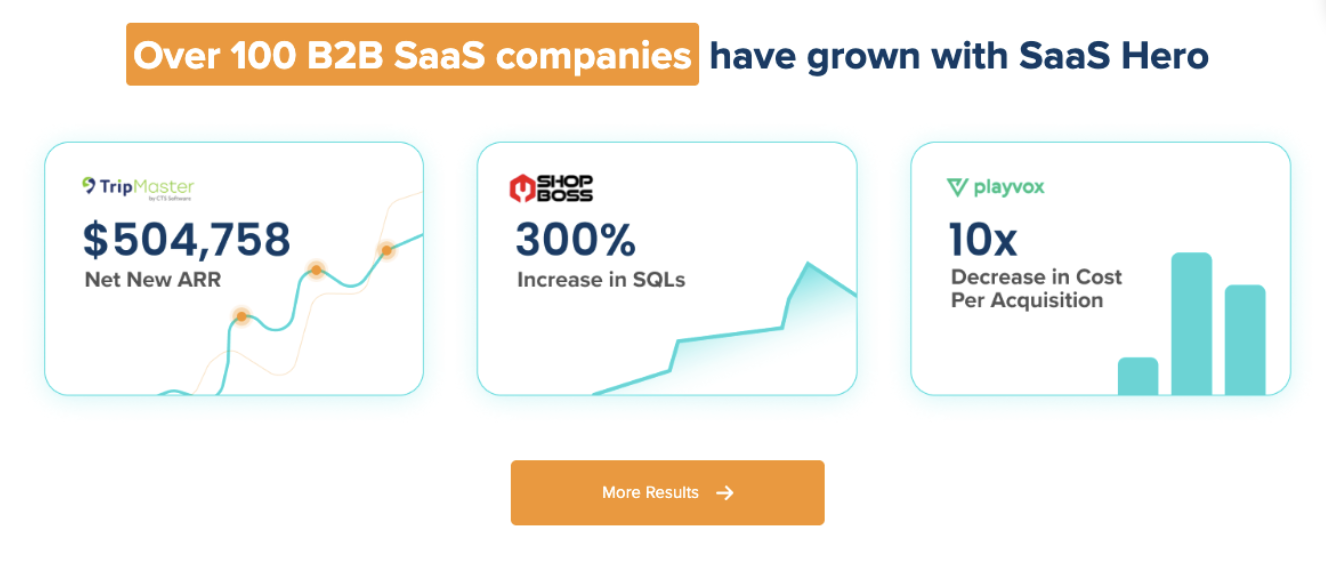
- Show case studies that quantify ARR and unit economics impact
During discovery calls, listen for familiarity with your segment, whether HR tech, fintech, or security. Strong partners speak comfortably about CAC, LTV, sales cycle, and buyer committees in your market.
5. Ensure Senior Experts Lead Your Account
Many agencies sell with senior leaders, then shift delivery to junior generalists. That gap between strategy and execution hurts performance on complex enterprise accounts.
This model often results in:
- Slow responses and reactive campaign changes
- Limited understanding of your product, ICP, and sales process
- Inconsistent quality in creative, targeting, and testing
Seek a senior-led structure where experienced strategists stay close to the work. Strong setups include:
- Clear limits on client-to-manager ratios
- Direct access to senior talent through shared channels such as Slack
- Regular strategy reviews that involve the same people who run your campaigns
Ask who will own strategy, who will execute, and how you will communicate day to day. Favor agencies that behave like an embedded team rather than a distant vendor.
6. Require CRM Integration And Real Attribution
Revenue-focused SaaS teams rely on unified data across marketing, sales, and customer success. Agencies that ignore your CRM and lean only on ad platform data view performance through a narrow lens.
Weak attribution practices typically:
- Depend on last-click reporting in analytics tools
- Overvalue lower-funnel clicks and undervalue demand creation
- Disconnect campaign spend from actual revenue and retention
Effective agencies integrate with tools such as HubSpot or Salesforce and use them as the primary source for performance measurement. Strong attribution models:
- Connect ad interactions to SQLs, opportunities, and closed-won deals
- Report pipeline created and ARR influenced per channel
- Use visual reporting tools such as Looker Studio to show the full funnel
Request sample reports that highlight multi-touch attribution, stage progression, and CAC by source to confirm that their approach matches your RevOps needs.
7. Expect Co-Ownership And A Clear Experimentation Roadmap
Revenue-focused SaaS teams rely on continuous testing. Agencies that resist shared planning or structured experimentation limit your ability to improve conversion rates and LTV to CAC ratios.
Detached vendors often:
- Propose static annual plans with minimal iteration
- Avoid transparent discussion of trade-offs between channels and offers
- Run ad tests without linking them to pipeline or ARR goals
Look for partners that co-own an experimentation roadmap with you. Effective co-ownership includes:
- Documented test backlogs with hypotheses, timelines, and success metrics
- Regular review meetings that cover results and next tests
- Active work on CRO and landing page performance, not just media buying
Ask to see real examples of A/B tests that improved demo-to-opportunity rates, pipeline, or ARR. Book a discovery call to see how a shared roadmap can support your growth targets.

Frequently Asked Questions
What is the difference between an MQL and an SQL, and why does my enterprise marketing agency need to understand this?
An MQL is a lead that meets marketing’s threshold for interest or fit. An SQL is a lead that sales has accepted as qualified and worth active pursuit. Agencies that understand this distinction can optimize campaigns for high-intent leads that convert into pipeline and ARR, not just content downloads.
How can I ensure an enterprise digital marketing agency aligns with our B2B SaaS unit economics like CAC and LTV?
Your team can insist that every campaign report connects to CAC, LTV, and payback period. Ask agencies to show how they measure pipeline value, win rates, and net new ARR, and how they change strategy when CAC or payback trends move outside your targets.
What should I expect from an enterprise digital marketing agency for SaaS in terms of technology integration and data privacy in 2026?
Your agency should integrate cleanly with your CRM, CDP, and marketing automation tools. Expect clear data-sharing practices, support for privacy-compliant tracking, and attribution models that work in a cookieless environment without sacrificing accuracy.
How do modern enterprise digital marketing agencies differ from traditional agencies in pricing and accountability?
Modern SaaS-focused agencies tend to use flat retainers and shorter terms rather than percentage-of-spend models and long lock-ins. Their scorecard centers on SQLs, pipeline creation, and ARR influence, which increases accountability and aligns incentives with your revenue outcomes.
What role should an enterprise digital marketing agency play in our overall RevOps strategy?
An effective agency works as an extension of your RevOps team. It participates in revenue meetings, understands your full customer lifecycle, and reports in the same language your leadership uses, such as pipeline stages, velocity, and expansion revenue.
Conclusion: Choose A Revenue-Centric Enterprise Digital Marketing Partner
Enterprise SaaS teams operate in a high-pressure environment where every dollar must support efficient, predictable growth. Avoiding misaligned pricing, vanity metrics, long lock-ins, generalist execution, weak attribution, and shallow experimentation protects both your budget and your pipeline.
A suitable agency integrates with your CRM and RevOps model, works on flexible terms, brings B2B SaaS expertise, and shares clear responsibility for pipeline and ARR. Turn your digital marketing into a predictable revenue engine with a partner that lives in your numbers, not just your ad accounts. Book a discovery call with SaaSHero today to assess whether your current strategy and partners match your growth goals.