




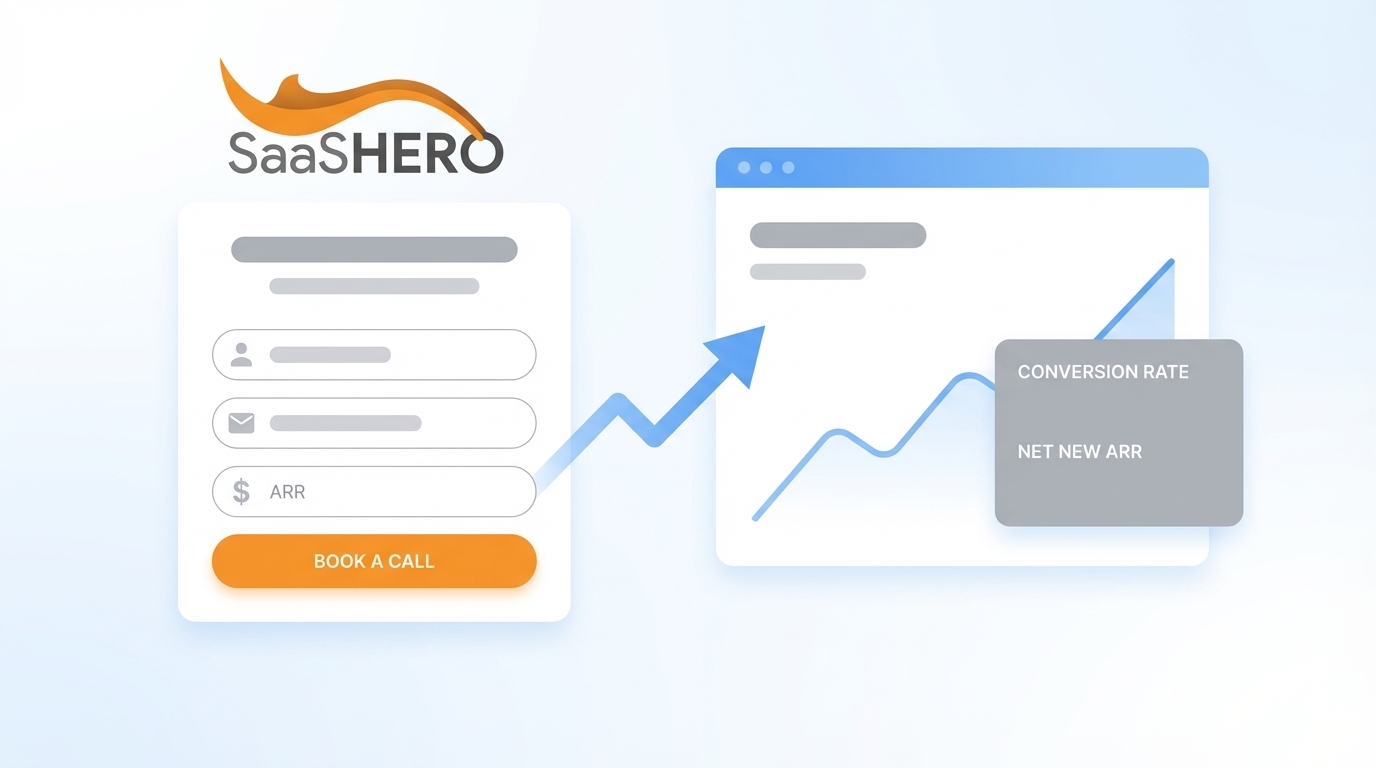
Key Takeaways for Higher-Converting Onboarding
- Instant Calendly redirects after sign-up capture peak intent, delivering up to 9x more meetings by cutting friction and time-to-call.
- Short, 3-field forms with AI-driven prioritization reduce abandonment while preserving lead quality through progressive profiling.
- SaaS-focused qualification questions around ARR, growth rate, and churn tolerance surface high-value prospects for faster, larger deals.
- Trust signals like G2 badges and quantified case studies above the fold build credibility fast with risk-averse B2B buyers.
- Apply these SaaSHero-tested tactics for 20-40% lifts and schedule a discovery call with SaaSHero to audit your onboarding funnel.

1. Capture Peak Intent with Instant Calendly Redirects
The moment a prospect submits your form is the highest-intent point in the journey. Redirecting them straight to a scheduling page uses that momentum before attention drops. This approach matches SaaSHero’s focus on removing friction and capturing high-intent moments, as seen in campaigns like TripMaster, which achieved a 650% ROI through improved lead flows.
Prospects who just shared their details are mentally ready for the next step. Showing calendar options immediately removes the burden of remembering to book later. This simple change keeps motivation high and reduces drop-off between form completion and first call.
Set your form’s post-submit action to redirect to “/schedule” instead of a generic thank-you page. Embed Calendly or your scheduling tool there and add context such as “Based on your responses, here are available times to discuss your specific needs.” This framing connects their effort to a clear next step.
Track three core metrics: immediate scheduling rate (aim for 15-25%), no-show reduction (often 40% lower when booked instantly), and time-to-first-meeting (compress from 5-7 days to 24-48 hours).
2. Use 3-Field Forms with Smart AI Prioritization
Short forms convert more visitors into leads. The Friction Score equation shows scores above 15 correlate with abandonment rates over 50%. Every extra field increases the chance a prospect bails.
SaaSHero typically limits the first touch to three fields: name, email, and company. Deeper qualification then happens through progressive profiling in nurture emails or on the scheduling page. This keeps the initial step fast while still collecting what sales need over time.
AI-powered form tools in 2026 can adjust fields based on traffic source and behavior. High-intent visitors from comparison pages might see a budget field, while cold traffic only sees basic contact fields. This tailoring keeps conversion rates high while still gathering key qualification data.
Use conditional logic so extra questions appear only after core details are entered. Add smart defaults and auto-complete to speed things up. Aim for a sub-30-second completion time to protect conversion rates.
3. Qualify with SaaS Metrics like ARR and Churn Tolerance
Generic BANT frameworks miss what matters most in SaaS. An effective qualification focuses on current ARR, growth targets, acceptable churn, and how well a prospect’s stack can integrate with your approach.
SaaSHero’s qualification framework includes questions such as “What’s your current ARR range?” and “What’s your target growth rate for the next 12 months?” These questions segment prospects by deal size and urgency while signaling deep SaaS expertise. AI-driven lead qualification for SaaS boosts trial-to-paid conversions by 30% when configured around these metrics.
Strong qualifications also uncover decision authority, marketing budget, current agency relationships, and pain points with existing lead gen. Questions about CAC targets and LTV expectations highlight sophisticated buyers who are ready for premium, strategic support.
Build branching logic in your CRM so high-value prospects (ARR above $1M and growth targets above 50%) route to senior team members. Smaller accounts can move into automated nurture until they reach your ideal thresholds.
4. Front-Load Trust Signals Above the Fold
B2B SaaS buyers want proof you can deliver before they commit time. Trust signals must appear within the first few seconds of page load to influence whether they keep engaging or bounce.
Place G2 High Performer badges, recognizable SaaS client logos, and quantified outcomes such as “Added $504K ARR for TripMaster” above the fold. Position these elements near your main call-to-action so visitors see proof and next step together.

Short case study snippets outperform vague testimonials. Replace “Great results!” with “Reduced CAC by 40% while scaling from $2M to $5M ARR.” Specific numbers show you understand SaaS economics and set realistic expectations.
Use a clear social proof hierarchy. Lead with awards and certifications, follow with logos grouped by company size, then highlight specific metric wins. This structure builds confidence as prospects scroll.
5. Warm Up High-Value Prospects with Personalized Loom Videos
Short, personalized Loom videos help your agency stand out in crowded inboxes. Custom videos for high-value prospects that speak to their company, industry, and growth stage can lift both reply rates and meeting attendance. This approach fits SaaSHero’s high-touch, transparent style supported by tools like Slack.
Keep each video between 60 and 90 seconds. Mention the prospect’s company by name, reference their site or recent news, and outline two or three specific ways you can impact their growth. This shows real research instead of generic outreach.
Automation can trigger video tasks based on form responses or CRM fields. High-ARR prospects can receive a tailored Loom within 24 hours of first contact. The extra effort often pays off through higher conversion rates and faster deal cycles.
Monitor play rate, completion rate, and reply rate. Videos with completion above 70% usually convert to meetings at roughly three times the rate of email-only follow-up.
6. Create Real Urgency with Capacity-Based CTAs
Real scarcity nudges prospects to act. SaaSHero limits new client onboarding to protect service quality, which naturally creates urgency around open spots. This capacity constraint becomes a clear, honest conversion lever.
Use specific urgency messages such as “Currently accepting 3 new clients for Q1 2026” or “Next available onboarding slot: March 15th.” These statements add decision pressure and position your agency as selective and in demand.
Keep urgency authentic. Experienced B2B buyers recognize fake scarcity and lose trust quickly. Anchor your messaging in real constraints like team bandwidth, implementation timelines, or seasonal demand.
Scale your lead gen results with SaaSHero’s flat-fee model, with limited slots available for Q2 2026.
7. Nurture Not-Yet-Ready Leads with HubSpot Sequences
Many prospects need time before they sign a retainer. A 14-day onboarding email sequence increased activation from 45% to 68% for project management SaaS companies. Structured nurture keeps your agency top-of-mind while you educate buyers.
SaaSHero’s sequences share SaaS-specific insights such as CAC benchmarks, relevant case studies, and tactical growth guides. Each email stands alone as useful content while reinforcing your authority.
Behavior-based triggers make these sequences more effective. Visitors who check pricing receive cost and ROI content. Those who download case studies receive similar success stories. This relevance raises engagement and shortens sales cycles.
Use a simple cadence: instant welcome, then value emails around days 3, 7, and 14 with soft CTAs. Focus on education first and selling second to build trust that converts into long-term retainers.
8. Run Heuristic CRO Audits with the SaaSHero Framework
Conversion gains start with a structured review of your onboarding experience. SaaSHero’s heuristic framework scores pages across seven principles: relevance, clarity, trust, friction, urgency, social proof, and mobile experience.
Three evaluators independently score each area and flag issues that appear across reviews. This process surfaces obvious problems quickly, without waiting for A/B test data.
Frequent findings include weak value propositions, hidden contact options, missing trust elements, and poor mobile layouts. Minor UX improvements can reduce abandonment by 20% and significantly lift trial conversions.
Prioritize fixes in this order: remove critical usability blockers, test clearer messaging, then refine mobile-specific experiences. This sequence compounds improvements across the entire onboarding funnel.
9. Protect Conversion Rates with Negative Keyword Hygiene
Better traffic quality raises onboarding conversion rates and lowers acquisition costs. Strong negative keyword lists block unqualified clicks so your budget goes to real buyers. SaaSHero’s Playvox campaign cut cost per lead by 10x with this approach.
Common SaaS negatives include “free,” “cheap,” “DIY,” and competitor names without intent modifiers. These filters reduce low-intent and navigational searches that rarely convert into serious leads.
Layer geographic and demographic negatives as well. B2B SaaS agencies should exclude consumer terms, very small business phrases, and regions they do not serve. This focus attracts prospects who match your ideal client profile.
Run regular negative keyword audits. Review search term reports, flag irrelevant queries, and add them as negatives. Continuous cleanup keeps traffic quality and conversion performance trending upward.
10. Tie Onboarding Performance to Net New ARR in Your CRM
Onboarding decisions should follow revenue, not vanity metrics. SaaSHero tracks Net New ARR, pipeline value, and LTV so teams optimize for business impact instead of raw lead counts.
Connect your CRM to every major touchpoint. Pass UTM parameters, GCLID, and lead source data from first click through closed-won. This connection reveals which campaigns and pages actually drive revenue.
Use attribution models that reflect real SaaS journeys. First-touch attribution helps with awareness decisions, last-touch supports conversion analysis, and time-decay models show nurture impact across the funnel.
With revenue tracking in place, you can see which channels bring the highest LTV, which onboarding flows close fastest, and which qualification patterns predict long-term success.
Migrate to SaaSHero’s month-to-month model and start tracking revenue-focused metrics that matter.
7-Step Checklist to Upgrade Your Onboarding Funnel
Apply these steps in sequence to capture quick wins and build long-term gains:
- Step 1: Audit current form friction using the Friction Score equation and aim for a score below 10.
- Step 2: Add instant Calendly redirects to every lead capture form.
- Step 3: Add SaaS-specific qualification questions around ARR, growth targets, and churn tolerance.
- Step 4: Place trust signals above the fold, including G2 badges, client logos, and specific results.
- Step 5: Build personalized video sequences for high-value prospects.
- Step 6: Launch automated nurture sequences with behavioral triggers.
- Step 7: Integrate CRM tracking for Net New ARR attribution.
SaaSHero’s TestGorilla campaign helped achieve an 80-day payback period and supported a $70M Series A round through this type of revenue-focused optimization.
FAQs
What is a strong onboarding conversion benchmark for lead gen agencies?
Industry data shows 30-60% lead-to-call conversion rates, with top agencies closing retainers at 20% or higher. SaaSHero regularly outperforms these benchmarks through SaaS specialization and systematic optimization. The crucial step is tracking the full journey from first touch to signed retainer, not just isolated stages.
How can agencies qualify SaaS leads quickly during onboarding?
Use SaaSHero’s BANT-plus framework. Cover Budget, Authority, Need, and Timeline, then add SaaS-specific factors like ARR, growth targets, and churn tolerance. Spread these questions across forms, scheduling pages, and discovery calls so prospects are not overwhelmed at the first step.
What causes most onboarding drop-offs?
Common issues include high-friction forms, no clear next step, weak trust signals, and generic follow-up. Prospects drop when they see unnecessary fields, vague value propositions, or slow responses. The first week matters most, since many leads go cold within 5-7 days if momentum stalls.
Which 2026 AI tools improve agency onboarding conversions?
AI chatbots with behavioral triggers, predictive lead scoring, and automated personalization often deliver conversion lifts above 30%. Calendar booking bots, dynamic forms, and AI-powered nurture sequences reduce friction while keeping outreach relevant at scale. The goal is to use AI to enhance human interactions, not replace them.
How does SaaSHero’s model differ from traditional agencies?
SaaSHero uses flat-fee pricing instead of percentage-of-spend, which removes misaligned incentives. Month-to-month contracts lower client risk and keep performance front and center. Senior specialists handle execution instead of junior teams. Most importantly, SaaSHero optimizes for Net New ARR instead of vanity metrics, aligning success with real business outcomes.
Conclusion: Start with the Big Three and Grow from There
Begin with instant calendar redirects, 3-field forms, and SaaS-specific qualification. These three changes create fast conversion lifts and set the stage for deeper optimization.
SaaSHero has generated more than $500K in Net New ARR for clients like TripMaster through this structured approach. Their flat-fee, month-to-month model removes long-term risk and keeps incentives aligned with your growth.
