




Key Takeaways for B2B SaaS Teams
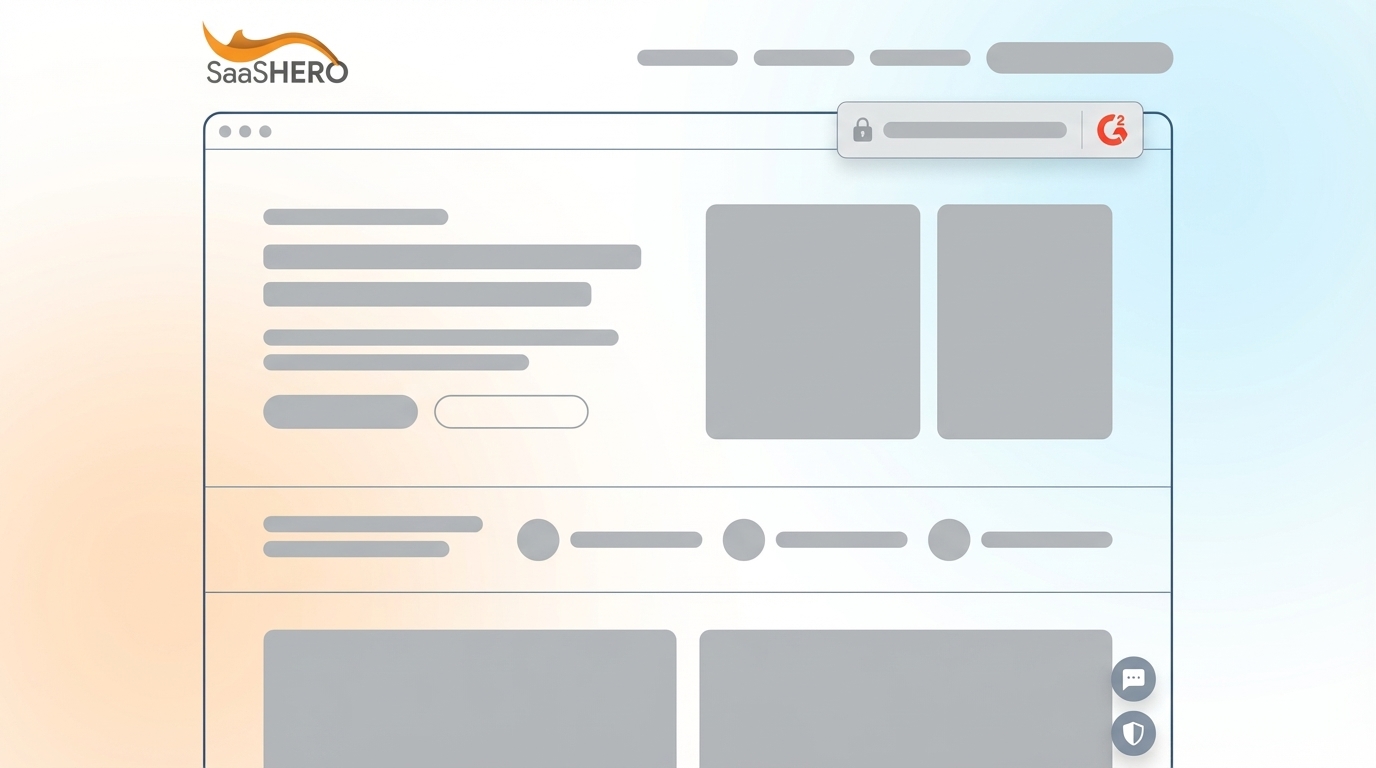
- Trust signals like security badges, G2 ratings, and client logos can lift B2B SaaS landing page conversions by 20-40% by easing buyer skepticism in the first few seconds.
- Stack exactly three trust elements above the fold, one security badge, one rating, and one recognizable logo, to create fast credibility without clutter.
- Customer proof with specific ROI metrics, such as “45% lead increase,” beats generic praise and gives buyers concrete evidence of value.
- Risk-reversal offers like 30-day free trials, money-back guarantees, and implementation promises lower friction and show confidence in your product.
- Partner with SaaSHero for a landing page audit that uncovers conversion gains of 20% or more for your B2B SaaS audience.
10 Landing Page Design Trust Signals for B2B SaaS in 2026 (with Templates & Examples)
1. Security and Compliance Badges That Calm Risk Concerns
Security badges like SOC 2 Type II, GDPR compliance, and SSL certificates address a core enterprise concern: “Can I trust this company with our data?” Compliance badges placed near CTAs lift conversions by 10-20% because they answer security objections before prospects raise them.
Place these badges directly below or beside your primary CTA button. For banking or financial SaaS products, highlight FDIC insurance mentions in the hero section. Use secondary certifications like ISO 27001 in the footer or a dedicated security section where buyers can dig deeper.
2. Third-Party Review Platform Ratings That Prove You Deliver
G2, Capterra, and TrustRadius badges carry more weight than self-proclaimed achievements because they show independent validation. Statements like “Voted #1 by G2” outperform “We’re the best tool on the market” because buyers naturally question vendor claims.
Show specific ratings such as “⭐ 4.8/5 on G2” instead of vague badges. Add review volume when it is impressive, for example “4.7/5 from 6,000+ reviews,” to signal both scale and consistency.
3. Customer Testimonials with Measurable Outcomes
Short, generic testimonials like “Great product!” rarely build real trust. Testimonials that include concrete performance data such as “We increased qualified leads by 45% in Q2” perform far better because they show clear value.
Include the customer’s full name, job title, company, and ideally a photo. Use video testimonials when possible, since they are harder to fake and create a stronger emotional connection with prospects.
4. Recognizable Client Logo Walls That Transfer Credibility
Named client logos like Toast, Ahrefs, and Strapi outperform generic counts like “45+ companies” because well-known brands transfer instant credibility. Prospects quickly think, “If it works for Slack, it will probably work for us.”
Place logo walls above the fold or directly below the hero section. Use clear, high-quality logos and consider grouping them by industry or company size so visitors can quickly spot relevant peers.

5. “As Seen In” Media Mentions That Signal Authority
Media coverage from outlets like TechCrunch, Forbes, or niche industry publications builds authority and third-party validation. These mentions show that your company is established enough to earn editorial attention.
Display publication logos with short copy such as “As featured in” or “As seen in.” Link to the original articles when you can so prospects can verify the coverage and explore more detail.
Book a SaaS landing page audit to pinpoint which trust signals will create the biggest conversion lift for your specific audience.
6. Free Trial and Money-Back Guarantees That Remove Risk
Risk-reversal offers like “30-day free trial” or “money-back guarantee” reduce the perceived cost of trying your solution. Seventy-four percent of trial users say the free trial was the single most influential resource in their purchase decision, which makes this offer a powerful trust signal.
Make guarantee terms clear and easy to find. Phrases like “No credit card required” or “Cancel anytime” lower friction further and show that you stand behind your product.
7. Live Chat and Instant Support Options That Show Real People
Visible support options such as live chat widgets, phone numbers, or “Talk to an expert” buttons show that real humans support your product. This matters for complex B2B purchases where buyers expect consultative help.
Include response time expectations like “Average response: 2 minutes” to set clear expectations. Consider showing online status or team photos to humanize your support experience.
8. Implementation and Onboarding Guarantees That Ease Change
Promises like “Live in 30 days or your money back” address a common B2B fear, long and failed implementations. Implementation guarantees scored 25 points in MaxDiff analysis of B2B trust signals, ranking as the third most important trust factor for operations teams.
Spell out timelines and define what “success” means in practical terms. Mention migration support or data import assistance to reduce switching anxiety even further.
9. Data Privacy and Security Statements Near Forms
Clear privacy and data handling statements are now basic requirements for enterprise buyers. Short lines like “Your data stays private” or “We never sell your information” give fast reassurance without forcing visitors to read legal pages.
Place privacy statements close to any form that requests personal information. Link to your full privacy policy for transparency while keeping the main reassurance short and easy to scan.
10. Embedded Case Studies with ARR Impact
Case studies that show specific revenue impact, such as “Generated $504k in Net New ARR,” provide some of the strongest proof of value. These work especially well for prospects in the consideration stage who need clear ROI evidence.
Highlight metrics that matter to your audience, including ARR growth, cost savings, efficiency gains, or adoption rates. Use real company names when allowed, or describe industry and size when confidentiality limits detail.

Above-the-Fold Trust Stack and the 3-Second Rule
Users spend around 57% of their total page-viewing time above the fold, so your trust signal choices in this area carry extra weight. SaaSHero’s heuristic analysis framework recommends stacking exactly three trust elements in your hero section, one security badge, one recognizable logo, and one strong testimonial or rating.

This “3-second trust stack” gives visitors instant confidence without overwhelming them. To verify that your trust elements work together, run a simple 5-second test. Ask whether a new visitor can understand who you serve, what you do, and why you are credible within five seconds. The extra couple of seconds account for processing your value proposition along with the trust elements.
The table below shows how to structure these three elements for clear placement and impact expectations.
| Trust Stack Element | Placement | Expected Impact |
|---|---|---|
| Security Badge (SOC 2) | Near CTA button | 10-20% conversion lift |
| G2 Rating (4.8/5) | Below headline | 15-25% trust increase |
| Client Logo (recognizable) | Hero section | 20-30% credibility boost |
Landing Page Trust Signal Mistakes to Avoid and 2026 Heuristic Checklist
Several common mistakes weaken trust signals, including cramming too many elements on a page, relying on vague or outdated testimonials, and hiding key proof points below the fold on mobile.
The most damaging mistake is misaligned message matching. If your ad promises “enterprise security” but your landing page leads with “easy setup,” you break trust before you build it. Make sure your trust elements directly reinforce your primary value proposition.
Use the heuristic checklist below to audit your current trust signals across four key dimensions and identify fast, high-impact fixes.
| Heuristic Principle | Audit Question | Quick Fix | Impact |
|---|---|---|---|
| Relevance | Do trust signals match our audience? | Replace generic logos with industry peers | 15-20% relevance boost |
| Clarity | Are benefits immediately obvious? | Add results-driven testimonials | 10-15% comprehension lift |
| Trust | Are claims externally validated? | Add G2 badges or case studies | 20-25% credibility increase |
| Friction | Do guarantees reduce risk? | Add money-back guarantee | 10-30% conversion improvement |
Landing Page Design Trust Signals FAQ
What are the best trust signals for B2B SaaS landing pages?
The most effective trust signals for B2B SaaS include G2 or Capterra ratings, recognizable client logos, security compliance badges such as SOC 2 and GDPR, customer proof with specific ROI metrics, and implementation guarantees. Together these elements address core B2B concerns, product effectiveness, peer validation, data security, measurable results, and implementation risk.
How do I implement trust signals in the first 3 seconds of page load?
Focus on your above-the-fold trust stack. Place one security badge near your primary CTA, show your strongest G2 rating below your headline, and feature one or two recognizable client logos in the hero section. Limit this area to three elements so visitors gain instant confidence without feeling overwhelmed.
Where can I find landing page trust signal templates?
Useful trust signal templates include testimonial blocks with name, title, company, and measurable outcomes, client logo carousels grouped by industry, security badge clusters near CTAs, and case study snippets that highlight specific ROI metrics. Customize each template with your real customer data and third-party validation to keep it credible.
How do I measure trust signal impact on ARR and conversions?
Track visitor-to-lead conversion rates before and after adding trust signals, and monitor time on page plus bounce rate as engagement indicators. Run A/B tests on different trust signal combinations, then measure downstream metrics such as demo-to-close rates. Most B2B SaaS companies see the conversion improvements mentioned earlier when trust signals are thoughtfully placed and clearly presented.
Should trust signals be different for enterprise vs SMB audiences?
Enterprise buyers usually prioritize security compliance badges, implementation guarantees, and case studies from similarly sized companies. SMB buyers tend to respond more to ease-of-use testimonials, quick setup promises, and clear proof of cost savings. Match your trust signal mix to the primary concerns and buying criteria of your target segment.
Get SaaSHero’s complete landing page trust signal audit and optimization roadmap to apply these tactics to your specific B2B SaaS funnel.
Conclusion
Trust signals often separate a 1.4% conversion rate from the 10-15% rates that top B2B SaaS landing pages achieve. By rolling out these 10 proven trust elements, from security badges to results-focused testimonials, you can cut buyer skepticism and move more visitors into qualified pipeline.
The companies that see the strongest gains review their current trust signals, find the gaps that matter most to their audience, and test focused improvements. In 2026’s capital-efficient environment, every additional conversion supports more sustainable growth.
Partner with SaaSHero to build a complete trust signal strategy that drives measurable conversion lifts and durable ARR growth for your B2B SaaS business.