




Written by: Aaron Rovner, Founder, Saas Hero | Last updated: September 2, 2026
Key Takeaways
- Competitor conquesting works as a full-funnel revenue strategy that targets prospects already evaluating alternatives, so B2B agencies move directly to differentiation.
- Effective programs follow a five-step framework: choose competitors with provable advantages, segment keywords by pricing/problem/evaluation intent, build dedicated landing pages, layer Google Ads with LinkedIn, and connect every click to closed-won revenue through CRM data.
- Ethical execution helps prospects evaluate their current agency with honest comparisons, social proof from switchers, and transparent messaging that builds trust.
- Measurement tracks qualified pipeline, SQLs, and closed-won ARR, and programs run for at least 60–90 days in isolated campaigns with independent budgets.
Why Competitor Conquesting Matters for B2B Agencies
Winning clients from competitors is often more capital-efficient than creating new demand from scratch in a saturated agency market. Prospects searching for competitor alternatives show high intent. They have a problem, they know they need a solution, and they are actively evaluating options. Your agency skips the education phase and moves straight into differentiation.
A 2026 B2B SaaS conquesting analysis by GrowthSpree, cited by Two Spouts, found that competitor keywords convert to SQL at roughly 10–20% versus 5–15% for generic search, with cost per SQL running 20–40% lower despite higher click costs. High-intent Google search ads can achieve click-through rates above 6%, so well-structured competitor keyword campaigns become efficient demand-capture investments.
The main challenge is execution. Many agencies treat conquesting as a narrow PPC move, bidding on competitor names without a landing page strategy, intent segmentation, or revenue measurement. As Malay Gupta, Founder of Growleads, puts it: “Competitor bidding isn’t a strategy. It’s a tactic. And tactics without strategy burn budget.” A stronger approach uses a full-funnel program measured against closed-won revenue instead of clicks.
The 5-Step Strategic Framework for Competitor Conquesting
Step 1: Select Your Conquest Targets
Build a competitor conquesting matrix before spending a dollar. The best target is often the company whose customers face a known problem that your product solves better, and you can prove that difference on the landing page, not simply the largest agency in your space. This proof standard keeps campaigns grounded in reality.

Structure your matrix with three columns for each competitor:
- Competitor name — the specific agency or vendor you are targeting
- Target keywords — the intent-segmented terms you will bid on (covered in Step 2)
- Your provable advantage — the specific, falsifiable claim you can make on the landing page, such as pricing model, onboarding speed, reporting depth, or CRM integration
TNT Growth recommends picking three to five competitors with a provable advantage and building a comparison matrix that verifies every claim before launch. Skip any competitor where your sales team cannot clearly articulate why you win. If they cannot explain it, the landing page will not explain it either.
Step 2: Segment Competitor Keywords by Intent
Bidding on a competitor’s brand name alone delivers the weakest version of conquesting. Stronger programs segment keywords by the buyer’s actual question. Three intent segments deserve their own campaigns.
- Pricing intent — examples include “[Competitor] pricing” and “[Competitor] cost.” These searchers feel cost pressure and compare options. Lead with your pricing model and total cost of ownership.
- Problem intent — examples include “[Competitor] too expensive” and “[Competitor] poor reporting.” These searchers feel active dissatisfaction. Lead with the specific pain point and your solution.
- Review and evaluation intent — examples include “[Competitor] reviews” and “[Competitor] alternatives.” These searchers sit in evaluation mode. Lead with honest comparison content and social proof from switchers.
Growleads reports that in B2B, a good conversion rate for competitor campaigns is 1–3% for direct competitor brand searches and 5–8% for comparison keywords, with below 1% indicating the landing page needs work. The higher range for comparison terms reflects the buyer’s more explicitly evaluative intent, which explains why these terms consistently outperform bare brand terms.
Two Spouts advises using phrase and exact match types to keep queries tightly scoped, because broad match on a competitor name can expand into loosely related terms that dilute intent. Build your negative keyword list before launch and refine it weekly for the first month. Navigational traffic such as “[Competitor] login” and “[Competitor] support” can consume 40–60% of a conquesting campaign’s budget if not excluded.
Step 3: Create Dedicated Landing Pages
Sending conquesting traffic to a generic homepage almost always fails. Each intent segment needs a dedicated landing page that speaks directly to the prospect’s pain point and positions your agency as the answer to that specific problem.

The page structure that converts comparison-intent traffic follows a clear pattern.
- Headline — factual and message-matched to the visitor’s comparison intent, not a broad category claim. A format like “[You] vs [Competitor]: the complete comparison” with no winner announced works because the visitor wants a comparison, not an ad.
- Honest summary — a three-sentence statement of who the competitor suits better and who your service suits better. This early concession creates powerful credibility.
- Comparison table — 8–12 buyer-relevant criteria using verifiable data. A table contestable on one row gets contested on all of them, so every claim must be sourced from public pricing or documentation.
- Social proof from switchers — testimonials from customers who migrated from the competitor act as the strongest proof type on a comparison page. A named-customer claim outperforms a generic logo strip by nearly 3x in conversion lift.
- Migration section — content covering switching logistics, data import, duration, and support reduces friction because inertia often acts as the real competitor.
- Stage-matched CTA — a demo or account review offer that fits evaluation intent, instead of a generic “contact us” prompt.
TNT Growth reports that in one program, dedicated competitor landing pages reduced cost per lead by 30%. The page should answer the buyer’s real question: “Should I choose them, or is there a better fit?”
Step 4: Deploy Multi-Channel Campaigns
Google Ads captures competitor-intent demand that already exists. LinkedIn creates conditions that surface that demand. The most effective conquesting programs layer both channels rather than running them in isolation.
Two Spouts recommends sequencing the channels in time: run LinkedIn first and continuously with thought-leadership and problem-framing creative to build familiarity, then have Google ready with higher bids and account-relevant copy when warmed accounts search. Warmed accounts search more often, click at higher rates, and convert at lower cost than cold accounts.
For ABM integration, Abmatic AI’s 2026 account-based advertising guide recommends starting with a target account list of 100–300 accounts, uploading that list to LinkedIn as Account Matched Audiences, and coordinating creative variations and sales timing. Personalized ads that reference the current stack, such as “Easier than [Competitor],” typically outperform generic alternatives.
Align messaging across paid search and paid social. A prospect who sees LinkedIn content about agency reporting failures, then searches “[Competitor] reporting,” should land on a page that speaks directly to that pain point, not a generic homepage.
Step 5: Measure Success from Clicks to Revenue
Measurement from click to revenue determines whether conquesting truly works. Track clicks and CTR, but also pipeline and closed-won revenue. Preserving the Google Click ID (GCLID) through the landing page and form connects competitor traffic through CRM stages such as qualified lead, opportunity, customer, revenue, contract value, and sales-cycle length, so cheap leads do not get mistaken for good leads.
Connect click IDs directly to CRM data in HubSpot or Salesforce to track closed-won ARR instead of vanity clicks. SaaSHero optimizes against CRM data such as qualified pipeline, lifecycle stage, and closed revenue rather than form fills. This approach ensures accurate ROI measurement across every conquesting campaign.
Two Spouts warns that judging each channel on last-click ROAS creates the biggest mistake, since neither platform passes clean cross-channel attribution, and advises measuring the system as a whole at the account level rather than the click level. Multi-touch attribution fits long B2B sales cycles better than last-click, and CRM-connected data supports this model.
Competitor Conquesting vs. Brand Bidding: Key Metrics
The table below summarizes typical cost and conversion differences between bidding on your own brand and conquesting competitors. Brand searchers behave like navigational users, while conquesting searchers behave like evaluators who compare options.
| Metric | Brand Bidding (Own Terms) | Competitor Conquesting |
|---|---|---|
| Typical CPC | $1–$3 | $10–$25 |
| Typical conversion rate | 8–15% | 1–3% on brand terms, 5–8% on comparison terms |
Overcoming Objections and Ethical Considerations
Agencies usually raise two objections about conquesting: they worry it fails against entrenched competitors, and they question its ethics. Both concerns can be addressed with the right approach.
The ethical approach frames conquesting as helping prospects evaluate their current agency, rather than disparaging competitors. Your ads and landing pages should help the prospect decide whether their current agency still meets their needs. Ethical competitor bidding highlights your unique features instead of attacking a rival, and avoids copying a competitor’s visual identity or making unsupported claims. This approach builds trust and positions you as the agency that will remain transparent after they switch.
The “conquest without looking like conquest” principle keeps messaging educational and value-driven. The most persuadable competitor customers are often not the loudest complainers; the real opportunity lies in quieter misalignment where the incumbent fits the customer’s current reality less well than it used to. Messaging that helps prospects recognize that misalignment converts better than messaging that attacks the competitor directly.
Legal considerations follow clear rules. Bidding on a competitor’s trademark as a keyword is generally lawful in most countries, as confirmed by the US Second Circuit ruling in 1-800 Contacts v. Warby Parker (October 2024, Case No. 22-1055), which held that purchasing a trademark as a keyword without using it in ad copy does not constitute trademark infringement. Google’s trademark policy, updated in July 2023, shifted to a complaint-based system: bidding on a competitor’s brand name as a keyword is allowed, but using the competitor name in ad headlines, descriptions, or display URLs is not allowed without authorization. Keep competitor names out of ad copy and focus on your own value proposition.
Executing a conquesting program that meets these ethical and legal standards requires a team that can own the full chain from ad to revenue.
How SaaSHero Supports Competitor Conquesting Programs
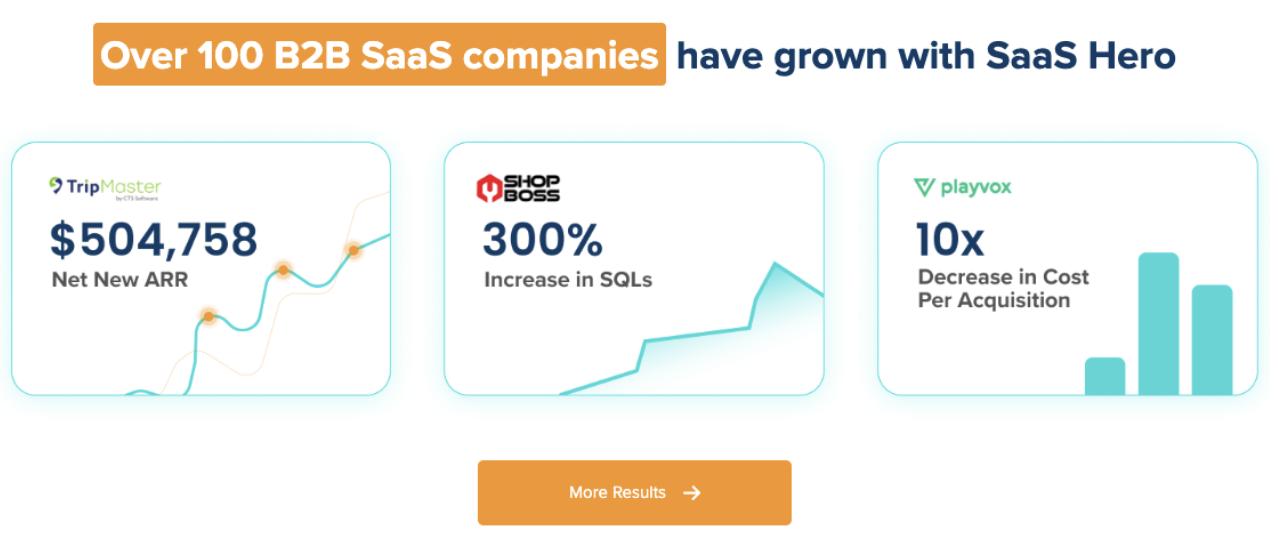
SaaSHero acts as the outsourced growth team for B2B companies, with one team owning strategy and execution across paid media, creative, landing pages, and reporting. The team optimizes everything against CRM revenue data rather than form-fill counts. With over $60M in lifetime ad spend managed and more than 100 B2B companies served, SaaSHero brings the pattern recognition and execution depth that competitor conquesting demands.

SaaSHero’s team functions as a fully integrated growth unit. The firm owns the entire chain from impression to CRM record, including campaign structure, ad copy, landing page design and build, conversion tracking, and revenue reporting. Agencies avoid coordinating multiple vendors or managing gaps between them. As a Google Premier Partner (top 3% of agencies) and G2 High Performer ranked #20 of approximately 6,000 agencies, SaaSHero combines verified credentials with a documented, repeatable methodology.
Agencies that want to implement competitor conquesting for their own growth or for their clients can rely on SaaSHero for both strategy and execution. The team builds programs that measure performance against closed-won revenue instead of clicks.
Book a discovery call to discuss how SaaSHero can build and execute your competitor conquesting program.
Frequently Asked Questions
Is competitor conquesting ethical for B2B marketing agencies?
Competitor conquesting stays ethical when you use a value-first philosophy. Ethical conquesting focuses on helping prospects evaluate whether their current agency still meets their needs, rather than attacking competitors by name or making claims that you cannot substantiate. The most effective approach presents your agency as a helpful resource for prospects experiencing misalignment with their incumbent.
This philosophy calls for transparent messaging that highlights your genuine strengths. It also calls for landing pages that honestly concede where the competitor may be a better fit, and ad copy that leads with your value proposition rather than disparaging the rival. Agencies that follow this approach build trust before the first conversation, which becomes a durable competitive advantage. Avoid copying a competitor’s visual identity, making unsupported superiority claims, or using competitor trademarks in ad copy without authorization.
How long does it take to see results from a competitor conquesting program?
Most programs require 60–90 days to gather meaningful data. Competitor CPCs run materially higher than generic terms, and conversion rates on direct competitor brand searches typically sit in the low single digits. The campaign needs enough time to accumulate data for judging cost per qualified lead and downstream revenue, instead of surface metrics like clicks.
B2B sales cycles commonly run six months or longer, so judging a conquesting campaign at 30 days produces misleading conclusions. The correct evaluation window starts after enough time for the sales cycle to mature, with at least 90 days for initial signal and a full sales cycle for revenue-level judgment. During the first 60 days, focus on search term hygiene, negative keyword refinement, and landing page headline testing. Budget allocation decisions should wait for CRM-level data rather than platform-reported conversion counts.
What budget should a B2B agency allocate to competitor conquesting?
Industry practice supports allocating 10–20% of total paid search budget to conquesting campaigns, treated as a discretionary layer that scales only when cost per SQL proves out. Competitor campaigns should sit in their own campaign with an independent budget cap, a dedicated bid target, and message control. Mixing them with brand or generic campaigns risks contaminating performance data through lower Quality Scores from competitor terms.
Because of this isolation, you need a budget large enough to gather meaningful data. A minimum of $3,000 per month works as a practical floor, since competitor CPCs often run 2–4x higher than generic terms and a smaller budget gets consumed before generating useful signal. Start with a capped budget and a defined cost-per-qualified-lead ceiling above which the campaign pauses. Expand only the competitors that produce acceptable downstream economics after a full evaluation window.
What is the difference between competitor conquesting and brand bidding?
Brand bidding targets your own brand terms to defend your SERP presence against competitors who may bid on your name. Conquesting targets competitor brand terms to intercept prospects who evaluate alternatives. The two motions serve different purposes and operate at different economics.
Brand bidding typically produces CPCs in the low single digits and conversion rates in the high single digits or low teens, because the searcher already knows and intends to find your brand. Competitor conquesting produces CPCs in the low to mid twenties and lower conversion rates on bare brand terms, with stronger performance on comparison and evaluation terms. Both motions belong in a comprehensive paid search strategy, but they require separate campaigns, separate budgets, separate landing pages, and separate measurement. Running brand defense before launching offensive conquesting sets the correct sequence, since a defended brand term stays far cheaper to hold than a competitor term is to win.
How do you connect competitor conquesting campaigns to CRM revenue data?
The connection runs through Google Click ID (GCLID) preservation and CRM integration. When a prospect clicks a conquesting ad, the landing page form must capture the GCLID and pass it into the CRM record in HubSpot or Salesforce. This step lets you associate the click with the lead, opportunity, and eventually closed-won revenue.
Conversion tracking needs correct configuration in Google Tag Manager, with the GCLID field mapped to a CRM property. From there, lifecycle stage events such as lead to MQL, MQL to SQL, SQL to opportunity, and opportunity to closed-won can flow back into Google Ads as offline conversion imports. This feedback loop teaches the bidding algorithm to optimize toward qualified outcomes rather than raw form fills. The reporting layer should surface pipeline created by competitor campaign, cost per SQL by competitor, and closed-won ARR attributed to conquesting, instead of impressions, clicks, or form-fill counts. Without this connection, conquesting campaigns optimize toward the wrong signal and get evaluated on the wrong metric.
Conclusion: Treat Conquesting as a Revenue Strategy
Competitor conquesting functions as a full-funnel revenue strategy rather than a narrow PPC tactic. Agencies that succeed treat it as a structured program: target selection built on provable advantages, intent segmentation across pricing, problem, and evaluation queries, dedicated landing pages that answer the buyer’s real question, multi-channel deployment that layers LinkedIn demand creation with Google demand capture, and revenue measurement connected to CRM data instead of form-fill counts.
The “conquest without looking like conquest” philosophy, which positions your agency as the helpful evaluator, builds trust before the first conversation and converts better than aggressive brand bidding. This approach also scales effectively. Ethical, value-based conquesting produces switchers who arrive already convinced, which shortens sales cycles and improves close rates.
Book a discovery call with SaaSHero today and build the conquesting program your agency deserves.