





Written by: Aaron Rovner, Founder, Saas Hero | Last updated: September 5, 2026
Key Takeaways
- Fleet technology demand generation must address a multi-stakeholder buying committee and long sales cycles that make last-click attribution misleading.
- Out-of-market awareness campaigns targeting the 95% of buyers not actively purchasing create a warm audience that converts more efficiently when triggers arrive.
- Regulatory events like ELD revocations, EV transition requirements, and AI adoption gaps create concentrated windows of elevated buyer intent that demand generation programs can use as timing signals.
- Channel selection should align to funnel stage: LinkedIn for demand creation, Google Ads for demand capture, and ABM platforms for account-level intent signals.
Executive Summary: How This FleetTech Demand Engine Works
The complete playbook covers six interconnected components that work as one system.
- ICP definition beyond firmographics, mapping the full buying committee and the triggers that move accounts into active evaluation
- Out-of-market awareness, reaching the roughly 95% of fleet buyers not actively purchasing at any given time
- In-market capture, converting the active 5% through intent-matched search and comparison content
- Industry trigger activation, using ELD revocations, EV transition requirements, and AI adoption gaps as demand signals
- Channel tactics aligned to funnel stage, with LinkedIn for demand creation, Google Ads for demand capture, and ABM platforms for account targeting
- Revenue-based measurement, where pipeline, CAC, and payback period replace MQL counts as the primary reporting currency
Several market statistics frame the scale of the opportunity.
- 84% of organizations with vehicle fleets use telematics, asset tracking, or integrated equipment management systems, yet only 28% report full digital implementation across their fleets, which defines a large upgrade and displacement opportunity.
- Only 7% of fleets have full AI integration, while 71% cite data integration as the greatest barrier to adoption.
- 52% of fleets use telematics across most or all vehicles, with GPS tracking and dispatch (70%), compliance and ELD functions (53%), and video-based safety systems (47%) as the primary use cases.
- The global fleet telematics market is projected to grow from $10.42 billion in 2025 to $21.95 billion by 2032 at an 11.2% CAGR.
Before diving into the playbook, align on what demand generation means in this fleet context.
What FleetTech B2B Demand Generation Really Means
FleetTech B2B demand generation is a full-funnel marketing strategy that builds long-term brand awareness among fleet operations directors, CFOs, and safety managers, captures active telematics or fleet management buyers, and accelerates sales pipelines through targeted, multi-channel engagement.
Demand generation differs from lead generation. Lead generation extracts contact information from people who already recognize a problem and actively look for a solution. Demand generation creates that awareness first. It builds the pipeline that lead generation later harvests. In fleet technology, where fleet decision-makers complete 57% of their evaluation before speaking to a supplier, most of the buying journey happens before any lead appears in your CRM.
The distinction between out-of-market and in-market demand anchors this entire playbook. Out-of-market demand describes the roughly 95% of fleet buyers who are not actively evaluating a purchase at any given moment. They feel the pain but have not named it or started a search. In-market demand describes the active 5% who are searching, comparing vendors, and requesting demos. A program that only addresses in-market buyers fights over a small, expensive pool of attention. A program that builds out-of-market awareness first creates a warm audience that becomes easier and cheaper to convert when a trigger hits.
The FleetTech Buying Committee: Going Deeper Than Firmographics
Fleet buying committees typically include 3 to 7 stakeholders such as fleet managers, procurement, finance, sustainability, and operations. Larger deals often expand to include a CFO and EHS leadership. LinkedIn research puts the typical buying committee at 6 to 10 individuals, with some enterprise deals reaching 20.
Each role evaluates fleet technology through a different lens.
- Fleet Manager / Operations Director, the primary champion, focuses on uptime, compliance, driver safety, and integration with existing systems and is often the primary decision-maker for daily operational tools.
- CFO / Finance, the economic buyer, evaluates total cost of ownership, CAC payback, and measurable ROI and increasingly influences purchasing decisions for platforms that demonstrate measurable TCO reduction.
- Safety Officer / EHS Lead, a compliance-focused stakeholder, drives demand for ELD-compliant solutions and driver behavior monitoring and pays close attention to regulatory risk.
- Sustainability Lead tracks emissions and EV readiness. 76% of fleet managers now cite sustainability as a sourcing criterion alongside TCO, so EV transition readiness has become a core evaluation factor.
- IT / Technical Evaluator assesses integration capability, API availability, and data security and can veto a deal on technical grounds alone.
Firmographic targeting such as company size, industry, and geography sets the outer boundary of your ICP. Triggers that move an account from out-of-market to in-market determine whether your message lands as timely or irrelevant. Fleet purchases are often triggered by fleet renewal cycles, regulatory changes, operational expansion, vehicle damage or failure, and strategic electrification programs. Messaging built around these triggers reaches buyers when they feel the most urgency.
Building Out-of-Market Awareness: Reaching the 95% Not Actively Buying
Most fleet technology buyers are not in an active evaluation at any given time, so your brand must reach them before a trigger fires and stay top of mind when it does. This compounding awareness advantage separates mature demand generation programs from reactive ones.
The channel mix for out-of-market awareness in fleet technology centers on three areas.
- LinkedIn advertising, the primary demand creation channel for reaching fleet managers, operations directors, safety officers, and CFOs by title and function. Run staged sequences that warm audiences over time instead of cold conversion campaigns.
- ABM platforms (6sense), where intent data highlights accounts showing early-stage research behavior before they surface in search, allowing budget concentration on accounts most likely to enter an active evaluation.
- Content marketing, including regulatory guides, EV transition frameworks, and AI adoption benchmarks that speak directly to the problems fleet buyers already manage.
The messaging framework for cold audiences works best when it starts with problems. Nobody on LinkedIn logs in to buy fleet management software. They manage driver safety incidents, prepare for a DOT audit, or try to understand what the latest ELD revocations mean for their compliance posture. Messaging that speaks to those operational realities earns attention. Messaging that leads with product features alone gets ignored.
A staged approach with awareness, then consideration, then conversion keeps campaigns efficient. 91% of fleet leaders plan to increase digital investment by 2030, so the pressure to build brand presence before buyers enter an active evaluation will keep rising.
Capturing In-Market Demand: Converting the Active 5%
Once out-of-market awareness has built a warm audience, the next task is capturing the active 5% who start searching. In fleet technology, this capture job sits primarily with paid search and SEO. When a fleet operations director searches “Samsara alternatives” or “ELD compliance software for mid-size fleets,” the companies that appear with relevant messaging and a purpose-built post-click experience win the evaluation shortlist.
The governing equation for paid search is simple: highly relevant traffic plus an excellent post-click experience equals success. Relevant traffic that lands on a generic homepage converts poorly and teaches the bidding algorithm nothing useful. Every campaign needs a dedicated landing page matched to the specific intent of the ad group feeding it.

Several in-market capture tactics work especially well in fleet technology.
- Comparison pages such as “Samsara vs. Geotab alternatives” or “best ELD software for trucking fleets” target buyers who have already named the category and now evaluate vendors.
- Pricing transparency supports independent research. Pages that address cost directly convert better than those that hide all pricing behind a demo request.
- Paid search structured by intent segments campaigns by intent level, including branded, competitor, category, and problem-aware. Monitor search terms reports continuously. Geotab holds 35% primary supplier share and Samsara 14% in the trucking segment, so competitor-intent keywords represent a high-value capture opportunity.
- Headline testing as the primary conversion lever focuses on the highest-impact variable on a landing page. A headline that names the buyer’s problem consistently outperforms a generic category claim.
Industry Triggers That Spike FleetTech Demand: ELD, EV, and AI
Not all in-market demand arrives at a steady pace. Fleet technology demand clusters around regulatory events, technology transitions, and compliance deadlines. Programs that align campaigns to these triggers reach buyers at the moment of highest urgency.
ELD compliance. The FMCSA has revoked 80 ELDs from its registered list since January 2025, which signals ongoing enforcement rather than a one-time mandate event. Carriers using a revoked device must replace it within 60 days or face out-of-service orders and civil penalties up to $19,246 per violation. The FMCSA’s proposed audit standards affect approximately 680,000 ELD users and introduce biennial third-party audits for all registered ELD providers. Carriers now must verify device registration status monthly, which creates recurring demand for platforms that automate this monitoring.
EV transition. EV-specific telematics features such as battery health monitoring, charging status, and energy consumption tracking are becoming standard requirements for new fleet procurement contracts by 2026–2027. Fleet electrification requires new competencies, including understanding battery degradation curves, managing charging infrastructure, and adapting maintenance programs for different powertrains. Platforms that address these requirements gain a messaging advantage with fleets actively planning EV transitions.
AI adoption gap. Only 7% of fleets have full AI integration, while 71% cite data integration as the greatest barrier, up from 38% in 2025. This gap creates a direct messaging opportunity for platforms that solve the data orchestration problem. Frame the value as “Finally, one platform that connects your telematics, ELD, and maintenance data without the integration headache.”
Channel Tactics by Funnel Stage: Where to Invest and Why
Channel selection in fleet technology demand generation should follow funnel stage, not personal preference. Each channel serves a different job, and measuring them all by the same metric, such as demo requests, leads to the wrong conclusions about performance.
LinkedIn Ads act as a demand creation channel. Fleet managers, safety officers, and CFOs visit LinkedIn for professional content, not to buy software. Use LinkedIn to build awareness and consideration among the 95% of buyers who are not yet in-market. Run staged sequences that move from problem-aware content to solution-oriented content and then to outcome-focused conversion asks. Target each stage only to the audience that engaged with the previous one. When teams judge LinkedIn on last-click demo requests, they usually decide the channel “doesn’t work,” even though it quietly drives branded search and direct traffic.
Google Ads functions as a demand capture channel. When a fleet operations director searches for a specific solution, Google is the first stop. Structure campaigns by intent segment, including branded, competitor, category, and problem-aware, and monitor search terms reports continuously. The platform’s matching logic drifts toward irrelevant queries without active management, and every dollar of that drift trains the bidding algorithm on the wrong audience.
ABM platforms (6sense) supply account-level intent data that connects out-of-market awareness to in-market capture. When 6sense signals that a target account researches ELD compliance or fleet management software, that account moves into a higher-priority engagement tier. This shift triggers more aggressive LinkedIn retargeting and coordinated sales outreach before the account surfaces in paid search.
See how SaaSHero structures channel investment across the full fleet technology funnel.
Measuring Success: From MQL Counts to Revenue Accountability
Fewer than 1% of MQLs convert to customers in the average B2B company, so raw MQL volume makes a weak primary success metric for any fleet technology demand generation program. Boards and PE sponsors now expect a shift from MQL counting to pipeline accountability.
The recommended measurement framework organizes metrics into four layers.
- Activity, which covers what marketing executed, including campaigns launched, creative tested, and pages built
- Response, which tracks how the market responded, including engagement rates, content consumption, and form completions
- Pipeline, which measures what marketing generated, including marketing-sourced pipeline dollar amount, cost per qualified opportunity, and pipeline coverage ratio
- Revenue, which reports what marketing contributed to closed revenue, including CAC, CAC payback period, and LTV:CAC ratio
The pipeline layer provides the first direct link to revenue accountability. Cost per qualified opportunity replaces cost per lead as the primary cost-efficiency signal. A $150 CPL with a 5% MQL-to-SQL conversion rate produces fewer qualified opportunities at a higher true cost than a $400 CPL that converts at 30%.
Fleet technology sales cycles are long, ranging from 4 weeks for small fleets to 18 months for large enterprise or government accounts. Last-click attribution in a cycle this long credits the branded search that happened after the buying decision was already made. That pattern systematically defunds the channels that created the demand. Multi-touch attribution connected to CRM data provides a more accurate view of marketing’s contribution across a long cycle.
Why SaaSHero Is the Right Partner for FleetTech Demand Generation
Fleet technology demand generation often breaks because nobody owns the full chain from impression to CRM record. The agency manages the ad account. A web contractor owns the landing pages. RevOps owns the CRM. No single owner connects these pieces, and the marketing leader becomes the integration layer.
SaaSHero exists to own that entire chain. One team handles paid media, creative, landing pages and CRO, attribution and reporting, and strategy under a single retainer. The team optimizes against CRM revenue data rather than form-fill counts. When a fleet technology company’s paid search campaign produces traffic, the same team that built the campaign also built the landing page, configured the conversion tracking that feeds the bidding algorithm, and built the dashboard that shows the CFO what pipeline that spend produced.

The commercial structure supports this strategy. SaaSHero’s retainer is indexed to total monthly ad spend, not channel count. Shifting budget from LinkedIn to Google, opening a 6sense integration, or testing a new creative angle carries no fee consequence. Channel mix decisions stay grounded in performance data.
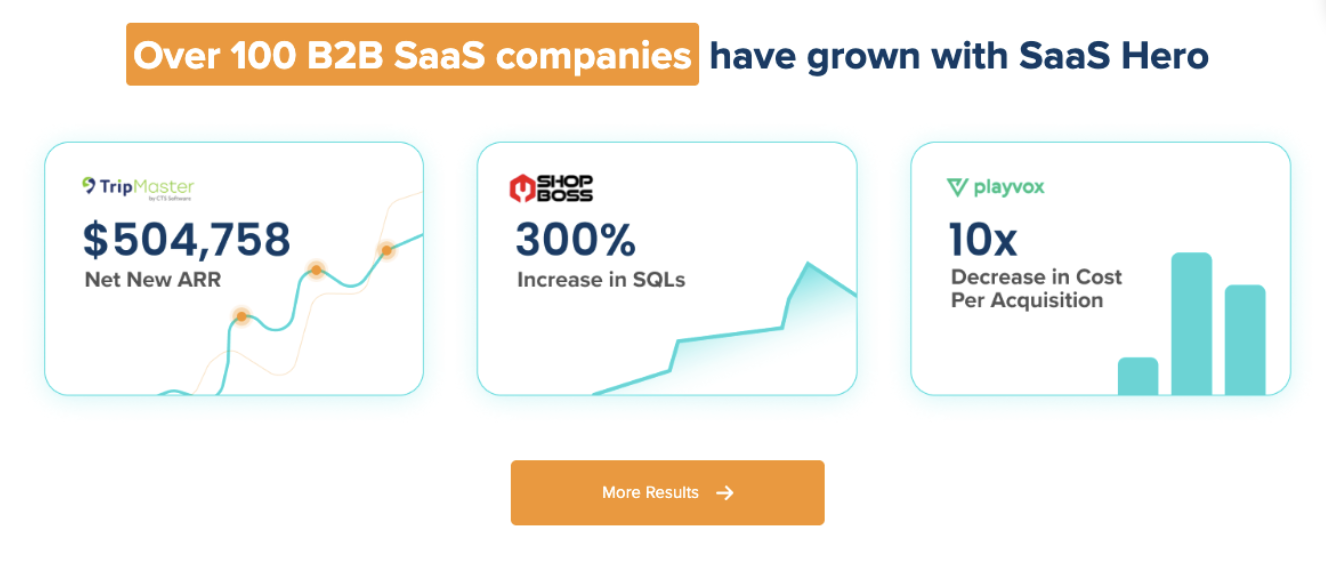
SaaSHero’s work with TripMaster, a transit and paratransit software company with a procurement-heavy sales cycle, illustrates the impact. The engagement produced $504,758 in net new ARR over one year, a 650% return on ad spend, and a 20% conversion rate from paid search. The mechanism matched the playbook described here: CRM-connected optimization, purpose-built landing pages, and a conversion architecture that fed the bidding algorithm qualified outcomes instead of shallow form fills.

SaaSHero credentials include Google Premier Partner status (top 3% of agencies), G2 High Performer in Digital Marketing for over two years (ranked #20 of approximately 6,000 agencies), $60M+ in lifetime ad spend managed, and more than 100 B2B companies served.
Have SaaSHero own your paid acquisition end to end, from impression to CRM revenue.
Frequently Asked Questions
How much should a fleet technology company budget for demand generation?
The right budget depends on fleet size, sales cycle length, and average contract value. As a starting point, fleet technology companies with $10M+ in revenue (Series B+ ARR) should spend at least $60,000 per month in paid media to generate enough data for meaningful optimization. Below that threshold, the bidding algorithms lack sufficient signal from qualified outcomes and default to optimizing for form fills.
A more useful framing asks what pipeline coverage ratio your board requires and what CAC payback period your LTV can support. Those two numbers, combined with your MQL-to-SQL conversion rate and average deal size, allow you to work backward to a defensible media budget. Most B2B growth-stage teams target a 3:1 to 4:1 pipeline coverage ratio. A healthy CAC payback period typically falls between 12 and 18 months, with under 12 months considered strong.
How long does it take to see results from FleetTech demand generation?
Expect meaningful data within 30 days of launch, optimization signals within 60 days, and a defensible read on channel economics by day 90. Fleet technology sales cycles range from 4 weeks for small fleets to 18 months for large enterprise or government accounts, so pipeline metrics will lag media spend by roughly the length of your average sales cycle.
This lag makes in-flight pipeline reporting crucial. Opportunities created, pipeline coverage ratio, and cost per qualified opportunity matter more than waiting for closed revenue to validate the program. Out-of-market awareness campaigns on LinkedIn take longer to show pipeline impact than in-market capture on Google Ads. They build the warm audience that conversion campaigns later harvest. A program that launches both simultaneously without a staged measurement approach will undercount LinkedIn’s contribution and overcount Google’s.
Should we focus on LinkedIn or Google Ads for fleet technology marketing?
Both channels matter, but each serves a different job. Google Ads captures demand that already exists, such as fleet managers searching for ELD compliance software, telematics alternatives, or specific competitor comparisons. LinkedIn creates demand among the large share of fleet buyers who are not yet in an active evaluation.
Many fleet technology companies run LinkedIn like a demand capture channel, pushing cold conversion campaigns that ask for demo requests from people who have never heard of the company. They then conclude that LinkedIn does not work. A better approach runs LinkedIn as a staged awareness and consideration program that builds warm audiences. Google Ads and direct outreach then convert those warmed accounts. Measuring LinkedIn on last-click demo requests will almost always make it look like a failure. Measuring it on engaged-account rate, pipeline from engaged accounts, and branded search lift gives a more accurate picture of its contribution.
How is FleetTech demand generation different from lead generation?
Lead generation extracts contact information from buyers who already recognize a problem and actively search for a solution. Demand generation creates that awareness first. As noted earlier, fleet buyers complete most of their evaluation before contacting a supplier, so much of the journey happens before any lead appears.
A program that only captures in-market demand through paid search, comparison pages, and demo request forms competes for a small, expensive pool of attention and leaves the majority of out-of-market buyers to competitors who reach them earlier. Demand generation builds the pipeline that lead generation later harvests. The two functions work together but do not serve the same role.
What metrics should we report to our board?
Report in the language your CFO and board already use. Focus on pipeline created by channel, cost per sales-qualified lead, CAC payback period, and pipeline coverage ratio. Avoid leading with impressions, clicks, or MQL volume, because these metrics do not answer whether marketing spend produces qualified pipeline at a sustainable cost.
If your sales cycle is longer than your reporting cycle, which is common in fleet technology, report on in-flight pipeline metrics alongside closed revenue. Opportunities created, pipeline value by stage, and account velocity help the board understand progress before deals close. A board-ready dashboard connects ad platform spend directly to CRM pipeline data so the numbers stay traceable and the methodology remains clear. For benchmarks, hold yourself to an LTV:CAC of 3:1 or better and a CAC payback under 12 months. Evidence does not specify a single pipeline coverage ratio benchmark, so use your board’s requirement as the target.
Conclusion: Evaluate Your FleetTech Demand Engine
The FleetTech demand generation playbook functions as a system rather than a checklist. ICP definition, out-of-market awareness, in-market capture, trigger-based messaging, channel alignment, and revenue-based measurement work together, with each layer feeding the next. A program that executes only one or two of these components in isolation will generate activity without consistent pipeline.
The core diagnostic question for any fleet technology marketing leader asks whether the current program owns the full chain from impression to CRM record or stops at the ad platform and hands the rest to someone else. If the landing pages belong to a web contractor, the conversion tracking to whoever set up Tag Manager two years ago, and the reporting to a monthly PDF that does not answer whether spend produced pipeline, the problem sits at the structural level rather than the tactical level.