





Written by: Aaron Rovner, Founder, Saas Hero | Last updated: September 3, 2026
Key Takeaways for B2B SaaS Leaders
- Most B2B SaaS companies hiring a growth marketing agency receive a senior sales pitch and a junior delivery team, which forces the internal marketing leader to act as strategist and quality controller.
- A genuinely senior growth marketing team owns strategy and execution across channels, finds problems early, and ties decisions to revenue data instead of activity metrics.
- Building an equivalent senior team in-house typically requires six to seven specialized roles with high salaries, plus benefits, tools, and management overhead.
- Before signing, evaluate an agency by confirming who will work on the account day-to-day, their B2B SaaS experience, and whether they bring proactive recommendations or wait for direction.
- Ready to partner with a team that owns results instead of waiting for direction? Schedule a discovery call with SaaSHero to see if our senior team fits your growth goals.
The Problem: Senior Pitch, Junior Delivery
Many B2B SaaS teams see the same pattern. A polished pitch deck features impressive senior titles and case studies from recognizable SaaS companies. The agency wins the business. Then the account moves to junior coordinators who execute tasks but lack the judgment to set strategy, spot opportunities early, or diagnose underperformance before the client does.
The real costs of this bait-and-switch extend far beyond the retainer fee. Wasted ad spend piles up from misconfigured campaigns and mis-specified conversion events. Months of progress disappear while the account trains the bidding algorithm toward the wrong audience. The marketing leader spends hours managing the agency, writing test ideas, chasing status updates, and finding account problems before the agency does. Missed revenue targets from a stalled pipeline cannot be recovered once the quarter closes.
The distinction between a senior team and a junior team comes down to who holds the agenda, not credentials on a resume.
| Dimension | Senior Team | Junior Team |
|---|---|---|
| Strategy | Owns it, brings recommendations | Waits for direction |
| Problem-solving | Proactively identifies issues | Applies reactive fixes |
| Reporting | CRM outcomes, pipeline, revenue | Platform metrics, clicks, leads |
| Accountability | Owns results | Owns tasks |
| Communication | Anticipates needs | Requires chasing |
Schedule a call to evaluate whether your current agency relationship reflects the senior or junior column.
The Solution: Traits of a Senior Growth Marketing Team
Genuine seniority shows up in judgment, not tenure. A senior growth marketer knows what to test, when to scale, how to diagnose underperformance, and how to connect ad spend to pipeline in a format a CFO can read. Deep B2B SaaS experience matters because sales cycles, buying committees, and CRM-level measurement differ from B2C or generic lead-generation work.

Clear markers of a genuinely senior team include depth of channel expertise, strategic ownership, outcome accountability, and proactive communication. A senior team arrives at every call with the next three things already scoped, rather than waiting to be asked what should happen next.
Core Roles on a Senior Growth Marketing Team
- Head of Growth / VP of Growth: Sets overall growth strategy, aligns marketing with business goals, and owns performance metrics across channels.
- Director of Growth Marketing: Manages day-to-day execution, coordinates campaigns, and keeps paid media, content, and product marketing aligned.
- Senior Growth Marketing Manager: Translates strategy into campaigns and owns execution and improvement for specific channels.
- Channel Leads (Paid Search, Paid Social): Direct high-budget campaigns on platforms like Google, LinkedIn, and Meta, with a focus on lowering CAC while scaling qualified pipeline.
- CRO Specialist: Designs landing page experiments and user experience tests that increase conversion from paid traffic.
- Marketing Operations Manager: Owns tracking infrastructure, CRM integrations, and conversion architecture that enable revenue-based decisions.
- Data / Analytics Lead: Oversees attribution models, funnel analysis, and reporting that connects ad spend to pipeline and revenue.
Talk with SaaSHero to see how these roles map across our client accounts.
The Cost Problem: What Senior Talent Costs In-House
Marketing leaders need clear cost context before comparing an agency retainer to in-house hiring. Assembling a senior growth marketing team internally usually means filling six to seven specialized roles. Based on Glassdoor and Payscale compensation data, current US salary ranges for these roles look like this:
| Role | In-House Salary Range (US) |
|---|---|
| Head of Growth | $156k–$203k |
| Director of Growth Marketing | $182k–$213k |
| Senior Growth Marketing Manager | $145k–$171k |
| Paid Search Lead | $106k–$128k |
| CRO Specialist | $85k–$110k base, up to $145k total comp for senior roles |
| Marketing Operations Manager | $95k–$145k |
| Data / Analytics Lead | $120k–$148k |
Assembling this team in-house means six to seven senior salaries plus benefits, tools, and management overhead, which often reaches $700k–$1.2M annually before a single ad runs. And that comes before the 6–10 weeks it typically takes to hire each senior paid media or analytics role, according to GingerKid Executive Search. In contrast, a senior-led agency offers equivalent capability at a monthly retainer indexed to ad spend, avoids the headcount approval process, and provides a more flexible commercial arrangement.
The Evaluation Problem: How to Vet an Agency’s Senior Team
The most important evaluation happens before you sign a contract. The questions below help you confirm whether the team that pitches is the team that delivers.
- Who will be on my account day-to-day? Confirm their seniority and meet them before signing. A genuinely senior-led agency introduces the actual account team during the sales process.
- What is the team’s experience with B2B SaaS specifically? B2B SaaS has distinct sales cycles, buying committees, and CRM measurement requirements that generalist experience does not cover.
- How do they handle strategy versus execution? Ask whether they bring recommendations or wait for direction. Their answer reveals who holds the agenda.
- Can they show examples of proactive recommendations that changed campaign direction? A senior team should describe specific instances where they identified a problem before the client did and acted on it.
- What is their reporting cadence, and what does it cover? Look for pipeline and revenue, not just clicks and impressions. Board-ready reporting determines whether the marketing budget survives the next review.
- Who owns the landing pages and post-click experience? An agency that only recommends landing page changes and hands them to the client avoids accountability for the highest-leverage variable in the funnel.
- What is their employee turnover rate, and how long has the proposed team been intact? High turnover means a new team every few months, which breaks continuity for multi-stage messaging and testing.
The Build-or-Buy Decision: Agency vs. In-House Senior Team
Most mid-market B2B SaaS companies benefit from a hybrid model. An internal owner sets goals and holds the number, while a specialist team owns strategy and execution across the disciplines underneath it. When the decision narrows to building a full senior team in-house or engaging a senior-led agency, the comparison looks like this:
| Factor | In-House Senior Team | Senior-Led Agency |
|---|---|---|
| Annual cost (6–7 roles) | $700k–$1.2M+ in salaries alone | Agency retainer (typically $15k–$25k/month for Series B+, up to $40k for broader scope) |
| Hiring timeline | 6–10 weeks to fill senior roles | Immediate access to an existing team |
| Cross-industry perspective | Limited to one company’s data | Broad pattern exposure across many B2B SaaS clients |
| Specialized expertise | Generalist coverage across disciplines | Deep specialists across channels |
| Scalability | Requires new headcount approval to scale | Scales within the retainer structure |
| Accountability | Internal reporting lines | Contractual outcomes |
For mid-market B2B SaaS companies in the $10M–$50M revenue range, marketing teams often include two to four people with no paid media specialist. In that context, a senior-led agency can provide a strong balance of expertise, cost-efficiency, and immediate availability, as long as the agency is genuinely senior-staffed.
The Red Flag Problem: Signs You’re Getting Junior Resourcing
Certain warning signs reveal that an agency is not truly senior-led, regardless of the pitch deck.
- Juniors handle the work while seniors appear only in sales calls and quarterly reviews.
- High employee turnover creates a new account team every few months and erases institutional knowledge.
- Reporting focuses on vanity metrics such as clicks, impressions, and form fills instead of pipeline and revenue.
- The agency avoids ownership of landing pages or post-click experience and sends recommendations for the client to implement.
- The team cannot articulate a clear strategy or testing plan without client input.
- The client discovers problems in the account before the agency does.
- The client writes test ideas and sets the agenda for what the agency should do next.
These red flags directly undermine results. For instance, an account staffed by juniors who wait for direction will not proactively identify that the bidding algorithm is optimizing toward the wrong conversion event. It will miss when the search terms report drifts away from anything the business sells. It also fails to connect ad spend to pipeline in a way that survives a board meeting, because nobody on the team has been responsible for that work before.
The Solution in Action: How a Senior Team Runs an Account
The impact of a genuinely senior-led team shows up in how the account operates, not only in the headline numbers. When a B2B SaaS company switches from a junior-led agency to a senior-led team, the first change appears in who holds the agenda, not in the ad platforms. The senior team arrives at the kickoff call with a documented campaign architecture, a conversion tracking plan, and a testing roadmap. The client reviews and approves, then the team executes.
Within the first thirty days, conversion tracking is rebuilt against CRM outcomes instead of simple form fills. The bidding algorithm starts learning from qualified pipeline events rather than raw form volume. The same team that runs campaigns designs, builds, and tests landing pages, instead of sending requests into a web contractor’s backlog. By day ninety, there is enough clean data to evaluate the channel based on economics instead of activity.

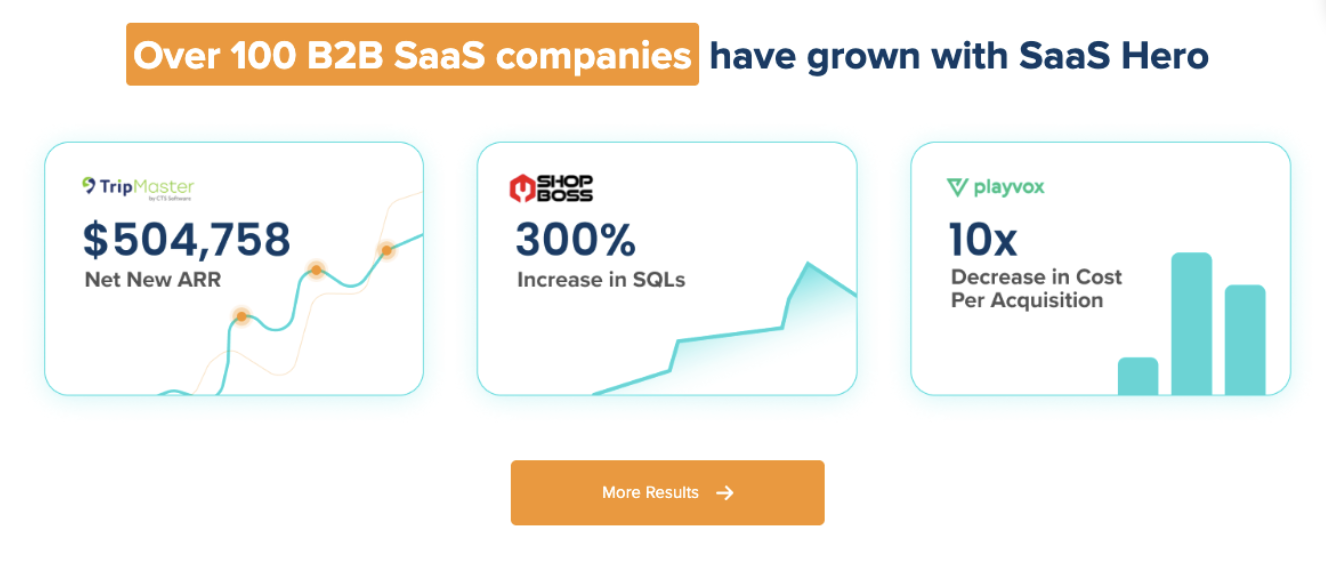
These mechanics translate into measurable outcomes for SaaSHero clients. TripMaster, a transit software company, added $504,758 in net new ARR over one year with a 650% return on ad spend and a 20% conversion rate from paid search. Similarly, Shop Boss, an automotive shop management SaaS, achieved a 305% increase in conversion rate after identifying landing page performance as the binding constraint. And Playvox, a CX software company, reduced cost per lead by 10x while increasing lead volume by 163%.

The mechanism behind each result is the same. One team owns strategy, execution, landing pages, and CRM-level reporting. There are no seams between the click and the pipeline record.
Conclusion: Work With a Team You Don’t Have to Manage
Genuine seniority rests on ownership and accountability, not titles on a pitch deck. Evaluating an agency means asking who touches your account daily, whether they are employees or contractors, and whether they arrive with ideas or wait for direction. For most mid-market B2B SaaS companies, a senior-led agency offers a practical balance of expertise, cost-efficiency, and speed.
The real cost of a junior-staffed agency goes far beyond the retainer. You pay in wasted ad spend, a stalled pipeline, and hours spent doing work you expected the agency to own. A senior team should bring ideas, own the strategy, and base decisions on revenue data without needing constant management. That standard should apply to every agency you consider, including this one.
Ready to work with a team that does not need to be managed? Talk with SaaSHero’s senior team about your growth targets.
Frequently Asked Questions
What is a growth marketing agency?
A growth marketing agency owns strategy and execution across the paid acquisition channels a B2B company uses to generate pipeline and revenue. Unlike a traditional marketing agency that may focus on brand, content, or a single channel, a growth marketing agency remains accountable for measurable commercial outcomes such as qualified pipeline, cost per sales-qualified lead, and revenue generated from paid spend. The strongest growth marketing agencies own the full acquisition chain: paid media strategy and management, creative production, landing page design and testing, conversion tracking, and CRM-level reporting. A genuinely senior-led growth marketing agency arrives with the strategy instead of waiting for the client to supply it.
What are the roles of a growth marketing team?
A senior growth marketing team typically includes leadership, channel specialists, CRO, marketing operations, and analytics roles working together as full-time specialists. As detailed in the roles section above, this structure covers strategy, execution, tracking, and revenue-connected reporting, with the team accountable for outcomes rather than activities.
How do I know if my growth marketing agency is truly senior-led?
The clearest test is who holds the agenda. In a genuinely senior-led relationship, the agency arrives at every call with recommendations, testing plans, and the next three actions it proposes, without relying on the client to generate ideas. Red flags include the client finding problems in the account before the agency does, reporting that focuses on platform metrics instead of pipeline and revenue, no ownership of landing pages or post-click experience, an inability to articulate a clear strategy without client input, and high employee turnover that produces a new account team every few months. Before signing with any agency, meet the specific people who will be in your account day-to-day, not only the senior team members who appear on sales calls.
How much does a Head of Growth make?
In the United States, a Head of Growth at a B2B SaaS company typically earns between $140,000 and $280,000 in base salary, with the exact range varying by company stage and location (for example, $150K–$190K at seed stage and up to $220K–$280K at growth stage), according to GrowthTalent. A Director of Growth Marketing typically earns approximately $182,000–$213,000 per Salary.com, and a Senior Growth Marketing Manager typically earns approximately $144,634–$171,411 per Salary.com as of July 2026. As mentioned earlier, building a full senior growth team in-house often reaches $700k–$1.2M or more in annual cost once you include benefits, tools, management overhead, and a hiring timeline of about 6–10 weeks for each senior role.
What should a senior growth marketing team’s reporting look like?
A senior growth marketing team’s reporting connects ad spend to pipeline and revenue using the vocabulary a CFO and board expect, such as cost per sales-qualified lead, pipeline created by channel, CAC payback period, and LTV:CAC ratio. The marketing leader should not need to reconcile platform metrics, CRM data, and analytics exports by hand before every board meeting. Reporting should be live and CRM-connected, available in dashboards the client can open themselves instead of static monthly PDFs. The team should also base optimization decisions on the same data the reporting surfaces. If the report shows pipeline by channel, the team should optimize toward pipeline by channel, not toward form fills that the platform records as conversions but the CRM does not recognize as qualified.