




Written by: Aaron Rovner, Founder, Saas Hero | Last updated: August 27, 2026
Key Takeaways
- Performance-based LinkedIn agencies in 2026 span form-fill pricing through full CRM-tied closed-won attribution, and that choice directly shapes board-level pipeline outcomes.
- Boards now evaluate marketing in finance terms, such as CAC payback, pipeline coverage, and closed-won cost by channel, yet most mid-market SaaS reporting stacks cannot answer those questions.
- Three pillars determine agency fit: attribution depth to closed-won revenue, pricing that separates fees from channel-mix decisions, and ICP proof through relevant pipeline case studies.
- Only 12% of B2B SaaS companies have full pipeline attribution; the rest focus on secondary metrics that do not correlate with revenue.
- SaaSHero delivers the flat-fee, CRM-tied model described in this guide, so you can schedule a discovery call to audit your attribution stack and agency relationship.
How This Guide Helps You Choose a Performance-Based LinkedIn Agency
Most B2B SaaS companies still judge LinkedIn agencies on cost per lead, which says little about pipeline quality or closed revenue. This guide introduces a three-pillar framework that focuses on what actually matters: attribution to closed-won deals, pricing that aligns incentives, and proof that the agency can reach your real buyers. With that structure in place, you can evaluate agencies on their ability to create profitable pipeline, not just cheap leads.
Why Capital Efficiency Became a Board-Level Concern in 2026
Boards and PE sponsors now ask marketing questions in finance vocabulary such as CAC payback, pipeline coverage, and closed-won cost by channel. Those questions are answerable, yet the reporting stack most mid-market SaaS companies run cannot provide clear responses. The ad platforms report one number, the CRM another, and the agency’s monthly deck a third, with nobody responsible for reconciling them.
The agency relationship often compounds this problem. A conventional paid media retainer is scoped to the ad account. The landing page belongs to the client, the CRM to RevOps, and the conversion definitions to whoever configured the tag manager, often years earlier and no longer at the company. Performance ends up set by the weakest link in the chain, and the scope boundary cuts straight through that chain.
This structure creates a gap. Automation moved the real work toward data quality. Broken measurement moved the real answer into the CRM. The standard retainer stops short of the full path it is judged on, so nobody owns the entire journey from impression to revenue.
If your current reporting stack cannot answer board-level questions about LinkedIn-driven pipeline in real time, the issue sits in the structure, not in individual tactics. Audit your attribution stack in a discovery call before you commit to any performance-based engagement.
Executive Summary: What Performance-Based Actually Means
Performance-based LinkedIn campaign management in 2026 rests on specific structural commitments, not just a pricing label. An agency using that term should satisfy all of the following criteria as one connected system.
- Fees are indexed to total ad spend or fixed, never to a percentage of spend that rewards budget inflation.
- Bidding signals sent to LinkedIn are CRM lifecycle events such as MQL, SQL, opportunity, and closed-won, not raw form fills.
- Primary conversions used for account-wide optimization are qualified pipeline outcomes, while secondary conversions such as content downloads are tracked but excluded from bidding.
- Attribution runs from impression to closed-won revenue through CRM integration, not just from click to form submission.
- Reporting surfaces pipeline, CAC, and payback period, which matches how a CFO thinks, not impressions, clicks, or cost per lead.
Only 12% of B2B SaaS companies have full pipeline attribution connecting LinkedIn ad spend to CRM revenue, so most teams still evaluate performance on cost per lead. That secondary metric does not indicate whether a form fill progressed to a qualified opportunity.
The Three-Pillar Evaluation Framework for LinkedIn Agencies
Evaluating a performance-based LinkedIn agency works best when you examine three structural dimensions: attribution depth, pricing alignment, and ICP proof. Each pillar highlights a different type of incentive risk. An agency can appear strong on two pillars and quietly fail the third, with the damage only visible in the CRM six months later.

Pillar 1: Attribution Depth From Form Fills to Closed-Won Revenue
A Series B B2B SaaS company running LinkedIn at a moderate cost per lead generated many leads in a quarter but saw limited SQLs, opportunities, and closed-won deals. Payback periods stretched out while the LinkedIn dashboard showed improving metrics throughout.
The mechanism behind this pattern stays simple. Campaign A producing leads at $90 CPL with a 10% SQL rate yields a $900 SQL cost, while Campaign B producing leads at $320 CPL with a 75% SQL rate yields a $427 SQL cost. When only form fills are supplied as conversion events, LinkedIn’s algorithm optimizes toward Campaign A, even though it produces more expensive SQLs.
LinkedIn’s default attribution windows miss 60-80% of B2B pipeline because sales cycles run long, and Dreamdata’s 2026 benchmarks report the average time from first LinkedIn ad impression to closed revenue in B2B SaaS is 281 days. Short attribution windows therefore cannot support reliable primary-conversion optimization.
The fix relies on a clear primary-versus-secondary conversion hierarchy. Secondary conversions such as content downloads, webinar registrations, and low-commitment forms stay visible in reporting but never drive account-wide optimization. Sending HubSpot lifecycle stage transitions back to LinkedIn via offline conversion imports can deliver 30–50% improvement in cost per SQL by training the algorithm on pipeline progression signals instead of raw form fills.
The LinkedIn Conversions API provides the technical layer that enables this model. It recovers conversions missed by the browser-side Insight Tag because of ad blockers and browser restrictions. Native connectors for Salesforce, HubSpot, and Dynamics 365 in LinkedIn Campaign Manager support closed-loop attribution from impression through to closed-won revenue.
When you evaluate an agency on this pillar, focus on which conversion events drive account-wide optimization and where those events originate, either in the ad platform pixel or in the CRM.
Pillar 2: Pricing Alignment Across Flat, Hybrid, and Percentage Models
Fee structure functions as incentive structure. The three dominant models in 2026 each produce a distinct pattern of recommendations from the agency that uses them. The table below shows how each model’s fee movement creates a structural incentive that shapes the agency’s channel-mix recommendations.
| Model | How the fee moves | Structural incentive | Channel-mix consequence |
|---|---|---|---|
| Percentage of spend | Rises with budget increases | Agency revenue grows when client budget grows, regardless of efficiency | Recommendations to scale carry an undisclosed financial interest, while recommendations to cut reduce agency income |
| Per-channel retainer | Rises when a channel is added, falls when one is dropped | Channel mix never remains a purely strategic question, because adding a test raises the invoice before it returns anything | Budget tends to calcify where it was first placed, and new channel tests often require a contract amendment |
| Flat-fee or spend-indexed flat retainer | Fixed or indexed to total spend, not channel count | Channel-mix recommendations and fee stay decoupled, so reallocation carries no financial consequence for the agency | Moving budget between channels, opening a test, or shutting a channel down can be argued on evidence alone |
The flat-fee or spend-indexed model is the only structure in which an agency can recommend pausing a channel or reducing spend without taking a pay cut. For a board or PE sponsor asking why the agency recommended scaling a channel that failed to return, the answer should trace back to data, not to a fee arrangement that made the recommendation financially convenient.
Pillar 3: ICP Proof Through Software Case Studies and Buyer Targeting
LinkedIn’s algorithm, when optimized for clicks or engagement, prioritizes high-frequency clickers such as students and researchers over B2B SaaS ICPs like time-poor CFOs or Operations Directors. That pattern produces strong vanity metrics and weak pipeline impact.
ICP proof from a prospective agency needs to go beyond a logo slide. You want to see how they connect targeting, messaging, and pipeline outcomes for companies that resemble yours.

- Case studies should show SQL cost and pipeline outcomes, not just CPL and lead volume.
- Reference accounts should sit in a similar ACV range and sales motion to your company.
- The agency should demonstrate how it constructs and excludes audiences, including how it separates decision-makers from end-users and excludes students, competitors, and existing customers.
- The targeting methodology should account for the buying committee, because Gartner research finds B2B buyers spend only about 17% of the purchase journey with suppliers and 6–10 decision makers are typically involved in B2B purchases.
Mixing regions or personas in a single LinkedIn campaign, such as cost-focused decision makers alongside workflow-focused end users, causes budget leakage to lower-CPC segments and dilutes messaging. That structure usually fails to resonate with either group.
Agency Landscape Map Aligned to the Three Pillars
The agency market in 2026 contains four structural types, and each type tends to perform differently across attribution depth, pricing alignment, and ICP proof. No single type works for every situation, so you want to match structure to your brief.
Full-service generalist agencies offer breadth under one contract across paid, organic, content, email, and sometimes brand and web. Paid media becomes one of many disciplines, often staffed by a generalist. Fee structure usually follows a per-channel or service-line model, so channel-mix recommendations and invoices move together. These agencies often score modestly on attribution depth and pricing alignment, with ICP proof depending heavily on individual team members.
Large integrated agencies provide global scale, multi-region delivery, and enterprise procurement readiness. The tradeoff usually appears in the seniority-to-account ratio. The senior people named in the pitch often do not work in the account week to week. These agencies can build deep attribution when scoped correctly, yet ICP proof and pricing alignment often suffer because of layered teams and complex retainers.
Specialist B2B paid media agencies narrow scope to paid search, paid social, landing pages, and attribution. Within this category, the key differentiators are whether the fee structure separates channel-mix recommendations from agency revenue and whether attribution runs through the CRM instead of stopping at the form. The strongest specialists score well on all three pillars and operate as extensions of RevOps.
Performance-only or pay-per-lead agencies tie fees to lead or appointment volume. Performance pricing for B2B leads in 2026 typically ranges from $150 to $450 per qualified lead for mid-market programs, with costs up to $600 possible depending on industry, deal size, and qualification criteria. The structural risk comes from defining “qualified” at the lead stage instead of the SQL or pipeline stage, which recreates the form-fill optimization problem under a different label and weakens attribution depth.
Readiness Checklist for CRM-Tied LinkedIn Attribution
Before you engage any performance-based LinkedIn agency, confirm that your internal systems can support CRM-tied optimization. Each requirement below enables the model described in the three pillars.
- A CRM such as Salesforce or HubSpot is in use, with lifecycle stages defined and consistently applied by the sales team, because those stages become optimization targets.
- Lead source is stamped on every CRM record at creation time, including campaign, ad group, and creative identifiers, so you can connect LinkedIn spend to pipeline outcomes.
- Someone owns the Google Tag Manager container and can grant agency access without a multi-week IT queue, which keeps tracking changes moving.
- A RevOps or Marketing Ops contact can configure offline conversion imports and CRM-to-platform integrations, closing the loop between ads and revenue.
- The sales team has agreed on what constitutes an SQL, which becomes the primary optimization target for the algorithm.
- Historical CRM data exists to calculate lead-to-SQL and SQL-to-close rates by source, even approximately, so you can benchmark performance.
- The marketing leader has authority to approve creative and messaging without a committee review cycle longer than 48 hours, which protects campaign velocity.
If you see gaps in this checklist, you can assess your attribution stack with SaaSHero in a working session before you change agencies.
Common Pitfalls to Surface Before You Hire an Agency
The questions below reveal structural failures that frequently undermine mid-market B2B SaaS LinkedIn programs. Use them to diagnose your current setup and to frame conversations with prospective agencies.
- Which conversion events currently drive account-wide optimization in LinkedIn Campaign Manager, and do those events reflect CRM lifecycle stages or platform-side pixel fires?
- When the monthly report shows lead volume increasing and cost per lead decreasing, does the CRM show a matching increase in SQLs and pipeline?
- Who owns the landing pages that LinkedIn campaigns point to, and when were those pages last tested with a clear hypothesis?
- Does the current agency bring a structured test agenda, or does the marketing leader write it and push it forward?
- If the agency relationship ended today, would the ad accounts, creative files, and conversion tracking configurations remain fully accessible to your company?
- Can current reporting answer a board question about pipeline created by LinkedIn spend this quarter without manual reconciliation across several systems?
Case Archetypes Showing the Three Pillars in Practice
Post-funding scaler. A B2B SaaS company at $15M ARR has committed to a pipeline number attached to a Series A. The marketing team includes two people. LinkedIn runs through a generalist agency on a per-channel retainer, optimized to Lead Gen Form submissions. Lead Gen Form ebook campaigns on broad ICP audiences deliver favorable CPLs but low SQL rates, which drives SQL costs higher. The board sees improving CPL while the CRO sees flat pipeline. The structural fix involves rebuilding the conversion hierarchy and pushing CRM lifecycle events into LinkedIn bidding, which sits outside the current agency’s scope and touches attribution depth and ICP proof.

PE-backed efficiency optimizer. A portfolio company at $40M ARR has a functioning demand engine and a five-figure monthly LinkedIn spend. The operating partner needs comparable reporting across three portfolio companies, each running a different agency on a different metric definition. The structural requirement centers on a standardized CRM-connected reporting layer and a consistent SQL definition, not a new creative strategy. An agency that cannot report in the vocabulary the fund uses for portfolio reviews fails the attribution and pricing pillars, regardless of its tactical LinkedIn execution.
Mature team hitting a ceiling. A $50M ARR company has run LinkedIn for two years. Lead volume looks healthy, yet the pipeline-to-spend ratio has degraded. Industry benchmarks for 180-day cohort ROAS for LinkedIn Ads in B2B SaaS typically range from 2.0x to 5.0x, with top performers achieving higher returns. The gap between average and top performance usually traces back to what the algorithm optimizes toward, not to creative quality or audience targeting. The structural fix lies in the conversion hierarchy and CRM-tied optimization, which directly affects attribution depth and ICP proof.
Frequently Asked Questions
What budget is required before CRM-tied LinkedIn campaign management makes sense?
Data volume, not a round budget number, sets the floor. LinkedIn’s algorithm needs enough conversion events to optimize meaningfully. For most B2B SaaS companies, that threshold requires a substantial monthly LinkedIn spend when primary conversions sit at the SQL or opportunity stage rather than the form-fill stage. Below that level, the algorithm lacks signal volume from CRM data and the engagement falls back to manual optimization against secondary metrics.
How long does it take to see pipeline results from a CRM-tied LinkedIn program?
The 281-day average conversion window mentioned earlier means you should plan for a long evaluation horizon. A realistic window is 90 days for early pipeline signals such as SQLs and opportunities created and 180 days for closed-won revenue. Cohort-based ROAS benchmarks for LinkedIn in B2B SaaS usually start low in the first 30 days, improve materially by 90 days, and reach the 4x–8x range by 180 days when you optimize to pipeline outcomes. Any agency promising closed-won results inside 60 days either works with unusually short sales cycles or measures something other than closed-won revenue.
Who inside the organization needs to be involved for CRM-tied optimization to work?
Three internal stakeholders are non-negotiable. RevOps or Marketing Ops must own the CRM integration that stamps lead source at record creation and pushes lifecycle stage changes back to LinkedIn as offline conversions. The sales team must agree on a consistent SQL definition that becomes the primary optimization target, because without that agreement the algorithm optimizes toward a moving standard. The marketing leader must have approval authority over creative and messaging without a slow committee review cycle, since approval speed often becomes the main operational constraint on LinkedIn program velocity.
What is the difference between a primary and secondary conversion in LinkedIn campaign management?
A primary conversion is the event used for account-wide optimization, which means it is the signal sent to LinkedIn’s algorithm as the goal it should find more of. In a CRM-tied program, primary conversions are qualified pipeline outcomes such as SQL creation, opportunity creation, or closed-won revenue. A secondary conversion is tracked and visible in reporting but excluded from bidding. Content downloads, webinar registrations, and low-commitment form completions sit in this category. The distinction matters because LinkedIn’s algorithm is goal-seeking. Pointed at a form fill, it finds people most likely to fill in forms, which differs from the people most likely to become qualified opportunities. The primary-versus-secondary hierarchy prevents the algorithm from optimizing toward the wrong audience.
How should a VP of Marketing evaluate whether an agency’s case studies are relevant?
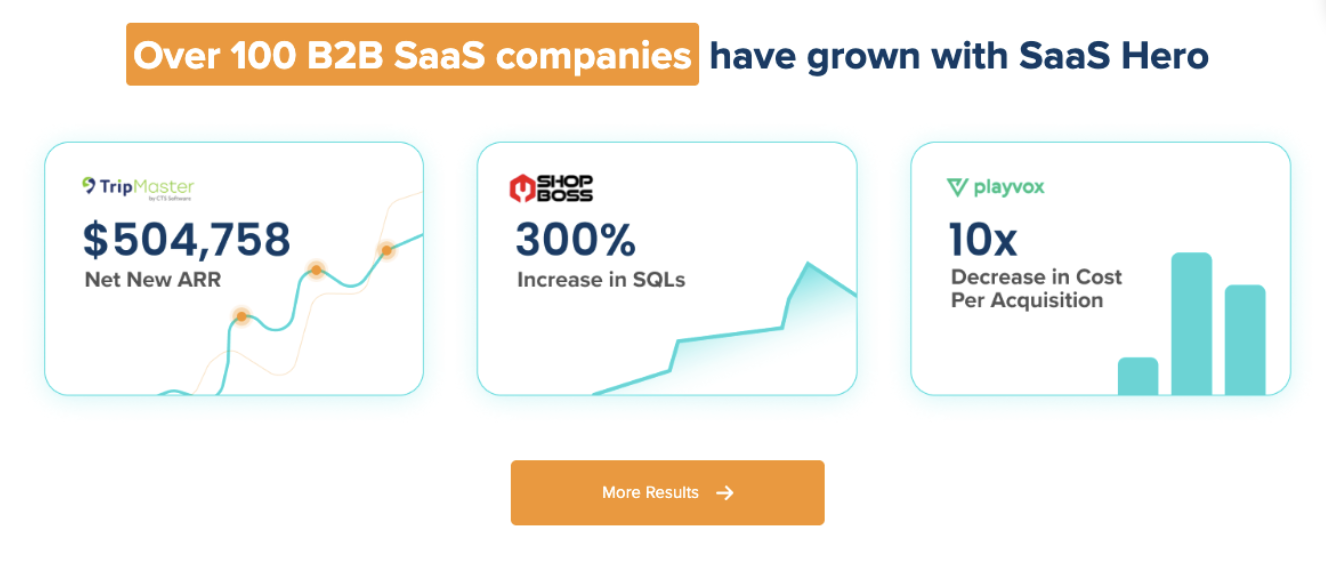
ACV, sales cycle length, and sales motion matter more than company size or industry label. A case study showing a 10x reduction in cost per lead signals form-fill optimization, not performance-based management. The case studies worth close attention show SQL cost, pipeline-to-spend ratio, and CAC payback period, with attribution methodology disclosed. If the case study does not state which conversion event drove optimization, the result almost certainly reflects lead-stage measurement. Ask the agency directly which primary conversion event they used in that account and how they connected it to the CRM.
Key Decision Points and an Internal Three-Pillar Workshop
Before you issue an RFP or take a discovery call with any performance-based LinkedIn agency, run a one-hour internal workshop structured around the three pillars. This session clarifies your current state and sharpens the questions you bring to agencies.
On attribution depth, pull the last 90 days of LinkedIn spend from the ad platform and match it against CRM records for the same period. Calculate the lead-to-SQL conversion rate by campaign. If that calculation takes more than 30 minutes of manual work, your attribution stack is not ready for CRM-tied optimization, and any agency promising it will struggle against your infrastructure.
On pricing alignment, map the current agency’s fee structure against the channel-mix decisions made in the last two quarters. Identify any recommendation to add or remove a channel and check whether the fee moved in the same direction. If it did, treat the incentive misalignment as structural rather than personal.
On ICP proof, pull the SQL-to-close rate for LinkedIn-sourced leads versus other sources from the CRM. If LinkedIn-sourced leads close at a materially lower rate than other sources, either targeting or the conversion hierarchy, or both, are misaligned with the actual buyer profile.
The agency that satisfies all three pillars owns the full chain from ad impression to CRM record, prices work in a way that separates channel-mix recommendations from agency revenue, and shows pipeline outcomes, not just lead volume, from accounts in a similar ACV range and sales motion to your company.
SaaSHero is built around this model. A flat-fee growth team optimizes against CRM revenue data and owns paid media, creative, landing pages, attribution, and strategy as one accountable scope, with no per-channel pricing and no percentage-of-spend arrangement. Every conversion hierarchy starts with primary CRM-tied events and secondary form-fill events clearly separated, and reporting uses the vocabulary boards and PE sponsors expect, such as pipeline, CAC, and payback period.
Get a three-pillar review of your LinkedIn program with SaaSHero and decide whether your current structure can support true performance-based management.