




Key Takeaways
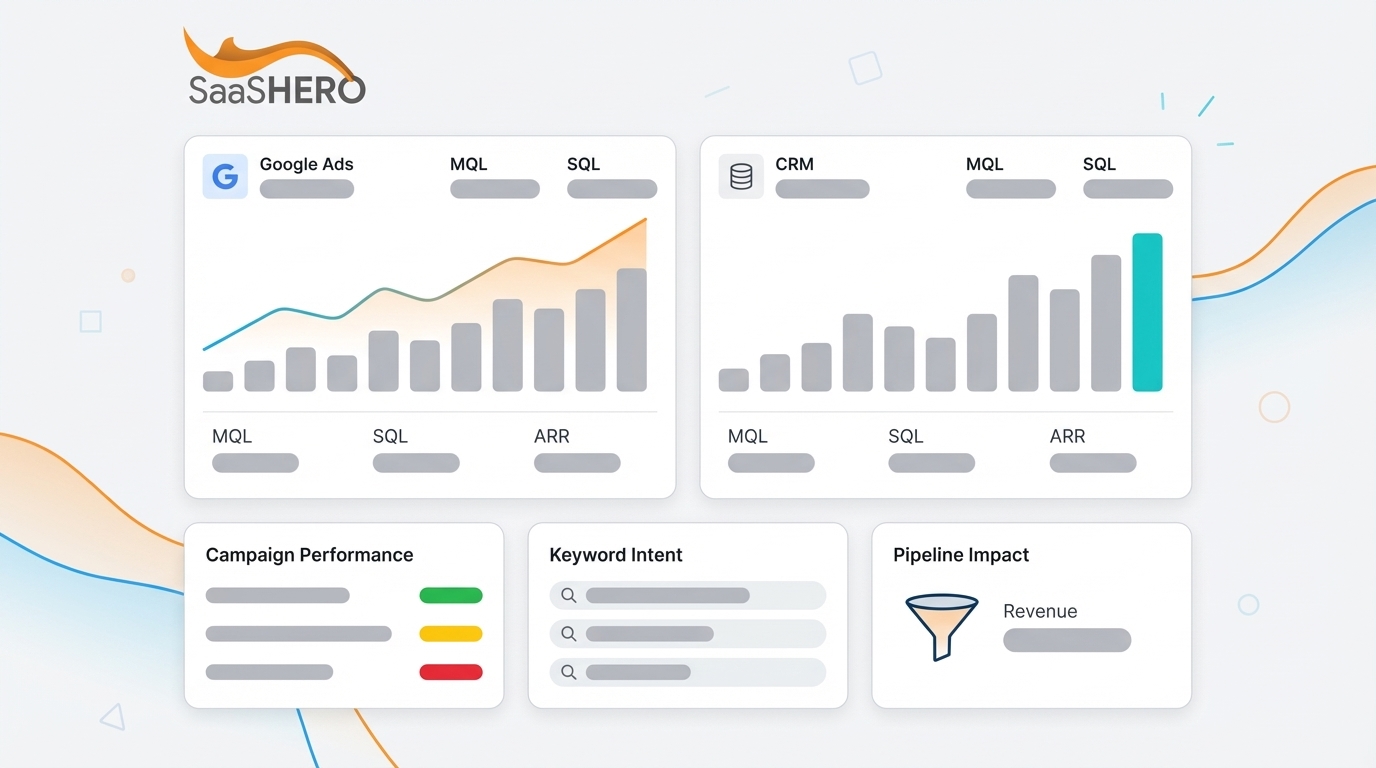
- Most B2B SaaS Google Ads accounts prioritize cheap leads and click metrics while underperforming on qualified pipeline and ARR.
- A structured forensic audit aligns campaigns, tracking, and bidding with revenue metrics like SQLs, opportunities, and payback period.
- Clarifying intent, tightening keyword and negative keyword strategy, and improving landing pages increases lead quality and reduces CAC.
- Clear reporting and attribution connect Google Ads performance to CRM data, which supports better budget decisions and sales alignment.
- SaaSHero can help you run or validate this audit; schedule a discovery call to review your current Google Ads performance.

Understanding the Unique Demands of B2B SaaS Google Ads
Why B2B SaaS is Different: Beyond Impressions and Clicks
B2B SaaS buyers move through long, multi-stakeholder sales cycles with high lifetime value and sales processes that often span several months. These journeys require a focus on SQLs, pipeline value, and ARR instead of surface metrics like clicks or form fills.
Revenue-focused campaigns align bids and budgets with CAC, LTV, and pipeline velocity, so one high-value deal can justify higher CPCs when it leads to profitable acquisition.
Common Pitfalls in B2B SaaS Google Ads Management
Treating B2B like B2C, optimizing for cheap leads, and targeting broad, unfocused keywords often attracts job seekers, students, and low-intent traffic. Mixed intents and personas inside the same campaigns or ad groups create noisy data and limit optimization.
Prerequisites for Your Forensic Google Ads Audit: Laying the Groundwork
Essential Access and Tools Needed
Secure admin access to Google Ads, Google Analytics, your CRM, and Google Tag Manager before starting. A connected view across web analytics, product data, and CRM records enables full-funnel analysis from first touch to expansion.
Set up Enhanced Conversions for Leads, offline conversion imports, and clear conversion values for key actions so the audit reflects actual revenue impact rather than partial activity metrics.
Key B2B SaaS Metrics to Focus On
Prioritize CAC, LTV, net new ARR, SQLs, opportunity value, and payback period. These metrics tie directly to unit economics and growth efficiency.
Base performance evaluations on profitability, not just lead volume, so high-intent but more expensive leads are not penalized if they convert at stronger rates.
Setting Realistic Expectations for the Audit
Plan 8–12 focused hours over about a week to complete a thorough audit, then expect an additional 60–90 days for optimizations to stabilize. Most B2B programs need several months to reflect full ROI because of long sales cycles and algorithm learning.
Treat the audit as a baseline for continuous improvement rather than a one-time project.
Your 7-Step Forensic Audit Plan: A High-Level Framework
This framework keeps the audit structured and focused on revenue impact:
- Account Structure and Naming Conventions: Clarify segmentation and hierarchy.
- Keyword Intent and Match Types: Align queries with buyer intent.
- Negative Keywords: Protect budgets from irrelevant traffic.
- Conversion Tracking and Value Alignment: Connect actions to revenue.
- Ad Copy and Landing Page Relevance: Match messages to intent and offers.
- Bid Strategies and Budget Allocation: Align spend with profitability.
- Reporting and Attribution to Revenue: Link campaigns to pipeline and ARR.
Step 1: Deconstructing Your Google Ads Account Structure for B2B SaaS
Evaluating Campaign Hierarchy and Segmentation
Segment campaigns by brand, non-brand, competitor, and retargeting to keep intent clear. This structure supports precise budgets and cleaner reporting.
Separating problem-aware, solution-aware, and product-aware stages allows messaging and bids to reflect where prospects are in their decision process.
Granularity: From Overly Broad to Tightly Themed Ad Groups
Use tightly themed ad groups so each cluster of keywords reflects a single intent or topic. SKAGs or STAGs often help with better ad relevance and Quality Score when used thoughtfully.
Remove mixed-intent ad groups that combine research, feature, and pricing queries, because they limit ad relevance and muddy performance data.
Why Structure Impacts B2B Budget Control and Reporting
Granular structure prevents high-performing brand terms from hiding weak performance in other segments. It also supports account-based tactics such as campaigns tailored by industry or company size.
Step 2: Unpacking Keyword Intent and Match Types for Qualified B2B Leads
Identifying High-Intent B2B Keywords
Include clear purchase-intent terms such as “[category] software,” “[competitor] alternative,” and comparison searches that signal active evaluation.
Map keywords to funnel stages and prioritize problem, solution, and pricing queries, which typically correlate with higher-quality opportunities.
Optimizing Match Types for Precision
Use Broad Match carefully and always with strong negative keyword coverage in technical B2B categories.
Review Search Term Reports regularly to harvest new positive keywords and add negatives, improving intent alignment over time.
Avoiding the “Cheap Lead” Trap
Exclude broad general terms that attract researchers, job seekers, and users without buying authority. Low CPL does not help if those leads never progress to SQLs.
Prioritize keywords used by real buyers evaluating solutions, even when CPCs are higher, because these terms usually create more pipeline per dollar.
Step 3: Fortifying Your Defenses with Comprehensive Negative Keywords
Building Your Essential B2B Negative Keyword Lists
Create account-level and campaign-level negative lists for non-commercial intents such as “free,” “jobs,” “career,” “student,” “login,” “support,” “PDF,” “templates,” and “open source.” Use search term analysis to update these lists continuously and share them across campaigns for consistency.
The Importance of Ongoing Negative Keyword Refinement
Consistent negative keyword work reduces wasted spend and improves overall traffic quality, especially in industries with complex terminology.
Track recurring patterns such as competitor research, academic queries, and support-related searches, then block them proactively in future campaigns.
Maximizing Efficiency: Using Negatives in AI-Driven Campaigns
Performance Max negatives apply only to Search and Shopping inventory, so strong account-level negatives become critical guardrails for B2B programs.
Many teams feel stretched by the tracking and optimization required for this level of control. Book a discovery call if you want support building and maintaining this structure for your SaaS.
Step 4: Verifying Conversion Tracking and Aligning with B2B Revenue
Tracking Beyond Form Fills: From MQL to SQL to ARR
Audit every conversion action and ensure tracking for high-value events such as demos, trials, and qualified calls, not just basic forms. Enhanced Conversions for Leads helps tie CRM outcomes back to ad clicks even when cookies are limited.
Assigning Conversion Values for Revenue-Driven Optimization
Use different values for events based on downstream conversion rates and average deal sizes. Import SQLs, opportunities, and closed-won revenue from your CRM so bid strategies can prioritize actions that lead to real ARR.
The Impact of Accurate Tracking on Bidding and Profitability
Reliable conversion data enables Smart Bidding to optimize toward profitability instead of shallow engagement metrics. Without this, decisions rely on incomplete signals.
Step 5: Evaluating Ad Copy and Landing Page Relevance for B2B Conversions
Crafting Ad Copy that Resonates with B2B Buyers
Write ads that reference specific pains, target roles, and business outcomes rather than generic product claims. Improving Google’s Ad Strength to “Good” or “Excellent” often raises conversion volume through better relevance and coverage.
Optimizing Landing Pages for B2B SaaS Conversion
Ensure strong ad-to-page message match and clear offers such as demos, trials, or pricing access. Check load speed, mobile experience, and form length so busy buyers can convert quickly.

The Synergy Between Ad Copy, Landing Pages, and Quality Score
Consistent messaging from keyword to ad to landing page improves Quality Score, lowers CPCs, and raises conversion rates. Even small gains here compound across your funnel.
|
Element |
High-Converting B2B |
Generic Approach |
Impact |
|
Headline |
Specific business outcome |
Generic product feature |
Higher CTR |
|
CTA |
“Get Demo” or “See Pricing” |
“Learn More” |
Higher conversion rate |
|
Social Proof |
Logos and concrete metrics |
Vague testimonials |
More trust |
|
Form Fields |
3–4 essential fields |
7+ detailed fields |
Higher completion rate |
Step 6: Optimizing Bid Strategies and Budget Allocation for B2B Profitability
Aligning Bid Strategies with B2B Business Goals
Select bid strategies based on conversion values and objectives, such as Maximize Conversion Value for variable deal sizes or Target CPA when values are similar. Use experiments to compare current bidding with value-based approaches before rolling out broadly.
Efficient Budget Pacing and Allocation in B2B
Review budget pacing, device, location, and audience performance and shift spend to segments that produce more pipeline per dollar instead of just more clicks.
Considerations for Niche and High-Value B2B Markets
High CPCs are common in niche B2B categories, so each click must be highly qualified. Concentrate budget on the most valuable, high-intent terms and adjust by time of day or season when your audience is most engaged.
Step 7: Refining Reporting and Attribution to Connect Ads to Revenue
Moving Beyond Vanity Metrics: Focusing on Pipeline and ARR
Shift dashboards toward SQLs, opportunities, and ARR created. Include CAC and payback period to evaluate true performance, not just lead counts.
Connect Google Ads data with CRM reports so you can trace campaigns from click to closed-won revenue.
Addressing B2B Attribution Challenges
Use multi-touch models where possible so early-stage campaigns receive appropriate credit within long buying cycles.
Create regular feedback loops with sales on lead quality and objections, then apply this insight to keyword choices, ad copy, and offers.
Long-Term B2B Performance Measurement and Iteration
Allow 60–90 days for campaigns and bidding strategies to stabilize and 3–6 months to see full ROI. Keep optimization focused on pipeline and revenue, not just form submissions.
Run monthly reviews that combine early indicators like engagement with lagging indicators such as pipeline and ARR so you can refine without overreacting to short-term noise.
FAQ Section: Common Questions About B2B SaaS Google Ads Audits
How long does a forensic audit typically take for a B2B SaaS company?
Most teams can complete a focused forensic audit in 8–12 hours over one week, with extra time if tracking or CRM connections need to be fixed. Expect 2–3 months to implement key changes and see stable performance trends.
What team roles should be involved in this audit process?
Include a paid media owner, a CRM or operations specialist for tracking and data integrity, and an executive stakeholder to align the work with revenue goals. External agencies should have admin access and a clear channel to sales for lead quality feedback.
How often should we audit our Google Ads campaigns?
Run a full audit quarterly and lighter checkups monthly that focus on search terms, conversion tracking accuracy, and business KPIs. Weekly reviews can concentrate on budgets, negatives, and bid strategy performance.
What are the main risks of a DIY audit, and how can they be mitigated?
Common risks include missing technical tracking gaps, misreading data, and making large changes that reset learning. Reduce this risk by documenting baselines, testing changes in stages, and involving multiple stakeholders in review.
How can this audit be adapted for different sizes of B2B SaaS organizations?
Early-stage companies can focus on getting tracking right and concentrating spend on a small set of high-intent terms. Growth-stage and enterprise teams can layer on attribution models, account-based segments, and more advanced automation and reporting.
What if results do not improve after implementing audit recommendations?
Revisit conversion tracking, keyword-to-offer fit, and landing page experience if performance stalls after 60–90 days. In some cases, the constraint sits with offer quality or sales process rather than ad execution, so full-funnel review is important.
Can this audit also prepare us for AI-driven campaign types like Performance Max?
The audit steps create the core ingredients for Performance Max, including accurate conversion tracking, clear values, strong negatives, and quality creative assets. Well-structured Search campaigns provide the data needed to configure and monitor Performance Max for B2B outcomes.
Conclusion: From Audit Insights to Measurable B2B SaaS Growth
A detailed Google Ads audit gives a clear view of where budgets are working, where they are wasted, and how to align campaigns with revenue goals. With better structure, intent-focused keywords, solid tracking, and revenue-based reporting, your account can shift from chasing cheap leads to generating predictable pipeline and ARR.
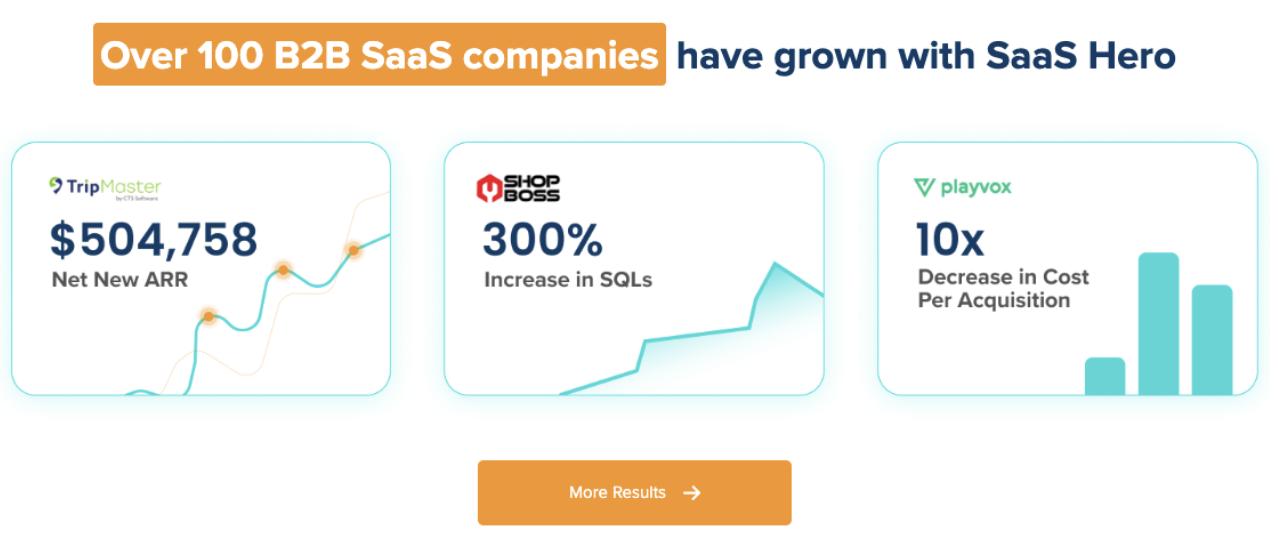
SaaSHero works with B2B SaaS teams to complete forensic audits, implement changes, and manage ongoing optimization. Book a discovery call to review your current Google Ads performance and identify the fastest path to more qualified pipeline.