




Last updated: January 28, 2026
Key Takeaways for SaaS CRO in 2026
- B2B SaaS conversion rates average 2-7% in 2026, so teams need revenue-first CRO tools that track GCLID-to-ARR for Rule of 40 compliance.
- Behavioral analytics tools like Hotjar and Fullstory uncover 15-25% conversion blockers through heatmaps and session replays connected to HubSpot.
- A/B testing platforms VWO and Optimizely often deliver 20% or higher uplifts on long B2B funnels, with VWO enabling no-code testing for lean teams.
- Personalization tools such as Mutiny increase enterprise SQLs by about 40% using AI-driven ABM and CRM data for dynamic content changes.
- Attribution tools WhatConverts and Cometly reach about 90% accurate GCLID-to-revenue tracking; book a discovery call with SaaSHero for implementation that targets an 80-day payback.
1. Behavioral Analytics Tools That Expose SaaS Funnel Friction
Hotjar
Hotjar provides heatmaps, session recordings, surveys, form analytics, and funnels that show exactly where prospects drop off in your conversion flow. The platform’s AI insights flag friction patterns such as rage clicks and form abandonment, which help B2B SaaS teams fix lengthy demo or trial request forms.
Hotjar connects directly with HubSpot so you can tie user behavior to lead stages in your sales funnel. Session recordings highlight rage clicks, scroll drop-offs, and form issues that reduce SQL creation and slow pipeline growth.
|
Pros |
Cons |
2026 Pricing |
SaaS Benchmark |
|
30-day free trial, intuitive interface |
Limited advanced segmentation |
$32/month Basic |
Identifies 15-25% conversion blockers |
|
No developer dependency |
Data sampling on higher plans |
Custom enterprise pricing |
Reduces form abandonment 20% |
SaaSHero pairs behavioral analytics setup with negative keyword strategies that removed 10x cost-per-lead waste for clients like Playvox. Book a discovery call to roll out analytics with competitor conquesting landing pages.
Fullstory
Fullstory records every user interaction with AI-powered session replay and automatic event tracking. The platform shines in mapping micro-conversions across complex B2B funnels, from whitepaper downloads to demo scheduling and trial activation.
Its CRM attribution features connect behavior data directly to closed-won revenue in Salesforce. This link helps teams prioritize UX fixes that move the pipeline and Net New ARR instead of chasing vanity metrics.
2. A/B Testing Platforms Built for Long B2B Sales Cycles
VWO
VWO’s visual editor gives marketers control without developer support, which matters for lean SaaS teams that need fast testing cycles. The platform combines A/B testing with built-in heatmaps and session recordings, so it can replace several separate CRO tools.
VWO works especially well for long-form B2B assets such as pricing pages, feature comparison pages, and solution overviews. The platform supports e-commerce optimization, lead generation tests, and visitor behavior analysis with direct GA4 integration for ARR funnel tracking.
|
Pros |
Cons |
2026 Pricing |
SaaS Benchmark |
|
Visual editor, no dev needed |
Limited client-side testing depth |
$199+/month Growth |
20% average uplift |
|
Unified testing plus analytics |
Enterprise SDK integration required |
Custom enterprise pricing |
3-month test cycles |
SaaSHero’s landing page build service aligns closely with VWO testing so you can refine conversion paths from first click through closed deal.

Optimizely
Optimizely offers enterprise scalability and strong cross-platform support, but it usually needs significant developer resources for server-side tests and feature flags. The platform fits high-traffic SaaS companies that run complex experiments across web apps, mobile apps, and product features.
See SaaSHero’s proven results implementing enterprise CRO programs that produced $504k Net New ARR for clients like TripMaster.

3. Personalization Platforms That Accelerate Enterprise SQLs
Mutiny
Mutiny specializes in enterprise account targeting, ABM personalization, and pipeline influence tracking with tight CRM integrations. The platform uses Clearbit data to personalize hero copy, proof points, and CTAs based on company size, industry, and tech stack.
For B2B SaaS teams running account-based marketing, Mutiny provides playbooks for marketers using Clearbit or 6sense data for segmentation. Its no-code interface lets marketers launch tailored experiences quickly, which increases enterprise deal velocity and SQL quality.
|
Pros |
Cons |
2026 Pricing |
SaaS Benchmark |
|
AI-powered ABM personalization |
Limited backend flexibility |
$20k+/year enterprise |
40% increase in enterprise SQLs |
|
Clearbit/6sense integration |
Needs enterprise-scale data |
Custom implementation |
25% faster deal velocity |
SaaSHero uses personalization tools as a competitor conquesting engine, tailoring landing pages to the specific competitor a prospect is researching.
4. Attribution Platforms That Tie Spend to Net New ARR
WhatConverts
WhatConverts offers dedicated integrations for HubSpot CRM and Salesforce that support true GCLID-to-revenue tracking. The platform links every marketing touchpoint to closed-won deals, which solves a core attribution challenge for B2B SaaS teams.
Lead tracking follows journeys from first click to closed sale, with CRM integrations centralizing data for Net New ARR reporting. This visibility supports accurate CAC calculations and more confident Rule of 40 planning.
|
Pros |
Cons |
2026 Pricing |
SaaS Benchmark |
|
HubSpot/Salesforce native integration |
Complex setup for large enterprises |
$30/month Starter |
90% attribution accuracy |
|
GCLID-to-revenue tracking |
Limited real-time reporting |
$200/month Pro |
30% CAC reduction |
SaaSHero delivers fast payback periods, as seen with TestGorilla, by implementing attribution that connects every marketing dollar to real revenue.
Cometly
Cometly supports extensive integrations, including deep connections with HubSpot and Salesforce for flexible multi-touch attribution. The platform tracks complex B2B journeys across channels and touchpoints, which gives growth teams the clarity needed for budget and bid decisions.
Book a discovery call to roll out attribution tools that provide the revenue visibility your leadership team expects.
5. Heuristic CRO Tools for Fast, Pre-Test Wins
Heap
Heap auto-captures clicks, form submits, and transactions with a clean dashboard that needs no manual event setup. This automatic capture suits SaaS teams that want full-funnel data without heavy engineering work.
Heap integrates with Mixpanel for deeper funnel analysis that pinpoints exact drop-off steps in your conversion paths. This heuristic approach surfaces quick wins before you invest time in formal A/B tests.
SaaSHero’s heuristic audits uncover conversion improvements before testing begins, which creates immediate ROI while longer experiments run in the background.
Implementing CRO Tools for SaaS Rule of 40 Targets
Rule of 40 compliance depends on a healthy balance between growth rate and profit margin that reaches at least 40% combined. Prioritize attribution tools that measure growth efficiency, connect CRM data for accurate revenue reporting, and benchmark performance against the 3-3-2-2-2 rule for sustainable scaling.
Focus on tools that lower CAC while protecting growth speed through higher conversion rates and stronger customer lifetime value. This approach keeps CRO aligned with board-level financial metrics.
Closing the Implementation Gap for 80-Day Payback
Many SaaS companies buy CRO tools yet never see meaningful gains because of weak implementation and a focus on vanity metrics. Revenue impact arrives when every tool connects to pipeline, ARR, and payback, not just clicks or scroll depth.
|
Approach |
ARR Tracking |
Pricing Model |
Payback Speed |
|
Top 5 Tools |
Platform-dependent |
Per-seat/usage |
6+ months |
|
Traditional Agencies |
Limited visibility |
% of spend |
12+ months |
|
SaaSHero Implementation |
GCLID-to-revenue |
Flat monthly |
Fast payback like TestGorilla |
SaaSHero closes this gap with senior-led implementation that ties each tool to your revenue pipeline so conversion lifts translate into Net New ARR growth.
Prioritizing Revenue-First CRO with SaaSHero
CRO tools only create value when they integrate cleanly with your revenue operations. Start with attribution platforms such as WhatConverts or Cometly to gain ARR visibility, then add behavioral analytics and testing tools on top.
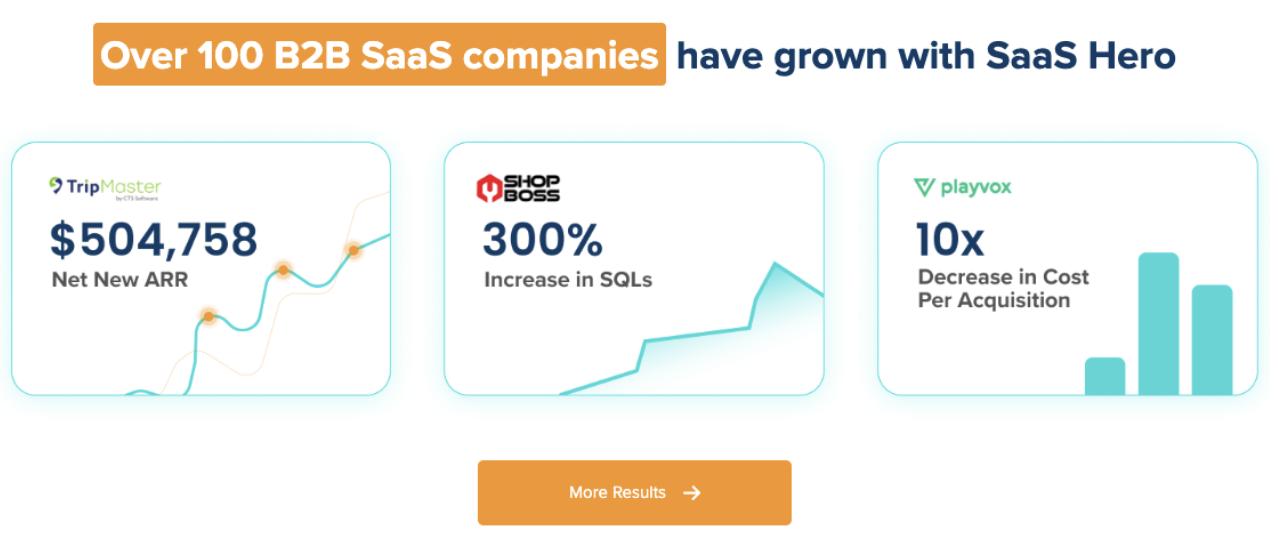
Choose tools that connect smoothly with your existing HubSpot or Salesforce setup. SaaSHero has helped clients secure $70M Series A rounds, cut cost per lead by 10x, and add more than $500k in Net New ARR through focused CRO programs.
Our flat-fee, month-to-month model aligns incentives with your growth targets instead of vendor quotas. Book a discovery call with a leading B2B SaaS CRO agency for proven revenue outcomes.
Frequently Asked Questions
What are the best free CRO tools for B2B SaaS startups?
Hotjar offers a free plan with basic heatmaps and session recordings, which covers early behavioral insights. Microsoft Clarity provides unlimited free usage for smaller sites and includes heatmaps and session replays.
Google Analytics 4 adds free funnel analysis and conversion tracking. UsabilityHub supports free five-second tests and first-click tests for quick UX checks. These tools give early-stage SaaS teams essential data before they upgrade to premium platforms, and SaaSHero can configure and refine them within a startup retainer.
How do attribution tools measure SaaS marketing ROI accurately?
Attribution platforms such as WhatConverts and Cometly track the full customer journey from first ad click, including GCLID, through HubSpot or Salesforce to closed-won revenue. They connect touchpoints across channels and sessions, which produces multi-touch attribution that highlights which campaigns create Net New ARR instead of just MQLs.
This data supports precise CAC calculations, stronger LTV performance, and ongoing Rule of 40 monitoring. The crucial step is a tight CRM integration that passes revenue data back into your marketing platforms for smarter bidding and budgeting.
How should B2B teams choose between Optimizely and VWO?
VWO suits marketer-led optimization because of its visual editor and built-in behavioral analytics, so teams without dedicated developers often prefer it. The platform supports long B2B sales cycles with funnel analysis and session recordings.
Optimizely offers deeper enterprise features and robust server-side testing, yet it usually requires more technical resources to run and maintain. For most B2B SaaS companies with 3-6 month sales cycles, VWO delivers faster time to value, while Optimizely fits large enterprises with complex engineering needs.
Which AI-powered CRO tools lead the market in 2026?
Hotjar AI turns heatmap and session data into automated insights that highlight friction and behavior patterns without manual review. Mutiny uses AI to drive dynamic personalization based on firmographic data and visitor behavior, which tailors content for each account segment.
VWO and Optimizely both include AI features for test recommendations and automatic winner detection. These capabilities shorten the path from insight to live improvement, which matters in competitive B2B SaaS markets.
Which SaaS metrics show successful conversion optimization?
Rule of 40 compliance, where growth rate plus profit margin exceed 40%, signals sustainable performance. Core conversion metrics include trial-to-paid conversion above 20% for sales-assisted models and lead-to-customer conversion above 5%.
Payback periods under 12 months indicate efficient CAC recovery. Net Revenue Retention above 120% reflects strong expansion and upsell performance, while monthly churn below 3% points to solid product-market fit supported by effective onboarding and lifecycle optimization.