




Key Takeaways
- High-converting SaaS landing pages with video demos, clear value props, and social proof can deliver up to 305% higher awareness-stage conversion rates.
- Case studies using a clear challenge, solution, and results structure with quantified ROI increase sales effectiveness by 49% and support funding rounds like TestGorilla’s $70M Series A.
- Competitor comparison tables that capture high-intent traffic highlight strategic advantages through feature matrices, total cost of ownership analysis, and use case testimonials.
- Transparent pricing pages with calculators, tiered options, and freemium paths reduce decision friction while addressing enterprise objections.
- Partnering with SaaSHero gives you custom, revenue-focused collateral on month-to-month retainers, with results like $504k ARR growth for TripMaster.
Awareness-Stage SaaS Landing Pages That Consistently Convert
Landing pages form the core of SaaS marketing collateral and directly affect customer acquisition costs when aligned with buyer intent and conversion goals.
1. Dropbox Business Video-First Landing Page
Why It Converts: Dropbox leads with a 60-second product demo video above the fold, which immediately shows how the product works. The headline “Your team’s content, together in one place” speaks directly to file fragmentation pain. Social proof appears within seconds through customer logos such as Spotify and Under Armour.
Revenue Proof: Video-first landing pages can drive conversion lifts up to 305%, similar to results achieved for Shop Boss through SaaSHero’s landing page improvements.
2. Stripe Payment Processing Clarity
Why It Converts: Stripe passes the 5-second clarity test with the headline “Online payments for internet businesses.” Visitors instantly understand what Stripe does and who it serves. Live transaction volume counters add real-time social proof and reinforce trust.
Revenue Proof: Clear value propositions within 5 seconds correlate with roughly 40% higher conversion rates in B2B SaaS funnels.
3. HubSpot Free CRM Landing Page
Why It Converts: The “Get started for free” message removes early friction and encourages trial. A feature comparison table positions the free tier against paid alternatives so visitors see the upgrade path. Trust signals such as G2 badges and “100,000+ customers” reinforce credibility.
4. Slack Team Communication Hub
Why It Converts: An interactive product tour sits directly on the landing page so prospects can explore Slack without creating an account. The “See how Slack works” call to action feels low commitment while still building familiarity with the interface.
5. Zoom Video Conferencing Simplicity
Why It Converts: A single email field with “Sign Up Free” keeps form friction extremely low. Security badges such as SOC 2 and GDPR appear near the form and immediately address enterprise security concerns.

LinkedIn Ads and Video Collateral That Drive B2B Pipeline
LinkedIn dominates B2B lead generation, with 89% of B2B marketers using the platform for lead generation and 62% reporting it generates leads, more than double the next channel. Video and targeted ads build awareness while establishing trust through thought leadership.
1. Gong Revenue Intelligence Video Series
Why It Converts: Gong’s LinkedIn video ads feature anonymized customer call recordings that show their AI in real scenarios. The hook “See what your prospects really think” sparks curiosity and demonstrates tangible value.
Revenue Proof: Video ads remain a core marketing trend in 2026, with AI-driven personalization increasing engagement and watch times.
2. Outreach Sales Engagement Targeting
Why It Converts: Outreach runs hyper-targeted LinkedIn ads aimed at roles like “VP Sales” and “Sales Director.” Messages such as “Stop losing deals to no-decision” speak directly to painful outcomes and grab attention quickly.
3. Salesforce Customer Success Stories
Why It Converts: Salesforce uses LinkedIn carousel ads that feature customer logos with specific ROI metrics such as “30% increase in sales productivity.” Each slide highlights a different industry, which supports precise audience targeting.
4. Monday.com Project Management Demos
Why It Converts: Short 15 to 30 second video demos walk through real workflows inside Monday.com. The visual format makes the product’s value obvious without heavy explanation.
5. Zendesk Customer Service Automation
Why It Converts: Zendesk targets customer service leaders with outcomes like “Reduce ticket volume by 40%.” The copy maps directly to KPIs that support budget approvals.
Consideration-Stage SaaS Case Studies That Win Deals
Case studies rank among the most effective B2B SaaS sales assets, with 82% following a challenge, solution, and results structure. These stories build credibility when prospects compare multiple vendors.
1. HubSpot Customer Growth Case Study
Why It Converts: HubSpot case studies follow a strict challenge, solution, and results format with clear metrics. Headlines such as “How Company X Increased Leads by 300%” communicate value immediately. Industry-specific examples help readers see themselves in the story.
Revenue Proof: Well-structured case studies can increase sales effectiveness by 49% when they include quantified outcomes.
2. TestGorilla HR Tech Success Story
Why It Converts: This case study highlights an 80-day payback period, which matters deeply to SaaS buyers focused on ROI. Details such as 5,000+ new customers added show scale and traction.
Revenue Proof: The asset supported TestGorilla’s $70M Series A by proving strong unit economics to investors.
3. Playvox CX Platform Performance Gains
Why It Converts: The story emphasizes a 10x decrease in cost per lead and a 163% increase in lead volume. This combination of lower cost and higher volume addresses both efficiency and growth goals.
4. TripMaster Transit Software ARR Growth
Why It Converts: The narrative focuses on Net New ARR of $504,758 instead of vanity metrics. A 650% ROI and 20% conversion rate from paid search give prospects concrete performance benchmarks.

5. Leasecake Real Estate Tech Funding Story
Why It Converts: The case study connects marketing performance directly to a $3M VC round. Startup buyers relate to this link between pipeline growth and investor confidence.
SaaSHero produces these conversion-focused case studies as part of a month-to-month retainer with no long-term contracts. Book a discovery call to review examples from your industry.
Competitor Comparison Pages That Capture High-Intent Buyers
Competitor comparison pages attract prospects who already evaluate alternatives and search for “your tool vs competitor” terms. These pages must stay honest while still positioning your product as the strategic choice.
1. Slack vs Microsoft Teams Comparison
Why It Converts: A side-by-side feature matrix uses clear checkmarks and X marks for quick scanning. Pricing comparisons show total cost of ownership instead of only per-seat pricing. Integration sections highlight Slack’s app marketplace strength.
2. Zoom vs WebEx Feature Analysis
Why It Converts: The page organizes content by use case such as “Large meetings,” “Webinars,” and “Phone system.” Each section includes testimonials from customers who match that use case.
3. HubSpot vs Salesforce CRM Matchup
Why It Converts: The comparison acknowledges Salesforce’s enterprise capabilities while positioning HubSpot as a better fit for mid-market teams. An implementation timeline comparison, such as 30 days versus 6 months, addresses a major buying factor.
4. Stripe vs PayPal Payment Processing
Why It Converts: The page focuses on developer needs, including API documentation quality, webhook reliability, and international payment support. Technical buyers value this level of detail.
Decision-Stage SaaS Pricing Pages That Remove Friction
Pricing pages act as the final conversion step in many SaaS funnels. Effective layouts address objections, clarify value, and make purchasing straightforward.
1. Stripe Transparent Pricing Model
Why It Converts: Per-transaction pricing of 2.9% plus 30¢ appears clearly with no hidden fees. A pricing calculator lets prospects estimate monthly costs based on volume. Enterprise buyers see a “Contact sales” option for custom agreements.
2. Zoom Tiered Pricing Strategy
Why It Converts: Zoom clearly separates Basic (free), Pro, Business, and Enterprise tiers with specific prices and features. An annual discount of up to 16% encourages longer commitments without confusion.
3. HubSpot Freemium to Premium Path
Why It Converts: A free tier removes early risk and encourages signups. Feature limits in the free plan create natural upgrade pressure while still delivering real value.
4. Salesforce Enterprise Pricing Structure
Why It Converts: Multiple product lines such as Sales Cloud, Service Cloud, and Marketing Cloud let buyers start with their most urgent need. Custom pricing for Enterprise signals flexibility while still outlining what each product includes.
Email Nurture Collateral That Keeps Prospects Engaged
Email nurture sequences keep prospects warm between first touch and purchase. Roughly 20% to 40% of webinar attendees enter the sales pipeline as qualified leads, so follow-up sequences matter for revenue.
1. HubSpot Educational Email Series
Why It Converts: A seven-email sequence focuses on inbound marketing education instead of constant product pitches. Each message offers practical tips while subtly positioning HubSpot as the natural solution. The final email introduces an ROI calculator.
2. Zoom Onboarding Sequence
Why It Converts: A 14-day sequence introduces features progressively. Each email covers one feature and includes a short video tutorial. Usage data triggers extra tips based on how each user engages with the product.
3. Slack Team Adoption Series
Why It Converts: Emails address common adoption hurdles such as “Getting your team to use Slack” and offer specific playbooks. Templates for communication guidelines and channel structure help admins roll Slack out smoothly.
4. Salesforce Industry-Specific Nurture
Why It Converts: Separate tracks exist for healthcare, financial services, manufacturing, and other industries. Each track includes relevant case studies and compliance details that match that sector.
5. Stripe Developer Education Track
Why It Converts: Technical emails share code samples, API docs, and integration guides. This content speaks directly to developers who influence payment platform decisions.
Social Proof Assets That Build SaaS Buyer Confidence
Social proof reduces skepticism by adding third-party validation. Roughly 82% of buyers trust peer reviews more than brand claims, so social proof elements play a central role in conversions.
1. G2 Badge Integration
Why It Converts: G2 “High Performer” and “Leader” badges provide independent validation at a glance. Placing them near pricing tables and signup forms reduces last-minute anxiety.
2. Customer Logo Walls
Why It Converts: Walls of recognizable logos, including Fortune 500 brands, create instant credibility. Grouping logos by industry helps visitors quickly find peers.
3. Video Testimonials
Why It Converts: Short 30 to 60 second videos feature customer leaders describing specific ROI outcomes. The focus stays on measurable results instead of vague satisfaction.
4. Usage Statistics
Why It Converts: Real-time counters show active users, processed transactions, or emails sent. These dynamic numbers demonstrate scale and reliability.
5. Industry Awards and Recognition
Why It Converts: Awards from analysts and industry publications, including Gartner Magic Quadrant and Forrester Wave placements, carry strong weight with enterprise buyers.
Launch Revenue-Driving Collateral Faster with SaaSHero
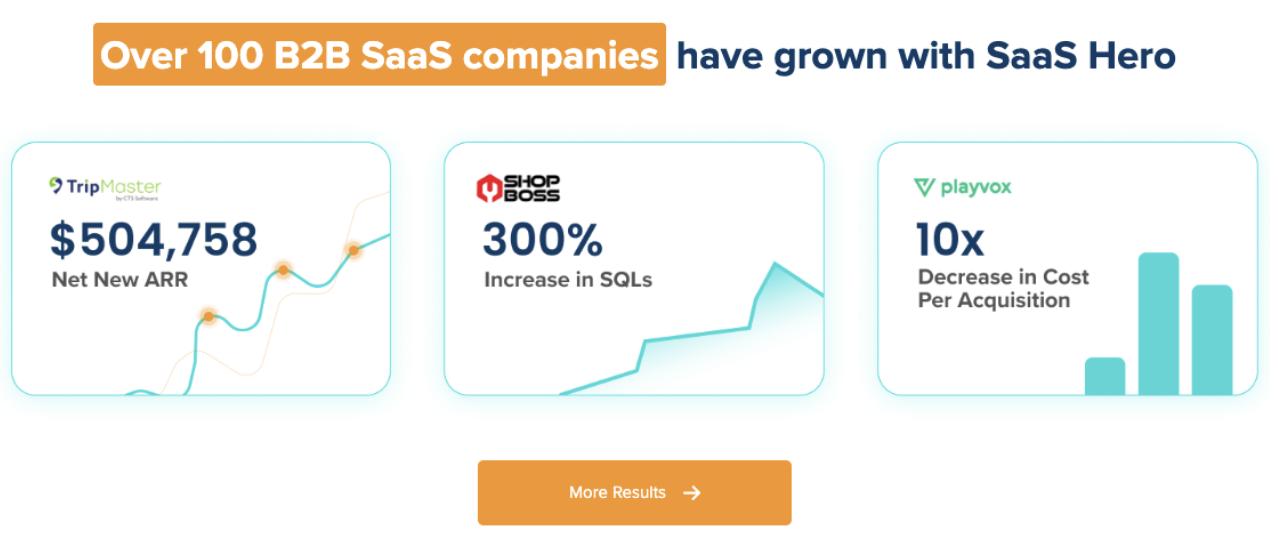
High-performing marketing collateral for B2B SaaS requires niche expertise, conversion-focused thinking, and continuous testing. SaaSHero uses flat monthly retainers starting at $1,250 instead of percentage-of-spend models. The senior team has delivered outcomes such as TripMaster’s $504k ARR increase, Playvox’s 10x cost-per-lead reduction, and Leasecake’s $3M funding round.
SaaSHero works on a month-to-month basis and earns your renewal every 30 days through performance. Landing page design starts at $750 and functions as a deliberate loss leader that helps your paid media convert more efficiently.
Ready to roll out these collateral strategies for your SaaS brand? Book a discovery call with SaaSHero and build a revenue-focused collateral stack.
Frequently Asked Questions
What are the most effective SaaS marketing collateral examples for B2B companies?
The most effective SaaS marketing collateral includes landing pages aligned to buyer intent, case studies with quantified ROI, competitor comparison pages, pricing tables with clear value differences, email nurture sequences, and social proof such as G2 badges. These assets support the full buyer journey from awareness through decision. Case studies can increase sales effectiveness by 49%, and webinars often generate 73% higher-quality leads than many other channels.
How do SaaS sales collateral templates impact revenue metrics like ARR and CAC?
Strategic sales collateral improves key SaaS metrics by lifting conversion rates and shortening sales cycles. Companies with strong collateral often see 305% conversion increases from video-first landing pages, 10x cost-per-lead reductions from competitor-focused campaigns, and 650% ROI improvements. Account-based collateral can raise average contract value by 171% and increase marketing-sourced revenue by 200%.
What are the best SaaS landing page examples that convert prospects to customers?
High-converting SaaS landing pages share several traits. They present a clear value proposition within 5 seconds, like Stripe’s “Online payments for internet businesses.” They feature video demonstrations above the fold, as Dropbox does, keep forms minimal like Zoom’s single email field, and display trust signals such as customer logos and security badges. They also mirror ad messaging and address specific buyer intent.
How should B2B SaaS companies structure competitor comparison collateral?
Effective competitor comparison pages use side-by-side feature matrices, total cost of ownership breakdowns, implementation timeline comparisons, and industry-specific use cases. The content acknowledges competitor strengths while highlighting your unique advantages. Relevant testimonials and a focus on the decision criteria that matter most to your target persona increase credibility.
What role does social proof play in SaaS marketing collateral effectiveness?
Social proof acts as a conversion catalyst because 82% of buyers trust peer reviews more than brand claims. Strong social proof includes G2 badges near pricing and signup forms, recognizable customer logos grouped by industry, video testimonials with specific ROI numbers, real-time usage statistics, and awards from analyst firms. These signals reduce risk and build confidence across the buyer journey.
Conclusion
The strongest SaaS marketing collateral examples in 2026 share clear value propositions, quantified outcomes, and alignment with each stage of the buyer journey. From Stripe’s transparent pricing to TestGorilla’s ROI-focused case studies, these assets convert because they speak to real buyer motivations at every funnel stage. They combine conversion principles with industry-specific language to drive measurable revenue.
Revenue-focused collateral benefits from ongoing testing and iteration. Companies that treat their assets like products and refine them based on conversion data see the best performance. Whether you are a founder launching early campaigns or a VP of Marketing scaling to millions in ARR, strategic collateral forms the base of sustainable growth.
Turn your SaaS collateral into a predictable revenue engine. SaaSHero’s methodology has generated millions in Net New ARR for B2B SaaS teams. Book a discovery call to design your custom collateral strategy.