




Key Takeaways
- B2B SaaS demo conversions improve fastest when agencies treat the funnel as an end-to-end system, not a set of disconnected tactics.
- Clear targeting and message match across ads and landing pages raise demo volume while protecting lead quality.
- Specialized demo pages, thoughtful forms, and structured testing lift conversion rates without requiring constant budget increases.
- Post-demo nurturing and reliable attribution connect marketing activity to pipeline, revenue, and long-term customer value.
- Agencies that want expert support with this full funnel approach can schedule a discovery call with SaaSHero to evaluate fit.

Prerequisites & Context for Demo Conversion Optimization
Effective demo optimization starts with the right tools, data access, and shared definitions between marketing and sales.
Core platforms should already be in place:
- CRM such as HubSpot, Salesforce, or Pipedrive with permissions to add fields and workflows
- Google Analytics 4 with conversion tracking configured
- Ad accounts for Google Ads, LinkedIn Ads, and paid social
- Landing page builder or development resources
- Email and marketing automation platform
- Behavior analytics tools like Hotjar or FullStory
Teams also need reliable data baselines:
- At least 90 days of funnel data by channel
- Customer acquisition cost, average deal size, and sales cycle length
- Sales feedback on demo quality and common objections
Shared funnel literacy is essential. Teams should clearly distinguish MQL, SQL, and opportunity stages and understand concepts like customer lifetime value and payback period. Benchmarks for small to mid-sized SaaS include 1.4% visitor-to-lead, 41% lead-to-MQL, and 39% MQL-to-SQL conversion, which gives helpful reference points.
Expect 2 to 3 weeks for initial setup and 5 to 10 hours per week for ongoing optimization over at least 60 to 90 days.
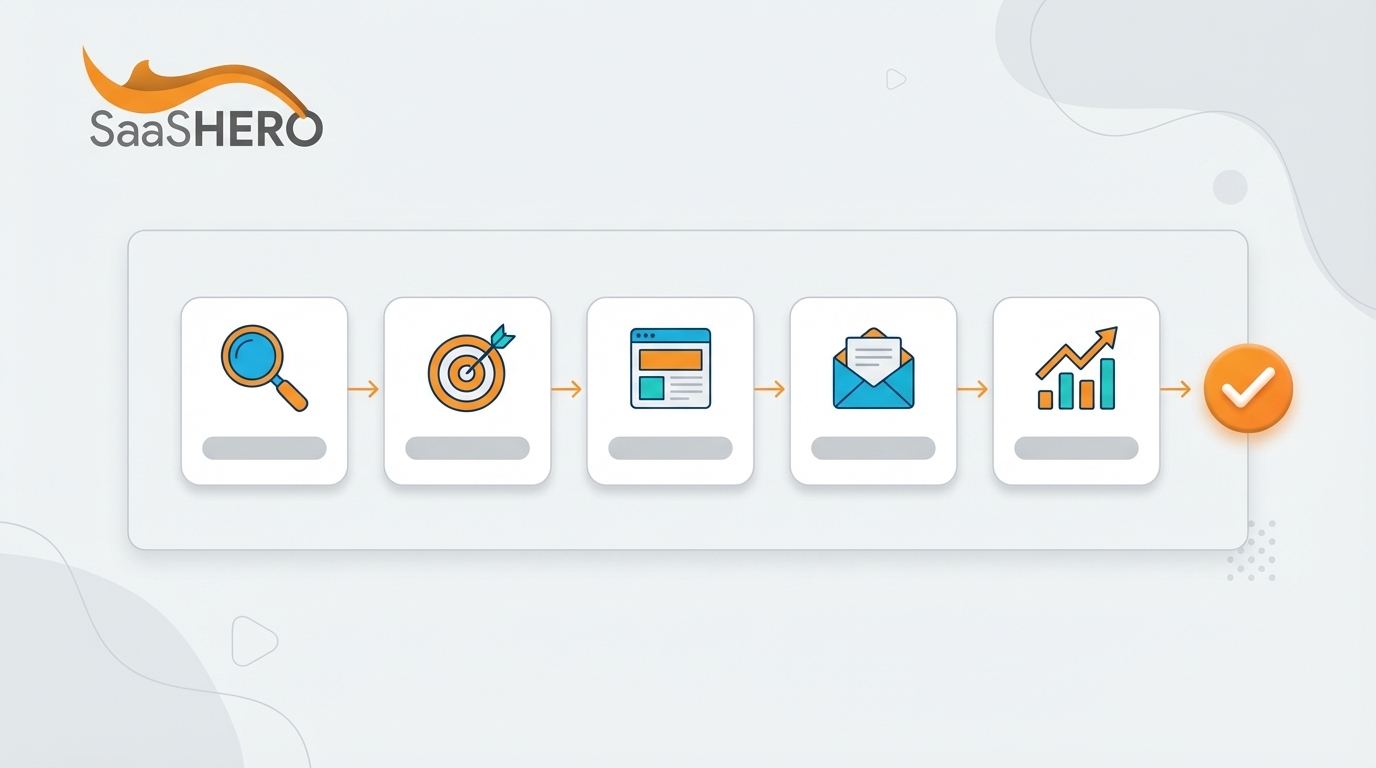
A 5-Step Framework for Demo Conversion Breakthroughs
Phase 1: Comprehensive Funnel Audit & Goal Alignment
This phase creates a clear view of current performance and reveals where conversions leak out of the funnel.
Key actions:
- Pull 90 days of data from the CRM and analytics, segmented by channel and campaign.
- Calculate visitor-to-demo, demo-to-opportunity, and opportunity-to-close rates.
- Audit demo pages for load speed, mobile experience, and form reliability. Page load under 2 seconds and backend response under 400 ms correlate with 50-80% higher top-funnel conversions.
- Interview several sales reps to understand demo quality, common disqualifiers, and missing context.
Focus areas become clear once data is mapped. Low visitor-to-demo rates suggest landing page work. Weak demo-to-opportunity performance points to targeting or qualification. Poor close rates often indicate product-market fit or sales process issues.
Phase 2: Precision Ad Targeting & Message Match Optimization
This phase improves the mix of people entering the funnel so demo volume grows without overwhelming sales with poor fits.
Start with a customer analysis:
- Identify common traits among high-value accounts such as company size, industry, and tech stack.
- Document roles, pain points, triggers, and decision criteria for each key persona.
Translate this into channel tactics:
- Build high-intent search campaigns, including competitor terms such as “[Competitor] pricing” and “[Competitor] alternatives”. PPC visitors often convert at 0.7% versus 2.1% for organic search, so precise targeting matters.
- Use LinkedIn targeting by job title, seniority, company size, and industry for each persona group.
- Write ad copy that names specific outcomes for that persona instead of generic “Book a demo” language.
Quality matters more than volume. Campaigns that drive fewer but more qualified demos usually produce better pipeline and lower CAC.
Phase 3: High-Converting Landing Page Design & CRO
This phase translates qualified clicks into booked demos through focused, relevant pages and careful experimentation.
Core principles for demo pages:
- Create dedicated pages for major segments and intent types, such as competitor comparison or use case.
- Use clear headlines tied to the problem, concise benefit subheads, and a simple hero visual of the product.
- Show targeted proof such as logos, ratings, and short quotes that match the audience.
- Keep forms short at first, then use progressive profiling for deeper qualification on later touches.
Effective demo pages often include integration details, security assurances, and role-specific content to reduce friction. Personalized calls to action can convert more than twice as well as generic CTAs, so test them early.
Technical quality supports all of this. Mobile experiences often underperform desktop by up to 60%, so mobile design and form usability should receive direct attention.

Phase 4: Post-Demo Nurturing & Sales Enablement
This phase keeps momentum between demo booking and close while giving sales the context needed to run effective conversations.
Recommended workflow:
- Trigger an immediate confirmation email with agenda, meeting link, and preparation steps.
- Send a short sequence with case studies, ROI examples, and relevant resources tailored to the prospect’s role.
- Collect extra qualification details through a short survey covering timeline, budget range, decision process, and stakeholders.
- Track on-site behavior between booking and demo, such as visits to pricing or case study pages, to gauge intent.
Demo show rate and demo-to-opportunity conversion are key health metrics for sales-led SaaS. Share performance data with marketing so both teams can refine messaging and follow-up content.
Phase 5: Advanced Attribution & CRM Integration
This phase connects every booked demo and closed deal back to originating campaigns, which supports better budget decisions.
Implementation steps:
- Capture GCLID and other click IDs on landing pages and pass them into the CRM.
- Use consistent UTM naming for LinkedIn, paid social, email, and partner campaigns.
- Store original source, campaign, and keyword at the contact and opportunity level.
- Build revenue reports that group deals by campaign and audience segment, not just by lead count.
Google Analytics 4 and CRM conversion imports help align marketing and revenue data. The goal is for nearly every opportunity to have a clear, traceable source so ROAS numbers are trustworthy.
Measuring Success: Validating Demo Conversion Strategies
Clear metrics keep teams aligned and help prove where the framework is working versus where it needs refinement.
Core funnel targets for dedicated demo pages:
- Visitor-to-demo: 3-5% for qualified paid and organic traffic
- Demo-to-opportunity: 50-70% for well-qualified demos
- Opportunity-to-close: 25-40%, depending on deal size and cycle length
Profitability metrics matter as much as volume. Customer acquisition cost and lifetime value provide the clearest view of campaign quality. Track deal velocity from demo to close so teams can see whether experiments shorten or lengthen the cycle.
Dashboards should update at least weekly and segment performance by channel, campaign, and segment. This structure allows quick shifts in spend toward the highest-value sources.
Beyond the Basics: Advanced Strategies for Sustained Demo Growth
Once the core framework is stable, selected advanced tactics can raise performance further without adding significant complexity.
- AI-powered personalization, where dynamic content based on visitor traits has been linked to 18-24% conversion lifts in B2B SaaS funnels.
- Experiment programs that run frequent A/B or multivariate tests on high-traffic pages. Teams that test more often generally see higher conversion gains.
- Predictive scoring models that highlight which demo requests are most likely to close so sales can prioritize their outreach.

Summary & Next Steps for Digital Marketing Agency Demo Conversion
This framework gives agencies a practical way to raise B2B SaaS demo performance without relying on constant spend increases.
Suggested rollout sequence:
- Complete a funnel audit and align on targets with sales.
- Refine targeting and message match in paid campaigns.
- Launch or upgrade dedicated demo pages for top segments.
- Add post-demo nurturing and simple sales enablement reports.
- Tighten attribution so every demo and deal maps back to its source.
Smaller teams can focus first on the audit, targeting, and landing pages, then layer in attribution and advanced testing once the basics are stable. Larger teams with more data can move faster into personalization and predictive tools.
Agencies that want hands-on help implementing this system for B2B SaaS clients can schedule a discovery call with SaaSHero to review current benchmarks and priority gaps.
Frequently Asked Questions About Digital Marketing Agency Demo Conversion
How long does it take to set up this framework and see results?
Most teams need 2 to 3 weeks to set up measurement, update targeting, and launch improved demo pages. Early improvements often appear within the first 30 days, with more reliable, statistically meaningful trends emerging after 60 to 90 days of consistent execution.
Which team roles should lead each phase?
Analysts and account leaders typically own Phase 1. Paid media specialists and copywriters drive Phase 2. Designers, developers, and CRO specialists handle Phase 3. Marketing automation and sales operations teams manage Phase 4. Data analysts and CRM admins lead Phase 5. Many agencies cover this with a core pod of 3 to 5 people.
What should teams do if metrics do not improve?
First confirm that tracking is accurate and that channel and campaign data tie correctly into the CRM. Next review traffic quality and lead feedback from sales to confirm fit. Then isolate where prospects drop off in the funnel and design focused tests on message match, form friction, or follow-up timing to address those specific breakpoints.