




Key Takeaways for Construction SaaS Revenue Growth
- Construction SaaS firms often face 15-20% churn and revenue leakage, yet smart pricing can reach 120%+ NRR and 2x ARR growth.
- Use the 7-step playbook: audit metrics, choose hybrid pricing models, A/B test tiers, and automate retention workflows.
- Hybrid subscription plus usage pricing delivers top 125% NRR benchmarks for construction workloads that vary by project.
- Cut churn with better onboarding, usage health scoring, proactive upsells, and seasonal campaigns that recover 15-25% of cancellations.
- Ready to improve pricing and revenue? Book a discovery call with SaaSHero for a free pricing audit and scalable revenue strategies.
Foundations You Need Before Changing Construction SaaS Pricing
Set up a solid data and tooling foundation before you adjust any pricing or subscription structure.
- Access to subscription data through Stripe, HubSpot, or your billing platform
- Google Optimize or similar A/B testing tools for pricing page experiments
- Baseline metrics such as current churn rate, ARPU, and customer lifetime value
- CRM integration that tracks revenue attribution from marketing touchpoints to closed deals
Define construction-specific concepts such as per-project pricing, field crew tiers, and equipment-based usage models. Plan for 4-6 weeks to see early results from pricing changes and rely on low-risk iterative tests that avoid disruption for existing customers.
The 7-Step Playbook to Reach 120% NRR
This structured playbook improves subscription pricing with clear, data-backed changes.
- Audit current value metrics and pricing alignment
- Analyze and rank the 7 core pricing models for construction SaaS
- Build tier structures that include hybrid elements
- A/B test pricing pages for stronger conversion
- Implement retention automations and strategic upsells
- Run competitor conquesting campaigns
- Review and adjust pricing every quarter
|
Pricing Model |
Construction Example |
NRR Benchmark |
Best For |
|
Per-User |
$50-200/user/month |
110% |
Team-based tools |
|
Usage-Based |
Per project/API call |
115% |
Variable workloads |
|
Hybrid |
Base + usage tiers |
125% |
Enterprise accounts |
Step-by-Step: Execute Construction Subscription Revenue Improvements
Step 1: Audit Value Metrics and Unit Economics
Start with a clear view of Customer Lifetime Value using the formula LTV = ARPU × (1 / churn rate) × gross margin. For construction software, include project seasonality and equipment upgrade cycles in your assumptions. A typical construction SaaS with $150 ARPU, 8% monthly churn, and 80% gross margin reaches an LTV of about $1,500.
Calculate Customer Acquisition Cost by dividing total sales and marketing spend by new customers acquired. Aim for an LTV/CAC ratio above 3:1 for sustainable growth and keep payback periods under 12 months so construction customers can manage cash flow swings.
Step 2: Rank the 7 Pricing Strategies for Construction SaaS
Tiered pricing serves multiple customer segments from SMB to enterprise, capturing varied value with clear upgrade paths. The list below highlights four of the seven core models and their impact on construction software.
|
Strategy |
Monthly Price Range |
NRR Impact |
Construction Use Case |
|
Hybrid Subscription + Usage |
$200 base + overages |
125% |
Project management with variable teams |
|
Feature-Based Tiers |
$50-500/month |
118% |
Good/Better/Best for different company sizes |
|
Per-Seat Pricing |
$25-150/user |
115% |
Team collaboration tools |
|
Usage-Based Only |
$0.10-5.00/unit |
112% |
API-heavy integrations |
Hybrid models optimize for products with both access and consumption value, supporting enterprise budgeting with usage tiers. This structure fits construction software well because customers rely on core features while project volume and team size change throughout the year.
Step 3: Use Core Subscription Revenue Formulas
Track a small set of formulas to understand subscription performance clearly.
- Monthly Recurring Revenue (MRR) = Number of customers × Average revenue per customer per month
- Net Revenue Retention (NRR) = (Previous MRR + Expansion − Churn/Downgrades) / Previous MRR
- Annual Recurring Revenue (ARR) = MRR × 12
Consider this example. A 20% ARPU increase from $150 to $180 per month, applied to 100 customers, adds $36,000 in ARR. Over a 24-month average lifetime, that single pricing improvement creates $72,000 in extra revenue.
Step 4: Build and A/B Test Tiered Pricing Structures
Test price points by varying 10-20% higher or lower, measuring signups and downstream revenue. Focus your tests on a few high-impact elements.
- Compare 3-tier versus 4-tier pricing structures
- Experiment with the placement of the “Most Popular” tier
- A/B test emphasis on annual pricing versus monthly pricing
- Validate which features belong in each tier bundle
Remove vanity tiers that confuse buyers or weaken perceived value. Each tier should match a clear customer segment and include obvious upgrade triggers tied to usage or feature needs.
Step 5: Reduce Churn in Construction Software Subscriptions
Retention improves fastest when onboarding, health scoring, and pricing flexibility work together. Personalized onboarding that uses automated flows increases first-year retention by about 25%.
- Smart Onboarding Sequences: Automated email flows guide new users through key features during their first 30 days.
- Usage-Based Health Scoring: Track logins, feature adoption, and project creation to flag accounts at risk.
- Proactive Upsell Triggers: Offer tier upgrades automatically when customers near usage limits.
- Seasonal Retention Campaigns: Address construction seasonality with pause options and flexible terms.
Smart cancellation flows offering pauses, discounts, and conditional surveys recover 15-25% of customers who initiate cancellation for reasons such as cost or missing features. Construction platforms benefit strongly from these flows because many cancellations relate to temporary slow periods.
Step 6: Run Competitor Conquesting Campaigns
Competitor conquesting captures buyers who already compare tools and search for alternatives. Focus on high-intent keyword themes.
- Pricing Intent: “[Competitor] pricing,” “how much does [Competitor] cost”
- Alternative Seeking: “[Competitor] alternatives,” “better than [Competitor]”
- Problem/Complaint: “[Competitor] problems,” “cancel [Competitor]”
Create comparison landing pages that speak directly to competitor gaps and highlight your strengths. This approach often cuts Customer Acquisition Cost by 20-40% compared with generic keyword campaigns.
Teams that want to scale conquesting quickly can book a discovery call and learn how SaaSHero’s flat-fee model removes the conflicts common with percentage-based agencies.
Step 7: Review and Adjust Pricing Every Quarter
Quarterly reviews keep pricing aligned with customer behaviour and market shifts.
- Analyze cohort performance by acquisition channel and pricing tier
- Monitor competitor pricing moves and positioning changes
- Test new feature bundles based on real usage data
- Improve pricing page conversion rates with ongoing tests
Avoid frequent price swings that confuse customers. Limit the number of variables in each test so results stay clear, and always factor in construction seasonality when you interpret data.
Track Success: 20% ARPU Lift and Under 10% Churn
Use a focused KPI set to confirm whether pricing changes work as planned.
- ARPU Growth: Aim for a 15-25% increase within six months
- Churn Reduction: Target monthly churn below 10%
- NRR Improvement: Push toward 120%+ through expansion and retention
- Payback Period: Keep payback under 12 months for durable growth
Connect your CRM to attribution tracking so you can tie pricing page visits and experiments directly to closed revenue and ROI.
Scale Revenue with Upsell Paths and Full-Funnel Marketing
Revenue expansion accelerates when pricing, product, and marketing support clear upgrade journeys. Design upsell paths that move customers from starter tiers to enterprise plans based on usage triggers and feature milestones.
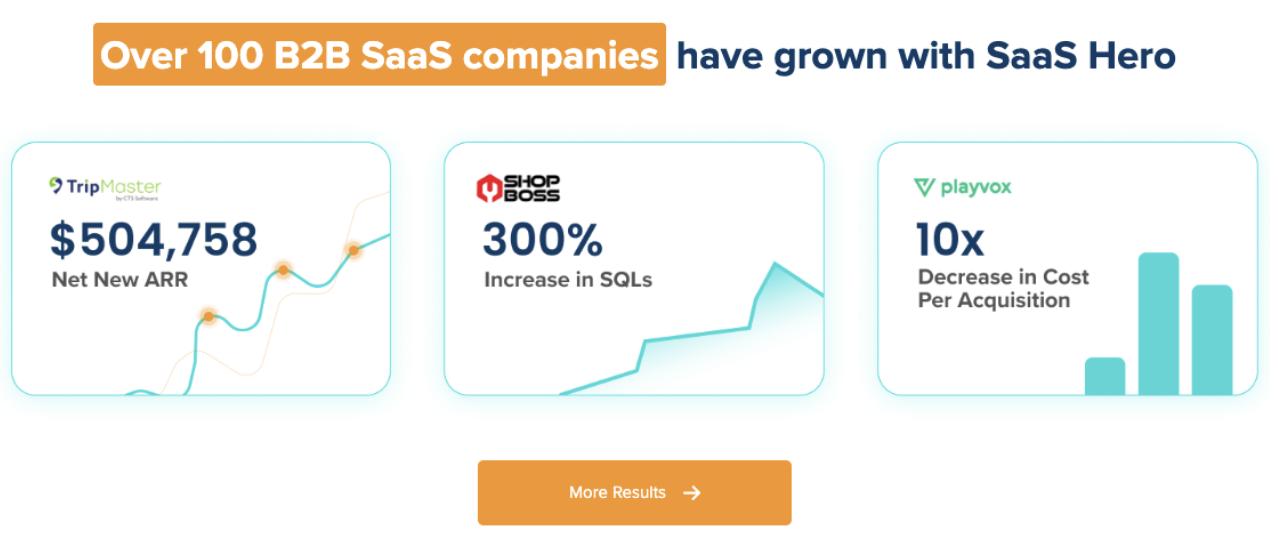
SaaSHero’s approach helped TripMaster generate $504,758 in Net New ARR through targeted, full-funnel marketing campaigns.

Recap: Run Your Construction SaaS Pricing Audit Now
Use this checklist to launch your pricing and revenue audit today.
- Calculate current LTV/CAC ratios and highlight areas for improvement
- Audit existing pricing tiers against the 7-model framework
- Set up A/B testing tools for pricing page experiments
- Implement core retention automations and health scoring
- Launch competitor conquesting campaigns on high-intent keywords
Transform your construction software subscription revenue with proven, measurable strategies. Book a discovery call to partner with SaaSHero for month-to-month optimization that grows revenue without long-term contracts or percentage-based fees.
Frequently Asked Questions
What are the 7 pricing strategies for construction SaaS?
The seven core pricing strategies include hybrid subscription plus usage, feature-based tiers, per-seat pricing, usage-based only, freemium with paid upgrades, enterprise custom pricing, and value-based pricing. Hybrid models usually deliver the highest NRR at around 125% because they blend predictable base revenue with expansion from usage charges. This structure fits construction software where companies need core functionality but experience shifting project volumes.
How long does it take to see revenue lift from pricing changes?
Most construction SaaS teams see early results within 4-6 weeks after rolling out pricing changes. The full impact appears after 3-4 months, once you can measure shifts in lifetime value and retention. Quick wins, such as pricing page conversion gains, show up within days, while bigger changes like tier redesigns require longer measurement windows.
What is the strongest pricing model for construction software?
Hybrid tiered pricing usually outperforms other models for construction SaaS. This structure combines a base subscription fee with usage-based charges for extra projects, users, or storage. Construction companies benefit from predictable budgeting for core features while still handling seasonal project spikes. The base tier protects recurring revenue and usage charges capture expansion during busy periods.
How can I reduce churn in construction software subscriptions?
Focus on three pillars. First, use proactive onboarding that gets users to the first value quickly. Second, apply usage-based health scoring to spot at-risk accounts before they cancel. Third, offer flexible pricing options that reflect construction seasonality. Automated retention flows that present pauses or discounts at cancellation, combined with regular outreach during slow periods, help reinforce value and prevent churn.
Should I use competitor conquesting for my construction SaaS?
Competitor conquesting works well for construction SaaS because buyers compare tools heavily before purchase. Target keywords such as “[competitor] pricing” and “[competitor] alternatives” with focused comparison pages that highlight your advantages. This tactic often cuts acquisition costs by 20-40% compared with generic keywords and captures prospects already deep in evaluation.