




Key Takeaways
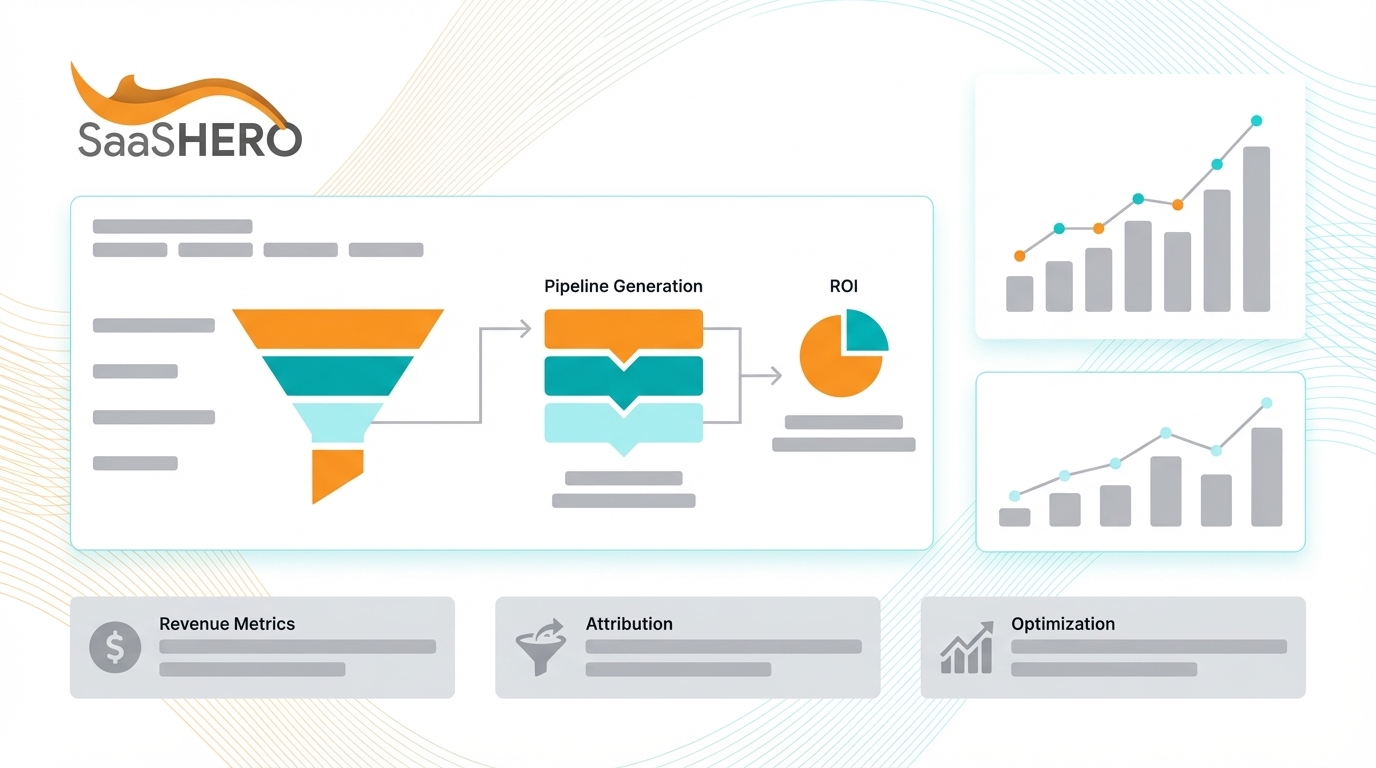
- High-ROI pipeline generation campaigns start with clear ICPs, buying groups, and a tech stack that tracks performance from first touch to closed revenue.
- Account-based frameworks, journey-mapped content, and product-led offers create higher-intent opportunities than volume-driven lead capture alone.
- Coordinated paid and organic channels, guided by intent data, keep your brand visible across a non-linear B2B buyer journey.
- Robust attribution, CRO, and structured lead management turn marketing activity into measurable pipeline and revenue.
- SaaSHero helps B2B SaaS teams plan, launch, and optimize pipeline campaigns that prove revenue impact. Schedule a discovery call to explore a fit.
Prerequisite Skills & Tools for Effective Pipeline Generation Campaign Management Services
Effective pipeline generation starts with a solid foundation in customer insight, technology, and staffing. Campaigns built on incomplete ICPs or fragmented data rarely produce quality opportunities.
Define Your Ideal Customer Profile (ICP) and Buying Group
Modern B2B deals involve buying groups, not solo decision makers. Complex B2B deals frequently involve 6–10 stakeholders, including business owners, IT or security, finance, procurement, and operations.
Map your buying group for each key segment. Identify the decision maker, budget owner, technical evaluator, and end users, then align messaging, content, and offers to each role across your campaigns.
Essential Tech Stack
High-performing teams center their stack on a tightly integrated CRM and marketing automation system such as HubSpot or Salesforce, or a CRM plus pipeline tool like Pipedrive.
Core components include:
- Analytics platforms such as GA4 for channel and page performance
- Attribution tools to connect touchpoints to opportunities and revenue
- Content management systems that support personalization
The goal is a single data flow where every interaction connects to pipeline and closed-won revenue.
Team Structure & Skill Sets
Mature demand gen teams cover paid demand, content, product marketing, and operations. Smaller companies often use a core internal team supported by specialized freelancers or agencies for SEO, content, design, and development.
AI tools assist with research, draft creation, and reporting, so lean teams can support complex programs without a large headcount.
Common mistakes include vague ICPs that drive low-quality volume and tech stacks that cannot attribute revenue accurately.
Schedule a discovery call to review your current pipeline foundation with SaaSHero.
Step 1: Strategic Planning – Defining Your Revenue-Centric Pipeline Generation Campaign
Strategic planning aligns campaigns to revenue instead of lead volume. Clear objectives, account focus, and buyer journeys guide every downstream decision.
Shift from Lead Capture to Demand Generation
Demand generation in B2B SaaS emphasizes long-term awareness and trust over quick form fills. Buyers research across channels before speaking with sales, so campaigns must support this behavior.
Prioritize educational content, thought leadership, and value-first offers. This approach produces fewer but more qualified opportunities and healthier close rates.
Develop Account-Based Marketing (ABM) Frameworks
Effective ABM programs often organize accounts into tiers so resources match potential value:
- Tier 1: 20–50 high-value accounts with individual plans
- Tier 2: 100–200 accounts with segment-level personalization
- Tier 3: 500+ accounts with programmatic outreach
This structure lets teams concentrate effort on priority accounts while still covering the broader market.
Map the Non-Linear B2B Buyer Journey
B2B buyers self-educate across content hubs, communities, review sites, and social channels. A linear funnel rarely reflects reality.
Plan content and touchpoints for four core stages: problem awareness, solution exploration, vendor comparison, and purchase justification. For a Tier 1 cybersecurity account, this might include compliance content for a CISO, technical guides for IT, and ROI models for finance.
Step 2: Content & Asset Creation – Fueling Your Pipeline Generation Campaigns
Pipeline-driven content focuses on quality, intent, and journey fit. Each asset should move a buying group closer to a qualified opportunity.
Use AI for Content Strategy & Creation
AI supports research, drafting, internal linking, and SEO optimization. AI tools can surface winning topics and formats from performance data, while humans guide strategy, positioning, and final edits.
Create High-Value, Journey-Mapped Content
Many teams now favor fewer, deeper assets mapped to clear journey stages. Useful formats include buyer guides, ROI calculators, implementation checklists, and vendor comparisons.
Each asset should support a specific decision, such as budget approval or tool selection, and connect to a logical next step like a demo or trial.
Build Product-Led Growth Assets
Product-led tactics such as free trials, freemium tiers, and interactive demos attract high-intent prospects. These leads understand your value proposition through direct experience.
Key metrics include trial sign-ups, activation rates, product engagement, and product-qualified leads. Use gated content selectively for high-value, late-stage assets and keep much of the early journey ungated for reach and brand building.
Step 3: Distribution & Orchestration – Activating Your Pipeline Generation Campaigns
Distribution turns strategy and content into pipeline. Coordinated channels and consistent messaging create a cohesive experience for buying groups.
Integrate Paid & Organic Channels
Effective demand engines balance organic programs with paid amplification. Organic content, SEO, and communities build credibility and surface demand, while paid search and paid social capture active buyers and speed up deals.
Coordinate Multi-Channel ABM Sequences
ABM orchestration spans display, LinkedIn, email, and SDR outreach. Triggers such as content downloads or high-intent page views can launch coordinated plays across these channels.
Teams focus on account engagement, opportunity creation, and pipeline progression rather than impressions alone.
Reach In-Market Buyers with Intent Data
Paid media becomes more efficient when aligned with first-party and third-party intent signals such as site behavior and topic-level research.
Identify accounts showing buying signals, then tailor ads, outreach, and content to their interests. Many SaaS companies blend in-house teams with outsourced specialists for SDR or media execution. Sales-as-a-Service models often deliver qualified meetings in 4–6 weeks, which can complement longer-term campaigns.
Step 4: Optimization & Measurement – Proving Pipeline ROI for Your Campaigns
Measurement and iteration convert activity into reliable growth. Teams that track the right metrics can double down on high-ROI motions and cut waste quickly.
Move Beyond MQLs to Pipeline & Revenue Metrics
Modern B2B metrics emphasize marketing-sourced and influenced pipeline, opportunity creation, win rate, sales cycle, and CAC to LTV ratios.
Monitor stage-to-stage conversion rates so you can see whether bottlenecks occur at qualification, opportunity creation, or closing.
Implement Robust Attribution
High-performing teams maintain a standard dashboard for channel and campaign impact. Multi-touch attribution connects early content touches to late-stage deals through CRM and analytics integrations.
Apply Conversion Rate Optimization (CRO) to Pipeline Pages
Advanced CRO methods test narrative, proof placement, and interactive elements on key pages.
Prioritize demo requests, pricing pages, and core BOFU landing pages. Test headlines, value propositions, social proof, and forms to increase qualified conversions without increasing traffic.

Establish a Lead Management Process
Structured lead management covers capture, qualification, routing, nurturing, and reporting. Define clear thresholds for marketing-qualified, sales-accepted, and sales-qualified leads, then document SLAs for follow-up and feedback.
Regular audits of data quality, definitions, and routing rules keep reporting accurate and prevent leakage between stages.
Schedule a discovery call to review your measurement and attribution with a SaaSHero specialist.
Advanced Strategies & Future-Proofing for Pipeline Generation Campaigns
Advanced tactics help mature teams capture incremental pipeline from competitive searches, underperforming pages, and tighter partner alignment.
Competitor Conquesting Strategy
Competitor conquesting targets branded and comparison keywords with tailored pages. SaaSHero often segments these by psychological intent, including pricing, problem or complaint, and review or validation intent.
Dedicated pages can:
- Compare pricing and total cost of ownership for cost-focused visitors
- Address common objections and offer switching incentives for dissatisfied users
- Aggregate reviews and side-by-side comparisons for validation-focused researchers
Heuristic Analysis for Landing Page Optimization
Heuristic analysis uses expert reviews to find major conversion issues before A/B testing. Evaluators score pages on relevance, clarity, trust, and friction, then prioritize changes.
This process produces a roadmap of fixes such as tighter message match, clearer value propositions, better proof placement, and simpler forms.

Build an Extension-of-Your-Team Partnership
Many B2B SaaS companies benefit from agencies that operate as embedded growth partners. SaaSHero integrates into client communication channels, planning cycles, and revenue dashboards, and focuses on financial outcomes such as net new ARR and fundraises.
Effective partners align on ICP, pipeline targets, and shared metrics so both teams work from the same scorecard.
Book a discovery call to explore how an embedded SaaSHero team could support your pipeline goals.
Frequently Asked Questions about Pipeline Generation Campaign Management Services
How long does it take to see results from a pipeline generation campaign?
Most teams need 4–6 weeks for ICP refinement, tech setup, and initial content, then 3–6 months to see consistent pipeline as journeys progress. Outsourced SDR or Sales-as-a-Service programs can add qualified meetings faster while broader campaigns ramp.
What team roles should support pipeline generation?
Core roles include demand generation for paid and ABM programs, content and brand for assets and creative, product marketing for positioning, and marketing operations for data and tooling. Smaller teams often combine roles and rely on agencies or freelancers for execution.
How should smaller vs. larger B2B SaaS companies adapt these strategies?
Smaller companies often focus on Tier 3 ABM, evergreen content, and clear product-led offers. Larger organizations can invest in Tier 1 and Tier 2 ABM, deeper personalization, and broader channel coverage. The same frameworks apply, but the level of granularity changes with budget and team size.
What are common risks in pipeline generation campaigns?
Frequent risks include disconnected systems, weak sales and marketing alignment, vanity metrics, and limited mid-funnel nurturing. Unified reporting, clear SLAs, revenue-focused KPIs, and structured nurture programs reduce these risks.
Summary & Next Steps for Your Pipeline Generation Campaigns
High-ROI pipeline generation for B2B SaaS depends on a clear ICP and buying group, a connected tech stack, journey-aligned content, coordinated channels, and revenue-focused measurement. Teams that connect these elements create predictable, defensible growth.
- Review your ICPs and buying groups to confirm alignment with your best customers
- Audit CRM and marketing integrations to ensure accurate attribution and reporting
- Prioritize CRO and ABM improvements that connect directly to opportunity creation

You can accelerate this process with a partner that lives and breathes B2B SaaS pipeline. Schedule a discovery call to see how SaaSHero could support your next stage of growth.