




Key Takeaways
- Transparent reporting helps B2B SaaS teams connect agency activity to CAC, LTV, ARR, and real pipeline, not vanity metrics.
- Clear frameworks for metric alignment, data integration, and continuous oversight turn reporting into a tool for better budget decisions.
- Modern reporting stacks combine CRM, attribution, dashboards, and intent data to show which channels and campaigns create revenue.
- Structured expectations, shared dashboards, and agreed KPIs keep agencies accountable and aligned with internal sales stages.
- SaaSHero helps B2B SaaS companies build transparent, revenue-focused reporting with lead gen agencies; schedule a discovery call to see how this can work in your stack.
The Strategic Imperative: Why Transparent Reporting Is Non-Negotiable for B2B SaaS
The Cost of Opacity for B2B SaaS Leaders
B2B SaaS companies now face strict expectations around capital efficiency. Boards and investors want proof that every marketing dollar supports healthy unit economics, including CAC, LTV, and Net New ARR. Reporting that only shows platform metrics like impressions or clicks does not meet that standard.
Many agencies still bill as a percentage of ad spend. This structure rewards higher budgets, even when revenue performance does not improve. Teams then see rising spend and impressive-looking activity metrics, while ROAS and pipeline quality decline.
Traffic and leads can grow while qualified opportunities and revenue shrink. For a B2B SaaS leader managing tight budgets, that lack of clarity creates real risk in planning, forecasting, and headcount decisions.
A Practical Framework for True Transparency
Transparent reporting in B2B SaaS shifts the focus from campaign activity to revenue accountability. A simple framework rests on three pillars:
- Metric alignment: Reports connect to CAC, LTV, ARR, SQLs, and win rate, not only impressions and clicks.
- Data integration: Ad platforms, CRM, and revenue systems share data so attribution covers the full journey.
- Continuous oversight: Live dashboards and regular reviews enable fast optimization and confident budget shifts.
This kind of reporting turns an agency from a cost center into a partner that helps protect runway and improves long-term growth quality.
Want your reporting to work this way? Schedule a discovery call with SaaSHero to review your current setup.

Beyond Vanity Metrics: KPIs That Tie Lead Generation to Revenue
Moving From Clicks to Commercial Impact
Modern B2B SaaS buying involves multiple stakeholders, long sales cycles, and many touchpoints. Reporting that stops at impressions, clicks, or MQL volume cannot reflect this reality.
Leading teams connect lead generation reporting directly to revenue and product metrics. Reports show pipeline creation, movement through CRM stages, and impact on payback period and LTV, rather than just channel activity trends.
Essential Revenue-Driving Metrics Agencies Should Report
Effective lead generation reporting highlights a small set of revenue-linked metrics, such as Net New ARR, qualified pipeline value, SQL volume and rate, and win rate by source.
For LinkedIn and outbound campaigns, key performance metrics include Connection Acceptance Rate, Reply Rate, Positive Sentiment Rate, and Meeting Show Rate. These metrics reflect audience fit and message quality far better than simple send volume.
Distinguishing positive, sales-ready replies from neutral or negative responses prevents inflated lead counts and keeps budget focused on channels that produce opportunities, not just conversations.
Balancing Activity Volume With Revenue Quality
Marketing leaders often must choose between optimizing for visible activity and optimizing for revenue. Activity-led strategies favor outreach volume, opens, and clicks. Revenue-led strategies favor SQLs, pipeline value, and ARR per opportunity.
Activity metrics still matter, but they work best as diagnostic signals that sit beneath revenue KPIs. When reports place revenue metrics at the top and activity beneath, teams can quickly spot where the funnel breaks and decide whether to fix targeting, creative, offers, or follow-up.
Essential Tools and Technologies for Transparent Reporting
Assessing Reporting Readiness With a Simple Maturity Model
Effective tool selection starts with a quick maturity check. Most B2B SaaS teams fall into one of three stages:
- Basic: Platform-level reports with siloed data and limited visibility beyond leads generated.
- Integrated: CRM and ad platforms connect, with multi-touch attribution and consistent funnel definitions.
- Predictive: Advanced analytics support forecasting, budget simulations, and cohort-based performance views.
Identifying your stage helps prioritize which tools and integrations matter most in the next 6 to 12 months.
Key Categories of Transparent Reporting Tools
CRM integrations (HubSpot, Salesforce) connect marketing efforts to sales outcomes. Salesforce highlights tools with custom lead lists, automated tracking, and reporting dashboards as essential for agency transparency. These capabilities make it easier to report on SQLs, pipeline value, and revenue by campaign.
Attribution platforms (Usermaven, Callbox Smart Engage) extend visibility across touchpoints. Usermaven supports cookieless analytics and funnel views, while Callbox’s Smart Engage platform connects CRM data, automation, and analytics for unified funnel views.
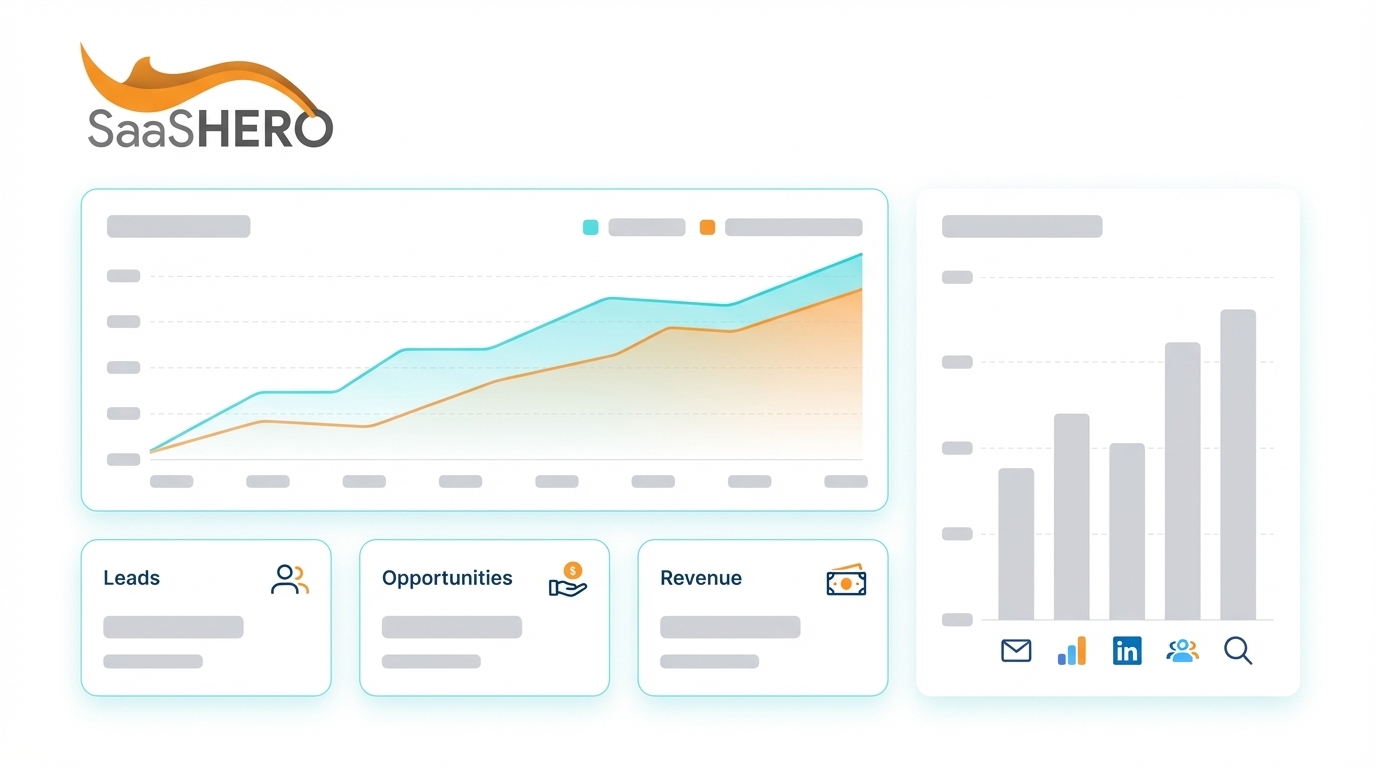
Data visualization tools (Looker Studio, Power BI) present performance in live dashboards that non-technical stakeholders can scan quickly. Live, in-platform reporting is widely preferred over static monthly PDFs because it enables ongoing optimization.
Intent and prospecting tools (Cognism, ZoomInfo, Dealfront, Leadfeeder) strengthen reporting by improving who enters the funnel. Cognism provides accurate, compliant B2B contact data with phone verification. ZoomInfo offers detailed company and contact intelligence. Leadfeeder identifies companies visiting your site before they convert.
Automation and integration tools (Zapier, LeadsBridge) keep data flowing in real time. Zapier connects marketing tools, CRMs, and communication systems with AI-assisted automation. LeadsBridge syncs marketing and CRM platforms without manual exports.
|
Tool Category |
Key Transparency Function |
Example Tools |
Essential SaaS Metrics |
|
CRM Integration |
Connect marketing to sales outcomes |
HubSpot, Salesforce |
SQLs, pipeline value, win rate |
|
Attribution Platform |
Multi-touch, end-to-end visibility |
Usermaven, Callbox |
CAC, LTV, ROI by channel |
|
Data Visualization |
Live performance dashboards |
Looker Studio, Power BI |
ARR growth, payback, unit economics |
|
Intent & Prospecting |
Verified lead and account data |
Cognism, ZoomInfo, Leadfeeder |
Account metrics, MQL-to-SQL rate |
Ready to align your tech stack with revenue reporting? Schedule a discovery call with SaaSHero to review options for your stage of growth.

Building an Accountable Agency Partnership
Common Reporting Pitfalls to Avoid
Most agency reporting issues fall into three patterns:
- Misaligned incentives: Percentage-of-spend billing that rewards higher budgets without tying fees to performance.
- Misaligned metrics: Reports centered on impressions and clicks while internal teams track pipeline and CAC.
- Disconnected systems: Limited integration between ad platforms and CRM, which hides what happens after the lead.
These gaps make it hard to defend budgets, compare channels fairly, or understand where pipeline truly comes from.
Setting Up a Reporting Framework With Your Agency
Clear expectations at kickoff prevent most problems. Start with a small set of shared KPIs that reflect your model, such as SQLs, qualified pipeline value, and Net New ARR by channel.
Agree on reporting cadence, with weekly performance updates and bi-weekly strategy reviews as a common pattern. Request live access to dashboards, not just slide decks. Always-on dashboards that clients can log into support faster decisions than monthly PDFs.
Ensure tracking passes from ad click into your CRM, with campaign identifiers tied to opportunities and revenue. That setup allows optimization based on closed-won deals, not just early-stage conversions.
How Transparent Reporting Changes Outcomes
Teams that adopt transparent reporting often see clear changes within a few quarters. Startups struggling to understand which channels created conversions gain clarity once they consolidate tracking and reframe reports around Net New ARR. Scale-ups managing multiple agencies can compare channels on a consistent set of revenue metrics, then shift budget based on proven performance. Enterprises that refine lead scoring with better reporting uncover mismatches between targeting and sales expectations, then tighten definitions and improve opportunity quality.
These shifts protect budgets, shorten feedback loops, and improve trust between internal teams and agencies.
Want this level of clarity from your agency? Schedule a discovery call with SaaSHero to discuss an accountable reporting model.

Frequently Asked Questions About Transparent Agency Reporting
What is the difference between vanity metrics and true performance metrics?
Vanity metrics, such as impressions, clicks, and email opens, describe activity but do not show commercial impact. These numbers can increase while revenue falls. True performance metrics connect directly to business outcomes, including CAC, LTV, Net New ARR, SQL-to-opportunity rate, and win rate by source. These metrics support budget optimization and reliable forecasting.
How can we align agency reporting with our internal CRM stages?
Alignment starts with a shared funnel. Map CRM stages to clear marketing definitions and share your qualification criteria. Configure tracking so campaign data flows from the first touch into your CRM, using tools like HubSpot attribution or Salesforce campaign tracking. Hold regular alignment sessions with the agency, marketing, and sales to review stage-to-stage conversion and identify bottlenecks. Request reporting that shows movement between stages, not only top-of-funnel volume.
What should a transparent reporting dashboard include?
An effective dashboard connects spend to revenue. Core elements include real-time CRM integration, a clear funnel from impression to closed-won, and cost-per-acquisition metrics by channel and campaign. Useful dashboards also show lead quality indicators, such as SQL rate, opportunity rate, and pipeline velocity. Filters for time range, channel, offer, and audience help teams answer most questions without rebuilding reports.
Conclusion: Turning Reporting Into a Strategic Advantage
Transparent reporting gives B2B SaaS leaders the clarity needed to defend budgets, manage CAC, and prioritize high-ROI channels. When metrics align with unit economics, data systems connect, and dashboards stay live and accessible, lead generation agencies can be held to the same standards as internal teams.
Use the frameworks in this guide to assess your current reporting, identify tool and process gaps, and reset expectations with partners. Companies that do this build more predictable pipeline, respond faster to market shifts, and invest with greater confidence.
If you want a partner that already works this way, schedule a discovery call with SaaSHero to see how transparent, revenue-first reporting can support your growth targets.