




Written by: Aaron Rovner, Founder, Saas Hero
Key Takeaways for B2B SaaS Facebook Targeting
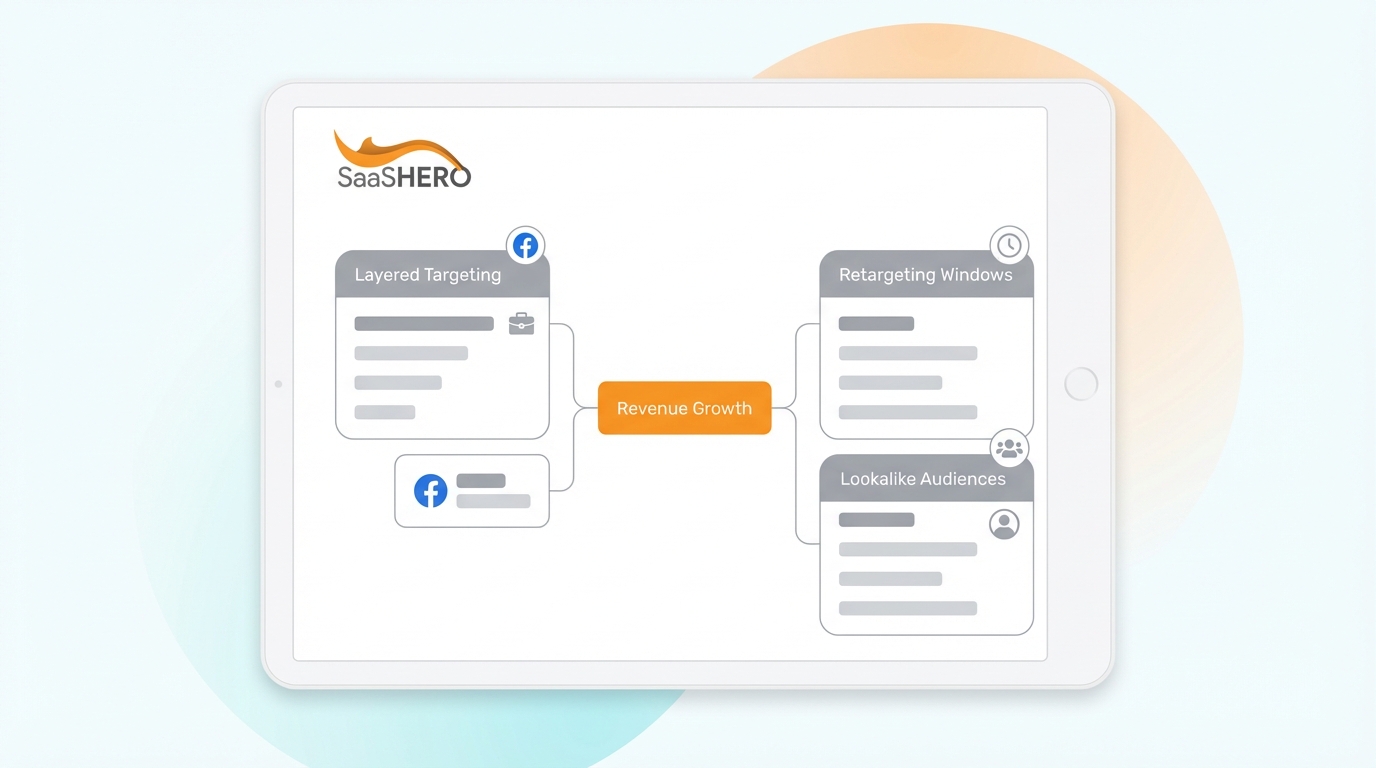
- Layer job titles with industry interests to reach decision-makers in verticals like SaaS and enterprise software and unlock 3-5x ROAS.
- Use engagement-tiered retargeting (7/30/90-day) to lift conversions 15-25% with messaging tailored to each buyer journey stage.
- Build 1-3% lookalike audiences from high-LTV CRM data for scalable prospecting while excluding low-value or churned segments.
- Split audiences by persona and company size, then add smart exclusions to cut CPA by 20-40% and speak directly to startup or enterprise needs.
- Book a discovery call with SaaSHero for a free Facebook ads audit and expert setup of these strategies.
1. Layer Job Titles and Industries for Precise B2B ROI
Layered targeting combines specific job titles with industry interests to create tightly qualified audience segments. This approach consistently beats broad targeting because it reaches true decision-makers inside your target vertical. B2B campaigns using job title plus industry interests often achieve 3-5x ROAS when set up correctly.
In Facebook Ads Manager, select job titles like “VP Marketing” or “Chief Technology Officer,” then narrow with interests such as “Software as a Service” or “Enterprise Software.” Add company size ranges like 51-200 employees for mid-market SaaS and exclude competitors to refine quality. The 2026 Andromeda algorithm responds strongly to these signals when you pair them with clear, benefit-driven creative.
Avoid targeting long lists of job titles in one ad set or using vague industry categories. Aim for audience sizes between 500,000 and 2,000,000 to balance delivery, learning, and cost control.
Implementation Checklist:
- Primary job titles: VP Marketing, CTO, Head of Operations, Director of Sales
- Industry layers: SaaS, Enterprise Software, Technology Services
- Company size: 51-200 or 201-500 employees
- Geographic targeting: Start with North America, UK, Australia
- Exclude: Direct competitors, existing customers, unqualified job levels
|
Test Variant |
CPA Target |
ROAS Goal |
SaaSHero Result |
|
VP Marketing + HR Tech |
$85 |
4x |
$67 CPA, 4.2x ROAS |
|
CTO + MarTech |
$95 |
3.5x |
$78 CPA, 4.8x ROAS |
|
Director + Enterprise |
$105 |
3x |
$89 CPA, 3.7x ROAS |
TestGorilla hit their 80-day payback period by using layered targeting to reach HR technology decision-makers, which supported their $70M Series A raise.
2. Use 7/30/90-Day Retargeting to Match SaaS Buyer Intent
Retargeting that segments by engagement depth and recency delivers higher ROI because each group receives messaging that fits its stage. Retargeting on Facebook improves conversion rates over time, especially for B2B where sales cycles stretch across many touchpoints.
Create separate audiences for 7-day visitors with high intent, 30-day visitors who stay warm, and 90-day visitors who need more nurturing. Add page-level rules so pricing page visitors see direct offers, while blog readers see educational or case study content. Use dynamic product or feature ads that reflect the exact pages each user viewed.
Allocate higher budgets and stronger bids to recent visitors, then taper spend for older segments. The 7-day audience usually converts 15-25% better than 30-day groups, which supports more aggressive bidding.
Retargeting Audience Framework:
- Hot (1-7 days): Pricing page, demo request, free trial signup
- Warm (8-30 days): Product pages, case studies, feature comparisons
- Cool (31-90 days): Blog content, resource downloads, general website
- Cold (90+ days): Brand awareness and thought leadership content
|
Audience Tier |
Conversion Rate |
CPA Target |
Messaging Focus |
|
Hot (1-7 days) |
12-18% |
$65 |
Limited-time offers, demos |
|
Warm (8-30 days) |
8-12% |
$85 |
Social proof, case studies |
|
Cool (31-90 days) |
4-7% |
$120 |
Educational content, value props |
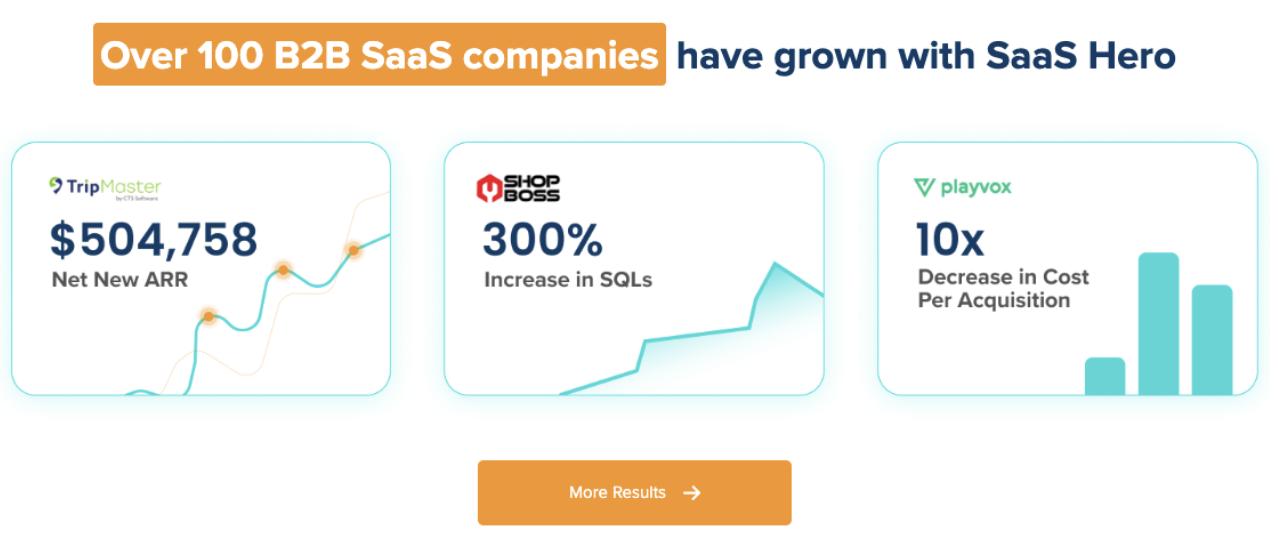
TripMaster used this type of retargeting structure to help generate $504,758 in Net New ARR by guiding prospects through multiple touches before they converted.

3. Build 1-3% Lookalikes from High-LTV CRM Segments
Lookalike audiences built from your highest-value customers give you scale without sacrificing quality. Manual targeting works best when you have at least 200 qualified customers to seed effective lookalike models.
Export CRM data that highlights customers with the highest LTV, longest retention, and fastest time-to-value. Upload this list as a custom audience, then create 1%, 2%, and 3% lookalikes for testing. The 1% lookalike usually delivers the strongest conversion rates, while 3% supports reach-focused or awareness campaigns.
Refresh your seed audience every quarter as your customer base grows and shifts. Exclude current customers and low-value segments so the model learns from your best accounts instead of support-heavy or churn-prone users.
CRM Data Segmentation for Lookalikes:
- Tier 1: Annual contracts $10k+, 12+ month retention, high NPS
- Tier 2: Monthly subscribers $500+, 6+ month retention, active usage
- Tier 3: Trial-to-paid within 14 days, strong feature adoption
- Exclude: Churned customers, free plans, support-heavy accounts
Scale with SaaSHero’s flat-fee model to roll out advanced lookalike strategies without percentage-of-spend fees.

4. Split Personas and Company Sizes for Relevant Messaging
Audience splits by persona and company size allow you to speak directly to each decision-maker’s priorities. Enterprise buyers care about security and compliance, while startup founders focus on cost control and speed-to-value.
Create separate campaigns for each persona and company size pair so a “Startup CTO” sees different creative than an “Enterprise IT Director.” Use Facebook detailed targeting to combine job functions with company size indicators such as “Small Business” or “Enterprise” interests.
Adjust bids and CPA targets based on expected contract value. Enterprise segments can support higher CPAs because each deal is larger, while SMB and startup segments need efficient volume at lower acquisition costs.
Persona-Company Matrix:
- Startup (1-50 employees): Founder, CTO, Head of Growth, focus on ROI and speed
- SMB (51-200 employees): VP and Director roles, focus on efficiency and scalability
- Mid-market (201-1000): C-suite and VPs, focus on integration and support
- Enterprise (1000+): Directors and Managers, focus on security and compliance
|
Segment |
Avg Contract Value |
CPA Target |
Key Messaging |
|
Startup CTO |
$2,400/year |
$85 |
Fast implementation, cost-effective |
|
SMB VP Marketing |
$8,500/year |
$150 |
Team collaboration, ROI tracking |
|
Enterprise Director |
$25,000/year |
$400 |
Enterprise security, compliance |
5. Use Exclusion Audiences to Remove Wasted Spend
Strategic exclusions protect your budget by removing unqualified users, competitors, and current customers from prospecting campaigns. Well-built exclusion lists often reduce CPA by 20-40% while improving lead quality.
Build and maintain exclusion lists that include current customers from CRM uploads, competitor employees sourced from LinkedIn, students and job seekers with low intent, and regions outside your service footprint. Update these lists monthly so they stay accurate.
Apply exclusions carefully and avoid blocking large groups without data. Test the impact of each exclusion by running split campaigns with and without that filter, then compare CPA and lead quality.
Essential Exclusion Categories:
- Existing customers: CRM email lists, website converters, active subscribers
- Competitors: Employee lists, company page followers, competitor brand interests
- Low-intent users: Students, job seekers, recent graduates, interns
- Geographic: Countries without payment processing, non-English speakers
- Behavioral: Frequent app installers, coupon seekers, price comparison shoppers
Playvox cut Cost Per Lead by 10x by tightening exclusions to remove unqualified traffic while increasing qualified lead volume by 163%.
6. Run Focused A/B Tests on Audience Variables
A/B tests that isolate one variable at a time reveal what truly drives performance. A clear testing protocol gives you reliable data for scaling and continuous improvement.
Run tests for at least 5-7 days with enough traffic to reach significance. Compare audience segments against each other while keeping creative and landing pages identical so you isolate audience impact. Run weekly or biweekly split tests on single variables to refine performance step by step.
Document every test in a central tracker that logs audience type, cost metrics, and conversion quality. Use Facebook’s A/B testing tool to split traffic accurately and avoid bias.
Testing Framework:
- Week 1-2: Audience size comparison, broad versus narrow targeting
- Week 3-4: Interest layering, single versus multiple interests
- Week 5-6: Lookalike percentage, 1% versus 2% versus 3%
- Week 7-8: Exclusion impact, with versus without key exclusions
- Week 9-10: Geographic performance, country or region splits
|
Test Variable |
Control |
Variant |
Winner Criteria |
|
Audience Size |
2M+ reach |
500K-1M reach |
Lower CPA and higher CVR |
|
Interest Layers |
Single interest |
2-3 layered interests |
Qualified lead rate |
|
Lookalike % |
1% LAL |
2% LAL |
Cost per qualified lead |
7. Connect Facebook Audiences to CRM Revenue
Connecting Facebook data to your CRM reveals true ROI instead of surface metrics like clicks or raw leads. Multi-touch attribution often shows that a measured 2.5x ROAS actually equals around 4x when you account for the full journey.
Set up UTM parameters, Facebook Pixel events, and CRM integrations so you can track users from first click through closed-won revenue. Create custom conversions for demo bookings, trial signups, and signed contracts so campaigns optimize toward revenue events.
Use tools like HubSpot attribution reports or Salesforce campaign influence to visualize the complete path to purchase. This view lets you refine audiences based on real revenue contribution instead of vanity metrics.
Attribution Setup Checklist:
- Facebook Pixel: Standard and custom events for key actions
- UTM tracking: Campaign, ad set, and ad-level parameters
- CRM integration: Lead source tracking and deal attribution
- Revenue reporting: Closed-won revenue by audience segment
- Cohort analysis: Customer LTV by acquisition source
Start month-to-month with SaaSHero today to roll out full-funnel attribution that ties Facebook spend directly to ARR growth.
Frequently Asked Questions
How do I set up layered targeting in Facebook Ads Manager for 2026?
Go to the Audience section in Ads Manager and click “Create New Audience.” Under Detailed Targeting, add your primary job title such as “VP Marketing,” then click “Narrow Further” and add industry interests like “Software as a Service.” Add company size filters and exclude competitors. Keep audience size between 500,000 and 2,000,000 for stable delivery. The 2026 Andromeda algorithm performs best with three to five targeting layers.
What is the ideal lookalike audience percentage for B2B SaaS campaigns?
Start with 1% lookalike audiences to get the highest conversion rates and lowest CPA. The 1% group contains users most similar to your seed list and often converts 15-25% better than broader percentages. Move to 2-3% lookalikes when 1% audiences saturate. Use 5-10% only for awareness campaigns where reach matters more than efficiency.
How does retargeting improve ROI for B2B SaaS Facebook ads?
Retargeting brings back prospects who showed interest but did not convert during the first visit, which happens often in long B2B sales cycles. When you segment retargeting by recency, such as 7-day, 30-day, and 90-day windows, you can match messaging to each stage of intent. Recent visitors in the 1-7 day group often convert at 12-18% compared to 4-7% for cold audiences, which supports higher bids.
What are the most common exclusion audience mistakes in B2B SaaS?
Over-excluding audiences is the most common mistake because it restricts delivery and raises costs. Avoid blocking entire job levels like “Manager” unless data proves they do not convert. Do not exclude segments based on assumptions and instead test each exclusion. Another frequent error is failing to refresh exclusion lists, which causes ads to show to current or churned customers. Keep exclusions focused on clear non-buyers such as competitors, existing customers, and irrelevant regions.
How do I track Facebook ads performance to actual ARR growth?
Install Facebook Pixel and configure custom events for actions like demo requests, trial signups, and contract signatures. Use UTM parameters on every ad so your CRM records the correct campaign source. Build closed-loop reporting that connects ad clicks to deals as they move through the pipeline. Tools like HubSpot attribution or Salesforce campaign influence reveal which Facebook audiences generate revenue. Prioritize metrics such as CAC, payback period, and Net New ARR instead of only leads or clicks.
Conclusion: Turn Facebook Audiences into Predictable SaaS Revenue
These seven segmentation strategies give B2B SaaS teams a clear framework for improving Facebook ads ROI in 2026. Prioritize based on your stage: bootstrapped startups can focus first on layered targeting and retargeting, while funded scale-ups can add full attribution and structured testing.
Key success factors include:
- Using high-quality CRM data as the base for lookalike audiences
- Running consistent, single-variable A/B tests on audiences
- Tying ad performance to revenue metrics instead of vanity metrics
- Refreshing creative every 2-3 weeks to reduce ad fatigue
- Integrating Facebook with HubSpot or Salesforce for complete attribution
Modern AI-driven optimization rewards advertisers who feed the algorithm strong creative and clean audience structures. Companies that reach 3-5x ROAS and 80-day payback periods combine these segmentation tactics with persuasive creative and fast, relevant landing pages.
Partner with SaaSHero’s senior-led team to deploy these strategies using flat-fee retainers starting at $1,250 per month. Our month-to-month model reduces long-term risk, and case studies like TripMaster’s 650% ROI and TestGorilla’s $70M Series A show what is possible for B2B SaaS brands.
Book a discovery call to review your current Facebook audience setup and roll out these proven segmentation tactics for your next growth phase.