




Written by: Aaron Rovner, Founder, Saas Hero
Key Takeaways
- B2B SaaS Facebook ads work best with funnel-stage campaigns: TOFU awareness, MOFU lead gen, and BOFU conversion for non-linear journeys.
- CRM-integrated custom audiences and account-based targeting for buying teams often cut cost per qualified lead by 40-60%.
- Sequential retargeting with stage-specific creative, such as problem videos, case studies, and testimonials, supports faster decisions.
- Multi-touch attribution models like W-shaped with 30-day click windows connect ads to Net New ARR and reveal real revenue impact.
- Companies see 650% ROI and $504k ARR; schedule a discovery call with SaaSHero to apply this framework.
Revenue-First Facebook Ads Framework
B2B SaaS Facebook ads that match complex buyer journeys rely on four core components.
- Funnel-Stage Campaign Architecture: TOFU awareness, MOFU nurturing, and BOFU decision campaigns.
- CRM-Integrated Custom Audiences: Account-based marketing with multi-stakeholder targeting.
- Sequential Creative Nurturing: Social proof and urgency-focused retargeting sequences.
- Revenue Attribution Models: Multi-touch tracking centered on Net New ARR and 80-day payback periods.
Net New ARR matters more than click-through rates. Companies using this framework often reach 650% ROI and $504k in Net New ARR within 12 months.
Modern B2B SaaS Buyer Journeys on Facebook
The traditional linear funnel no longer reflects B2B SaaS buying in 2026. Buyers now move through post-linear journeys where they loop, jump stages, stall, and restart non-linearly. Facebook campaigns must meet prospects at many decision points instead of forcing a rigid sequence.
Modern B2B SaaS journeys usually include three phases that need distinct Facebook strategies.
|
Journey Stage |
Facebook Objective |
Key Tactics |
Success Metrics |
|
TOFU (Problem Aware) |
Awareness/Traffic |
Broad lookalikes and pain-focused video content |
Engagement rate, video completion |
|
MOFU (Solution Seeking) |
Lead Generation |
CRM custom audiences and competitor conquest |
Cost per MQL, demo requests |
|
BOFU (Vendor Selection) |
Conversions |
3-5 touchpoint retargeting and pricing focus |
Cost per SQL, pipeline value |
Step-by-Step Facebook Campaigns by Funnel Stage
Step 1: TOFU Awareness Campaigns
Target broad lookalike audiences based on your highest-value customers. Use problem-focused video content that speaks to clear pain points without naming your product. Add interest targeting around industry publications and competitor audiences to reach early-stage researchers.
Step 2: MOFU Lead Generation
Build custom audiences from CRM data, including visitors who viewed pricing pages, downloaded resources, or attended webinars. Meta’s new GEM AI model and Advantage+ features can refine these audiences toward higher-intent prospects. Run competitor conquest campaigns that reach users exploring alternative tools.
Step 3: BOFU Decision Support
Set up retargeting sequences for prospects who engaged with MOFU content. Rotate 3-5 ad variations that highlight social proof, pricing clarity, and urgency. Use negative keywords to avoid people looking for competitor login pages instead of evaluating vendors.
Step 4: AI-Enhanced Campaign Improvements
Meta’s AI tools delivered a 22% increase in ROAS when combined with Advantage+ creative features. Use automated brand consistency, AI-generated product highlights, and dynamic creative testing to scale winning combinations.
Step 5: Account-Based Retargeting for Key Accounts
Upload lists of target accounts and job titles to build precise custom audiences. Focus on decision-makers and influencers inside your ideal customer profile and enrich targeting with LinkedIn data when available.
Targeting Multi-Stakeholder B2B Buying Teams
B2B SaaS purchases usually involve several decision-makers who need tailored messages. Create separate custom audiences for each group.
- Economic Buyers: CFOs and VPs who care about ROI and cost control.
- Technical Evaluators: IT leaders and engineers who focus on integration and security.
- End Users: Department heads and managers who want usability and productivity.
- Procurement: Purchasing teams that review contracts and vendor risk.
Use value-based bidding to prioritize high-LTV prospects and exclude current customers to protect the budget. Effective retargeting cuts cost per qualified lead by 40-60% compared to cold Facebook campaigns.
Creative and Retargeting That Match Each Stage
Creative assets should match the funnel stage and buyer intent.
TOFU Creative: Use problem-agitation videos, industry trend content, and educational resources that build authority without a hard pitch.
MOFU Creative: Share case studies, G2 reviews, comparison charts, and demo videos that show clear value and differentiation.
BOFU Creative: Feature customer testimonials, ROI calculators, free trial offers, and urgency-focused messages that clear final objections.
Run 3-ad sequences with A/B tests on headlines, calls-to-action, and visuals. Let each ad build on earlier interactions so prospects follow a clear story toward conversion.
Revenue Attribution That Connects Ads to ARR
Standard Facebook attribution windows rarely fit B2B SaaS cycles. Use custom attribution windows of 7-day view and 30-day click as a minimum for longer sales cycles. Add UTM parameters and CRM integration so you can track the full path from first impression to closed-won deal.
W-shaped attribution models suit B2B SaaS well by giving equal credit to first touch, lead creation, and opportunity creation. This model exposes the real influence of Facebook across long journeys.
Track a focused set of revenue metrics.
- Cost per Marketing Qualified Lead (MQL)
- Cost per Sales Qualified Lead (SQL)
- Pipeline value generated
- Net New ARR contribution
- Customer acquisition cost (CAC) payback period
Multi-touch attribution often uncovers 40-60% more pipeline value from Facebook campaigns than native platform reports show.
Attribution complexity often slows teams down. Book a discovery call to set up tracking that ties Facebook spend directly to closed revenue.
Real-World ARR Results from Revenue-First Ads
Companies that use this revenue-first approach see clear, measurable outcomes.
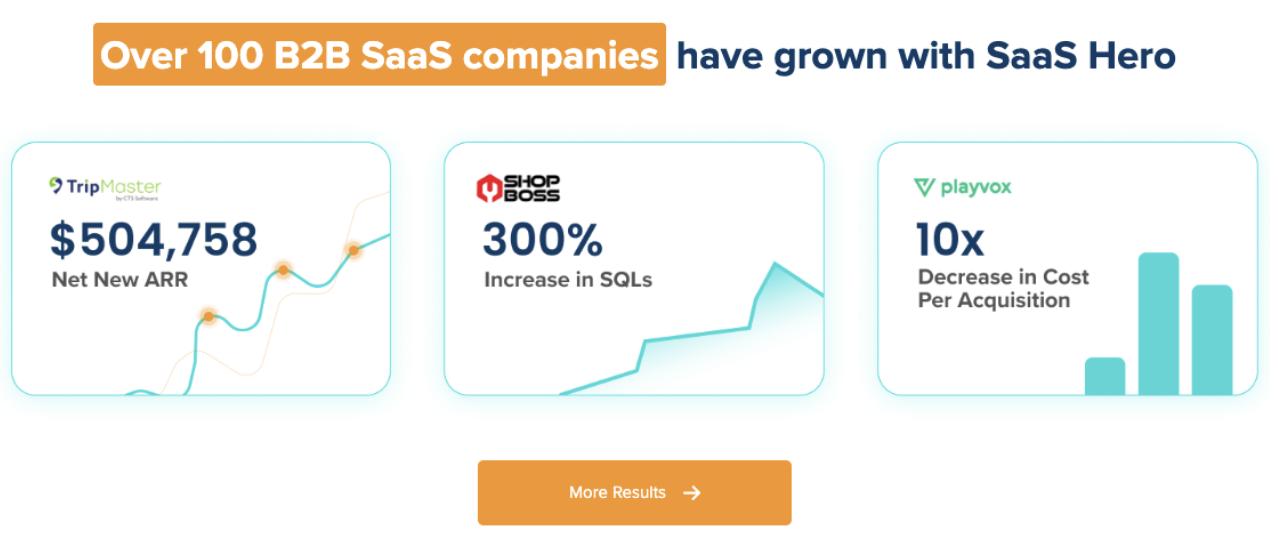
TripMaster (Transit Software): Generated $504,758 in Net New ARR with 650% ROI and a 20% conversion rate from paid search and paid social campaigns.1

TestGorilla (HR Tech): Reached an 80-day payback period and added 5,000+ new customers, which supported a $70M Series A through strong unit economics.1
Playvox (CX Software): Achieved a 10x decrease in Cost Per Lead while increasing lead volume by 163% through account restructuring and negative keyword refinement.1
These outcomes show the impact of treating paid social as a revenue channel instead of a simple lead source.
Frequent Facebook Mistakes and How to Fix Them
Facebook’s lead-to-opportunity conversion rate averages only 2-5% while LinkedIn reaches 10-15%, which highlights the need for precise targeting and strong creative.
Teams often run into the same issues.
- Using consumer-style creative for B2B buyers.
- Weak attribution across long sales cycles.
- Overly broad targeting without account-based focus.
- Chasing vanity metrics instead of revenue.
56% of B2B marketers struggle to link content to ROI and track customers through the journey, so disciplined implementation becomes essential.
Practical Roadmap to Launch and Scale
Start with a full audit of current Facebook campaigns that reviews audience quality and attribution setup. Connect your CRM with Facebook’s Conversions API so server-side data improves tracking accuracy.
Build stage-specific creative and landing pages that match each buyer phase. Test competitor conquest campaigns that send traffic to comparison pages built for high-intent visitors.

Hold weekly performance reviews that focus on pipeline metrics instead of native platform numbers. Adjust based on cost per SQL and Net New ARR contribution.
Teams that want expert support can move faster. Book a discovery call to scale Facebook ads and drive measurable ARR growth.

FAQs
How do I track Facebook ads to actual ARR in my CRM?
Use Facebook’s Conversions API with UTM parameters and GCLID tracking. Connect your CRM, such as HubSpot or Salesforce, so you capture the full path from ad click to closed-won deal. Set custom attribution windows of 7-day view and 30-day click to match B2B cycles. Build automated reports that show pipeline value and Net New ARR by campaign.
What attribution model works for long B2B SaaS sales cycles?
W-shaped attribution fits complex B2B journeys because it gives equal credit to first touch, lead creation, and opportunity creation. For sales cycles longer than 90 days, time-decay models can give more weight to recent touchpoints while still valuing early awareness. Avoid last-click attribution because it heavily underestimates Facebook’s influence.
Should I manage Facebook ads in-house or hire an agency?
In-house management can work when you have dedicated expertise and time for ongoing testing. Many B2B SaaS teams lack the depth needed for advanced attribution, competitor conquest, and creative testing. A flat-fee specialist partner removes percentage-of-spend conflicts and provides senior-level support without long contracts.
How do I run Facebook ads for multiple decision-makers?
Create separate custom audiences for each stakeholder group, such as economic buyers, technical evaluators, and end users. Write role-specific creative that speaks to their goals and risks. Use account-based targeting to reach several contacts inside each target company. Build sequential retargeting paths that nurture each group through its own evaluation steps.
What budget should I allocate to Facebook ads for B2B SaaS?
Start with 15-20% of your total paid media budget on Facebook, with a focus on retargeting and competitor conquest. Increase spend when the cost per SQL and pipeline contribution meet your targets. Use Facebook alongside Google Ads and LinkedIn instead of relying on it alone. Watch CAC payback periods and adjust spend based on unit economics, not fixed percentages.