




Written by: Aaron Rovner, Founder, Saas Hero
Key Takeaways
- Hyper-target your ICP with firmographic, behavioral, and demographic scoring to cut roughly 40% of unqualified ad spend and focus on high-probability prospects.
- Build an SEO and content flywheel that delivers 61% lower CAC than paid ads and 702% ROI through compounding organic traffic and lead generation.
- Run CRO heuristic audits and improve PLG trials to increase conversions by 20-50% from existing traffic without raising media budgets.
- Launch referral programs that average $150 per customer and use competitor conquesting to capture high-intent traffic at lower costs.
- Stack these 10 tactics with SaaSHero’s flat-fee expertise for 30-50% CAC reductions; schedule a discovery call for your free CAC audit today.
Tactic 1: Narrow Your ICP With Hyper-Targeting
Precise Ideal Customer Profile targeting cuts roughly 40% of wasted spend by focusing on prospects with real purchase intent. This approach matters most for B2B SaaS companies with long sales cycles where broad targeting burns budget on leads that never close.
Score leads using firmographic data such as company size, industry, and tech stack, behavioral signals like content engagement and trial usage, and demographic attributes including job title and seniority. Platforms like HubSpot and Salesforce support automated lead scoring with custom weightings. Track Cost Per Lead, MQL-to-SQL conversion rates, and Revenue Per Lead to validate impact.
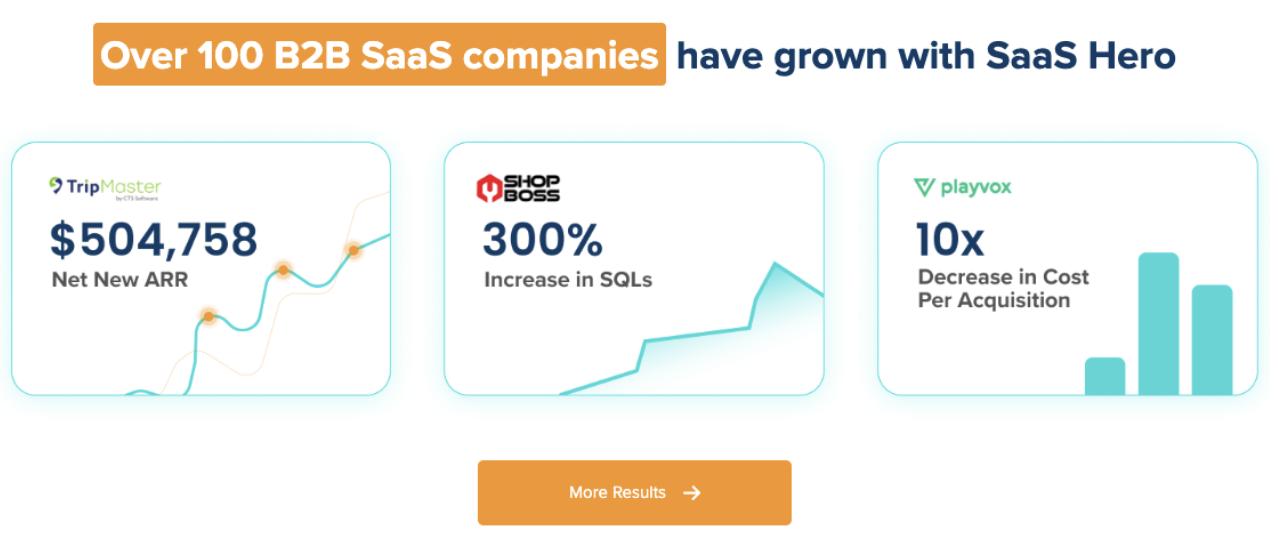
SaaSHero generated $504,758 in Net New ARR for TripMaster by focusing ad spend only on transit authorities and transportation companies. Avoid widening your targeting just to increase volume, because that shift quickly dilutes lead quality and inflates CAC.

Tactic 2: Build a Compounding SEO and Content Flywheel
Content marketing reduces CAC by 61% compared to paid advertising, and SEO delivers 702% ROI with seven-month break-even periods. This flywheel compounds as each new asset keeps generating leads without additional ad spend.
Create topic clusters around buyer-intent keywords and publish in-depth guides that speak directly to customer pain points. Optimize for featured snippets, improve site speed, add schema markup, and ensure mobile responsiveness. Measure organic traffic growth, keyword rankings, and especially organic lead-to-customer conversion rates.
SaaSHero’s paid media strategies helped TestGorilla reach an 80-day payback period by building efficient acquisition channels that reduced dependence on expensive paid campaigns.
Tactic 3: Run CRO and Heuristic Audits on Key Pages
Conversion Rate Optimization increases lead volume from existing traffic by 20% or more, which lowers CAC without extra media spend. Heuristic audits surface obvious conversion blockers before you commit weeks to A/B testing.
Use 5-second tests to confirm that visitors instantly understand your value proposition. Add trust signals such as security badges and customer logos above the fold, shorten forms to only essential fields, and refine mobile layouts. Test headlines, calls to action, and page structures in a structured experimentation program.
SaaSHero applies a proven heuristic framework and landing page design process for B2B SaaS clients, consistently lifting conversion rates across paid and organic funnels.

Tactic 4: Improve PLG Trials for Faster Activation
Product-Led Growth motions achieve roughly 50% lower CAC than sales-led competitors by enabling self-serve signups and viral loops.
Design onboarding flows that reveal core product value in the first session. Use progressive disclosure so new users see only what they need at each step. Define activation milestones that correlate with long-term retention and build sharing features that encourage team adoption. Personalized onboarding increases activation rates by 35-50%.
SaaSHero’s CRO methodology extends to trial optimization by finding friction in the user journey and removing blockers to activation through targeted landing page design and conversion improvements. Users experience value earlier, which drives higher trial-to-paid conversion.
Tactic 5: Scale Low-Cost Referral and Affiliate Programs
Referral programs average about $150 per B2B SaaS customer, making them one of the most cost-efficient acquisition channels. Referred customers usually stay longer and churn less.
Offer dual-sided rewards that benefit both referrer and new customer. Add simple in-app sharing flows, track referral attribution accurately, and give referrers ready-to-use email and social templates. Introduce tiered rewards for multiple successful referrals to keep advocates engaged.
See SaaSHero’s growth strategies that helped Leasecake build acquisition momentum and support their $3M VC round.
Tactic 6: Capture High-Intent Buyers With Competitor Conquesting
Competitor conquesting reaches buyers who are actively comparing alternatives and ready to decide. This tactic works especially well in B2B SaaS where teams research deeply before committing.
Bid on competitor pricing terms, “alternative to” searches, and complaint-based queries, then send that traffic to focused landing pages that address switching concerns. Use comparison tables to highlight your advantages, offer migration support to reduce friction, and add negative keywords to avoid paying for pure navigational searches.
SaaSHero helped Playvox cut Cost Per Lead by 10x by rebuilding campaigns around competitor intent signals and pairing them with tailored comparison pages that converted evaluators into qualified leads.
Tactic 7: Fix Agency Misalignment That Inflates CAC
Percentage-of-spend agency models reward higher budgets even when performance stalls, which inflates CAC through unnecessary media growth. This structure often hides weak strategy behind bigger ad numbers.
Shift to flat-fee retainers that tie agency success to your results instead of your budget. Use month-to-month agreements to maintain accountability, require revenue-based reporting instead of vanity metrics, and connect campaigns directly to your CRM for clear attribution.
SaaSHero’s flat-fee model starting at $1,250 per month removes incentives to overspend and keeps recommendations focused on efficiency and CAC reduction.
Tactic 8: Use AI for Smarter Lead Scoring and Generation
AI-native sales motions cut go-to-market costs by about 35% by surfacing high-probability prospects and timing outreach precisely.
Deploy predictive lead scoring based on historical conversion data and route strong leads to the right sales reps automatically. Personalize outreach with behavior-based messaging and refine ad bidding using AI-driven audience insights. Track lead quality scores and conversion rate lifts to validate the model.
AI-driven optimization supports real-time budget shifts toward the best-performing channels and audiences, which reduces wasted spend on low-intent traffic and concentrates investment on qualified buyers.
Tactic 9: Maintain Strict Negative Keyword Hygiene
Poor negative keyword management can waste 20-30% of paid search budgets on irrelevant clicks. A disciplined hygiene process filters out low-quality traffic and improves CAC and lead quality together.
Review search query reports frequently to find irrelevant terms. Add broad match negatives for competitor brand names when you only want their generic category traffic. Exclude job-seeker and educational queries and remove locations outside your target regions. Watch impression share loss to ensure you are not blocking valuable searches.
SaaSHero’s negative keyword work for Playvox supported their 10x CPL reduction by cutting navigational and unqualified traffic and redirecting budget toward high-intent searches.
Tactic 10: Scale Growth Safely While Protecting CAC
Scaling acquisition while holding churn steady requires a coordinated strategy across channels. Companies can cut CAC by 40-60% when they stack complementary tactics instead of chasing single-channel wins.
Pair content marketing with paid amplification, connect referral programs with strong customer success motions, and combine CRO improvements with traffic scaling. Maintain multi-touch attribution across channels and monitor cohort retention so growth does not sacrifice customer quality.
Review SaaSHero’s scaling methodology that produced $504,758 in Net New ARR for TripMaster by layering tactics while preserving retention and deal quality.
People Also Ask: B2B SaaS CAC FAQs
Most Common CAC Mistakes in B2B SaaS
Poor attribution modeling affects 68% of SaaS companies and pushes budgets toward underperforming channels. Other frequent mistakes include revenue-based budgeting that ignores lifetime value differences, overreliance on a single channel, and siloed sales and marketing teams that slow long B2B cycles. Many teams also optimize channels in isolation instead of managing the full funnel, which often undervalues top-of-funnel content.
CAC Benchmarks for B2B SaaS in 2026
|
Channel |
CAC Range |
LTV:CAC Ratio |
|
SEO/Content |
$290-$942 |
6:1 |
|
Referrals |
$150 |
5:1 |
|
Paid Search |
$802 |
2.5:1 |
|
Social Ads |
$937 |
1.8:1 |
The median B2B SaaS CAC is $1,200, with healthy businesses targeting LTV:CAC ratios above 3:1 and payback periods under 12 months.
Ways to Reduce CAC Without Slowing Growth
Stack complementary tactics instead of chasing isolated channel gains. Use content marketing for compounding lead flow while paid channels maintain short-term volume. Improve CRO first to capture more value from current traffic, then scale budgets. Add referral programs to create compounding word-of-mouth. Strengthen customer success and retention to raise lifetime value so you can support higher CAC when needed. Work with specialized agencies like SaaSHero that use flat-fee models instead of percentage-of-spend pricing.
How AI Helps Lower B2B SaaS CAC
AI-powered lead scoring surfaces high-probability prospects earlier in the funnel, which shortens sales cycles and raises close rates. Machine learning models refine ad bidding in real time and direct spend toward the best audiences and keywords. Predictive analytics highlight churn risk before it appears in revenue, enabling proactive retention programs that increase lifetime value. AI also supports personalized content and outreach at scale without proportional increases in manual work.
Why Traditional Agency Models Raise CAC
Percentage-of-spend billing encourages agencies to push higher budgets even when performance stalls. Long contracts reduce urgency and accountability. Reporting that focuses on impressions and clicks instead of revenue hides weak outcomes. Limited B2B SaaS specialization often results in generic strategies that ignore complex buying committees and long cycles. SaaSHero’s flat-fee, month-to-month structure removes these conflicts and ties agency success directly to client growth.
Stack These CAC Tactics With a Revenue-Aligned Partner
The strongest CAC reductions come from combining ICP hyper-targeting, content and SEO, CRO, PLG trial improvements, and competitor conquesting. Companies that coordinate these tactics see the largest cuts in CAC while protecting growth quality.
Traditional percentage-of-spend agencies often worsen the CAC problem through misaligned incentives and generic playbooks. SaaSHero’s B2B SaaS focus, flat-fee pricing, and month-to-month accountability keep every recommendation centered on efficiency and revenue impact. Their results include $504,758 in Net New ARR for TripMaster, an 80-day payback period for TestGorilla, and a 10x CPL reduction for Playvox.
Book a discovery call for your custom CAC reduction plan and start rolling out these tactics with a partner committed to profitable growth.