





Written by: Aaron Rovner, Founder, Saas Hero
Key Takeaways
- Hybrid GTM strategies blend PLG, sales-led, and partnerships to lower CAC by up to 30% and increase win rates by 53% for $1-10M ARR B2B SaaS companies.
- TripMaster generated $504k in Net New ARR with 650% ROI through paid search, competitor conquesting, and PLG onboarding.
- TestGorilla reached 5,000+ customers with an 80-day payback period, while Clay scaled to $100M ARR through coordinated multi-motion execution.
- Use a 5-step process: audit funnels, design channel blends, define metrics, improve conversion paths, and expand partnerships for durable growth.
- Avoid silos and weak attribution, and schedule a strategy session with SaaSHero to apply hybrid strategies that have already driven $500k+ ARR for clients.
How Hybrid GTM Works for B2B SaaS
A hybrid go-to-market strategy blends multiple acquisition channels and sales motions to serve different customer segments and deal sizes. Pure PLG models rely on self-service adoption, while traditional sales-led approaches depend on outbound prospecting and demos. Hybrid strategies combine these motions so each one supports the segments where it performs best.
The core components include:
- Product-Led Growth: Self-service trials, freemium models, and in-product activation for smaller or lower-touch deals.
- Sales-Led Motion: Direct outreach, demos, and consultative selling for complex or high-stakes enterprise deals.
- Partnership Channels: Co-selling, marketplace listings, and ecosystem integrations that tap into existing demand.
- Content & Inbound: Educational content that nurtures prospects across the full buyer journey and supports both PLG and sales.
To understand when each model makes sense, compare how they perform across key dimensions:
| GTM Model | Best For | Typical Metrics | Limitations |
|---|---|---|---|
| Pure PLG | Simple, low-touch products | High volume, low ACV | Slow enterprise growth |
| Pure Sales-Led | Complex enterprise solutions | High ACV, long cycles | High CAC, limited scale |
| Hybrid | Multi-segment markets | Balanced growth and efficiency | Operational complexity |
As noted earlier, these combined approaches deliver significantly higher win rates and help companies capture value across segments while preserving capital efficiency.
7 Hybrid GTM Examples Driving B2B SaaS Growth
1. TripMaster: Transit Software Success
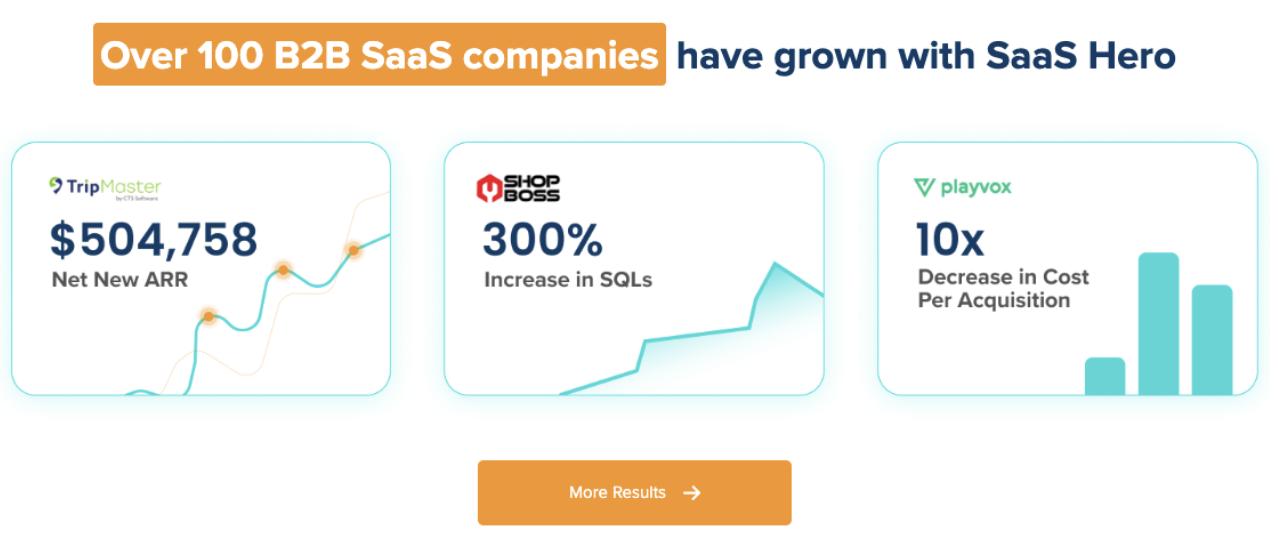
TripMaster, a transit management software company, used a hybrid strategy that combined paid search, social media advertising, and conversion rate optimization. This approach generated $504,758 in Net New ARR with a 650% ROI and a 20% conversion rate from paid search. The team focused on high-intent prospects through competitor conquesting and then nurtured trial users with product-led onboarding.

2. TestGorilla: HR Tech Scaling
TestGorilla applied aggressive multi-channel scaling while protecting strict efficiency metrics to support their Series A raise. The hybrid motion delivered an 80-day payback period and supported a $70M Series A round while adding more than 5,000 new customers. Their playbook combined PLG trial experiences for smaller accounts with sales-assisted enterprise deals for larger contracts.
While TripMaster shows hybrid success in a focused vertical, TestGorilla illustrates how the same principles support rapid scaling in a broader HR tech market.
3. Clay: GTM Engineering Platform
Clay unified more than 75 data providers for sales and marketing teams and reached a $100M revenue run rate, doubling its valuation to $3.1B in six months. The hybrid strategy enabled GTM engineering and AI-native workflows for different segments. Smaller teams adopted Clay through self-service, while enterprise customers engaged through sales-led implementations for complex workflows.
Clay builds on the TestGorilla example by showing how multi-motion orchestration supports both high-velocity adoption and large, technical deployments.
4. Contentsquare: Marketplace Co-Selling
Contentsquare highlights the impact of partnership-driven hybrid strategies through marketplace co-sell opportunities. Their co-sell deals are 81% larger, close 11% faster, and deliver a 106% increase in ACV compared to traditional sales motions. Partnerships extend reach and improve deal quality when layered on top of existing PLG and sales motions.
This example shows how hybrid GTM evolves over time, adding ecosystem plays once core motions already perform well.
5. Gong: Conversation Intelligence
Gong delivers conversation intelligence through a hybrid approach that blends product-led user adoption with sales-led enterprise expansion. Customers implementing Gong see 29% higher growth rates because PLG usage feeds data into sales conversations and expansion plays. The product experience and sales motion reinforce each other instead of operating in silos.
6. Highspot: Sales Enablement Platform
Highspot uses a hybrid strategy to serve multiple market segments with tailored motions. Aetna achieved a 62% improvement in sales content governance, while Oxford University Press drove a 23% increase in buyer engagement through Highspot’s hybrid selling models. Different segments receive different blends of enablement, content, and sales support.
Highspot reinforces the pattern that hybrid GTM works across industries and deal sizes when motions match segment needs.
7. Playvox: CX Software Efficiency Gains
Playvox restructured its GTM approach using competitor conquesting and negative keyword strategies. The team achieved a 10x decrease in Cost Per Lead while increasing lead volume by 163%. Their hybrid strategy combined targeted paid acquisition with product-led trial experiences that converted qualified traffic into revenue.
These examples together show that hybrid GTM strategies consistently outperform pure models when teams execute them with clear segments, metrics, and coordination. See how SaaSHero can replicate these results for your company and schedule a strategy session tailored to your market and growth stage.
How to Build a Hybrid GTM Strategy: 5-Step Process
Effective hybrid GTM strategies come from deliberate planning and consistent execution. Use this 5-step process as a blueprint.
1. Audit Current Funnels and Define ICP
Start with a comprehensive audit of existing acquisition channels, conversion rates, and customer segments. High-performing GTM teams focus on ICP-specific pain points and stage-aware messaging. Use data enrichment to identify traits of your highest-value customers and build detailed buyer personas for each motion.
2. Design a Channel Blend for Each Segment
Map acquisition channels to customer segments based on deal size, complexity, and buying behavior. Combine competitor conquesting, content marketing, and product-led growth tactics in a coordinated plan. Hybrid models pair product-led approaches for simple products with sales-led demos for complex solutions, so each segment receives the right experience.
3. Establish Metrics and Attribution
Set up tracking for key metrics such as LTV:CAC ratios, Net New ARR, and payback periods. Maintaining an LTV:CAC ratio above 3x validates your unit economics before you scale spend. To calculate these metrics accurately across motions, implement multi-touch attribution that shows how each channel contributes to closed revenue.
4. Test and Improve Conversion Paths
Run heuristic analysis and A/B tests on landing pages, trial experiences, and sales processes. Focus on removing friction in the buyer journey while protecting lead quality. Test different messaging and offers for each customer segment so every path reflects that segment’s priorities.

5. Scale Partnerships and Ecosystem Plays
Develop strategic partnerships, marketplace listings, and co-selling relationships once core motions perform reliably. Ecosystem-led growth can reduce CAC by up to 30% and provide access to qualified prospects through trusted partners.
Core Elements of a Hybrid B2B SaaS GTM Plan
Successful hybrid GTM plans rely on a few operational elements that work together as a system.
Intent Targeting: Use competitor keywords, review sites, and comparison searches to capture high-intent prospects. Add negative keyword strategies to cut wasted spend on navigational or irrelevant searches so your funnel fills with qualified demand.
Attribution Setup: Connect ad clicks to CRM data with GCLID tracking and standardized lifecycle stages (Lead, MQL, SQL, Opportunity, Customer) across all channels. This structure turns the intent you capture into trackable journeys that reveal which motions actually drive revenue.
Content Strategy: Create educational content that supports both self-service evaluation and sales conversations. Build comparison pages, case studies, and ROI calculators that answer the questions surfaced by your attribution data and intent signals.
Sales and Marketing Alignment: Align teams with shared targets, pipeline coverage, SLAs, and unified dashboards so PLG and sales motions reinforce each other. This alignment ensures smooth handoffs and consistent experiences across channels.
Pricing Strategy: Hybrid pricing models deliver the highest retention with roughly 105% NRR by offering flexible options for different segments and use cases. Clear pricing tiers support both self-serve and sales-led paths.
Common Pitfalls and Stage-Specific Plays
Knowing common failure modes and stage-appropriate plays helps you avoid expensive mistakes with hybrid GTM.
Critical Pitfalls to Avoid
Siloed Channels: Running PLG, sales, and partnership motions independently creates conflicting customer experiences and attribution gaps.
Misaligned Incentives: Sales teams that focus only on large deals may ignore PLG-generated leads, while marketing teams may chase volume instead of qualified opportunities.
Poor Attribution: About 44% of seller interactions never reach the CRM, which causes roughly 10% lower forecast accuracy. Without reliable tracking, you cannot improve channel performance or prove ROI.
Success Scenarios by Company Stage
Bootstrapped Startups ($1-3M ARR): Start with competitor conquesting and PLG trials, then add sales assistance for deals above $10k ACV.
Scaling Companies ($3-7M ARR): Implement a full hybrid strategy with dedicated teams for each motion and integrated attribution.
Growth-Stage Companies ($7-10M ARR): Add structured partnership programs and account-based marketing for enterprise segments.
Marketing problems cause 22-29% of startup failures, so precise GTM execution directly affects survival and growth. Get expert guidance to avoid these pitfalls and talk to our team about implementing a proven hybrid strategy.
FAQ
What is the best hybrid GTM approach for companies under $1M ARR?
Early-stage companies benefit from a simple hybrid approach that combines competitor conquesting on Google Ads with a PLG trial experience. Focus on one primary channel, usually paid search, while you build product-led onboarding. This setup captures high-intent prospects and develops self-service capabilities without spreading resources across too many channels.
What CAC benchmarks should I target with hybrid GTM strategies?
Target a payback period similar to the TestGorilla benchmark mentioned earlier, which means 80 days or less. Your LTV:CAC ratio should exceed 3x, and best-in-class companies often reach 5x or higher. In hybrid models, PLG motions usually have lower CAC with smaller deal sizes, while sales-led motions carry higher CAC with larger deals. The blended CAC should sit 30-50% lower than pure sales-led approaches because partnerships and PLG improve efficiency.
How does hybrid GTM compare to pure PLG or sales-led models?
Hybrid strategies provide greater flexibility and market coverage than pure models. Pure PLG works well for simple, low-touch products, and pure sales-led models fit complex enterprise solutions. Hybrid approaches combine these strengths and capture value across multiple segments. They deliver higher win rates and support faster scaling while still protecting capital efficiency, at the cost of more operational complexity and coordination.
What metrics should I track to measure hybrid GTM success?
Prioritize revenue-based metrics over vanity metrics. Track Net New ARR, blended CAC across all channels, LTV:CAC ratios by segment, payback periods, and pipeline velocity. Monitor channel-specific metrics such as trial-to-paid conversion rates for PLG, SQL-to-close rates for sales, and partner-sourced deal performance. Use multi-touch attribution to see how channels combine to create revenue.
When should I add partnerships to my hybrid GTM strategy?
Add partnerships after you prove product-market fit and establish at least one successful PLG or sales motion. Partnerships work best when you can clearly explain your value proposition and share credible case studies with potential partners. Start with marketplace listings such as G2 and Capterra and integration partnerships, then move into co-selling relationships. Partnerships usually become major revenue drivers around $3-5M ARR when you can dedicate resources to managing them.
Conclusion
Hybrid go-to-market strategies fit the capital-efficient growth environment facing B2B SaaS in 2026. By combining PLG, sales-led, and partnership motions, companies can reduce CAC by 30-50% while accelerating ARR growth toward $10M and beyond. The seven examples in this guide show that hybrid approaches outperform pure models when teams support them with clear metrics, attribution, and operational alignment.
SaaSHero has delivered more than $500k in Net New ARR for clients like TripMaster while maintaining disciplined unit economics. Ready to build your hybrid GTM engine? Schedule a strategy session to map your path from current ARR to $10M+ with proven, capital-efficient tactics.