




Written by: Aaron Rovner, Founder, Saas Hero
Key Takeaways for Choosing a Lead Gen Partner
- Avoid agencies using percentage-of-spend billing that incentivize budget waste, and prioritize flat-fee models tied to Net New ARR and CAC payback.
- Demand CRM-integrated reporting focused on pipeline metrics, MQL-to-SQL conversion, and multi-touch attribution instead of vanity metrics like impressions.
- Choose SaaS specialists with proven revenue case studies, low client-to-manager ratios, and no long-term lock-ins.
- Target your ICP with intent data, competitor conquesting, and channel strategies tailored to B2B buyer journeys that often run 3 to 18 months.
- Partner with SaaSHero for month-to-month contracts and revenue-first execution, and schedule a discovery call to cut CAC and scale ARR.
Top 10 Questions to Kick Off Your Agency Interview
Use these ten questions to quickly confirm basic competence and surface early red flags during any agency interview.
- How do you track Net New ARR attribution?
- What is your typical CAC payback period for SaaS clients?
- Do you use percentage-of-spend or flat-fee billing?
- What is your minimum contract term?
- How many clients does each account manager handle?
- Can you show me three SaaS case studies with revenue outcomes?
- How do you integrate with our CRM for pipeline tracking?
- What channels do you recommend for our ICP?
- How do you handle competitor conquesting campaigns?
- What is your approach to landing page optimization?
6 Questions to Test Strategy and ICP Fit for B2B SaaS
Those ten questions establish baseline competency. Now move deeper to confirm that the agency truly understands your market and buying process.
B2B SaaS buyer journeys are complex, with modern buyers completing 67% of their purchase journey before contacting sales, consuming 13+ pieces of content and involving 6-10 stakeholders. Your agency must build strategy around this behavior.
1. How do you define and target our Ideal Customer Profile (ICP)?
Look for agencies that dig into firmographics, technographics, and behavioral signals instead of broad demographic targeting.
2. What is your approach to dark funnel attribution?
Enterprise B2B lead generation agencies emphasizing vanity metrics like impressions and clicks instead of pipeline value obscure real revenue impact due to poor lead handoff processes. Your partner should explain how they capture and interpret off-channel influence.
3. How do you handle multi-touch attribution in long sales cycles?
SaaS sales cycles often run 3 to 18 months depending on deal size. Your agency must understand first-touch, last-touch, and multi-touch models and explain when each one applies.
4. What is your competitor conquesting strategy?
Effective agencies target users searching for “[Competitor] pricing” or “[Competitor] alternatives” with tailored ads and dedicated comparison landing pages.

5. How do you segment campaigns by buyer journey stage?
Strong partners map different content and offers to awareness, consideration, and decision-stage prospects instead of pushing one generic message.
6. What intent data sources do you use?
Intent data platforms identify high-value accounts actively researching product-related issues, achieving 5-10 meetings booked per 100 surging accounts in the first 30 days. Ask which tools they use and how they activate those signals.
5 Questions on Experience and Case Studies to Avoid Bait-and-Switch
The “boutique is bullshit” trend fills the market with freelancers posing as agencies. Enterprise B2B lead generation agencies that sell with senior partners but hand off execution to junior account managers compromise data quality and governance.
1. Can you show me three SaaS case studies with specific revenue outcomes?
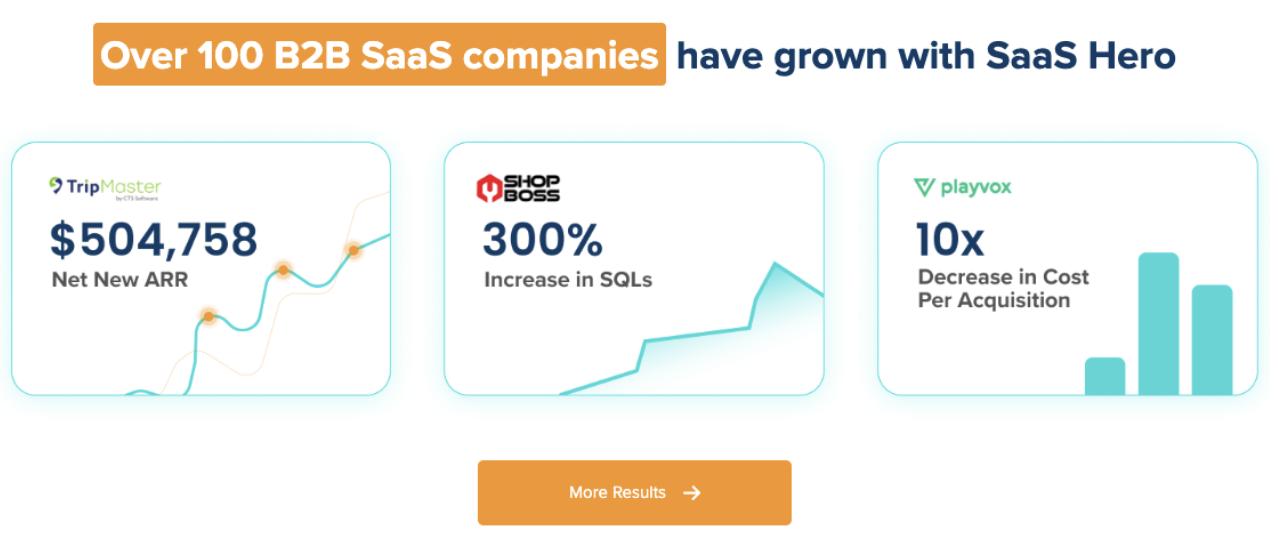
Demand metrics like Net New ARR, not just lead volume. SaaSHero’s TripMaster case study shows $504,758 in Net New ARR added in 12 months.

2. Who will actually manage our account day-to-day?
Meet the person who will execute your campaigns, not only the salesperson. Ask about their SaaS background and current client load.
3. What is your client-to-account-manager ratio?
Quality agencies keep 8 to 10 clients per manager at most to prevent burnout and protect strategic focus.
4. How many B2B SaaS clients do you currently serve?
Generalist agencies serving diverse clients lack mastery of SaaS-specific metrics like churn, MRR, LTV, and sales cycle length. Prioritize teams living in SaaS every day.
5. What verticals within SaaS do you specialize in?
HR Tech, Cybersecurity, and MarTech each have distinct buyer behaviors and competitive landscapes. Vertical specialization improves messaging and targeting.
5 Questions on Reporting and Metrics that Keep You Revenue-Focused
Bad agencies hide behind impressions and click-through rates. Revenue-focused partners report on the numbers that matter in board meetings.
1. How do you integrate with our CRM for closed-loop reporting?
Look for HubSpot, Salesforce, or Pipedrive integrations that pass lead source data through to closed deals.
2. What is your typical MQL-to-SQL conversion rate for SaaS clients?
Industry benchmarks show MQL to SQL conversion at 15%, with this stage representing the largest drop-off in B2B sales funnels. Ask how they improve that conversion.
3. How do you calculate and report on CAC payback periods?
CAC payback is calculated as Sales and Marketing spend divided by Net New ARR, with healthy targets under 12 months. Your agency should report this monthly or quarterly.
4. What attribution model do you use for multi-channel campaigns?
First-touch, last-touch, and time-decay models each tell different stories about channel performance. The agency should explain which model they use and why.
5. How frequently do you report on pipeline metrics?
Weekly performance updates and bi-weekly strategy calls support transparency and fast adjustments. When you review options, ask agencies to walk you through their reporting cadence and structure, then book a discovery call if you want to see how SaaSHero’s framework works in practice.
5 Questions on Pricing, Contracts and Risk to Dodge Lock-Ins
Traditional agencies’ percentage-of-spend billing models reward budget growth instead of performance, creating misaligned incentives. Smart SaaS leaders demand transparent pricing that ties agency success to client efficiency and revenue.
1. Do you charge percentage-of-spend or flat monthly fees?
As mentioned in the key considerations above, percentage-of-spend models create misaligned incentives. Flat fees align agency success with your efficiency goals and make budget conversations more objective.
2. What is your minimum contract commitment?
Long-term lock-in contracts of six to twelve months shift nearly all risk to SaaS clients and shield agencies from performance accountability. Shorter terms keep pressure on results.
3. What setup fees do you charge?
Reasonable setup fees of $1,000 to $2,000 support proper campaign foundations and filter out non-serious prospects.
4. How do you handle budget scaling decisions?
This question reveals whether the agency’s growth recommendations serve your business or theirs. Agencies should recommend increases based on performance data, not revenue needs, and should tie budget changes to CAC, conversion rates, and payback improvements.
5. What is included in your base retainer?
Clarify which services require additional fees and which activities sit inside the monthly retainer so you avoid surprise invoices.
The comparison table below shows how these pricing choices create real accountability gaps between traditional agencies and performance-focused partners.
| Pricing Model | Traditional Agency | SaaSHero | Benefit |
|---|---|---|---|
| Billing Structure | 10-20% of ad spend | $1,250-$7,000 flat fee | No incentive to waste budget |
| Contract Terms | 6-12 month lock-in | Month-to-month | Performance accountability |
| Setup Investment | Often hidden in retainer | $1,000-$2,000 transparent | Clear expectations |
5 Questions on Team, Channels and Execution plus 5 Red Flags
Execution quality separates professional agencies from freelancers posing as institutions. Use these questions to probe operational depth and team structure.
1. What is your team structure and who owns strategy versus execution?
Look for senior-led structures where strategists stay hands-on instead of delegating everything to junior staff.
2. Which channels do you recommend for our specific ICP?
80% of B2B leads originate on LinkedIn, yet Google Ads, content syndication, and other channels may fit your audience and deal size better. Ask for channel rationale tied to your buyer journey.
3. How do you approach landing page optimization?
Conversion rate optimization should connect directly to your paid campaigns and sit inside the core engagement, not as an expensive add-on that slows testing.

4. What is your creative production process?
B2B ads require different messaging than B2C. Ask about their copywriting, design capabilities, and review cycles.
5. How do you stay current with platform changes and industry trends?
Google and LinkedIn constantly update their algorithms and features. Your agency should adapt quickly and explain how they monitor and respond to these changes.
Beyond these execution questions, watch for the warning signs below that signal an agency may lack the operational maturity to deliver consistent results.
| Red Flag | Warning Sign | SaaSHero Alternative |
|---|---|---|
| High Turnover | Different contacts every quarter | Stable, senior-led team |
| No CRM Integration | Cannot track closed deals | HubSpot/Salesforce integration |
| Generic Proposals | Same deck for every prospect | Custom strategy presentations |
| Vanity Metrics Focus | Reports on clicks, not revenue | Net New ARR tracking |
| No Slack/Direct Access | Monthly email updates only | Real-time communication |
FAQ
How should I score agency responses to these questions?
Create a weighted scorecard with revenue metrics at 30%, pricing transparency at 25%, team experience at 20%, contract flexibility at 15%, and communication approach at 10%. Agencies scoring below 70% likely will not deliver sustainable growth. Focus on specific examples and case studies instead of generic promises.
What if an agency dodges questions about ARR tracking?
This behavior represents a major red flag. Any serious B2B SaaS agency should eagerly discuss revenue attribution and pipeline tracking. If they deflect to vanity metrics or claim “it is complicated,” they likely focus on lead volume instead of quality. Revenue-aligned agencies treat closed-loop reporting as a competitive advantage.
Which channels work best for B2B SaaS lead generation in 2026?
The most effective channels depend on your ICP and sales cycle. LinkedIn often dominates for enterprise sales, while Google Ads excels for high-intent searches. Content syndication and intent data platforms now serve as powerful middle-funnel channels. Multi-touch attribution across channels matters more than squeezing one channel in isolation.
Is month-to-month contracting really viable for agencies?
Month-to-month agreements work well for both sides when performance stays front and center. These contracts create forcing functions for agency performance while reducing client risk. Quality agencies prefer this model because it demonstrates confidence in their results. The learning phase typically takes 60 to 90 days, yet leading indicators should improve within 30 days.
What budget threshold requires a full-service agency versus a specialist?
Companies spending under $10,000 monthly often succeed with dedicated campaign managers, while those above $25,000 benefit from full marketing teams. The decision depends more on internal capabilities than budget size. If you lack CRO, creative, or strategic resources internally, full-service support makes sense at lower spend levels.
Hire Revenue-First Partners: Why SaaSHero Fits This Checklist
The 25+ questions in this guide help you filter for partners who treat revenue as the primary success metric, not vanity numbers. Top-performing SaaS companies achieve 8%+ lead conversion rates by pairing smart channel selection with disciplined testing and measurement.

SaaSHero follows this revenue-first playbook with flat-fee pricing, month-to-month contracts, and documented outcomes such as TestGorilla’s 80-day payback period that supported their $70M Series A. Their competitor conquesting strategies and integrated CRO work together to grow qualified pipeline, not just traffic.
Use these questions in your next agency search to avoid misaligned incentives and find partners who understand SaaS unit economics. Then schedule a strategy call with SaaSHero to see how a revenue-aligned partnership feels in practice.