




Written by: Aaron Rovner, Founder, Saas Hero
Key Takeaways
- Misaligned GTM teams stall ARR growth, while aligned revenue operations grow 12-36% faster than competitors.
- The 7-step playbook synchronizes sales, marketing, and CS around shared revenue KPIs such as Net New ARR, CAC payback under 80 days, and LTV:CAC ratios above 3:1.
- Weekly AI dashboards, real-time feedback loops, and conquesting map buyer journeys and can boost win rates by 30-40%.
- SaaSHero’s framework delivered $504k Net New ARR for TripMaster and an 80-day CAC payback for TestGorilla, showing rapid results in 4-6 weeks.
- Partner with SaaSHero for proven GTM alignment, and book a discovery call to scale your revenue machine.
Prerequisites for SaaS GTM Alignment
Set up core systems before you roll out the 7-step framework. Your team needs HubSpot or Salesforce CRM, Google Ads and LinkedIn advertising accounts, and clean ARR and CAC data. Define critical terms upfront, including Net New ARR (new subscription revenue minus churn), 80-day CAC payback periods, and dark funnel attribution that tracks buyer journeys beyond last-click models.
The 2026 landscape favors AI-integrated approaches that compound growth. SaaS companies with AI deeply incorporated into their products grow twice as fast as peers relying on AI as a supporting feature. Expect 4-6 weeks to achieve meaningful alignment when working with specialized partners who understand SaaS unit economics and month-to-month engagement models like SaaSHero.
7-Step GTM Alignment Framework Overview
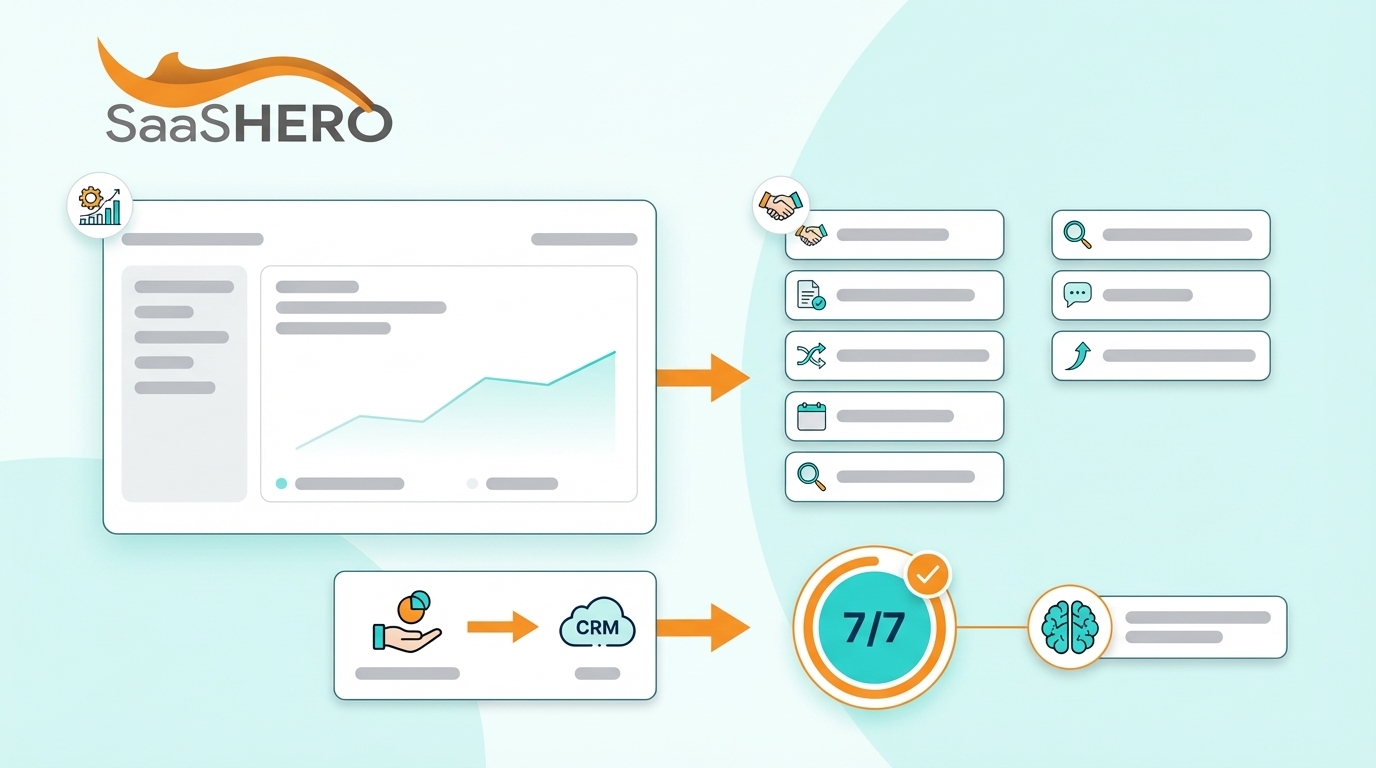
With these prerequisites in place, your team can implement the complete alignment playbook. The framework consists of seven interconnected steps: 1. Define Shared Revenue KPIs, 2. Co-Create Cross-Team GTM Plans, 3. Unify CRM Handoffs and Attribution, 4. Implement Weekly Reviews with AI Dashboards, 5. Map Complete Buyer Journey with Conquesting, 6. Establish Real-Time Feedback Loops, and 7. Scale with Proven Revenue Partners.
This framework addresses the core challenge facing SaaS teams: aligned teams using ABM are 843% more likely to overcome objections than traditional SDR models. Each step builds on the previous one and creates a compound effect that turns individual team performance into organization-wide revenue acceleration.
7 Steps to Keep GTM Strategy Execution Aligned
Step 1: Define Shared Revenue KPIs That Drive Decisions
Eliminate vanity metrics by setting revenue-first KPIs that every team member understands and owns. Focus on Net New ARR, Customer Acquisition Cost (CAC), and Lifetime Value (LTV) ratios instead of impressions or click-through rates, because these metrics measure revenue efficiency rather than activity volume. B2B SaaS companies should target LTV approximately 3 times CAC as a guardrail. Calculate LTV using ARPA × gross margin × average months retained.
Implement a shared KPI dashboard that tracks monthly recurring revenue growth, CAC payback periods under 12 months, and Net Revenue Retention above 120%. Best-in-class PLG companies maintain NRR rates above 120%, which allows them to double revenue from existing customers every 5 years. SaaSHero’s TripMaster case study demonstrates this approach, achieving $504,758 in Net New ARR by aligning all teams around revenue metrics instead of activity-based measurements. The following table shows how these results compare to common benchmarks across three critical revenue metrics.

| Metric | Formula | Benchmark | SaaSHero Result |
|---|---|---|---|
| Net New ARR | New Subscriptions – Churn | 30% growth | $504k gain |
| CAC Payback | CAC ÷ Monthly Gross Margin | <12 months | 80 days (TestGorilla) |
| LTV:CAC Ratio | Customer LTV ÷ CAC | 3:1 minimum | Not specified |
Step 2: Co-Create Cross-Team GTM Plans
Break down silos by involving sales, marketing, and customer success in joint planning sessions that align sales and marketing GTM strategies. Create shared quarterly objectives where marketing commits to specific SQL volumes, and sales commits to follow-up SLAs and conversion rates. This collaborative approach helps both teams see how their activities influence pipeline generation and revenue outcomes.
Establish clear handoff criteria that create mutual accountability between teams. Marketing delivers qualified leads that meet agreed-upon scoring criteria, and sales commits to contacting those leads within defined timeframes, which prevents blame-shifting for pipeline gaps. Document these agreements in formal Service Level Agreements (SLAs) that specify lead quality thresholds, response times, and feedback mechanisms, turning verbal commitments into measurable obligations that support continuous improvement.
Step 3: Unify CRM Handoffs and Attribution
Unify CRM processes so they capture the complete buyer journey from first touch to closed-won revenue. NetHunt CRM enables the creation, visualization, and management of multiple sales pipelines for different client types, products, buyer personas, or tiers, which supports the complex attribution needs of modern SaaS businesses.
Configure automated lead routing based on behavioral triggers, company size, and engagement scores, so the cross-team plans from Step 2 translate into consistent execution. Use tools like HubSpot or Salesforce to track multi-touch attribution that connects marketing activities to revenue outcomes. SaaSHero specializes in setting up these integrations so marketing spend clearly correlates with pipeline generation and closed deals.
Step 4: Implement Weekly Reviews with AI Dashboards
Shift from monthly reporting cycles to weekly alignment meetings powered by real-time AI dashboards. Dynamic GTM Operating Systems provide real-time visibility into strategy execution, reduce coordination overhead by 60-70%, and detect misalignment within weeks instead of quarters. These systems support proactive course correction before small issues grow into major revenue problems.
Use conversation intelligence tools that analyze sales calls and provide actionable insights for both individual reps and overall team performance. Track leading indicators such as pipeline velocity, deal progression rates, and competitive win rates to spot trends before they affect quarterly results. Schedule a consultation to see how SaaSHero implements AI-powered reporting that connects marketing activities to revenue outcomes.
Step 5: Map Complete Buyer Journey with Conquesting
Document every touchpoint in your buyer’s journey, from initial awareness through post-purchase expansion. Implement competitor conquesting strategies that target high-intent prospects who actively evaluate alternatives. Create dedicated landing pages for competitor comparison searches, pricing inquiries, and alternative solution queries.
Apply SaaSHero’s conquesting methodology, which targets three psychological intent buckets: pricing intent (competitor cost searches), problem intent (alternative and complaint searches), and validation intent (review and comparison searches). This approach captures prospects at critical decision moments when they are most likely to switch solutions or make purchase decisions.
Step 6: Establish Real-Time Feedback Loops
Build systematic processes for capturing and acting on market intelligence from sales conversations, customer feedback, and competitive encounters. AI competitive intelligence automation with win/loss learning loops and real-time delivery yields 30-40% improvement in competitive win rates by giving teams current, actionable intelligence during active deals.
Set up automated workflows that surface relevant competitive intelligence, customer success insights, and market feedback directly within CRM deal records. This contextual delivery gives sales teams the right information at the right moment and removes the need for manual research or outdated battlecards.
Step 7: Scale with Proven Revenue Partners
Once you have strong internal feedback mechanisms, accelerate results through specialized external expertise. Partner with agencies that understand SaaS unit economics and offer month-to-month engagements aligned with your growth stage. Avoid percentage-of-spend models that reward budget inflation instead of performance gains. SaaSHero’s flat-fee retainer structure keeps recommendations focused on efficiency and results rather than agency revenue.

Choose partners with demonstrated SaaS expertise, transparent pricing, and senior-led execution. SaaSHero’s track record includes helping TestGorilla reach the sub-80-day payback metrics that supported their $70M Series A raise, and Playvox reduce cost-per-lead by 10x while increasing conversion volume by 163%.
Measuring GTM Alignment Success
Measure alignment success through leading indicators such as pipeline velocity improvements, shorter CAC payback periods, and higher win rates. Top-performing B2B marketers achieve 81% higher ROI with Account-Based Marketing compared to other tactics, which shows the revenue impact of coordinated GTM execution.
Monitor unified dashboard metrics including the NRR threshold established earlier, CAC payback under 80 days, and pipeline coverage ratios above 3x. SaaSHero’s revenue reporting connects these metrics to specific marketing activities and sales processes, which supports continuous improvement based on actual revenue impact instead of activity-based measurements.
Partner with SaaSHero for Flawless GTM Alignment
SaaSHero specializes in implementing revenue-first GTM alignment for B2B SaaS companies from Series A through growth stage. The flat retainer model ($1,250-$7,000/month) removes the conflicts of interest common in percentage-based pricing, and the month-to-month agreements mean the team re-earns your business every 30 days through measurable results.
The senior-led team has managed over $30 million in B2B SaaS advertising spend, helping companies like TripMaster add significant Net New ARR and TestGorilla achieve the payback metrics that supported their $70M Series A raise. SaaSHero integrates directly into your existing tools and processes and functions as an extension of your team rather than a distant vendor.

Unlike traditional agencies that chase vanity metrics, SaaSHero focuses on revenue outcomes through sophisticated attribution tracking, competitor conquesting strategies, and AI-powered optimization. Book a discovery call to see how your GTM strategy can align with field execution for measurable revenue growth.
Summary and Next Steps
GTM alignment depends on shared KPIs, collaborative planning, unified attribution, real-time feedback, and specialized partnerships. Start with Step 1 by defining revenue-first metrics, then move through each step while tracking improvements in pipeline velocity and CAC efficiency. The compound effect of aligned execution usually produces measurable results within 4-6 weeks of implementation.
Frequently Asked Questions
How do you align GTM metrics across sales and marketing in SaaS?
Align GTM metrics by focusing on shared revenue measures such as Net New ARR, CAC payback periods, and LTV:CAC ratios instead of activity-based counts. Establish clear definitions for qualified leads, implement multi-touch attribution tracking, and create joint accountability through Service Level Agreements between teams. Use unified dashboards that show how marketing activities influence pipeline generation and closed revenue.
How long does it take to implement SaaSHero’s GTM alignment framework?
The timeline mentioned earlier, 4-6 weeks, assumes you work with specialized partners who can accelerate implementation. The exact duration depends on existing system complexity and team readiness. SaaSHero’s month-to-month engagement model supports rapid iteration and adjustment based on early results, so the framework adapts to your specific business needs and market conditions.
What’s the best CRM setup for seamless sales and marketing handoffs?
HubSpot and Salesforce both support sophisticated handoff processes when configured with automated lead routing, behavioral scoring, and multi-touch attribution. The key lies in implementing clear lead qualification criteria, automated follow-up workflows, and feedback loops that improve lead quality over time. SaaSHero configures these systems to support revenue-first alignment instead of activity-based reporting.
How much do AI dashboards improve GTM performance?
AI-powered dashboards often improve win rates by 30-40% through real-time competitive intelligence and predictive analytics. They reduce coordination overhead by 60-70% and help teams detect strategic drift within weeks instead of quarters. The most effective setups surface actionable insights directly within existing workflows rather than forcing teams into separate reporting tools.
What ROI can I expect from professional GTM alignment services?
SaaSHero’s clients often see 3-5x ROI within the first quarter through faster pipeline velocity, lower CAC, and higher win rates. TripMaster achieved strong Net New ARR growth, while TestGorilla reached a CAC payback that supported their Series A funding. Results depend on current alignment maturity and implementation consistency, but most teams see measurable improvements within 30 days. Contact us to discuss specific ROI projections for your situation.