




Written by: Aaron Rovner, Founder, Saas Hero | Last updated: September 3, 2026
Key Takeaways
- B2B Google Ads performance improves when Smart Bidding trains on revenue-focused CRM events instead of raw form fills.
- Most optimization failures come from mis-specified conversion actions that teach the algorithm to chase low-quality leads.
- A disciplined weekly routine across search terms, bids, Quality Score, ad copy, budget pacing, and conversion hygiene sustains performance.
- Offline conversion import via GCLID and CRM integration creates accurate revenue attribution and enables effective Smart Bidding.
- Companies ready for this revenue-first approach can schedule a discovery call with SaaSHero to audit and improve their accounts.
What Google Ads Management Optimization Means for B2B Revenue
Google Ads management optimization is the continuous process of refining campaigns, keywords, bids, and conversion data to maximize return on ad spend (ROAS) and drive qualified pipeline. The goal is revenue-generating opportunities that your sales team accepts and closes, not more clicks or more form fills.
Why Most Google Ads Optimization Fails
The most common failure in B2B Google Ads is optimizing for the wrong signal. When a form fill of any kind is set as the primary conversion action, the bidding algorithm does exactly what it is designed to do. It finds more people who fill out forms.
That population includes students, job seekers, competitors, and companies far outside your ideal customer profile. Cost per lead falls. Lead volume rises. The dashboard looks healthy. Pipeline does not move.
This pattern creates a self-fulfilling prophecy at the core of modern paid search. Google’s Smart Bidding uses auction-time signals to optimize toward whatever conversion goal is set. Point it at a low-quality conversion action and it will find the cheapest people to trigger that action, reliably and at scale. Every month this continues, the model gets better at finding the wrong audience.
For B2B companies with sales cycles measured in months and average contract values between $5,000 and $100,000+, a mis-specified conversion event can train an account toward the wrong audience for an entire quarter. The CRM shows the damage only after the budget is spent.
The fix is changing what gets sent back to the platform, not adjusting bids. The algorithm must be rewarded for finding qualified leads, sales-qualified opportunities, and closed revenue instead of form submissions.
The 7-Step Weekly Optimization Routine
A structured weekly routine forms the operational foundation of any well-managed account. This checklist focuses on the specific failure points most common in B2B accounts.
- Search Term Audit. Review the search terms report for irrelevant queries and add them as negative keywords. Broader match types capture all queries of narrower types plus additional related searches, so query drift is continuous rather than periodic. This reality makes a weekly audit mandatory, and most accounts fail here because nobody is looking.
- Bid and Audience Analysis. Check bid adjustments and audience performance segments. Reallocate spend toward the audiences and devices producing qualified pipeline instead of focusing on clicks alone.
- Quality Score Check. Monitor Quality Score and ad relevance for top-performing keywords. Low scores inflate CPCs and reduce impression share on your most valuable terms.
- Ad Copy Refresh. Test new headline and description variations against the control. Advertisers who improve their responsive search ads’ Ad Strength from Poor to Excellent see 15% more clicks and conversions on average.
- Budget Pacing Review. Verify that spend is distributed appropriately across the month. Overspending early exhausts budget before high-intent searches occur later in the period.
- Landing Page Spot-Check. Confirm that the landing page headline matches the promise made in the ad. Headline copy is the single highest-leverage variable for landing page conversion rate. A mismatch between ad and page creates a conversion leak that no bid strategy can compensate for.
- Conversion Action Hygiene. Confirm that primary and secondary conversion actions are correctly configured. Misconfiguring primary versus secondary conversion settings can prevent Smart Bidding from optimizing effectively.
Smart Bidding: Choosing Manual or Automated Strategies
Automated bidding requires a sufficient volume of conversion data before it can perform reliably. Running Smart Bidding on a thin or low-quality conversion signal produces worse outcomes than manual CPC, because the algorithm calibrates on noise.
| Strategy | When to Use | Data Requirement |
|---|---|---|
| Manual CPC | New accounts, low conversion volume, or when conversion tracking is being rebuilt | No minimum; use when automated strategies lack sufficient signal |
| Maximize Conversions | Accounts with established conversion tracking and sufficient budget to spend fully | No hard minimum, but Google recommends evaluating performance over periods that include at least 30 conversions |
| Target CPA | Accounts with a defined cost-per-acquisition goal and consistent conversion volume | At least 30 conversions recommended for reliable optimization |
| Target ROAS | Accounts assigning revenue values to conversions and focusing on return on spend | At least 15 conversions in the past 30 days for Search campaigns; 50 conversions in 35 days for Demand Gen |
The critical prerequisite for any automated strategy is conversion tracking that reflects real business outcomes. Automated, conversion-based bid strategies rely on conversion history to optimize bids, and if the right conversion actions are not set up, it can impact the accuracy of automated bids and limit conversions. Activate Smart Bidding only after the conversion architecture is correct.
Improving Quality Score: The Relevance Trifecta
Quality Score functions as Google’s proxy for ad relevance and directly affects both your cost per click and your ad position. Three levers move it.
- Tightly Themed Ad Groups. Every keyword in an ad group should share a single, clear search intent. When keywords are grouped by intent rather than by topic, ad copy can speak directly to what the user is looking for. This approach improves expected click-through rate, the most heavily weighted component of Quality Score.
- Relevant Ad Copy. Write headlines that mirror the user’s search query and the intent behind it. Google recommends crafting ad copy that focuses on user benefits, includes keyword integration, and avoids generic language. Generic copy that could belong to any competitor in the category scores poorly on ad relevance.
- High-Performing Landing Pages. The landing page experience component of Quality Score measures whether the page delivers on the promise made in the ad. The headline is the most impactful lever for that delivery. A page that opens with a category claim like “#1 Software” rather than a direct statement of the buyer’s problem will underperform regardless of how well the ad is written.
Ad Testing That Produces Clear Insights
Ad testing produces actionable learning only when one variable changes at a time. Testing a new headline alongside a new description and a new CTA simultaneously makes it impossible to attribute performance differences to any single element.
For B2B accounts, the highest-value tests focus on messaging that speaks to the buyer’s specific problem instead of generic feature claims. A headline that names the pain (“Pipeline Flat Despite High Lead Volume?”) will consistently outperform one that names the product category (“B2B Marketing Software”). Test the problem framing first, then the offer, then the CTA.
Advertisers with one responsive search ad who add a second RSA to their ad group see a 6.6% increase in conversions at a similar cost per conversion on average. Maintain at least two active RSAs per ad group with Good or Excellent Ad Strength ratings.
Budget Pacing and Allocation: Follow the Revenue
Budget allocation decisions should follow CRM data rather than platform-reported conversion volume. A campaign producing 50 form fills per month at a $40 CPL appears stronger than one producing 10 qualified opportunities at a $200 CPL until you compare their pipeline value.
Review budget allocation monthly against pipeline contribution by campaign. Move budget toward campaigns producing sales-qualified leads and opportunities. Reduce or pause campaigns producing volume without pipeline. This reallocation is only possible if conversion tracking connects ad clicks to CRM outcomes, which makes the measurement architecture described next the prerequisite for everything else.
Tracking Revenue: Integrating Google Ads with Your CRM
That architecture starts with CRM integration. It is not an advanced feature of Google Ads optimization. It is the foundation. Without it, every optimization decision relies on incomplete or misleading data.
The mechanism is offline conversion import. When a user clicks an ad, Google assigns a unique Google Click ID (GCLID). That GCLID must be captured at the moment of lead submission and stored in the CRM alongside the lead record. When that lead later becomes a qualified opportunity or a closed deal, the GCLID is uploaded back to Google Ads, along with the conversion type and timestamp. The platform then attributes that revenue outcome back to the original ad click.
Google Ads Data Manager supports direct connections to Salesforce and HubSpot, importing the last 14 days of data on the first run and all changes since the last run on subsequent runs. For accounts not yet using Data Manager, enhanced conversions for leads uses hashed first-party data such as email addresses to supplement imported offline conversion data. This setup improves attribution accuracy across devices and browsers.
The conversion architecture that makes this work has two tiers:
- Primary conversions are biddable. They are the signal Smart Bidding optimizes toward. For B2B, primary conversions should be high-quality CRM events such as a Sales Qualified Lead created, an Opportunity opened, or a deal closed. A raw form fill should never be a primary conversion in a B2B account.
- Secondary conversions are observation-only. They are tracked and visible in reporting but excluded from bidding. Content downloads, webinar registrations, and newsletter signups belong here because they show interest rather than a clear buying signal.
Once this architecture is in place, lifecycle stage events from the CRM, such as MQL created, SQL created, and Opportunity opened, can be pushed back into Google Ads as the optimization signal. The algorithm then learns to find more of the people who become qualified opportunities instead of more of the people who fill out contact forms. Advertisers who used first-party data alongside GCLIDs for offline measurement saw a median 10% increase in conversions compared to those using standard offline conversion imports.
Tools and Dashboards for Revenue Tracking
The reporting layer should connect ad spend to CRM outcomes in a single view. Platform-reported metrics and CRM-reported pipeline should not require manual reconciliation in a spreadsheet the day before a board meeting.
The recommended stack for B2B accounts centers on three tools that cover the full workflow.
- Google Ads Editor for bulk account changes, negative keyword management, and campaign structure work that is slow to execute in the browser interface.
- Optmyzr for automated optimization rules, Quality Score monitoring, and search term management at scale.
- Looker Studio connected to both the Google Ads API and the CRM (HubSpot or Salesforce) to produce a single dashboard showing spend, leads, pipeline, and revenue by campaign and channel. This dashboard answers board-level questions without requiring the marketing leader to rebuild it each quarter.
The dashboard should report in the vocabulary of finance: cost per SQL, pipeline created by channel, and CAC payback period. Impressions, clicks, and cost per lead belong in supporting views, not in the primary executive summary.
When to Consider an Expert Partner
Building and maintaining this entire system, from conversion tracking to CRM integration to weekly optimization and reporting, creates a substantial operational commitment. Many mid-market B2B marketing teams lack the dedicated paid search expertise and time to run this consistently.
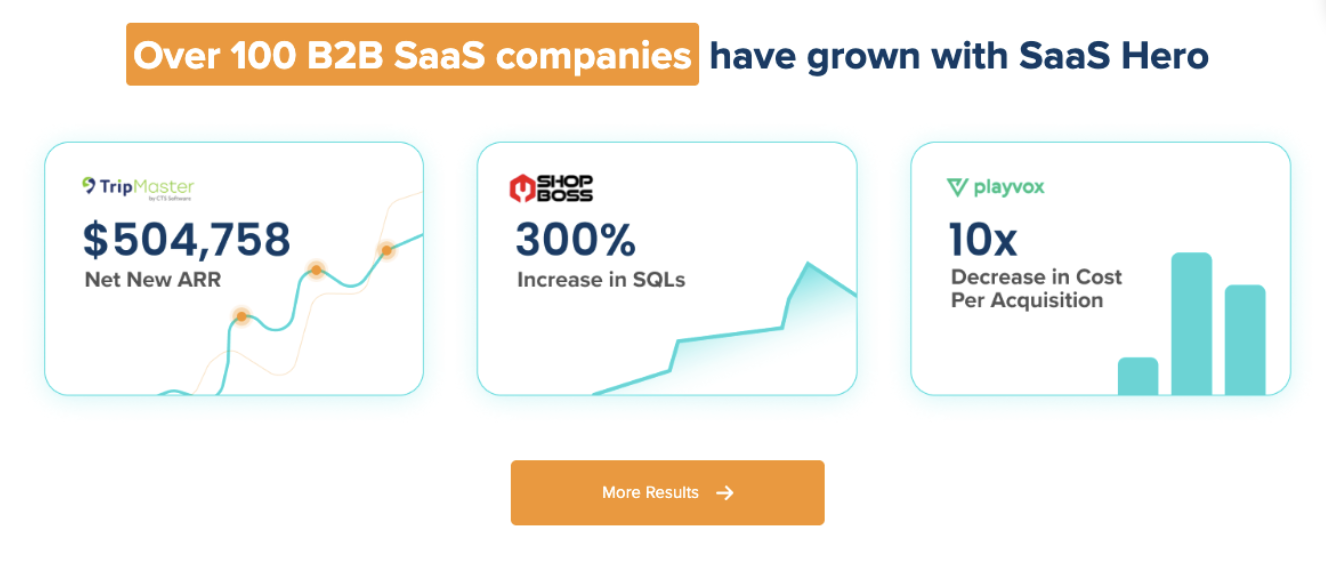
SaaSHero is the outsourced inbound growth team for B2B companies, with a track record of managing over $60 million in ad spend for B2B SaaS and professional services firms. As a Google Premier Partner, a designation held by the top 3% of agencies, SaaSHero owns the entire chain from campaign structure to landing pages to CRM reporting and optimizes every account against CRM revenue data rather than form-fill counts.
SaaSHero fits companies that have an underperforming agency, an internal team member juggling paid media with other responsibilities, or limited confidence that their ad spend is returning everything it should. The engagement covers paid media, creative, landing pages and CRO, attribution and reporting, and strategy as one team on one accountability line.

Get a direct assessment of what your account is optimizing toward and what it would take to fix it by scheduling a discovery call.

Frequently Asked Questions
What is a good Google Ads optimization score?
A score of 80% or higher is generally considered good, though many experienced advertisers consider a well-managed account to be one that sits in the 70–85% range after strategically dismissing recommendations that do not align with their goals. Google’s optimization score is a relative metric calculated against account history and platform best practices. It reflects how closely your account settings align with Google’s recommendations, not how well your campaigns are driving revenue.
For B2B accounts, the optimization score works as a useful hygiene indicator but should never serve as the primary performance metric. Focus on cost per SQL, pipeline created, and CAC payback period. An account with a 95% optimization score that is trained on form fills underperforms an account with a 70% score that is optimizing toward qualified opportunities.
How often should you optimize Google Ads?
At a minimum, review the account weekly. A structured weekly routine should cover the search terms report, bid and audience performance, budget pacing, ad copy testing, landing page alignment, and conversion action configuration.
Major structural changes, such as campaign architecture, bidding strategy transitions, and CRM integration updates, should be evaluated monthly or quarterly with enough conversion data to make statistically valid decisions. Accounts that are reviewed less frequently than weekly accumulate query drift, budget waste, and stale creative that compounds over time.
What is the difference between primary and secondary conversions in Google Ads?
Primary conversions are used by Smart Bidding to optimize your campaigns. They are the signal the algorithm pursues at auction time. Secondary conversions are tracked for observation only and do not influence bidding.
For B2B accounts, the primary conversion should be a high-quality CRM signal such as a Sales Qualified Lead, a created Opportunity, or a closed deal instead of a raw form fill. Setting a form fill as a primary conversion instructs the bidding algorithm to find more people who fill out forms, which differs from the population of people who buy. Secondary conversions should include lower-intent actions like content downloads and newsletter signups, which provide useful behavioral data without corrupting the bidding signal.
How do I import offline conversions from Salesforce or HubSpot to Google Ads?
The most direct method is Google Ads Data Manager, which supports native connections to both Salesforce and HubSpot. On the first run, Data Manager imports the last 14 days of conversion data. On subsequent runs, it imports all changes since the last sync.
The underlying mechanism requires that auto-tagging is enabled in Google Ads so that a GCLID is appended to every ad click, that the GCLID is captured at the moment of lead form submission and stored in the CRM record, and that when a lead reaches a qualifying lifecycle stage such as MQL, SQL, or Opportunity, the GCLID is returned to Google Ads with the conversion type and timestamp. For accounts not yet using Data Manager, enhanced conversions for leads provides an alternative that uses hashed email addresses to match offline conversions back to ad events. This approach is easier to implement and improves attribution accuracy across devices.
Conclusion: The Optimization Checklist
The core problem in most B2B Google Ads accounts rarely comes from bids, keywords, or creative. It comes from the conversion signal. An account trained on form fills will produce form fills. An account trained on qualified pipeline will produce qualified pipeline. Every other optimization lever, including Smart Bidding strategy, Quality Score, ad testing, and budget allocation, depends on the quality of the data being fed into the algorithm.
The steps to fix it:
- Audit your conversion actions and separate primary (biddable) from secondary (observation-only).
- Set primary conversions to high-quality CRM events such as SQLs, Opportunities, or closed revenue.
- Implement offline conversion import via GCLID to connect ad clicks to CRM outcomes.
- Push lifecycle stage events back into Google Ads for bidding optimization.
- Establish a weekly routine covering search terms, bids, ad copy, budget pacing, landing pages, and conversion hygiene.
- Transition to Smart Bidding only after conversion volume and data quality meet the required thresholds.
- Build a Looker Studio dashboard connected to your CRM that reports pipeline, CAC, and payback period instead of impressions and clicks.
SaaSHero executes this playbook for B2B companies that have the goals but not the in-house capacity to implement it, owning the entire chain from impression to pipeline.
If you need help implementing this, talk to SaaSHero. Schedule a free account audit to see what your campaigns are actually optimizing toward.