




Written by: Aaron Rovner, Founder, Saas Hero
Key Takeaways for 2026 B2B SaaS Unit Economics
- Target 3:1 LTV:CAC ratios and sub-12-month payback periods as 2026 benchmarks for Series A/B B2B SaaS success, with elite performers reaching 5:1+ and roughly 80-day paybacks.
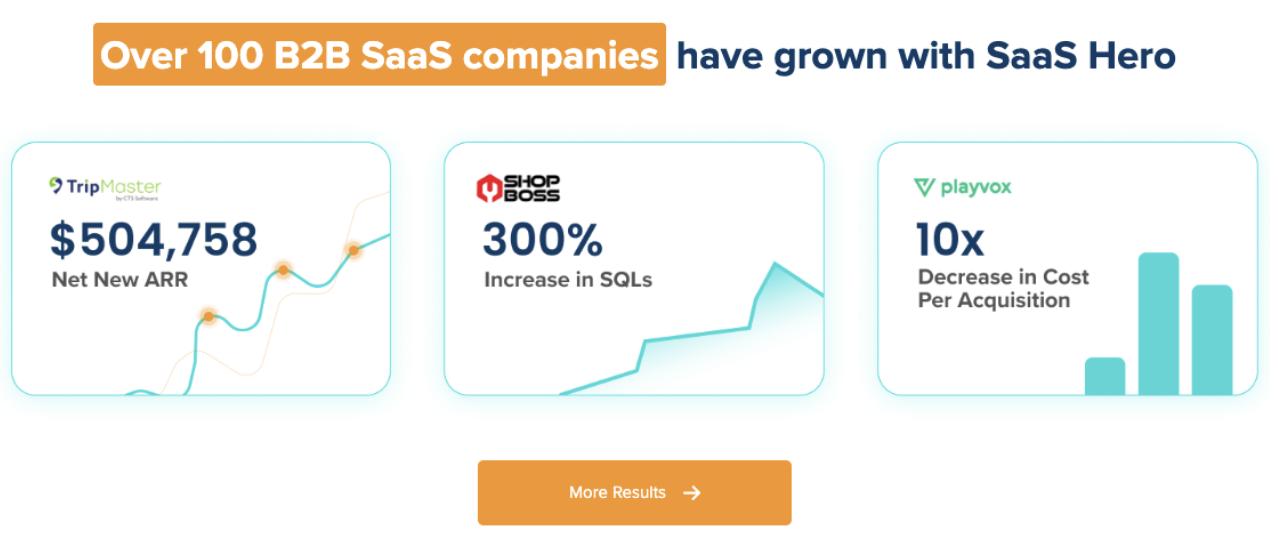
- Run channel-specific CAC audits to stop waste, using negative keywords and high-intent targeting to cut costs by up to 75%, as shown by Playvox’s 10x CPL reduction.
- Use competitor conquesting and ABM to capture high-intent prospects, driving outcomes like TripMaster’s $504,758 net new ARR with 650% ROI.
- Grow LTV through value-based pricing, usage-triggered upsells, and churn reduction below 3.5%, so expansion ARR can surpass new customer revenue.
- Work with revenue-first agencies like SaaSHero on flat-fee, month-to-month engagements, and get a free unit economics audit call that maps your CAC, LTV, and payback gaps.
B2B SaaS Unit Economics Metrics & 2026 Benchmarks
Core unit economics rely on four metrics: Customer Acquisition Cost (CAC), calculated as total sales and marketing spend divided by new customers acquired; Lifetime Value (LTV), derived from average revenue per account divided by churn rate; CAC Payback Period, which measures months to recover acquisition investment; and the LTV:CAC ratio, which indicates long-term profitability potential.
The table below compares 2026 Series A/B benchmarks with elite performance across these four metrics and highlights how PLG and sales-led motions create different unit economics profiles.
| Metric | Formula | 2026 Benchmark (Series A/B) | Elite Performance | PLG vs Sales-Led |
|---|---|---|---|---|
| LTV:CAC Ratio | LTV ÷ CAC | 3:1 minimum | 5:1+ (top performers) | PLG: 4:1 (lower CAC), Sales: 3:1 (higher ACV) |
| CAC Payback | CAC ÷ Monthly New ARR | <12 months | 80 days (TestGorilla) | PLG: 5-9mo, Sales: 12-18mo |
| Monthly Churn | 1 – Retention Rate | <3.5% | <1% (Enterprise) | PLG: 3-5%, Sales: 1-3% |
| Channel CAC | Channel Spend ÷ Customers | Google: $802; LinkedIn: $982 | 10x CPL reduction (Playvox) | PLG: Organic $290-942 |
These benchmarks highlight the pressure B2B SaaS companies face in 2026. Median Net Dollar Retention sits at 101%, while top performers maintain 111%+ through disciplined expansion strategies. Cohort analysis by acquisition channel separates marketing that supports durable growth from spend that only drives short-term volume. The elite 80-day payback level now serves as a clear reference point for capital-efficient growth in a constrained funding environment.
Step 1: Calculate Channel-Specific CAC and Stop Budget Waste
Unit economics work starts with forensic CAC analysis by channel, with ad platforms connected directly to CRMs like HubSpot or Salesforce so teams track true net new ARR instead of vanity metrics. Most B2B SaaS companies hemorrhage budget through broad keyword targeting that captures low-intent traffic. This waste compounds when last-click attribution undervalues top-funnel activities, which then appear unproductive. The cycle continues when teams skip negative keywords that would block navigational searches and keep the same wasteful patterns alive.
SaaSHero’s process uses deep account audits to expose conversion leaks, beginning with Google Ads restructuring that removes generic terms like “project management software” and replaces them with high-intent modifiers such as “alternative to [competitor]” and “pricing.” The integration of call tracking systems directly into Microsoft Dynamics 365 enabled ScotPac to achieve a 75% improvement in cost per opportunity by eliminating manual data entry and enabling real-time attribution.
ScotPac’s gains came from attribution clarity, while Playvox shows how the same forensic mindset applied to keyword strategy can drive even larger shifts. Playvox achieved a 10x decrease in Cost Per Lead and increased volume by 163% through systematic negative keyword deployment and campaign restructuring. Teams unlock these results by moving past platform-level metrics and tying every decision to closed-won revenue, so optimization follows business outcomes instead of click-through rates or impressions.
Step 2: Lower CAC with Competitor Conquesting and ABM
Competitor conquesting gives B2B SaaS teams a high-intent channel that targets prospects already evaluating solutions, using strategic keywords around competitor pricing, alternatives, and complaint-driven searches. This strategy taps three clear intent buckets: pricing intent from users comparing costs, problem intent from frustrated current customers, and validation intent from prospects seeking social proof before they commit.
Effective execution relies on focused comparison landing pages that call out competitor weaknesses and highlight your differentiated value. SaaSHero’s compliant framework uses factual comparisons without competitor logos, with feature matrices and total cost of ownership breakdowns that resonate with budget owners. Strong negative keyword hygiene supports this work by excluding broad brand terms that pull in navigational traffic and keeping bids on evaluative modifiers only.
TripMaster’s results show the upside of this approach, with $504,758 in net new ARR, 650% ROI, and a 20% conversion rate from paid search campaigns. Message match between ad copy and landing pages keeps prospects moving smoothly through the funnel and protects conversion rates. If competitors currently win prospects you should own, schedule a conquesting strategy call to turn their unhappy users into your next pipeline wave.

Step 3: Increase LTV with Pricing, Expansion Revenue, and Churn Control
Lifetime Value grows fastest when pricing architecture, expansion revenue, and churn prevention work as a single system instead of isolated tactics. Companies that build mature expansion programs often see expansion ARR surpass new customer ARR, with leaders generating about 45% of new ARR from existing accounts.
Pricing forms the base of this LTV system. Value-based positioning that mirrors customer budgets and procurement workflows lifts ACV without hurting win rates. Directive Consulting’s security tool client increased ACV by 40% by shifting from “faster threat detection” to “Audit-ready in 48 hours, not 3 weeks,” which mapped directly to compliance budget line items. Their workflow automation client grew enterprise ACV by 60% by moving from per-task pricing to per-workflow pricing that matched how enterprises buy.
Expansion revenue then builds on that pricing foundation. A marketing automation platform grew expansion ARR from 20% to 45% of total new ARR by tracking usage signals such as reaching 80% email send capacity or adopting webhooks, which triggered timely CSM outreach and upsell offers. Structured 14-day onboarding sequences, quarterly business reviews with ROI proof, and in-app prompts for sticky features all support this motion and tie directly to higher retention.
Step 4: Shorten SaaS Payback Period with Focused A/B Testing
Payback period shrinks when teams rigorously test conversion elements that affect acquisition efficiency, from landing page layouts to pricing displays and onboarding flows. A structured A/B program that experiments with value proposition headlines, social proof placement, and call-to-action copy can lift conversion rates without any increase in ad spend.
Looker Studio dashboards track cohort performance by acquisition source so teams can spot winning variants quickly and scale them. The $750 landing page design fee becomes a leveraged investment because stronger pages improve performance across every paid and organic channel. TestGorilla’s 80-day payback, referenced in the benchmarks above, illustrates how many small conversion wins can compound into elite unit economics.
The testing roadmap focuses on elements with the strongest link to payback: headline clarity around value, prominent trust signals such as G2 badges and customer logos, streamlined form fields that reduce friction, and mobile responsiveness that supports research on smaller screens. Each test cycle builds on prior learnings, which steadily improves CAC and payback across all channels.

Step 5: Improve Unit Economics with a Revenue-First Agency Partner
B2B SaaS companies improve unit economics faster when agency incentives align with revenue instead of media spend. SaaSHero uses a flat monthly retainer, from $1,250 for up to $10k ad spend to $4,500 for full marketing team services, which removes percentage-of-spend conflicts that reward higher budgets instead of better performance.
Month-to-month agreements create a built-in accountability mechanism, since the agency must re-earn the relationship every 30 days with measurable results. This structure supported TestGorilla in securing a $70M Series A by proving sustainable unit economics at an elite payback level that met investor expectations for capital efficiency.
SaaSHero focuses on B2B SaaS verticals such as HR Tech, Transportation, Procurement, and Cybersecurity, which gives clients domain depth that generalist agencies rarely provide. Senior-led teams keep client-to-manager ratios below 8-10 accounts, which prevents the dilution common in high-volume shops. Dedicated Slack channels and bi-weekly strategy calls keep internal and external teams aligned and allow quick reactions to market shifts.
Measure Success with Weekly Net New ARR and Payback Reviews
Durable unit economics come from consistent measurement of revenue outcomes, not surface-level engagement metrics. Weekly reviews of net new ARR, pipeline velocity, and CAC payback trends by channel keep teams focused on what actually drives growth.
The complexity of B2B buying journeys requires tracking that respects multi-touch influence across weeks or months. Multi-touch attribution shows that organic search and product experience influence about 65% of deals, while last-click models often over-credit paid social at around 60%. This insight supports smarter budget shifts that lower blended CAC.
Teams monitor leading indicators of unit economic health such as CAC payback by cohort, Net Revenue Retention trends, and pipeline coverage ratios that signal future growth. The elite 80-day payback level serves as a reference point for channel performance and helps leaders decide which channels to scale and which to cut.
Advanced: PLG Unit Economics and 2026 Scaling Strategies
Product-Led Growth models often enjoy lower CAC and easier scaling because they reduce reliance on large sales teams. PLG companies frequently achieve lower acquisition costs by removing dedicated sales headcount from many deals. They also average around 120% net revenue retention when products deliver value within minutes and require little setup.
A hybrid motion that blends PLG efficiency with enterprise sales reach lets companies serve both self-serve SMB buyers and high-value enterprise accounts. Companies that mix self-service experiences with partner channels often see 72% lower CAC, while ecosystem-led growth produces deals 53% more likely to close with 40% higher average order values.
Competitor conquesting fits PLG especially well because it targets users who already understand the category and now want a better alternative, which speeds trial-to-paid conversion.
Frequently Asked Questions
How long does it take to see CAC reduction results?
Most B2B SaaS companies see early CAC improvements within 4-8 weeks after they apply systematic optimization. SaaSHero’s conquesting campaigns often show movement in the first month, with Playvox’s 10x Cost Per Lead reduction as one example. Sustainable unit economics gains usually require 90-day optimization cycles to match B2B sales timelines and attribution lag. The fastest wins come from high-intent channels and disciplined negative keyword work that cuts wasted spend immediately.
What are realistic LTV:CAC benchmarks for Series A companies?
Series A B2B SaaS companies should aim for the 3:1 minimum mentioned earlier, while healthy performers often reach 4:1 and elite teams hit 5:1 or more. The sub-12-month payback guideline still applies, but acceptable ranges shift with deal size, and larger enterprise contracts can justify slightly longer payback. Monthly churn below 3.5% supports sustainable economics, and Net Revenue Retention above 110% signals strong expansion that lifts LTV over time.
Is competitor conquesting legally risky for B2B SaaS companies?
Competitor conquesting stays compliant when teams use factual comparisons and avoid trademark misuse. SaaSHero’s framework removes competitor logos, uses clear advertiser labels, and focuses on accurate feature and value comparisons instead of misleading claims. Business buyers expect this level of transparency during evaluation and often welcome side-by-side comparisons when they research alternatives.
How does SaaSHero’s pricing work for companies spending $10k monthly?
Companies spending up to $10k each month pay a flat $1,250 retainer for dedicated campaign management or $2,500 for full marketing team support, with no percentage-of-spend fees that push budgets higher. The month-to-month structure removes long-term contract risk and keeps recommendations focused on performance, not media volume. Setup fees range from $1,000-$2,000, and landing page design costs $750, which creates a clear, all-in view of optimization investment.
What is the difference between PLG and sales-led unit economics?
PLG models usually achieve lower CAC because they rely more on product experience and organic demand, with acquisition costs often between $290 and $942, while sales-led models average $802-$982 on paid channels. Sales-led motions, however, tend to drive higher LTV through larger contracts and deeper relationships. The right mix depends on product complexity, target market, and ACV, and many successful companies now use hybrid motions that combine PLG efficiency with enterprise sales reach.
Summary: Your 2026 B2B SaaS Unit Economics Checklist
Stronger unit economics in B2B SaaS come from consistent execution across five areas: channel-level CAC analysis with waste removal, aggressive competitor conquesting for high-intent demand, LTV growth through pricing and expansion, payback improvement through structured A/B testing, and partnerships with revenue-aligned agencies that focus on outcomes.
The 2026 capital market rewards companies that can prove sustainable 3:1 LTV:CAC ratios and payback under 12 months, while others struggle to raise. SaaSHero’s framework directly supports these investor expectations and has generated over $30M in campaign-driven revenue, with proof points such as TripMaster’s $504,758 net new ARR and TestGorilla’s elite payback performance across varied B2B SaaS segments.
Begin your unit economics reset by auditing CAC across every channel, launching targeted conquesting campaigns for immediate high-intent pipeline, and shifting reporting toward net new ARR instead of vanity metrics. Get your free unit economics analysis and see exactly where your marketing dollars are leaking, then use a discovery call to map a 90-day optimization plan for your 2026 growth goals.