





Written by: Aaron Rovner, Founder, Saas Hero
Key Takeaways
- Facebook Lead Ads with precise audience layering and Conversions API drive 15-25% lead-to-SQL rates and 650% ROI for high-intent B2B SaaS leads.
- The 3-2-2 full-funnel retargeting method lifts conversions by up to 63% through structured TOFU, MOFU, and BOFU creative sequences tailored to B2B buyer journeys.
- CLTV-based 1-3% lookalike audiences can deliver 151% revenue increases and 12.3% conversion rates, beating generic targeting by 35%.
- ROI-focused creatives that follow the 85% Relevance Rule and PAS framework routinely generate $100K+ additional ARR from a $10K monthly ad budget.
- Partnering with revenue-first agencies like SaaSHero on flat-fee models supports 80-day CAC payback; schedule a discovery call to roll out these strategies.
5 Facebook ARR Growth Plays for SaaS Startups in 2026
These five strategies match specific growth stages, from bootstrapped startups to teams preparing for Series A. Each strategy builds on the previous one and together they form a practical framework for predictable ARR growth.
Strategy 1: Capture High-Intent Leads with Facebook Lead Ads
Facebook Lead Ads give SaaS startups a direct way to capture high-intent prospects without sending them off-platform. Keeping users inside Facebook reduces friction and usually improves conversion rates compared with traffic campaigns that rely on external landing pages.
Effective execution relies on precise audience layering that combines job titles, company sizes, and behavioral indicators. Strong targeting blends demographics with interests like digital marketing or SaaS product news plus behaviors such as business page administration or B2B software purchasing patterns. This multi-layered approach keeps your ads in front of decision-makers who are actively evaluating solutions.
Conversions API (CAPI) setup plays a central role in accurate attribution. More than 50% of browser-side conversions now go untracked without CAPI, so server-side tracking becomes essential for measuring real ROI. Integrating platforms like HubSpot or Salesforce connects CRM data to Facebook and lets you optimize for closed revenue instead of raw lead volume.
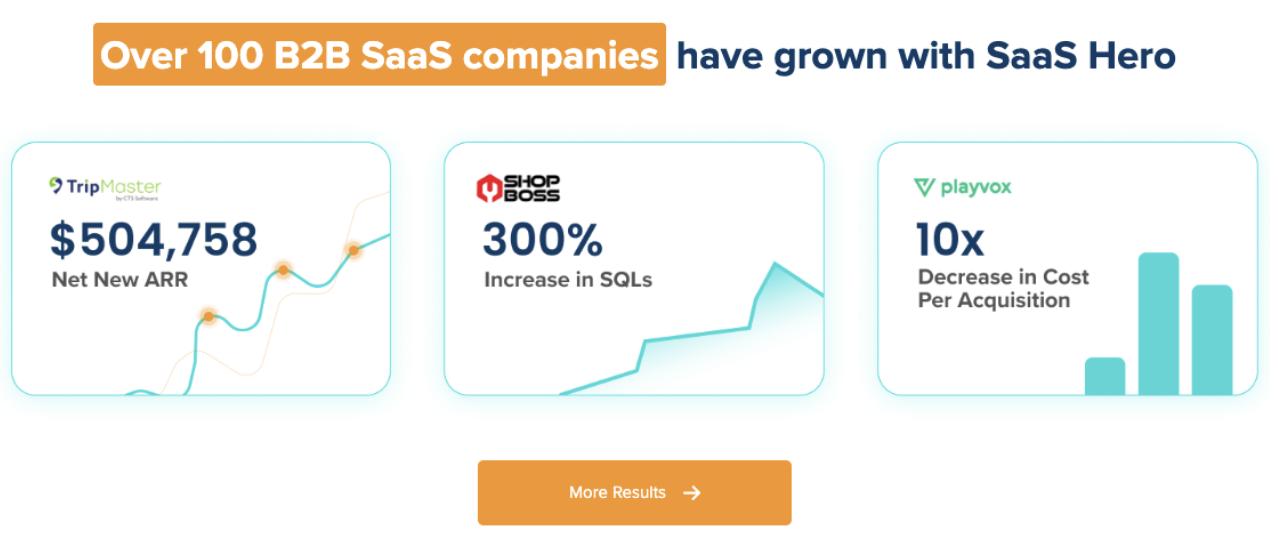
SaaSHero used this approach to generate $504,758 in net new ARR for TripMaster, a transit software company, through targeted lead generation campaigns that included paid social. The campaigns focused on transit authority decision-makers and municipal procurement officers and produced a 650% ROI through tight audience targeting and refined lead qualification.

Core metrics include SQL conversion rates, average contract value, and time-to-close. High-performing campaigns usually reach 15-25% lead-to-SQL conversion with CAC payback periods under 90 days.
Book a discovery call to roll out high-intent lead generation tailored to your SaaS market.
Strategy 2: Use the 3-2-2 Full-Funnel Retargeting Method
The 3-2-2 Method gives B2B SaaS teams a clear structure for full-funnel retargeting. The framework uses three top-of-funnel creatives for awareness, two middle-of-funnel assets for consideration, and two bottom-of-funnel offers for conversion.
Full-funnel B2B ad strategies can lift conversions by up to 63%, so this method helps you capture more value from every visitor. B2B buyers usually need 6-8 touchpoints before they convert, so planned sequences outperform random one-off ads.
TOFU creatives highlight the problem and educate the audience through videos, industry reports, and thought leadership. MOFU assets move into product demonstrations, case studies, and comparison guides that speak to specific use cases. BOFU materials feature free trials, pricing breakdowns, and time-bound offers that speed up decisions.
In 2026, server-side tracking keeps this funnel measurable despite privacy changes. Meta’s enhanced mobile ad tools and engaged-view attribution preserve full-funnel performance by using referrer data and cross-channel reporting.
SaaSHero’s CRO-focused execution of 3-2-2 often reaches 650% ROI through disciplined testing of creative sequences and audience progression rules across paid channels. A flat-fee pricing model keeps the focus on revenue growth instead of budget inflation.
Strategy 3: Build CLTV-Based Lookalikes with AI Targeting
Post-iOS privacy shifts changed how lookalike audiences perform and pushed teams toward more advanced AI-driven targeting. The strongest results now come from 1-3% lookalike audiences built from high-value customers instead of broad website traffic.
Companies using data-driven audience segmentation see 60% higher conversion rates than generic targeting. The source audience matters most, so you should build lookalikes from customers with high annual contract values, low churn, and strong expansion potential.
CLTV-based lookalike audiences can drive up to 151% revenue growth and 38% lower cost per acquisition. This approach depends on CRM integration that flags your highest-value customers, then feeds that list into Facebook as the seed for lookalike segments.
SaaSHero’s vertical focus in HR Tech, Transportation and Logistics, and Cybersecurity supports precise lookalike creation. Experience managing more than $30 million in B2B SaaS ad spend gives the team the data depth needed for reliable AI targeting.
Execution steps include CRM data export, customer value analysis, lookalike creation at several percentage tiers, and structured testing to find the most efficient audience size. Lookalike audiences at 1-2% average 12.3% conversion rates and beat interest-based targeting by 35%.
Strategy 4: Scale ARR with ROI-Focused Creatives
Creative quality drives most Facebook performance for B2B SaaS. The 85% Relevance Rule states that creative accounts for roughly 85% of campaign results, so a structured creative process becomes a direct growth lever.
High-performing creatives follow the Problem-Agitation-Solution framework. They start with a clear pain point, highlight the cost of inaction, then present a specific solution. User-generated content videos that feature real customers and real outcomes often outperform polished corporate videos by a wide margin.
SaaSHero offers $300 creative packages that include five ad variations for rapid testing. These bundles let teams test different messages, visuals, and calls to action without slowing down production or sacrificing professional quality.
The creative strategy centers on scroll-stopping visuals paired with benefit-focused copy that speaks directly to defined personas. Winning campaigns invest in mobile-first creatives that highlight features, benefits, and social proof in a format that performs well on small screens.
Even a 20% lift in conversion rate from stronger creatives can add $100,000 or more in ARR for a startup spending $10,000 per month on Facebook. That math makes creative testing one of the highest-impact activities in your paid acquisition program.
Strategy 5: Work with a Revenue-First Facebook Ads Agency
Agency pricing models can either support your ARR goals or work against them. Percentage-of-spend billing rewards agencies for higher budgets regardless of performance, while long contracts shift risk to clients and protect weak results.
SaaSHero uses a flat-fee, month-to-month model that separates agency revenue from ad spend. Pricing ranges from $1,250 to $3,000 per month based on spend band and channel count, which keeps costs predictable and keeps optimization focused on revenue growth instead of budget size.

The TestGorilla case study shows how this model works in practice. Through structured testing and revenue-focused strategy, SaaSHero helped the team reach an 80-day CAC payback period that supported a $70 million Series A round. Investors responded to the strength of those unit economics.
| Spend Band | 1 Channel (Month-to-Month) | 1 Channel (6-Month Prepay) | 2 Channels |
|---|---|---|---|
| Up to $10k | $1,250 | $1,000 | $2,500 |
| $10k – $25k | $1,750 | $1,400 | $3,000 |
| $25k – $50k | $2,250 | $1,800 | $3,500 |
| $50k+ | $3,250 | $2,600 | $4,500 |
2026 Privacy Playbook for Facebook ARR Growth
The 2026 privacy environment demands specific technical setups to keep attribution and optimization reliable. Core pieces include Conversions API, first-party data pipelines, and CRM-based attribution models.
| Privacy Challenge | Solution | Implementation | Impact |
|---|---|---|---|
| iOS Tracking Loss | CAPI Integration | Server-side events | 50%+ attribution recovery |
| Cookie Deprecation | First-party data | CRM sync | Improved targeting |
| Attribution Gaps | Multi-touch modeling | Cross-platform tracking | Revenue visibility |
Book a discovery call to set up revenue-first Facebook programs that match your growth targets.
Real SaaSHero Case Studies and ARR Math
Real client results show how a structured Facebook strategy can compound ARR for B2B SaaS startups. The following table summarizes several SaaSHero engagements.
| Client | Channel Focus | Spend → ARR | Payback Period |
|---|---|---|---|
| TripMaster | Paid Search + Social | $504k Net New ARR | ~80 days |
| TestGorilla | Multi-channel | 80-Day Payback | 80 days |
| Playvox | Account Optimization | 10x CPL Reduction | N/A |
| Leasecake | LinkedIn Ads | $3M VC Round | N/A |
The core formula behind these outcomes is simple: ARR = Leads × Conversion Rate × Average Contract Value. For example, $10,000 in monthly spend that produces 100 qualified leads at a 15% close rate and $7,000 average contracts yields $105,000 in new ARR, which equals a 10.5x return on ad spend.
Frequently Asked Questions
Why Full-Funnel Facebook Works for B2B SaaS
Full-funnel Facebook strategies support B2B SaaS growth by matching messages to each stage of a complex buyer journey. SaaS deals often involve several stakeholders, long evaluations, and higher perceived risk, so prospects need structured education before they commit. The 3-2-2 Method delivers educational content for awareness, comparison content for consideration, and clear offers for decision. B2B buyers usually need 6-8 interactions before they buy, so sequential retargeting becomes a key driver of conversion rate and lifetime value.
How to Select a Facebook Ads Agency for ARR Growth
Agencies that drive ARR growth share three traits: revenue-aligned pricing, B2B SaaS specialization, and transparent attribution. Avoid percentage-of-spend pricing that rewards higher budgets without tying fees to performance. Look for flat-fee models that align incentives with your outcomes. Confirm that the agency understands CAC, LTV, and churn instead of only surface metrics. Ask for case studies that show ARR impact, not just lead counts or traffic lifts, and make sure the team can integrate with your CRM and report on revenue from closed deals.
How 2026 Privacy Changes Affect Facebook Ads
Privacy changes in 2026 reshape Facebook advertising through weaker tracking, attribution gaps, and narrower targeting. iOS App Tracking Transparency cut Facebook’s data collection to roughly 4% opt-in rates, while modern browsers strip tracking parameters from many links. Startups can still perform well by using Conversions API, first-party data capture, and server-side tracking. These setups recover much of the lost attribution and improve data accuracy. The shift moves teams away from browser-only tracking and toward CRM-based attribution that connects ad touchpoints to revenue.
Red Flags When Evaluating Facebook Ads Agencies
Several warning signs suggest an agency will not support your ARR goals. Percentage-of-spend pricing and long contracts move risk to you and protect the agency even when results stall. Reporting that focuses on impressions, clicks, or CTR instead of revenue shows a misalignment with business outcomes. Generalist agencies that serve many unrelated industries often lack the depth needed for B2B SaaS. Agencies that cannot explain their attribution model or connect to your CRM also limit your ability to scale paid acquisition responsibly.
Expected ROI Timeline for Facebook in B2B SaaS
Most B2B SaaS teams see Facebook ROI develop over a 90-day optimization window, with early signals in 30-45 days. Initial campaigns usually need 2-4 weeks for algorithm learning and audience refinement, followed by structured testing. Well-run programs often reach positive ROI within 60 days and can grow to 4-10x return on ad spend by month three. The full impact extends beyond direct conversions because many prospects influenced by Facebook later convert through other channels, so long-term attribution is essential for measuring net new ARR.
Conclusion: Turning Facebook into a Reliable ARR Engine
These five strategies form a practical playbook for generating net new ARR from Facebook in 2026. High-intent lead capture, structured retargeting, CLTV-based targeting, and creative testing all support each stage of SaaS growth.
Success depends on partners who care about revenue, not vanity metrics. SaaSHero’s flat-fee, month-to-month structure removes common agency conflicts and brings specialized B2B SaaS expertise to your team.
Startups that commit to data-driven optimization, revenue-aligned partnerships, and ongoing testing can turn Facebook into a repeatable growth channel. Book a discovery call to see how SaaSHero’s approach can accelerate your path to sustainable ARR through Facebook advertising.