




Written by: Aaron Rovner, Founder, Saas Hero
Key Takeaways
- Reject percentage-of-spend pricing models that reward higher budgets and waste. Choose flat-fee structures with 30-day exit clauses for real alignment.
- Require revenue-focused reporting with CRM integration that tracks SQLs, Net New ARR, and CAC payback under 80 days, not just vanity metrics.
- Prioritize B2B SaaS specialists with at least 50 case studies, Google Premier status, and senior strategist ratios under 10:1.
- Use competitor conquesting expertise to capture 12% or higher conversion rates with targeted keywords and dedicated comparison landing pages.
- Verify ROI guarantees with written 4x or higher ROAS thresholds, clear refund policies, and proven results. Schedule a discovery call with SaaSHero to benchmark your current performance.
Step 1: Align Incentives With Flat-Fee Pricing
The percentage-of-spend model creates a built-in conflict of interest between you and the agency. When agencies charge 10-20% of your ad budget, they earn more when you spend more, regardless of performance. A $50,000 monthly budget generates $7,500 in agency fees, while a $100,000 budget doubles their revenue to $15,000 without guaranteeing better results.
Ask for transparent, flat-fee pricing structures instead:
- Request pricing based on spend bands, not percentages
- Insist on 30-day exit clauses so you keep leverage
- Watch for bait-and-switch tactics where low initial quotes quickly escalate
- Confirm that fees stay fixed within each spending tier
SaaSHero follows this model with clear retainer pricing that starts at $1,250 per month for campaigns up to $10,000 in ad spend. Their flat-fee structure keeps recommendations to scale budgets grounded in performance data, not commission-driven incentives.
Step 2: Shift Reporting From Clicks To Revenue
Vanity metrics slow B2B SaaS growth and hide real performance issues. Agencies that focus on impressions, clicks, and CTR often optimize for their own dashboards instead of your revenue. Poor conversion tracking pushes spend toward low-value actions like newsletter signups instead of revenue-generating demos.
Require agencies to integrate with your CRM and track:
- Sales Qualified Leads (SQLs) with GCLID tracking attached
- Net New ARR attributed directly to paid campaigns
- CAC payback periods that stay under 80 days
- Pipeline velocity and the relationship between deal size and channel
The strongest agencies can show clear payback timelines, not just lead counts. TestGorilla reached an 80-day payback period through SaaSHero’s revenue-focused approach, which provided the unit economics that supported their $70M Series A raise.
Step 3: Choose B2B SaaS Specialists With Senior Ownership
Generalist agencies spread their attention across e-commerce, local services, and mobile apps, which dilutes their expertise. B2B SaaS needs deep vertical knowledge of churn, expansion revenue, and multi-stakeholder buying committees. Agencies with Google Premier Partner certification and integrated B2B services report 2.9x higher ROAS and 34% lower CAC.
Evaluate specialization using clear criteria:
- At least 50 B2B SaaS case studies that include ARR outcomes
- Google Premier Partner status, which places them in the top 3% of agencies
- Senior strategist-to-client ratios below 10:1
- Proven experience in your specific vertical, such as HR Tech or Cybersecurity
SaaSHero caps senior manager portfolios at 8-10 accounts, which keeps strategy execution in senior hands instead of junior coordinators. Their exclusive focus on B2B SaaS means every team member understands the difference between demo requests, free trials, and lower-intent leads.
Step 4: Assess Competitor Conquesting And CRO Skills
Competitor conquesting taps into some of the highest-intent traffic available for B2B SaaS. SaaS companies that target competitor alternative keywords often see 12% conversion rates compared to 2.3% for generic terms. This strategy requires careful execution and attention to legal guidelines.
|
Intent Type |
Keywords |
Landing Strategy |
Conversion Rate |
|
Pricing |
[Competitor] cost, pricing |
TCO comparison pages |
8-15% |
|
Alternatives |
[Competitor] alternative |
Feature comparison tables |
10-18% |
|
Problems |
Cancel [Competitor] |
Switch and save messaging |
12-20% |
Agencies need strong conversion rate optimization skills, not just traffic generation capabilities. SaaSHero’s competitor campaigns reach 12% conversion rates on alternative searches by sending traffic to focused comparison pages instead of generic homepages.
Step 5: Validate ROI Guarantees With Clear Terms
Real ROI guarantees rely on specific performance thresholds and refund mechanisms, not vague promises. Well-managed B2B accounts can reach 400-800% returns through advanced conversion tracking and disciplined bid strategies, which makes structured guarantees both realistic and necessary.
Validate guarantee structures by confirming:
- Written ROAS thresholds, with a minimum of 4x for B2B SaaS
- Refund or credit policies that apply when performance falls short
- Third-party verified case studies that show revenue outcomes
- CRM integration requirements that support accurate tracking
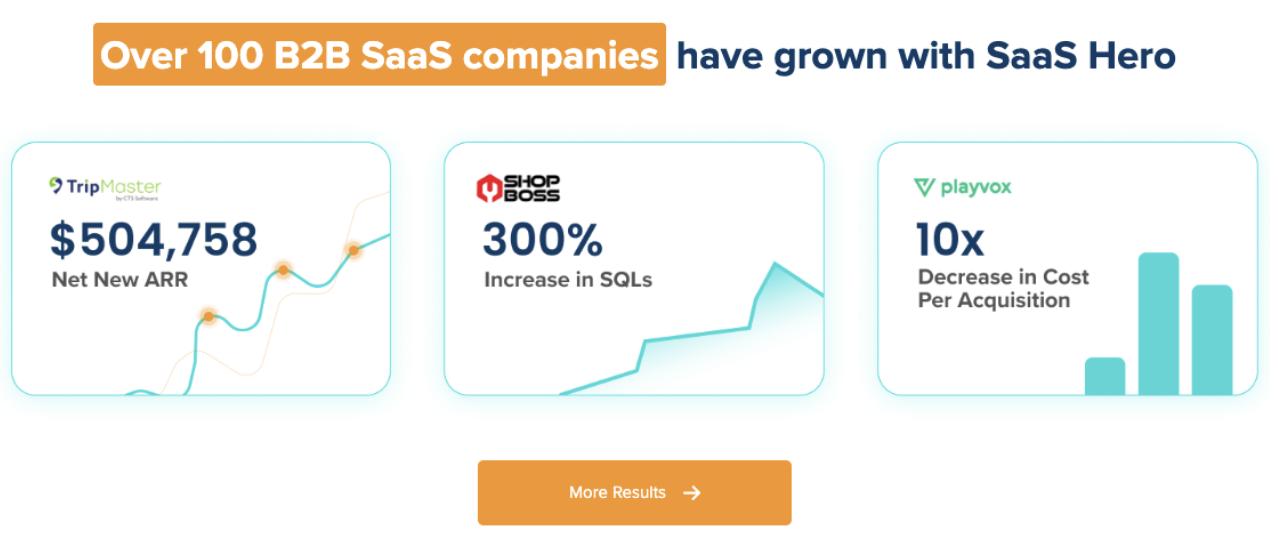
SaaSHero backs their guarantees with documented outcomes such as TripMaster’s $504,758 in Net New ARR and 650% ROI. Their month-to-month contracts create constant accountability, since they must re-earn client trust and budget every 30 days based on performance.

Frequently Asked Questions
What is a Google Ads ROI guarantee?
A Google Ads ROI guarantee is a contractual commitment where agencies promise specific return thresholds, usually 4-6x ROAS for B2B SaaS, with defined refund mechanisms if they miss the mark. These guarantees rely on accurate tracking that connects ad clicks to closed revenue through CRM integration. Agencies that work with ROI guarantees focus on revenue outcomes instead of surface-level metrics like clicks or raw lead volume.
Do ROI guarantees work for B2B SaaS companies?
ROI guarantees work well for B2B SaaS because subscription models create predictable lifetime value and measurable recurring revenue. The key lies in setting expectations that match your sales cycle and attribution window. Initial ROAS may look lower when deals take months to close, but the compounding effect of subscription revenue supports guarantees when they focus on Net New ARR instead of only immediate conversions.
How can I spot agencies that will not deliver guaranteed ROI?
Warning signs include percentage-of-spend pricing models, 12-month minimum contracts, and reports that highlight impressions and clicks instead of revenue. Lack of CRM integration, weak tracking capabilities, and no case studies with clear revenue outcomes also signal risk. Agencies that avoid month-to-month agreements or cannot show senior-level account management often lack confidence in their ability to deliver on guarantees.
What is a realistic timeline for seeing ROI from guaranteed campaigns?
B2B SaaS companies should plan for 80-120 days to validate initial ROI, with full guarantee thresholds usually measured over 6-12 months to match sales cycles. Google’s learning phase requires 30-50 conversions, which can take 60-90 days for higher-priced SaaS products. Leading indicators such as SQL quality, pipeline velocity, and demo-to-close rates should start improving within the first 30 days.
How does SaaSHero’s approach differ from other agencies?
SaaSHero combines flat-fee pricing with month-to-month contracts, which removes the conflicts of interest that come with percentage-based models. Their exclusive focus on B2B SaaS, senior-led account management, and inclusion of CRO services within their retainer creates a full growth engine instead of a basic traffic service. Their performance-driven structure and short contract terms show confidence in their process and tight alignment with client revenue goals.
Conclusion: Choose Agencies That Share Your Revenue Goals
Selecting a Google Ads agency with ROI guarantees requires a structured review across five core areas. Focus on agencies that prove incentive alignment through flat-fee pricing, revenue-based reporting, B2B SaaS specialization, competitor conquesting strength, and clear, enforceable guarantee terms.
Keep three non-negotiables in mind:
- Transparent pricing that avoids percentage-based conflicts
- CRM-integrated reporting centered on Net New ARR
- Case studies that document specific revenue outcomes
As B2B SaaS markets tighten in 2026, vanity metrics and misaligned partnerships become too costly to tolerate. Your growth depends on agencies that tie their reputation and revenue directly to your success.
Partner with an agency that stands behind its results. Book a discovery call with SaaSHero to explore their month-to-month, performance-driven approach to B2B SaaS growth.