




Written by: Aaron Rovner, Founder, Saas Hero | Last updated: August 29, 2026
Key Takeaways
- Traditional form-fill optimization misleads algorithms and inflates lead counts while pipeline stays flat.
- Privacy changes and long B2B sales cycles have broken last-click attribution, creating 15-40% data loss.
- Boards now demand CAC payback, pipeline coverage, and LTV:CAC on a quarterly cadence, not impressions or clicks.
- A five-phase closed-loop rollout tracking audit, CRM integration, multi-touch attribution, cohort tables, and incrementality testing replaces form-fill metrics with revenue-linked measurement.
- Book a discovery call with SaaSHero to assess whether your current measurement architecture can survive board or PE diligence.
The 5-Phase Closed-Loop Measurement Rollout Playbook
The following five phases form a complete implementation sequence that turns form-fill reporting into revenue-linked measurement. Each phase builds on the previous one with a defined output and a gate before advancing, so your system can withstand board scrutiny and guide budget decisions with confidence.
- Phase 1 — Tracking Audit and Primary Conversion Architecture (Days 1–30). Audit Google Tag Manager, GA4, and all ad platform conversion actions. Classify every existing conversion event as primary (used for account-wide bidding optimization) or secondary (tracked but excluded from optimization). Limit primary events to CRM-qualified outcomes such as sales-qualified lead created, opportunity opened, or demo booked with a confirmed ICP match. Keep secondary events like content downloads, newsletter signups, and unfiltered contact-form submissions visible in reporting but never feed them into Smart Bidding. Implement server-side tracking via Google Enhanced Conversions and, where applicable, Meta Conversions API, sending hashed first-party identifiers directly from the server to bypass browser restrictions. Output: a documented primary-versus-secondary conversion hierarchy with a traceable rationale for every classification.
- Phase 2 — CRM Integration and UTM Persistence (Days 15–45). Map the full data join: impression → click → UTM parameters captured at form submission → CRM contact record → lifecycle stage transitions → closed-won revenue. Store the GA4 client_id and UTM parameters as custom properties on the CRM contact, contact, account, and opportunity records without overwriting first-touch data, which enables row-level reconciliation between marketing touch data and CRM revenue records. Configure HubSpot or Salesforce to push lifecycle stage transitions such as MQL created, SQL created, opportunity opened, and closed-won back to GA4 via the Measurement Protocol and to Google Ads via offline conversion import. Output: a live CRM field map showing every UTM and identifier field, its source, and its downstream use in attribution reporting.
- Phase 3 — Multi-Touch Attribution Model and Looker Studio Dashboard (Days 30–60). B2B SaaS buyer journeys for mid-market deals ($15K-$100K ACV) typically span 30–90 days with multiple stakeholders and cross-channel touchpoints, so single-touch attribution models miss most of the story. Implement a W-shaped or full-path model that assigns heavier credit to first touch, lead creation, opportunity creation, and closed-won milestones. Build a Looker Studio dashboard with four views: (a) sourced pipeline and sourced revenue by channel and campaign, (b) influenced pipeline by channel, showing every channel that touched an opportunity regardless of whether it originated it, (c) blended CAC and cost per SQL by channel, and (d) a funnel conversion table from ad click to MQL to SQL to opportunity to closed-won, segmented by channel. Connect the dashboard directly to HubSpot or Salesforce as the data source, not to ad platform APIs alone. Output: a board-ready Looker Studio dashboard that answers “what did this spend produce in pipeline and revenue” without manual reconciliation.
- Phase 4 — Gross-Margin-Adjusted Cohort Tables (Days 45–90). Bessemer Venture Partners defines CLTV as the net present value of the recurring profit streams of a given customer, which requires gross-margin adjustment rather than revenue-based LTV. Build a monthly acquisition cohort table with rows representing acquisition month and columns representing months since acquisition (Month 0 through Month 12+). Populate each cell with cumulative gross-margin-adjusted revenue per customer using ARPU × Gross Margin % × months elapsed. Identify the payback month for each cohort as the column in which cumulative gross profit per customer divided by CAC crosses 1.0. Segment the table by acquisition channel so that paid search, paid social, and organic cohorts are compared at equivalent maturity. CAC must be fully loaded, incorporating all sales and marketing spend including salesperson salaries, commissions, tools, events, agency fees, content production, and platform costs. Output: a channel-segmented cohort table updated monthly, with a heatmap overlay to surface underperforming newer cohorts before they appear in aggregate ROAS metrics.
- Phase 5 — Incrementality Testing as Quarterly Verification (Days 60–90 and ongoing). Mature B2B SaaS measurement programs use incrementality testing as a quarterly verification layer rather than the primary system. Select the top three channels by spend. For each, design a holdout test and suppress ads for 10–20% of the target audience at the account level, suppressing all known contacts at a given company domain rather than individual users to avoid contamination from buying committees. For SaaS companies with 30–60 day average sales cycles, incrementality tests should run for a minimum of four to eight weeks. Track incremental SQLs, incremental pipeline dollars, and incremental closed-won revenue as primary outcomes. Report both attributed performance for day-to-day optimization and incremental performance for strategic budget decisions. Output: a quarterly iROAS figure per channel with pre-defined decision thresholds such as “increase spend if iROAS exceeds 3.0” and “reduce and rebuild if below 1.5” that govern the next quarter’s budget allocation.
Core Metrics and the Closed-Loop Model
The closed-loop mental model functions as a single chain: impression → click → CRM record → revenue outcome. Every metric in the system measures one segment of that chain, which means the quality of your optimization depends entirely on which segment you choose to measure. Optimization quality equals conversion-event quality, so the better the event fed to the algorithm, the better the audience the algorithm finds.

LTV:CAC is the ratio of gross-margin-adjusted lifetime value to fully loaded customer acquisition cost. Healthy gross-margin-adjusted LTV:CAC ranges are typically 3:1–4:1 (or up to 5:1) for mid-market SaaS (~$15K–$100K ACV) and 3.5:1–5:1 (or up to 6:1+) for enterprise SaaS (>$100K ACV). A revenue-based LTV that omits gross margin overstates the ratio by 1.5–3x depending on margins, which becomes a material error in a board or PE diligence context.
CAC Payback Period is CAC divided by Monthly Recurring Revenue per customer multiplied by Gross Margin %. Bessemer Venture Partners benchmarks recommend targeting CAC payback of less than 12 months for SMB-focused accounts, less than 18 months for mid-market, and less than 24 months for enterprise. Payback acts as the lead metric for cohorts under 12 months old because it relies only on observable inputs rather than retention assumptions.
Pipeline Coverage is qualified pipeline divided by the bookings target for the period. This metric translates CAC and payback projections into a forward-looking view that boards use to assess whether the current quarter’s number will be hit.
Multi-Touch Attribution distributes credit across all tracked touchpoints in the buyer journey. 67% of B2B teams still rely on last-touch attribution despite its tendency to over-credit demand capture while ignoring demand creation that occurred months earlier in the buying cycle. A W-shaped or full-path model corrects this by weighting first touch, lead creation, opportunity creation, and closed-won.
Sourced vs. Influenced Revenue are distinct reporting lines. Sourced revenue is attributed to the channel that originated the opportunity. Influenced revenue includes every channel that touched the opportunity at any point in the cycle. Both are required: sourced revenue answers “where did this deal come from,” and influenced revenue answers “what channels contributed to closing it.”
Why the Current Ecosystem Falls Short
The conventional paid media retainer is scoped to the ad account. The landing page belongs to the client, the CRM to RevOps, and the conversion definitions to whoever configured the tag manager, often years earlier and often no longer at the company. Performance is set by the weakest link in the chain, and the scope boundary runs through the middle of that chain.
This structural flaw shows up differently depending on how companies organize marketing execution, yet the outcome stays consistent across three common archetypes. Three agency archetypes each fail at a different point in the chain.
Agencies scoped to the ad account cannot change the landing page headline, which is usually the single highest-leverage variable for conversion rate, and cannot change what the CRM counts as qualified. They optimize faithfully within their scope and produce a result nobody is accountable for.
In-house generalists covering paid media alongside content, product marketing, and events lack the operational depth to configure offline conversion imports, audit search terms reports, or build the CRM field mapping that makes revenue-based optimization mechanically possible. The gap is always the same: no paid media specialist.
Specialist contractors produce competent individual deliverables such as a search account, a design asset, or a tracking implementation, with no party accountable for the outcome across all three. Failures occur between the parties: conversion tracking breaks between the form and the CRM, ad copy promises what the landing page headline does not repeat, and campaign structure drifts from lifecycle-stage definitions until neither reflects how the company sells.
Last-click attribution compounds all three failures. Last-click attribution in privacy-constrained environments systematically over-credits bottom-funnel channels like branded search while under-crediting upper-funnel touchpoints that initiate long B2B journeys, leading to misallocated budgets. Budget flows toward the channel that gets credit for closing deals that other channels created, and the channels that created demand are defunded two quarters later.
Strategic Trade-offs in Measurement and Execution
Each strategic trade-off shapes budget allocation and board reporting in ways that often stay hidden during the initial decision.
Build vs. Buy (Attribution Infrastructure). Building a custom attribution stack on a data warehouse gives maximum flexibility and avoids vendor lock-in. This approach carries engineering cost, maintenance burden, and a 3–6 month implementation timeline before any optimization signal reaches the ad platforms. Buying a neutral attribution platform accelerates time-to-signal but introduces a vendor dependency and a recurring license cost. The second-order effect appears as a capacity constraint: a custom build requires RevOps and engineering bandwidth that most $10–50M companies lack, while a purchased platform still requires an owner for configuration and data quality, which is the same capacity problem in a different form.
Insource vs. Outsource (Paid Media Execution). An in-house paid media manager accumulates product knowledge no agency matches and is available immediately. The constraint is five-discipline coverage across paid search, paid social, creative production, landing page design and testing, and conversion tracking architecture. Very few individuals are strong in all five. The parts that get under-served are usually the post-click experience and the attribution plumbing, because those failures stay invisible until revenue stalls. The second-order effect is stark: a capable internal hire optimizing to form fills because the CRM integration was never built produces the same outcome as a bad agency, with lead volume up and pipeline flat.
Form Volume vs. CRM Outcomes (Optimization Target). Optimizing to form fills produces a lower cost per lead and a higher lead count, both of which look correct on a platform dashboard. The algorithm finds the people most likely to fill out forms, and that population does not match the population that buys. Optimizing to CRM outcomes such as SQLs, opportunities, and lifecycle stage transitions requires the data join described in Phase 2 and a sufficient volume of qualified conversion events to exit the platform’s learning phase. The second-order effect matters for board communication: switching optimization targets mid-flight resets the learning phase and temporarily degrades performance before improving it, which creates a board-reporting problem in the quarter the switch happens. To avoid explaining a temporary performance dip during a high-pressure quarter, sequence the switch during a lower-stakes period when the board’s focus is elsewhere.
Contemporary Best Practices and Sequencing
Leading B2B SaaS marketing teams in 2026 follow a specific order for measurement improvements, because each layer depends on the previous one being stable.
CRM-connected attribution forms the foundation. Companies with mature first-party data strategies achieve 1.5x higher marketing ROI than competitors in the post-cookie environment. Server-side tracking via Google Enhanced Conversions and Meta Conversions API acts as the technical prerequisite, sending hashed first-party identifiers from the server to the ad platforms rather than relying on browser pixels that are blocked by ad blockers, ITP, and consent denials.
Gross-margin-adjusted payback sits as the second layer. Efficient SaaS businesses target a CAC payback period of 12 months or less when measured via cohort gross-margin tables. Payback calculated on revenue-based LTV without gross-margin adjustment overstates efficiency and produces budget recommendations that do not survive CFO scrutiny.
Ninety-day phased validation provides the sequencing discipline. Validate the primary channel, typically paid search, with a clean conversion architecture before expanding to paid social. Running two channels simultaneously on an unvalidated conversion architecture means neither can be read cleanly and doubles spend at the moment the least is known. Closed-loop SaaS attribution requires cohort-based measurement over a minimum 3-month maturation window before calculating CAC payback period, trial-to-paid conversion rate, and new MRR per dollar of spend by channel.
Incrementality testing enters as the quarterly verification layer after the attribution foundation is stable, with test durations calibrated to your sales cycle length as described in Phase 5. The 2026 operating standard for marketing measurement is triangulation: marketing mix modeling for strategic allocation, holdout or incrementality tests for tactical decisions, and platform-reported metrics only as directional input rather than source of truth.
Four-Stage Measurement Maturity Model
This four-stage model helps you pinpoint your current state and the next specific gap to close before moving forward.
Stage 1 — Ad-Hoc. Conversion tracking is inherited from a previous configuration. The primary conversion action is a form fill or a page view. Attribution defaults to last-click. Board reporting is assembled manually from three sources that do not agree. The diagnostic question is simple: can you produce a single number for marketing-sourced pipeline that your CRO and CFO would both accept as accurate?
Stage 2 — Platform Metrics. Conversion tracking is intentional but limited to browser-side pixels. Reporting is built from ad platform dashboards. Multi-touch attribution is discussed but not implemented. The CRM and the ad platforms are not connected. The diagnostic question becomes whether your monthly report leads with pipeline and CAC or with impressions and cost per lead.
Stage 3 — CRM-Connected. Server-side tracking is live. UTM parameters and identifiers persist through the CRM to closed-won. A multi-touch attribution model is implemented. Looker Studio dashboards pull from the CRM as the source of truth. Gross-margin-adjusted cohort tables exist by acquisition month and by channel. The diagnostic question focuses on evidence: can you show the board a cohort table that identifies the payback month for each acquisition channel’s customers?
Stage 4 — Incrementality-Driven. All Stage 3 infrastructure is stable. Quarterly holdout tests run on the top three channels by spend. Budget allocation decisions are governed by iROAS thresholds with pre-defined actions. Platform-reported ROAS is used as a directional input, not a source of truth. The diagnostic question asks whether you know the incremental revenue produced by each major channel, meaning the revenue that would not have occurred without that spend.
Common Strategic Pitfalls and Diagnostic Questions
Each pitfall below comes with a single internal diagnostic question that surfaces it without requiring a full attribution audit.
Pitfall 1: Training algorithms on low-quality conversions. The ad platform’s bidding model is only as good as the conversion event it optimizes toward. An account optimizing to a newsletter signup or an unfiltered contact form will find the people most likely to do those things, which rarely matches the ICP. The diagnostic question asks: what is the primary conversion action in your Google Ads account, and does it correspond to a CRM-qualified outcome?
Pitfall 2: Letting last-click drive budget allocation. As noted earlier, last-touch attribution systematically defunds upper-funnel channels that create demand and over-credits branded search that captures it. The diagnostic question asks which channel receives the most budget and whether that allocation is based on last-click data or on multi-touch pipeline contribution.
Pitfall 3: Splitting scope across vendors with no single owner. When the ad account, the landing pages, and the CRM integration belong to different parties, failures occur at the seams. Nobody is accountable for the outcome, and the marketing leader becomes the integration layer. The diagnostic question asks who is accountable for the conversion rate between ad click and sales-qualified lead and whether that person controls both the landing page and the conversion tracking.
Pitfall 4: Reporting activity metrics to a board that asks outcome questions. Leadership wants outcome metrics rather than activity metrics, so reports should prioritize revenue influenced and pipeline created by channel instead of leads and clicks. The diagnostic question asks whether your board deck leads with pipeline and CAC payback or with impressions and cost per lead.
Pitfall 5: Running incrementality tests without pre-defined decision thresholds. Most incrementality tests fail scrutiny once underway because teams discover methodological problems only after results arrive. The diagnostic question asks whether, before your last incrementality test began, you documented the iROAS threshold at which you would increase, maintain, or reduce spend.
Two Anonymized Scenarios
Scenario A: Post-Series-B Scaler. A $28M ARR B2B SaaS company has raised a $15M Series B and committed to doubling ARR in 18 months. The VP of Marketing has a $40k monthly ad budget, a team of three, and a board that asks for CAC payback and pipeline coverage every quarter. The current attribution stack is last-click, the CRM is HubSpot, and the primary conversion action is a demo request form that captures both ICP and non-ICP submissions equally. The structural choices this company faces include implementing the primary-versus-secondary conversion architecture immediately to stop training the algorithm on non-ICP submissions, building the CRM-connected Looker Studio dashboard before the next board meeting so pipeline reporting is live rather than assembled manually, and sequencing paid social as a demand-creation channel with a staged messaging cadence rather than a direct demo-request campaign against cold audiences. The incrementality testing layer can wait until the attribution foundation is stable, which typically takes about 90 days.

Scenario B: PE-Backed Mid-Market Optimizer. A $45M ARR B2B SaaS company was recapitalized 14 months ago. The PE operating partner has introduced standardized reporting across the portfolio and is asking why this company’s CAC payback is 22 months while two comparable portcos are at 14 months. The marketing team runs Google Ads through one agency and LinkedIn through a contractor, while landing pages are managed by the web team. The structural choices this company faces include consolidating paid search, paid social, and landing pages under a single accountable party so that the conversion chain can be measured end to end, rebuilding the conversion architecture with server-side tracking and CRM integration so that the 22-month payback figure can be decomposed by channel and by acquisition cohort, and running a geo holdout test on the highest-spend channel to determine whether the spend is incremental or whether the company is paying for conversions that would have occurred anyway. The board reporting problem is a data quality problem, because the 22-month payback cannot be improved until it can be accurately measured by channel.
Identify your measurement scenario and highest-leverage fix in a discovery call with SaaSHero.
Frequently Asked Questions
How do we justify the investment in closed-loop attribution infrastructure to our CFO?
The CFO’s objection to attribution infrastructure usually appears as a cost concern, but the underlying issue is payback. Without CRM-connected attribution, the ad platform’s bidding algorithm is trained on form fills rather than qualified opportunities, which means the algorithm systematically finds the wrong audience. The cost of that misalignment, meaning budget spent acquiring leads that never convert to pipeline, almost always exceeds the cost of the infrastructure that fixes it. The practical argument is to calculate the current cost per SQL and the current lead-to-SQL conversion rate by channel, then model what a 20% improvement in lead quality would produce in pipeline at the current spend level. That number, compared against the implementation cost, becomes the payback period for the infrastructure investment. Most CFOs at $10–50M B2B SaaS companies find that payback period acceptable when it is presented in those terms rather than as a technology project.
Who owns the data when we implement CRM-connected attribution — us or the agency?
The client owns all data, accounts, and assets throughout the engagement and after it. This is a contractual term, not a courtesy. Ad accounts, conversion tracking configurations, CRM field mappings, Looker Studio dashboards, landing page files, and design files all belong to the client and remain accessible at all times. The agency operates inside the client’s own accounts such as Google Ads, HubSpot, Salesforce, and Google Tag Manager rather than in agency-owned properties. When the engagement ends, the measurement history, the account structure, and the learning stay with the business that paid for them. Any agency that cannot commit to this in writing is using data ownership as a switching cost, which creates a structural conflict of interest.
How long does it take to see meaningful results from a closed-loop measurement implementation?
The implementation timeline has three distinct phases. In the first 30 days, the tracking architecture is rebuilt, including server-side tracking, CRM integration, primary-versus-secondary conversion classification, and the Looker Studio dashboard. This phase produces no optimization signal yet and instead produces a clean measurement foundation. In days 31–60, the first meaningful data arrives, the algorithm begins receiving qualified conversion signals, and the cohort table starts populating with the first month’s acquisition data. Optimization decisions in this phase stay directional rather than conclusive. By day 90, there is enough clean data to evaluate whether the channel, the campaign structure, and the messaging thesis are sound, and to make the first budget allocation decisions based on CRM-sourced pipeline rather than form-fill volume. The incrementality testing layer, which provides causal proof rather than correlational attribution, requires an additional 4–8 weeks per test and is best sequenced after the attribution foundation is stable.
What is the difference between sourced revenue and influenced revenue, and which one should we report to the board?
Sourced revenue is attributed to the channel that originated the opportunity, meaning the first marketing touchpoint that brought the buyer into the funnel. Influenced revenue includes every channel that touched the opportunity at any point in the sales cycle, regardless of whether it originated the deal. Both numbers are required for a complete board report, and they answer different questions. Sourced revenue answers “where did this deal come from” and serves as the primary input for CAC calculations by channel. Influenced revenue answers “what channels contributed to closing it” and provides the correct metric for evaluating upper-funnel channels like LinkedIn awareness campaigns, which rarely originate deals but frequently appear in the journeys of deals that close. Reporting only sourced revenue systematically undervalues demand-creation channels and produces budget allocation decisions that defund the top of the funnel. Reporting only influenced revenue overstates the contribution of every channel that appeared in any touchpoint. The board needs both, clearly labeled, with the attribution model and its known biases stated explicitly.
How do we run an incrementality test without sacrificing pipeline in the quarter we run it?
The holdout size determines the pipeline sacrifice. A 10–15% holdout of the target audience withholds ads from a small enough segment that the impact on total pipeline stays manageable, while still producing a statistically meaningful result if the test runs for the full pre-registered duration. The practical steps to minimize pipeline impact are clear: run the holdout on the channel with the most uncertainty rather than the highest-spend channel, schedule the test outside the final six weeks of a quarter when pipeline pressure is highest, define the primary outcome as incremental SQLs or incremental pipeline dollars rather than closed-won revenue, which requires a longer observation window than most quarters allow, and pre-align with RevOps and Sales on the SQL definition and opportunity tagging before the test begins so the results are credible to the revenue team when they arrive. The cost of not running the test is continuing to allocate budget based on platform-reported ROAS, which cannot distinguish correlation from causation and routinely overstates channel contribution by 40% or more in mature digital channels.
Conclusion and Next Step
The five-phase rollout, covering tracking audit and primary conversion architecture, CRM integration and UTM persistence, multi-touch attribution and Looker Studio dashboard, gross-margin-adjusted cohort tables, and quarterly incrementality testing, creates a complete closed-loop measurement system. The system’s gated structure ensures each measurement layer is stable before building the next, which prevents the cascading failures that occur when companies skip foundational phases. This approach replaces form-fill optimization with revenue-linked optimization, supplies the exact data joins and cohort tables that board and PE reporting requires, and produces a measurement architecture that survives diligence.
The maturity model provides a self-assessment tool so you can identify your current stage, identify the specific gap to close, and sequence the implementation accordingly. The pitfall diagnostics provide five questions that surface the most common failures without requiring a full attribution audit. The two anonymized scenarios illustrate how the structural choices differ depending on whether the primary pressure is growth velocity or capital efficiency.
A practical internal next step is a 90-day readiness workshop. Audit the current conversion architecture against the Phase 1 criteria, map the CRM field structure against the Phase 2 requirements, and identify the single highest-leverage intervention, whether that means rebuilding the primary conversion action, implementing server-side tracking, or consolidating the landing page and ad account under a single accountable party.
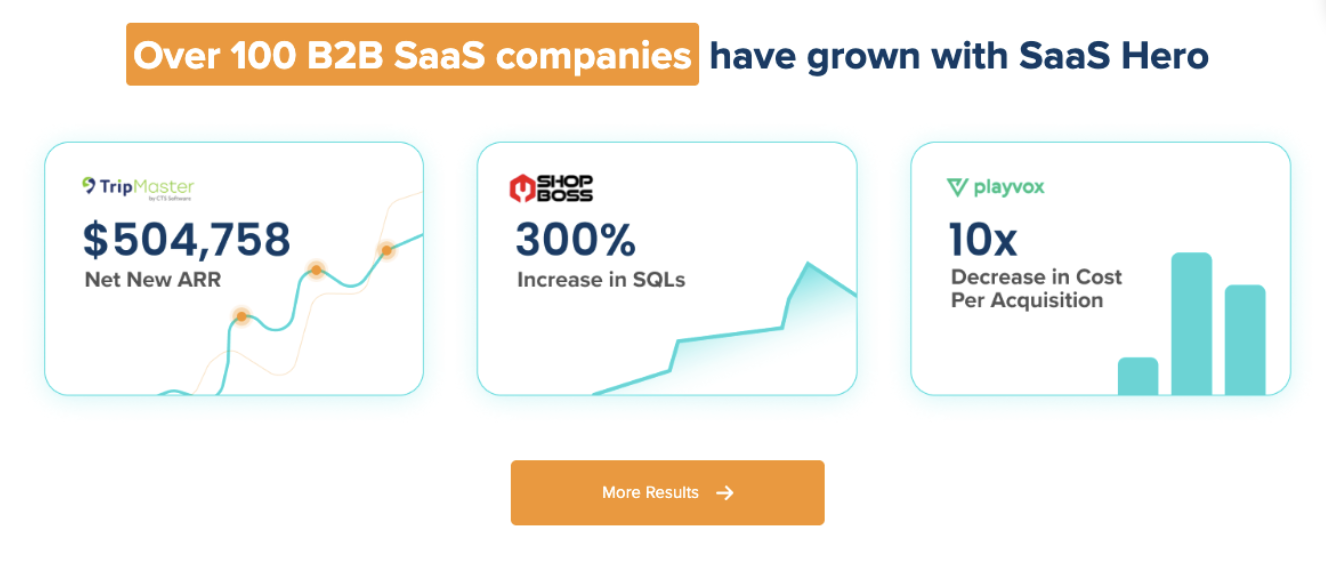
SaaSHero operates this system at scale across more than 100 B2B companies, managing approximately $16 million in annual advertising spend optimized against CRM revenue data rather than form-fill counts. The team owns the full chain, including paid media, creative, landing pages, and CRM-connected attribution, so revenue-linked optimization becomes mechanically possible rather than aspirational.
Run the CRM-vs-form-fill diagnostic and identify your rebuild phase in a discovery call with SaaSHero.