




Written by: Aaron Rovner, Founder, Saas Hero
Key Takeaways
- Capital-efficient performance marketing helps B2B SaaS teams prove unit economics, shorten payback periods, and support durable growth.
- Metrics such as LTV:CAC, CAC payback, MER, and revenue-based pipeline tracking now matter more than lead volume or CPL.
- Channel choices across Google Ads, LinkedIn Ads, review sites, and retargeting work best when guided by clear ICPs, intent data, and multi-touch attribution.
- Organizational readiness, cross-functional alignment, and avoidance of vanity metrics or misaligned agency incentives determine long-term ROI from any platform mix.
- SaaS leaders can move faster by partnering with a B2B SaaS specialist. Schedule a discovery call with SaaSHero to review your current performance marketing model.
Why Capital-Efficient Performance Marketing Matters In B2B SaaS
B2B SaaS growth now depends on disciplined capital allocation instead of growth-at-all-costs spending. Leaders must connect every marketing dollar to pipeline, ARR, and payback, not just demo or MQL volume.
Teams increasingly track LTV:CAC, pipeline velocity, CAC payback, MER, and multi-touch attribution to understand real efficiency. Revenue-centric outcomes such as qualified pipeline, win rate, and CAC payback are replacing legacy metrics like CPL as primary performance signals.
Effective platform choices now center on measurable revenue impact, cost predictability, and transparent reporting rather than impression volume or click-through rates.
Choose The Right B2B SaaS Performance Marketing Platforms
Platform selection should follow your ICP and buyer journey, not the latest channel trend. Each major platform plays a distinct role.
B2B SaaS teams often rely on performance channels that tie spend to demos, free trials, and sign-ups. In practice, this usually looks like:
- Google Ads for high-intent demand capture when prospects search for solutions.
- LinkedIn Ads for role-based targeting across buying committees in target accounts.
- Review platforms such as G2 and Capterra for validation and comparison stages.
- Retargeting tools to keep engaged prospects moving through the funnel.
Modern GTM strategies now use AI to detect micro-niches and high-propensity accounts, guiding where budget should concentrate. Privacy shifts also push teams toward multi-touch attribution that reflects complex B2B journeys instead of single-touch models.
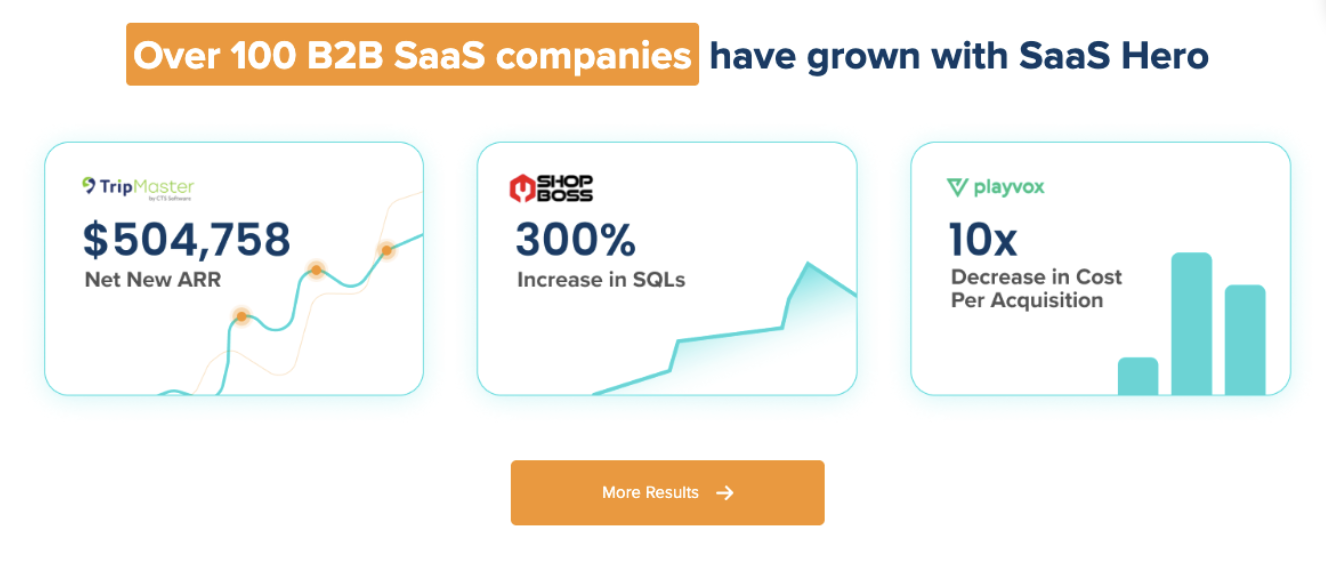
Traditional agencies often tie fees to media spend, which encourages higher budgets without clear business impact. Specialized B2B SaaS partners such as SaaSHero favor flat fees, month-to-month terms, and revenue-based reporting that better align with capital-efficient growth.
Make Smart Trade-offs On Talent, Channels, And Analytics
B2B SaaS leaders must decide where to build depth and where to buy expertise. Three decisions tend to drive results.
First, in-house versus outsourced execution shapes cost structure and speed. In-house teams gain more product context, while specialized partners bring pattern recognition from many SaaS accounts. Hybrid models often work best, with internal leadership and external execution.
Second, single-channel specialization versus broader channel mixes affects focus. Concentrated spend in one or two channels can accelerate learning, while multi-channel strategies reduce risk and reach more of the buying committee.
Third, analytics infrastructure choices influence scalability. Some teams invest in proprietary tracking stacks, while others rely on platform-native tools. Either way, small UX and content improvements that lift engagement and lead conversion create high-leverage gains for paid efficiency, so measurement must extend beyond ad platforms into landing pages and funnels.
Effective SaaS strategies align ICP clarity, full-funnel design, channel mix, automation, and retention, with performance marketing integrated across each layer. Platform choices should support this broader GTM system, not operate in isolation.
Use Modern Tactics That Improve Performance Marketing ROI
High-performing B2B SaaS teams treat performance marketing as a structured test-and-learn program, not just a set of ad campaigns.
Effective playbooks include tactics such as competitor conquesting on Google, sophisticated LinkedIn targeting, and dedicated CRO programs for B2B landing pages. These approaches require a clear view of search intent, buyer psychology, and competitive positioning.
Layered advertising strategies now combine several channels to drive high-intent traffic and pipeline while keeping CAC within targets, rather than leaning on a single platform.

Cross-functional alignment amplifies these efforts. Marketing leaders now show impact by proving that performance programs shorten payback and improve conversion efficiency, which requires close collaboration with sales and customer success.
Well-aligned teams use performance marketing to support not only acquisition, but also product engagement and CLV growth. Performance channels then function as a full-lifecycle revenue engine instead of a top-of-funnel activity.

Check Your Readiness And Operating Model
Results from any platform mix depend on organizational maturity. Stage, data quality, and ownership structure all matter.
From seed through Series A, performance marketing plays different roles in the broader growth system. Early-stage teams usually emphasize message testing and market feedback before scaling budgets. Later-stage teams focus more on repeatable acquisition, investor-grade metrics, and predictable pipeline.
Assessment should cover attribution capabilities, CRM integration, and alignment on revenue KPIs. Connecting web analytics, CRM, and product analytics creates a reliable view of performance marketing impact across the funnel.
Clear operating models that define who owns strategy, execution, and analytics across internal teams and partners help avoid coordination failures and keep accountability tight.
SaaS leaders who want an external check on readiness can use an outside partner to benchmark current performance and identify the quickest wins.
Avoid Common B2B SaaS Performance Marketing Pitfalls
Even experienced teams often run into the same structural issues that suppress ROI.
Misaligned incentives rank near the top. Traditional agency models that rely on long-term contracts and percentage-of-spend billing often conflict with SaaS financial realities, since they reward higher ad budgets instead of better efficiency.
Metric selection creates another frequent problem. Teams increasingly emphasize ARR and revenue growth from paid programs rather than vanity activity metrics, yet many dashboards still prioritize impressions or CTR.
Reporting that highlights CAC payback rather than CPL better reflects business outcomes, but this shift requires new expectations from executives and partners.
Early-stage teams in particular receive guidance to avoid over-weighting follower counts or impressions. Paid campaigns should tie to activation and revenue signals to keep burn under control.
Misalignment between marketing, sales, and product also reduces returns. Without shared definitions of qualified leads, clear SLAs, and feedback loops, even strong ad performance fails to convert into ARR.
Match Your Performance Marketing Approach To Your Growth Stage
Different B2B SaaS stages need different operating models and platforms, even when they pursue similar metrics.
Founder-led teams at the earliest stages often operate with modest budgets and direct executive involvement. They benefit from transparent platforms, flexible terms, and quick experimentation rather than complex, long-term commitments. SaaSHero supports this with month-to-month agreements and pricing structures suited to startups that need signal before scale.
Post-funding scalers must prove efficient growth while expanding coverage quickly. Stage-specific playbooks recommend platform choices and measurement frameworks that match each funding milestone, so teams can raise while maintaining capital discipline.
Mature revenue teams often seek incremental efficiency improvements and better partner alignment. Many VPs of Marketing report frustration with agencies that emphasize spend and surface metrics over pipeline and ARR, which pushes them toward alternative partnership models.
Current best-practice strategies integrate ABM, AI, and paid media into unified systems optimized for pipeline and revenue. Platform and partner choices should reflect where your organization sits on that path.
Practical Answers To Common B2B SaaS Performance Marketing Questions
Q1: Choosing performance marketing platforms for B2B SaaS
Leaders should align platforms with ICP, buying stages, and measurable business outcomes. Google Ads usually handles high-intent demand capture, LinkedIn Ads reaches specific roles across target accounts, and review sites influence buyers in the comparison phase. The best channel mix is the one that shows clear attribution to qualified pipeline and revenue, not just traffic or form fills.
Q2: Setting a realistic LTV:CAC goal
LTV:CAC targets vary by model and stage, but many successful B2B SaaS companies aim for ratios near 3:1 over time while keeping CAC payback under 12 months. Some programs achieve faster payback, such as SaaSHero engagements that reach payback near 80 days, yet the key focus stays on steady improvement in payback and retention rather than a single benchmark.
Q3: Improving attribution quality
Multi-touch attribution that connects ad interactions, landing page behavior, CRM data, and product usage gives a more accurate view than last-touch models. A mix of first-touch, last-touch, and time-decay perspectives often works best. Tools and processes should track progression, activation, and revenue, not only form submissions, similar to SaaSHero setups that combine platforms such as Looker Studio and HubSpot for full-funnel insight.
Q4: Deciding between in-house and outsourced management
This choice depends on available expertise, team bandwidth, and growth targets. In-house teams gain control and product depth; specialized partners add cross-account insight and speed. Many B2B SaaS companies keep strategy internal and work with external partners for execution and experimentation. Partners that use flat fees, month-to-month terms, and revenue-focused reporting, such as SaaSHero, tend to align better with capital-efficient growth than those that bill as a percentage of ad spend.
Next Steps To Build A Durable Performance Marketing Engine
Capital-efficient performance marketing in B2B SaaS rests on clear economics, thoughtful platform selection, and a mature operating model. Teams that connect performance channels to revenue, align around shared KPIs, and invest in continuous testing create durable growth engines instead of short-lived channel wins.
Strategic leaders now treat performance marketing as an integrated part of GTM, not a siloed acquisition function. They prioritize attribution that ties efforts to ARR, choose partners whose incentives mirror their own, and refine experiences from ad click to product adoption.
Make your performance marketing program a reliable driver of revenue, not a cost line item. Book a discovery call with SaaSHero to review your current performance, identify inefficiencies, and explore capital-efficient growth options tailored to your stage.