




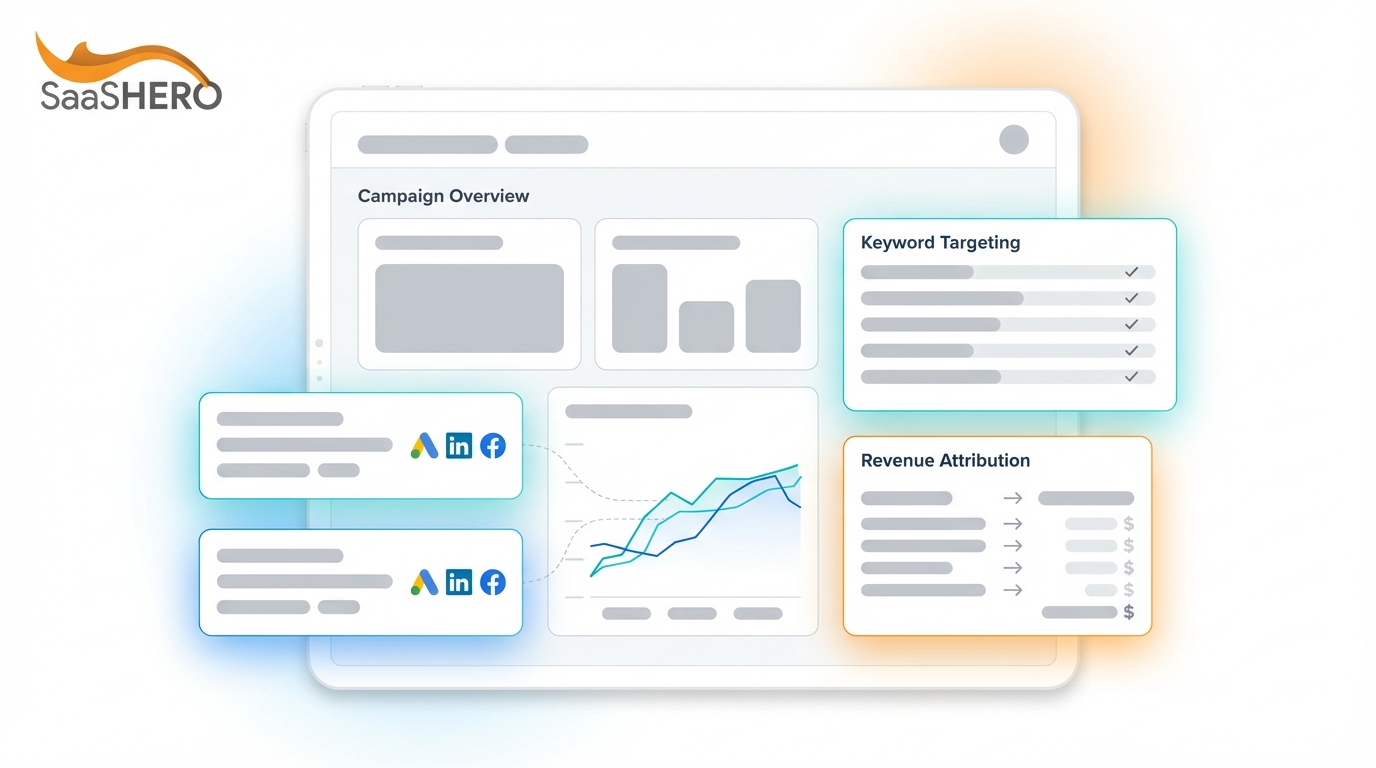
Key Takeaways for Higher-Quality B2B SaaS Leads
- 80% of B2B SaaS leads are unqualified. Fix this with tight ICP targeting and high-intent keywords to cut junk traffic by 50% or more.
- Use the 40-40-20 copy structure (40% problem, 40% solution, 20% proof) to double engagement and improve message-market fit.
- Run competitor conquesting visuals with dedicated landing pages to capture ready buyers at roughly 40% lower CPA.
- Use qualifier CTAs, progressive forms, and 3-2-2 testing to reach 20% or higher SQL rates with statistically valid results.
- Track revenue attribution with GCLID-to-CRM connections for clear Net New ARR visibility. Book a discovery call with SaaSHero to implement this framework and scale results.
Prerequisites: Tools and Concepts You Need in Place
Set up core tools before you launch this framework. Use Google Ads and LinkedIn Ads Manager for campaigns, HubSpot or Salesforce for CRM tracking with GCLID integration, and G2 badges for social proof in your ads and landing pages. Know the difference between SQLs and MQLs, how dark funnel attribution works, and how to calculate CAC payback.
Plan roughly 2 weeks for tracking implementation and about 30 days to see meaningful performance shifts. Poor attribution setup creates inflated vanity metrics, so connect your ad platforms and CRM correctly before you scale spend.
|
Tool Category |
Required Platform |
Key Metric |
Setup Time |
|
Ad Platforms |
Google Ads, LinkedIn |
SQL Rate |
3-5 days |
|
CRM Tracking |
HubSpot, Salesforce |
CAC Payback |
7-10 days |
|
Social Proof |
G2, Capterra |
Trust Signals |
1-2 days |
7-Step Revenue-First Framework for High-Quality Leads
This framework keeps revenue at the center of your ad strategy and filters out low-intent leads. Each step tightens your audience, message, and tracking so you attract buyers and repel tire-kickers.
|
Step |
Objective |
Key Metric |
Expected Uplift |
|
1. ICP Targeting |
Focus the audience precisely |
Audience Quality |
50% junk reduction |
|
2. Intent Keywords |
Capture high-intent traffic |
Search Quality |
3x conversion rate |
|
3. 40-40-20 Copy |
Align message with the market |
CTR + Quality |
2x engagement |
|
4. Competitor Visuals |
Win ready buyers |
Conversion Rate |
40% lower CPA |
|
5. Qualifier CTAs |
Pre-qualify leads |
SQL Rate |
20%+ SQL rate |
|
6. 3-2-2 Testing |
Improve performance |
Statistical Significance |
15-25% improvement |
|
7. Revenue Attribution |
Track to closed-won |
Net New ARR |
Full funnel visibility |
Key Strategies to Improve Lead Quality:
- Refine ICP with firmographic and behavioral targeting.
- Use negative keywords and AI intent signals to filter traffic.
- Apply 40-40-20 copy for tight message-market alignment.
- Run competitor conquesting to capture high-intent prospects.
- Track SQLs with multi-touch attribution to stay revenue-focused.
Step 1: Refine Your ICP for Precise Targeting
Cut half of your junk traffic by defining your Ideal Customer Profile with clear boundaries. Use LinkedIn’s 2026 AI-powered targeting to layer company size, industry, and job function filters. AI-powered intent-based targeting identifies buyers before they reach out to sales, enabling high-intent conversions in B2B SaaS.
For an HR Tech SaaS, target “VP of People” at 100 to 1000 employee companies in specific industries instead of broad “HR professionals.” Build LinkedIn lookalike audiences from your best customers. Use Google Ads Customer Match to upload CRM data and find similar high-value prospects.
Avoid casting a wide net just to increase lead volume. Start narrow, prove conversion quality, then expand carefully. Track cost per SQL instead of only cost per lead.
Step 2: Use High-Intent Keywords and Strong Negative Targeting
Focus your search campaigns on keywords that clearly signal buying intent and block research-only traffic. Target phrases like “solution + pricing,” “alternative to [competitor],” and “[competitor] vs [your brand].” B2B PPC uses first-party data integration with Google’s Performance Max and Enhanced Conversions, uploading CRM data from closed deals to target similar high-value prospects.
Build deep negative keyword lists that include “free,” “cheap,” “student,” “personal use,” and competitor brand names without modifiers. These negatives prevent spending on navigational searches where users only want login pages.
Turn on Google’s AI-powered audience signals to find users with purchase intent across the web. Add demographic exclusions for job titles and seniority levels that rarely control the budget.
Step 3: Apply the 40-40-20 Ad Copy Structure
Use the 40-40-20 framework so your ads speak to pain, present a clear solution, and prove credibility. Allocate 40% of the copy to problem agitation, 40% to your solution, and 20% to social proof. Carousel Ads deliver 2x CTR over single-image ads, ideal for storytelling and multi-feature showcases.
Write headlines that call out specific pain, such as “Manual HR processes stealing 10 hours every week.” Use body copy to describe your product and include quantified outcomes. Close with G2 badges or customer logos to build instant trust.
Test several headline variations that hit different pain points. Use responsive search ads so Google can mix and match, while you keep the overall 40-40-20 balance across assets.
Step 4: Build Competitor Conquesting Visuals and Pages
Create ads and landing pages tailored for competitor conquesting campaigns. Toggl employs aggressive competitor conquesting by targeting searches for rivals on Google Ads, converting ready-to-buy prospects without educating on category need.
Design comparison tables that highlight your strengths without attacking competitors directly. Use phrases such as “simpler alternative” or “more affordable option.” Offer switching incentives like free migration or contract buyouts to reduce friction.
Publish dedicated landing pages for each major competitor with URLs like “/alternative-to-[competitor].” This structure improves Quality Score and conversion rates through a tight message match. Trello achieved 40% lower CPAs than generic campaigns by positioning as a simple alternative to complex tools.

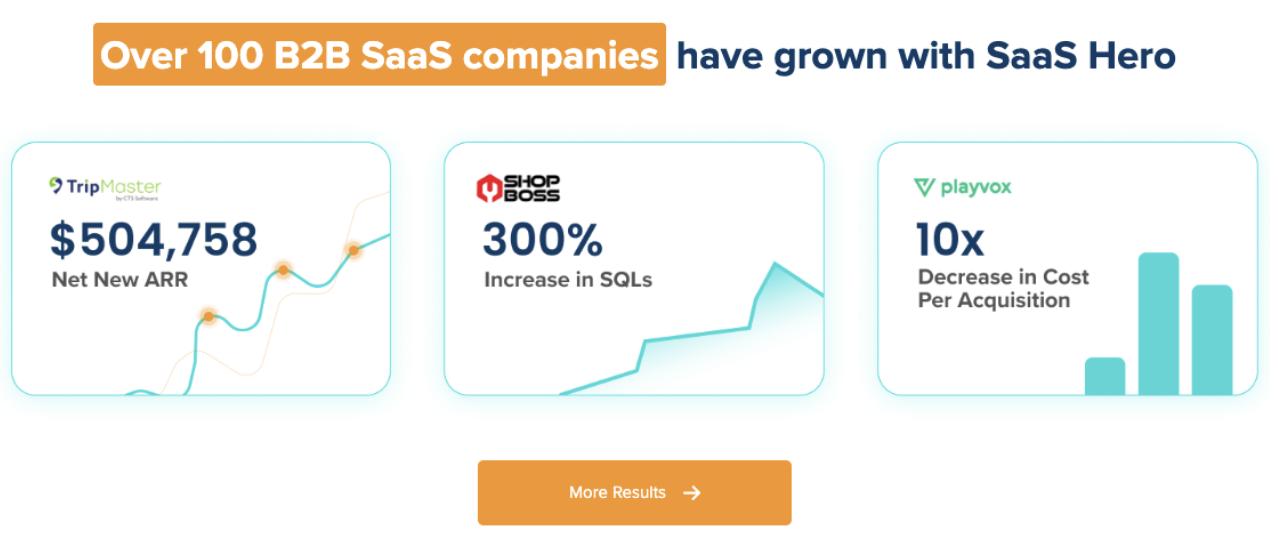
If competitor campaigns feel complex, book a discovery call with SaaSHero. The team delivered $504k ARR for TripMaster using this conquesting playbook.

Step 5: Use Qualifier CTAs and Progressive Forms
Use CTAs that qualify prospects instead of generic “Get Demo” buttons. Try “See Pricing for 100+ Employee Companies” or “Book Enterprise Demo” to attract ICP-aligned leads and discourage poor fits.
Lead Gen Forms outperform external landing pages by 5x in conversion rates due to pre-filled mobile convenience. Add qualifying questions such as company size, current tool, and implementation timeline.
Set up progressive profiling on your forms. Ask for basic contact details first, then request deeper qualification data on later steps or visits. This approach protects conversion rates while giving sales the context they need.
Step 6: Run 3-2-2 Testing with Clear Structure
Use a structured testing plan, so your decisions rest on statistically sound data. Testing methodology matters more than testing frequency; use Google’s Campaign Experiments feature for structured experiments instead of informal A/B testing to ensure statistical validity.
Test 3 headlines, 2 descriptions, and 2 landing page versions at the same time. Run experiments for 30 to 60 days in B2B so you gather enough volume. Prioritize high-impact elements in this order: images, headlines, then body copy.
Log every test in a shared spreadsheet and keep a simple record of winners and losers. Scale winning variations and retire weak ones in a consistent cycle. Change one major variable at a time so you know what actually moved the numbers.
Step 7: Connect Revenue Attribution from Click to Closed-Won
Track every qualified deal back to the original ad click with a clean attribution setup. Use GCLID tracking to pass Google Ads data into your CRM so you can optimize for customers, not just form fills.
Multi-touch attribution users see 15-25% better conversion optimization, crucial for accurate revenue attribution in B2B SaaS ads. Use HubSpot attribution reports or Salesforce campaign influence models to map the full buyer journey.
Build automated reports that show Net New ARR, pipeline value, and SQL conversion rates by campaign. Shift your reviews away from CTR and toward revenue impact so budget flows to what actually grows the business.
Measure Success with SQLs, Payback, and ARR
Judge campaign performance with revenue-focused metrics such as 20% or higher SQL conversion rates, CAC payback under 90 days, and Net New ARR tied to GCLID-to-CRM tracking. Use multi-touch attribution to see how each touchpoint contributes.
Create dashboards in Looker Studio or HubSpot that show movement from ad click to closed-won deal. Close attribution gaps with consistent UTM tagging and CRM integration before you increase budgets.
|
Metric |
Target Benchmark |
Tracking Method |
Review Frequency |
|
SQL Rate |
20%+ |
CRM Attribution |
Weekly |
|
CAC Payback |
<90 days |
Revenue Tracking |
Monthly |
|
Net New ARR |
Campaign ROI |
GCLID Integration |
Quarterly |
Scale with AI Intent, Carousels, and Retargeting
Scale winning campaigns using AI intent signals, richer formats, and smart retargeting. Use Google’s audience signals for AI-powered competitor conquesting. Video Ads provide 5x engagement vs static formats for brand awareness and engagement.
Launch carousel ads that highlight multiple features or customer stories in one unit. Build retargeting campaigns for visitors to your G2 profile and competitor comparison pages. Use dynamic creative optimization to tailor messages by company size and industry.
When you are ready to scale aggressively, book a discovery call with SaaSHero to apply advanced targeting and creative strategies that delivered 10x CPL reductions for Playvox.
Recap Checklist and Next Actions
Apply this 7-step framework in order: define a precise ICP, launch high-intent keywords with negatives, structure copy with 40-40-20, build competitor conquest campaigns, use qualifying CTAs and forms, test with 3-2-2 structure, and connect revenue attribution.
Audit your current ad accounts against these steps and flag the largest gaps. Prioritize fixes that affect SQL rate and CAC payback first. Book a discovery call with SaaSHero to accelerate rollout and reach up to 3x better lead quality faster.
FAQs
How do I get SQLs instead of MQLs from my ad campaigns?
Qualify prospects before they enter your funnel with targeted messaging and form questions. Use competitor conquest campaigns to reach high-intent buyers already comparing solutions. Add progressive profiling to collect data such as company size, budget, and timeline. Replace generic CTAs with specific language that attracts your ICP and filters out poor fits.
What is different about 40-40-20 copy compared with traditional ad copy?
Traditional ad copy often leads with features or vague benefits. The 40-40-20 structure dedicates 40% of space to agitating clear pain points, 40% to presenting your solution with measurable outcomes, and 20% to social proof such as customer logos or G2 badges. This mix connects with real problems while proving credibility and value.
How long should I run competitor conquesting campaigns before judging results?
Expect early signals within 2 to 4 weeks because these searches carry strong intent. Allow 30 to 60 days in B2B SaaS to reach statistical significance. Start with exact match competitor terms plus modifiers like “pricing” or “alternative” instead of broad brand names alone. Track cost per SQL, not just cost per click, to confirm lead quality.
What negative keywords are essential for B2B SaaS ad campaigns?
Use negatives such as “free,” “cheap,” “student,” “personal,” “resume,” and competitor brand names without modifiers. Add industry-specific negatives like “B2C” if you only sell B2B, or “small business” if you target enterprise. Include country and region negatives for markets you do not serve and job-related negatives for roles without budget authority. Review search term reports regularly to find new negatives that block unqualified traffic.
How do I track revenue attribution from ads to closed deals?
Turn on GCLID tracking so Google Ads data flows into your CRM and links to each contact and deal. Use UTM parameters on every campaign and confirm your CRM stores them on form submissions. Rely on HubSpot attribution reports or Salesforce campaign influence to map the full journey. Build custom reports that show Net New ARR, pipeline value, and SQL conversion rates by campaign so you optimize based on revenue, not vanity metrics.