




Key Takeaways for Switching Google Ads Agencies
-
Watch for red flags like percentage-of-spend billing, vanity metrics, and long-term contracts that signal it is time to switch Google Ads agencies.
-
Use the 7-step framework of verifying ownership, reviewing contracts, notifying the agency, inviting the new one, migrating billing, exporting data, and auditing to complete a 2-4 week transition without losing data.
-
Prepare prerequisites like admin access, CRM credentials, and a 30-day notice review to reduce risk during the switch.
-
Choose revenue-focused agencies with flat-fee, flexible contracts, CRM integration, and B2B SaaS expertise to improve ROAS and Net New ARR.
-
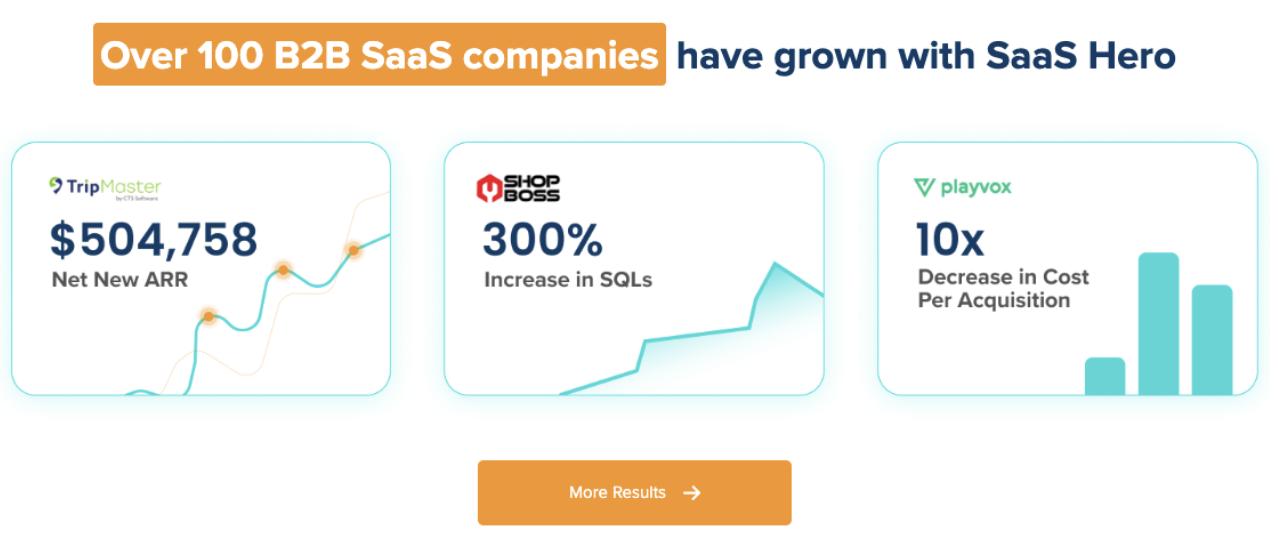
Switch risk-free and pursue Net New ARR gains similar to TripMaster’s $504k increase by booking a discovery call with SaaSHero today.
Clear Signs You Should Replace Your Google Ads Agency
Specific red flags show when your current Google Ads agency no longer supports your growth goals.
-
Percentage-of-spend billing models that reward agencies for higher budgets instead of efficient performance
-
Vanity metric reporting that highlights impressions, clicks, and CTR instead of SQLs, pipeline value, and Net New ARR
-
Junior account management after senior-led sales calls, which often produces weak execution
-
No CRM integration that blocks accurate revenue attribution and prevents clear cost-per-customer tracking
-
Dark funnel attribution failures where agencies claim credit for brand searches without creating incremental demand
-
Long-term contract requirements of 6-12 months that push all risk onto your team
-
Lack of B2B SaaS expertise shown through generic strategies reused across unrelated industries
Specialized agencies like SaaSHero instead use flat-fee structures, senior-led execution, and integrated Net New ARR tracking that connects agency success directly to your revenue growth.

Prerequisites and Risks Before You Switch Agencies
Once you spot these red flags, prepare your accounts and contracts so the switch happens smoothly and with minimal disruption.
-
Verify account ownership by confirming you have Admin access in Google Ads settings.
-
Document billing administrator status so your team controls payments during the transition.
-
Secure CRM login credentials for HubSpot, Salesforce, or any system your new agency must integrate.
-
Plan a 2-4 week transition buffer to cover setup, handoff, and early optimization.
-
Review current contract terms for termination notice requirements and any financial penalties.
Recent 2026 updates include enhanced MCC invitation processes and improved data source integrations that make agency transitions easier. Significant risks still exist with uncooperative agencies and contract traps that require careful 30-day notice reviews.
High-Level Framework for Switching Google Ads Agencies
The complete agency switch process follows seven sequential steps that keep campaigns running while you change partners.
|
Step |
Action |
Timeline |
|---|---|---|
|
1 |
Verify Ownership |
Day 1 |
|
2 |
Review Contract |
Days 1-2 |
|
3 |
Notify Current Agency |
Day 3 |
|
4 |
Invite New Agency |
Week 1 |
|
5 |
Migrate Billing |
Week 2 |
|
6 |
Export/Import Data |
Weeks 2-3 |
|
7 |
Audit and Optimize |
Week 4 |
Step-by-Step Guide to a Smooth Google Ads Agency Switch
1. Verify Account Ownership and Access
Log in to your Google Ads account and open Tools & Settings > Access and security to confirm Admin status. Confirm that you can see the 10-digit MCC ID and all billing information. If ownership is disputed, submit Google’s official transfer form to resolve access issues.
2. Review Current Contract Terms
Examine your existing agency agreement for termination clauses, auto-renewal language, and notice requirements. Standard contracts often require 30-day notice and may include early termination fees. SaaSHero’s month-to-month structure removes most of these switching barriers.
3. Notify Your Current Agency
Send formal written notice by email that documents your termination request and the exact timeline. If the agency refuses to cooperate, Google support can help unlink MCC connections when agencies violate Terms of Service.
4. Invite Your New Agency
Share your MCC ID with the new agency and approve link requests through Settings > Access and security > Manager accounts. Revenue-aligned agencies like SaaSHero use flat-fee structures that remove incentives to inflate ad spend.
5. Migrate Billing Control
Move payment methods to client-direct billing in Google Ads Billing settings. This step keeps financial control with your team and prevents agencies from holding accounts hostage through billing dependencies.
6. Export and Import Campaign Data
Use Google Ads Editor to download campaign structures, keywords, and ad copy. Confirm that GCLID tracking continues to flow into your CRM systems such as HubSpot or Salesforce so attribution remains accurate during the transition.
7. Conduct Post-Switch Audit and Optimization
Audit campaign structures, negative keyword lists, and conversion tracking setups. For B2B SaaS accounts, confirm Salesforce ARR attribution connections and roll out competitor conquesting strategies. Case studies show large gains; Playvox cut cost-per-lead by 10x after a full account restructuring.
Ready to switch with minimal risk? Book a discovery call with SaaSHero.
Why SaaSHero Simplifies Your Agency Switch
SaaSHero focuses solely on B2B SaaS across HR Tech, Cybersecurity, Transportation, and Marketing Technology. Their flat retainer model removes percentage-based fee conflicts, and senior specialists manage execution from day one.

|
Monthly Spend |
1 Channel (Month-to-Month) |
|---|---|
|
Up to $10k |
$1,250 |
|
$10k-$25k |
$1,750 |
|
$25k-$50k |
$2,250 |
|
$50k+ |
$3,250 |
Client results include TripMaster’s $504k Net New ARR growth and TestGorilla’s 80-day payback period that supported their $70M Series A funding. This flexible contract approach keeps you free to change partners again if performance ever falls short.

Measurement Strategy and 30-60-90 Day Planning
Track Net New ARR and customer acquisition cost through integrated Looker Studio dashboards. Because B2B SaaS sales cycles often average 120 days, these dashboards should use 90-day conversion windows and data-driven attribution to credit early touchpoints that influence closed-won deals.
Many SaaS teams face dark funnel attribution gaps when offline conversions never connect back to the original ad click. Google’s 2026 data source integration features now sync closed-won opportunities from CRMs like Salesforce directly into conversion tracking.
Build a measurement checklist that covers SQL tracking, CRM sync verification, and pipeline attribution accuracy so your new agency optimizes toward revenue instead of vanity metrics.
Summary and Recommended Next Steps
Successful Google Ads agency switches rely on clear ownership, careful contract review, structured data migration, and focused performance optimization. The 7-step framework in this guide helps B2B SaaS companies change agencies while preserving attribution accuracy and campaign stability.
Revenue-first partners like SaaSHero remove traditional switching friction through flexible contracts, flat-fee pricing, and focused B2B SaaS expertise. Their work with clients such as TripMaster and TestGorilla shows how specialized SaaS knowledge converts into measurable revenue outcomes.
Book a discovery call today for a month-to-month, low-risk engagement.
Frequently Asked Questions
What if my current agency will not release access to my Google Ads account?
If your agency blocks access during the switch, you still have several escalation paths. First, confirm your Admin status in Google Ads and try unlinking their MCC through Tools & Settings > Access and security.
If the agency created the account and claims full ownership, that behavior may violate Google Ads Terms of Service. Contact Google support with documents that prove you own the business so they can resolve the dispute. Google can force account transfers when agencies improperly hold client accounts.
How long does it typically take to switch Google Ads agencies?
A complete Google Ads agency switch usually takes 2-4 weeks when you follow a structured plan. Week 1 covers ownership verification and contract notifications. Week 2 focuses on new agency onboarding and billing migration.
Weeks 3-4 handle data export and import along with early campaign optimization. The timeline may extend if your current agency resists the change or if complex CRM integrations require extra configuration. Agencies like SaaSHero shorten this process through standardized onboarding and dedicated transition support.
Which type of agency works best for B2B SaaS companies?
B2B SaaS companies benefit most from agencies with vertical specialization, flat-fee pricing, and strong revenue attribution capabilities. Look for partners who understand SaaS metrics such as MRR, churn, and customer lifetime value instead of generic digital marketing shops.
The ideal agency offers flexible short-term contracts, connects directly with your CRM for accurate attribution, and focuses on Net New ARR instead of vanity metrics. Agencies like SaaSHero serve B2B SaaS across several verticals with senior-led execution and transparent pricing that starts at $1,250 per month.
How do I maintain revenue attribution accuracy during an agency switch?
Maintaining attribution accuracy requires tight coordination across tracking systems during the handoff. Confirm that your new agency implements GCLID tracking from Google Ads through landing pages into your CRM.
Set up Enhanced Conversions for Leads to offset cookie limits and support offline conversion imports from your CRM back into Google Ads. Use Google’s new data source integrations to sync closed-won opportunities from Salesforce or HubSpot automatically. Extend conversion windows to 90 days for B2B sales cycles and rely on data-driven attribution instead of last-click models that undervalue early touches.
What contract terms should I negotiate to make future agency switches easier?
Negotiate month-to-month agreements or initial terms capped at three months to keep switching friction low. Include clear termination clauses that allow 30-day notice without penalties and confirm that you own all account access, creative assets, and campaign data.
Avoid percentage-of-spend pricing models that create misaligned incentives and choose flat retainers instead. Require the agency to provide full campaign exports and reasonable support during any future transition. Add performance benchmarks tied to revenue metrics, with automatic termination rights if those benchmarks are not met within 90 days.