




Written by: Aaron Rovner, Founder, Saas Hero
Key Takeaways
- Replace vanity metrics like leads and impressions with revenue-first metrics: ROAS >4:1, LTV:CAC >3:1, and payback periods under 90 days for real agency ROI.
- Apply the 7-step audit framework to set baselines, implement GCLID and CRM tracking, isolate incremental ARR, and compare results to 2026 SaaS benchmarks.
- Use clear formulas such as CAC = Total Spend / New Customers, LTV = ARPU × Margin × Lifespan, and ROI = (CLV – Agency Cost) / Agency Cost × 100.
- Rely on multi-touch attribution and quarterly dashboards that connect ad spend to closed-won revenue, and replace agencies below ROAS 3:1 or with payback periods over 120 days.
- Revenue-aligned agencies like SaaSHero drive stronger ARR growth, so schedule a discovery call to review your current agency’s performance.
Prerequisites: Tools, Data & SaaS Metrics for Accurate ROI Tracking
Accurate growth marketing agency ROI measurement starts with solid data infrastructure and clear baseline metrics. Essential tools include GA4 with GCLID persistence, CRM platforms like HubSpot or Salesforce with campaign tracking, and visualization tools like Looker Studio for executive dashboards.
Your data foundation needs historical CAC and LTV metrics to set performance baselines, complete ad spend records to capture true costs, and SQL and ARR tracking to measure revenue outcomes. These three data types feed directly into the key formulas:
CAC = Total Marketing Spend / New Customers Acquired
LTV = Average Revenue per Customer × Gross Margin × Average Lifespan
ROAS = Revenue Generated / Ad Spend
Payback Period = CAC / (Monthly Gross Margin per Customer)
In 2026’s post growth-at-all-costs environment, target payback periods under 90 days to maintain sustainable unit economics. Most setups take 2 to 4 weeks, and attribution gaps usually create the biggest risk.
High-Level 7-Step Revenue-First Agency ROI Audit Framework
The following framework shows how each audit step builds toward a clear scale-or-fire decision, with benchmarks that separate high-performing agencies from underperformers:
| Step | Objective | Benchmark | Success Indicator |
|---|---|---|---|
| 1. Baseline Pre-Agency | Prove Incremental Lift | N/A | Clear Pre-Period Data |
| 2. Setup Revenue Tracking | GCLID to CRM Integration | Verified UTM Persistence | End-to-End Attribution |
| 3. Isolate Agency Impact | Incremental SQLs/ARR | >20% YoY Growth | Net New Revenue Attribution |
| 4. Calculate Core Formulas | CAC/LTV/ROAS Analysis | LTV:CAC >3:1 | Positive Unit Economics |
| 5. Benchmark vs Standards | Industry Comparison | ROAS 3-5:1, <90-day Payback | Above-Average Performance |
| 6. Monitor Attribution | Multi-Touch Tracking | Data-Driven Models | Accurate Channel Credit |
| 7. Review Quarterly | Scale or Fire Decision | Net ARR >20% Growth | Sustained Performance |
Step 1: Establish Baseline Metrics
Export Pre-Agency Performance Data
Start by extracting 90-day pre-agency SQL and ARR data from your CRM. Then calculate baseline CAC using Total Marketing Spend divided by New Customers Acquired. This baseline shows the incremental lift created by agency activities.
Avoid Vanity Metric Traps
Ignore click-through rates and impression volumes because these vanity metrics rarely correlate with revenue. Focus instead on revenue-generating activities tracked through reliable attribution. The most common mistake is using last-click attribution that ignores 60 to 80 percent of the customer journey in B2B SaaS.
Account for Sales Cycle Length
This attribution gap becomes even more critical when you factor in sales cycle length. Weight assisted conversions at 40 percent for 120-day sales cycles. B2B SaaS buyers average 15 to 20 marketing touchpoints before purchase, which requires more sophisticated attribution models.
Step 2: Set Up Revenue Tracking
Implement GCLID Persistence
Configure Google Click ID tracking from ad clicks through form submissions to CRM records. Confirm that UTM parameters persist across every step in your conversion funnel.
CRM Integration Requirements
Connect GA4 to Salesforce or HubSpot with campaign member tracking enabled. Map every lead source to specific agency campaigns so you can attribute revenue accurately.
Step 3: Isolate Agency Impact
Calculate Incremental SQLs
Measure SQL volume and quality above your baseline performance. Use the blended Marketing Efficiency Ratio, defined as Total Revenue divided by All Marketing Spend, to account for cross-channel effects.
Track Net New ARR Attribution
Focus on closed-won revenue that you can attribute directly to agency campaigns. Separate expansion revenue from existing customers so you isolate the impact on new customer acquisition. Once you have isolated these incremental results, you need standardized formulas to quantify the agency’s financial return.
Step 4: Apply the Marketing ROI Formula for Agencies
Use a comprehensive agency ROI formula that accounts for every relevant cost. Start with this version:
ROI = (Net Revenue – Total Agency Cost) / Total Agency Cost × 100
Include agency retainer fees, ad spend, and setup costs in total agency cost. For subscription businesses, use Customer Lifetime Value in the numerator for a more accurate picture:
ROI = (CLV Attributed to Agency – Total Agency Cost) / Total Agency Cost × 100
If attribution feels complex, SaaSHero’s revenue-first approach provides instant visibility into true ROI so you can see how we have solved this for similar SaaS companies.

Step 5: Benchmark Against 2026 SaaS Standards
Compare your agency’s performance against these four critical metrics. If your numbers fall below the 2026 Benchmark column, your agency underperforms the market average and needs closer scrutiny:
| Metric | 2026 Benchmark | Top Performer | Source |
|---|---|---|---|
| ROAS | 3-5:1 | 6:1+ | Industry Average |
| LTV:CAC Ratio | 3:1 | 5:1+ | SaaS Standard |
| CAC Payback | <90 days | <60 days | 2026 Efficiency Target |
| Net Revenue Retention | 110%+ | 120%+ | Growth Indicator |
Median SaaS companies spend $2 to acquire $1 of new ARR, which shows how critical efficient agency partnerships have become.
Step 6: Monitor Attribution Models
Multi-Touch Attribution Implementation
Deploy time-decay or U-shaped attribution models for long B2B sales cycles. Tools like HockeyStack and Dreamdata provide sophisticated attribution modeling that supports complex buyer journeys.
Account-Level Tracking
Track buying committee interactions across every stakeholder involved in the deal. B2B SaaS purchases usually involve 3 to 7 decision makers, which makes account-based attribution models essential.
Step 7: Review and Adjust Quarterly
Dashboard Creation
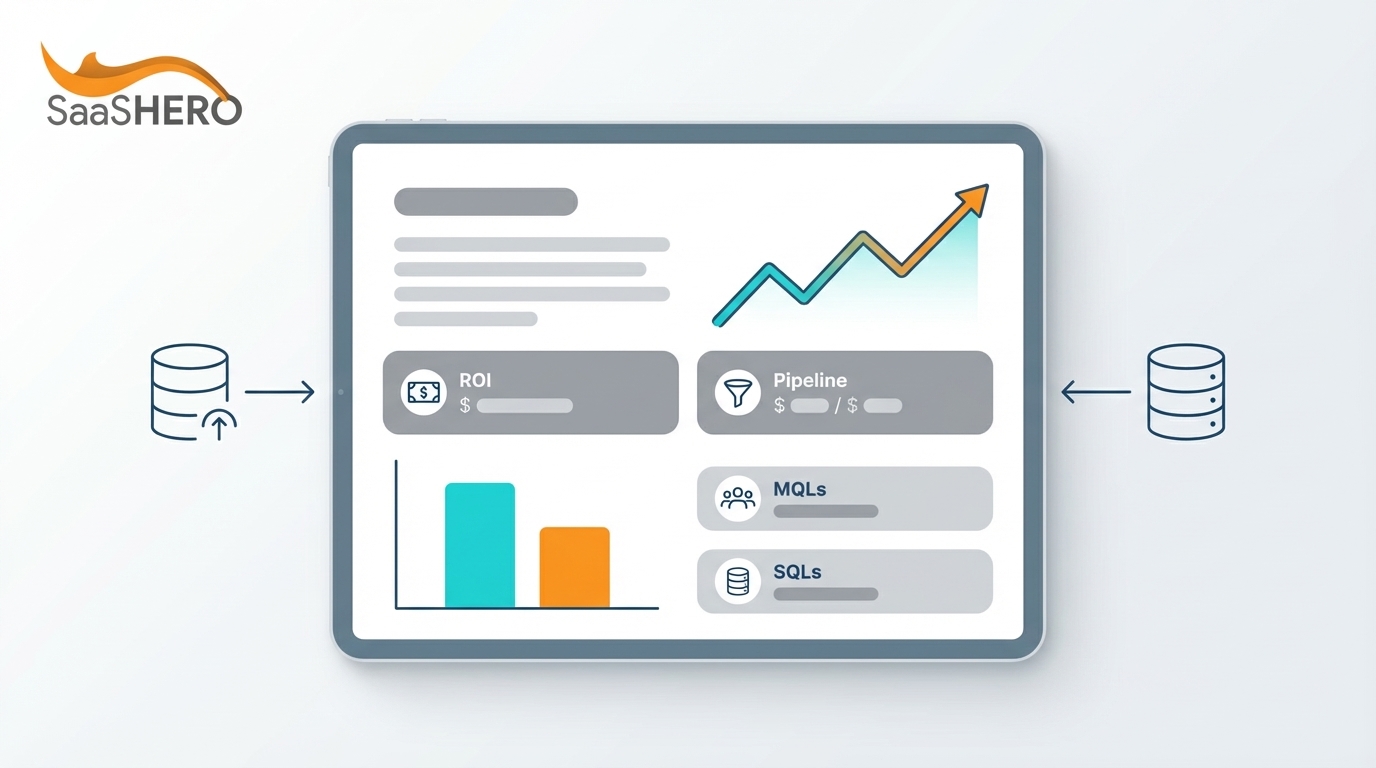
Build executive dashboards that show Spend, SQLs, Pipeline, ARR, and ROI in a single view. Add month-over-month trends and benchmark comparisons so leaders can make quick decisions.
Performance Thresholds
Replace agencies that deliver ROAS below 3:1, payback periods longer than 120 days, or declining Net New ARR. Scale successful campaigns that consistently meet the 4:1 ROAS threshold.
Metrics & Validation: Define Success and Avoid Pitfalls
Success metrics for 2026 include ROAS above 4:1, LTV:CAC above 3:1, the 90-day payback threshold mentioned earlier, and Net New ARR growth above 20 percent year over year. Your dashboard should display these metrics next to spend allocation and pipeline velocity.
Common pitfalls include vanity metric reporting such as impressions and clicks, attribution gaps from iOS privacy changes, and short-term measurement windows that ignore long B2B sales cycles. Seventy-nine percent of marketing-generated leads never convert due to poor nurturing, which reinforces the need for full-funnel measurement.
Insist on CRM-integrated reporting that connects ad clicks to closed-won revenue. Agencies that provide only platform metrics, such as Google Ads dashboard screenshots, cannot prove incremental business impact.
Why Revenue-Aligned Agencies Deliver Superior ROI
Revenue-aligned agencies prioritize Net New ARR instead of raw lead volume. They implement sophisticated attribution tracking, focus on customer lifetime value, and align pricing models with client success.
Case studies show that agencies using revenue-first methodologies can reach 650 percent ROI with payback periods around 80 days. These agencies integrate directly into client CRMs, provide weekly performance updates, and adjust campaigns based on closed-won revenue data.


Summary & Next Steps
Use this 7-step framework to audit your current agency’s performance from end to end. Establish baseline metrics, implement reliable tracking, calculate true ROI with comprehensive formulas, and compare results against 2026 industry standards.
Set quarterly review processes with clear performance thresholds. Scale agencies that meet the ROAS targets outlined earlier and maintain healthy payback periods, and replace underperformers that focus on vanity metrics instead of revenue impact.
When you are ready to upgrade to a revenue-aligned growth partner, schedule a strategy session to see how data-driven agencies deliver measurable ARR growth.
FAQ
What is a good marketing ROI for SaaS agencies?
A good marketing ROI for B2B SaaS agencies usually ranges from 4 to 6:1 ROAS, with LTV:CAC ratios of 3:1 or higher. Top-performing agencies reach ROAS above 6:1 with payback periods under 60 days. Given that most SaaS companies operate at roughly 2:1 acquisition costs, efficient agencies are crucial for capital efficiency.
What are marketing ROI benchmarks by industry for 2026?
B2B SaaS marketing ROI benchmarks for 2026 include payback periods under 90 days and ROAS of 3 to 5:1 for average performers, with 6:1 or higher for top quartile companies. Email marketing delivers around 36:1 ROI, while SEO reaches roughly 7:1 ROI over three years. Account-based marketing delivers higher ROI than other activities for 76 percent of B2B marketers.
How do you track ROI in marketing agencies?
Track marketing agency ROI by implementing GCLID persistence from ad clicks to CRM records and using multi-touch attribution models for long B2B sales cycles. Measure Net New ARR instead of lead volume, and run weekly pipeline reviews with CRM integration to attribute closed-won revenue to specific agency campaigns.
How long should you measure agency ROI?
Measure agency ROI over minimum periods of 90 days for B2B SaaS because sales cycles often range from 60 to 120 days. Initial performance indicators appear within 30 days, but full ROI measurement usually requires 6 to 12 months to capture customer lifetime value and retention effects on profitability.
What if your agency shows no ROI improvement?
If your agency shows no ROI improvement after 90 days, review their reporting methodology, attribution models, and emphasis on vanity metrics versus revenue. Move to revenue-reporting agencies that integrate with your CRM, provide weekly pipeline updates, and adjust campaigns based on closed-won revenue instead of click-through rates or impression volumes.