




Key Takeaways
- 2026 B2B SaaS growth requires sub-12 month CAC payback and 3:1 LTV:CAC ratios, with focus on ARR efficiency over vanity metrics.
- GCLID-to-CRM attribution connects ad clicks to closed-won deals and enables bidding based on real revenue, not form fills.
- Proven channel mix: 40% Google Ads and 45% LinkedIn Ads, with intent targeting and competitor conquesting driving higher ROI.
- Avoid percentage-of-spend agencies that reward higher budgets; choose flat-fee partners like SaaSHero for accountable, senior execution.
- Book a discovery call with SaaSHero to audit paid media and apply ARR growth frameworks that have delivered 300%+ ROI.
Core Paid Media Framework for Hitting SaaS ARR Targets
High-performing B2B SaaS paid media programs focus on net new ARR, sub-90-day payback periods, and Rule of 40 alignment. Use this 7-step optimization model: 1) Audit wasted spend and misaligned targeting, 2) Implement GCLID-to-Salesforce or HubSpot tracking, 3) Deploy intent-based targeting with first-party signals, 4) Run competitor conquesting campaigns, 5) Improve conversion rates through structured testing, 6) Scale with flat-fee expert partners, and 7) Iterate based on CRM pipeline data.
| Metric | 2026 Benchmark | SaaSHero Case Study | Industry Average |
|---|---|---|---|
| ROI | 300%+ | 650% (TripMaster) | 200-250% |
| LTV:CAC | 3:1 minimum | Achieved sub-90 day payback (TestGorilla) | 2.8:1 |
| Payback Period | <90 days | 80 days | 11.4 months |
A practical channel allocation uses 40% Google Ads, 45% LinkedIn Ads, and 15% other platforms, aligned to intent and buyer stage. Precision targeting combined with GCLID tracking that follows prospects from first click to closed-won status supports a durable 3:1 LTV:CAC ratio. Book a discovery call to apply this framework to your current ARR goals.
LinkedIn Ads Strategy for B2B SaaS Revenue Growth
LinkedIn ROI Targets for 2026 (300%+)
LinkedIn Ads drive premium B2B reach through ABM campaigns that target specific job titles, company sizes, and verticals such as HR Tech or Cybersecurity. The 2026 benchmark calls for 300%+ ROI with 4:1 LTV:CAC as a healthy norm. Strong performance depends on layered intent signals, retargeting engaged accounts, and avoiding broad audiences that burn budget on low-quality clicks.
Hitting a 3:1 CAC to LTV Ratio with Paid Media
Efficient CAC in B2B SaaS starts with GCLID attribution that tracks every paid click through your CRM to closed-won revenue. Turn on auto-tagging in Google Ads, capture GCLID with JavaScript on landing pages, and upload offline conversions back into Google Ads. This setup trains smart bidding on real revenue instead of top-of-funnel form submissions.
GCLID Implementation Checklist:
- Enable auto-tagging and personalized advertising in Google Ads.
- Install the Conversion Linker Tag in Google Tag Manager.
- Capture GCLID as a hidden form field and store it in HubSpot or Salesforce.
- Upload closed-won deals with GCLID, conversion time, and deal value.
- Configure value-based bidding for deals above $1,000 ARR.
Competitor Conquesting with GCLID-Backed Attribution
Competitor conquesting often delivers the highest-intent traffic for B2B SaaS paid media. Target searches like “[Competitor] pricing,” “[Competitor] alternatives,” and “[Competitor] vs [Your Brand]” with focused landing pages that speak directly to switching pain points. Add negative keywords for brand-only searches so you avoid paying for navigational queries from existing customers or job seekers.
Conversion Rate Wins that Support the Rule of 40
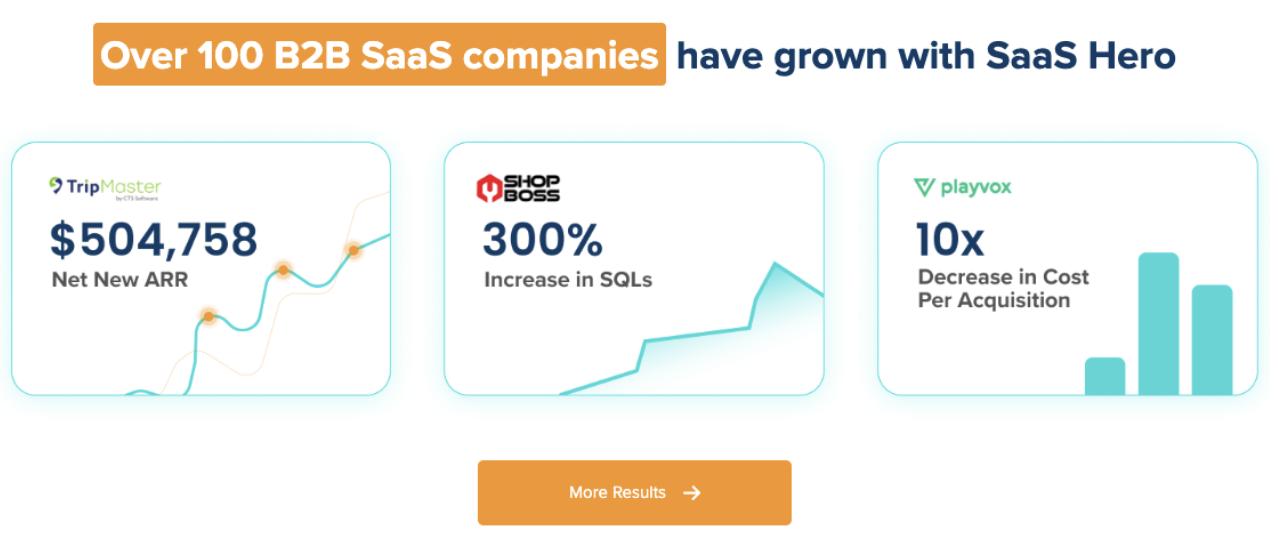
Conversion rate optimization creates immediate ARR gains through structured landing page experiments. Run 5-second clarity tests, refine hero section CTAs, and place social proof above the fold. SaaSHero case studies show 20% conversion lifts from heuristic analysis and iterative testing, including Playvox’s 10x CPL reduction and TripMaster’s $504K net new ARR. Book a discovery call to use these CRO frameworks to grow ARR without raising acquisition costs.

Agency Pricing Traps and How SaaSHero Works Differently
Traditional agencies often create structural waste through percentage-of-spend billing that rewards higher budgets, junior teams handling accounts sold by seniors, 12-month contracts that reduce accountability, and vanity metric reports that hide revenue impact. These issues intensify when capital is tight and every marketing dollar must prove its impact on ARR.
SaaSHero counters these problems with flat monthly retainers in the Dedicated Campaign Manager tier, from $1,250 to $3,250 for one channel or $2,500 to $5,750 based on spend and channel count. Senior specialists manage a maximum of 8 to 10 clients, agreements run month-to-month, and reporting ties directly to CRM pipeline and revenue data.
| Monthly Spend | 1 Channel | 2 Channels | 3+ Channels |
|---|---|---|---|
| Up to $10k | $1,250 | $2,500 | $3,750 |
| $10k-$25k | $1,750 | $3,000 | $4,250 |
| $25k-$50k | $2,250 | $3,500 | $4,750 |
| $50k+ | $3,250 | $4,500 | $5,750 |
Documented outcomes include TripMaster’s $504K ARR increase, TestGorilla’s $70M Series A supported by an 80-day payback period, and Playvox’s 10x cost-per-lead improvement. Book a discovery call to move from percentage-based agency waste to a flat-fee performance partnership.

2026 Paid Media Shifts and Your Next Moves
The 2026 B2B SaaS paid media landscape now runs on signal-led targeting and Account-Based Advertising that use first-party intent data for precise prospecting. AI-driven personalization, post-cookie attribution, and CRM-integrated workflows now define which teams win on capital efficiency.
Winning teams in 2026 drop vanity metrics, invest in robust attribution, and work with specialists who understand B2B SaaS unit economics. The playbook above gives you a path to 300%+ ROI, sub-90-day payback, and durable ARR growth through focused paid media.
Turn paid media from a cost center into a predictable revenue engine. Book a discovery call today to apply this 2026 playbook and join SaaS companies adding $500K+ ARR through strategic paid media partnerships.
Frequently Asked Questions
What is the ROI benchmark for B2B SaaS marketing in 2026?
The minimum viable ROI benchmark for B2B SaaS paid media in 2026 is 300%, with leading teams reaching 400% to 650% returns. This standard reflects capital efficiency expectations where each marketing dollar must show clear impact on net new ARR. Focus on closed-won revenue attribution instead of clicks or impressions so you can optimize for business outcomes instead of surface engagement.
What should the B2B SaaS CAC to LTV ratio target be?
The ideal LTV:CAC ratio for B2B SaaS sits at a 3:1 minimum, with 4:1 as the new healthy target for 2026. Ratios below 3:1 signal weak customer value relative to acquisition cost, while ratios above 7:1 can indicate under-investment in growth. Calculate this metric using actual lifetime value from your CRM and track it by acquisition channel so you can shift budget toward the strongest unit economics.
How do I implement GCLID tracking for B2B SaaS attribution?
Effective GCLID tracking starts with auto-tagging in Google Ads and a Conversion Linker Tag in Google Tag Manager. Capture GCLID parameters on landing pages with JavaScript, store them as hidden fields in your CRM, and upload offline conversions back to Google Ads with deal values and close dates. This closed-loop system connects first ad click to final revenue and lets smart bidding optimize for customer value instead of raw lead volume.
What are the biggest paid media mistakes B2B SaaS companies make?
Common mistakes include optimizing for vanity metrics like CTR instead of revenue, hiring agencies that bill on percentage of spend, and targeting audiences that are either too broad or too narrow without structured testing. Many teams also ignore competitor conquesting and skip proper attribution that links ad spend to closed-won deals. These issues push CAC higher over time and damage unit economics in capital-constrained markets.
How should B2B SaaS companies allocate paid media budgets across channels?
A practical starting point for B2B SaaS budgets is 40% Google Ads for high-intent search, 45% LinkedIn Ads for precise B2B reach, and 15% for channels like Microsoft Ads or niche industry platforms. Adjust this mix based on your buyer journey data, with more Google Ads for strong brands and more LinkedIn for complex enterprise cycles. Test methodically and reallocate based on pipeline and revenue contribution instead of surface-level metrics.