




Written by: Aaron Rovner, Founder, Saas Hero
Key Takeaways
- Run Pixel plus CAPI with custom ARR events so server-side tracking stays accurate after iOS privacy changes.
- Use one UTM convention, such as utm_source=facebook, and map it to CRM fields for full-funnel attribution.
- Set 28-day view-through and 7-day click windows so Facebook captures long B2B SaaS sales cycles.
- Turn on Meta’s Incremental Attribution model to prove causal ARR lift with holdout testing.
- Connect your CRM to dashboards for ROAS reporting, and book a discovery call with SaaSHero for automated setups that have generated $504k+ ARR.
Tools You Need Before You Start
Gather Meta Ads Manager, Facebook Pixel, Conversions API, your CRM such as HubSpot or Salesforce, Google Analytics, a UTM builder, and Looker Studio. Know the basics of Facebook ads, ARR, and MRR math, and funnel stages like MQL, SQL, and closed-won. Block 4 to 6 hours for setup and 30 days for validation. Watch for CRM sync failures because data silos create missing attribution and unreliable ROI numbers.
7-Step Framework That Connects Spend to ARR
This 7-step framework connects Facebook ad spend to closed-won ARR through tracking, attribution windows, and clear revenue events.
|
Step |
Objective |
Tools |
Time |
|
1 |
Pixel/CAPI setup |
Events Manager |
1h |
|
2 |
UTM tracking |
UTM builder |
30m |
|
3 |
Attribution windows |
Ads Manager |
15m |
|
4 |
Incremental model |
Ads Manager |
20m |
|
5 |
ARR events |
CRM workflows |
1h |
|
6 |
Dashboards |
Looker/HubSpot |
1h |
|
7 |
ROI validation |
Formulas |
30m |
How to Attribute New ARR to Facebook Ads: 7-Step SaaS Guide (2026)
Step 1: Install and Verify Pixel plus CAPI
Start with server-side tracking through Conversions API alongside the standard pixel. Install the Facebook Pixel base code and configure server-side events using fbq(‘track’,’ Purchase’,{value: ARR,currency:’USD’}) for subscription conversions. Match attribution windows to your typical sales cycle instead of relying on defaults. Test everything in Events Manager and confirm both pixel and CAPI events fire correctly for trial signups and subscription purchases.
Step 2: Build Consistent UTM Parameters
Lock in a standard UTM structure such as utm_source=facebook, utm_medium=paid_social, utm_campaign=conquest_pricing. Map each UTM field to HubSpot properties or Salesforce custom fields so source data follows contacts through the funnel. Use lowercase for all UTM parameters to prevent data fragmentation. Set dynamic UTM insertion at the ad level so every new ad follows the same pattern.
Step 3: Configure Longer Attribution Windows for SaaS
Use custom attribution windows of 28-day view-through and 7-day click for B2B SaaS trials. This window fits longer buying journeys better than Facebook’s default 1-day view and 7-day click settings. Proper multi-touch attribution often reveals 40 to 60 percent more pipeline value from Facebook campaigns than native reporting. Set these windows in Events Manager under Attribution Settings so they match 60 to 90-day B2B sales cycles.
Step 4: Turn On Meta Incremental Attribution
Enable Meta’s Incremental Attribution model for 2026 to measure net new growth with holdout tests and control groups. Haus research shows Meta driving almost 20 percent lift to brands’ primary KPIs, including new customer revenue, across incrementality tests. This approach separates correlation from causation and proves Facebook’s real impact on ARR instead of relying on last-click bias.
Step 5: Define ARR Revenue Events in Your CRM
Create a custom event called NetNewARR in your CRM that captures first-time MRR multiplied by 12 after trial conversion. Filter these events so they only include contacts with a Facebook UTM source. Build automated workflows in HubSpot or Salesforce that tag deals with the original traffic source and calculate net new ARR while excluding expansions and renewals.
Step 6: Connect CRM Data to Reporting Dashboards
Set automated data flows with HubSpot workflows or Salesforce Process Builder so Facebook-attributed deals feed into Looker Studio dashboards. The Stape Conversions Tracking HubSpot CRM app automates contact status updates from HubSpot CRM to Meta Ads via Meta Conversions API and supports closed-loop optimization. Create calculated fields such as SUM(ARR) WHERE utm_source=’facebook’ so revenue attribution stays clear.
Book a discovery call. SaaSHero automates this full integration with proven CRM workflows that have generated $504k+ ARR for clients like TripMaster.
Step 7: Calculate ROI and Confirm Accuracy
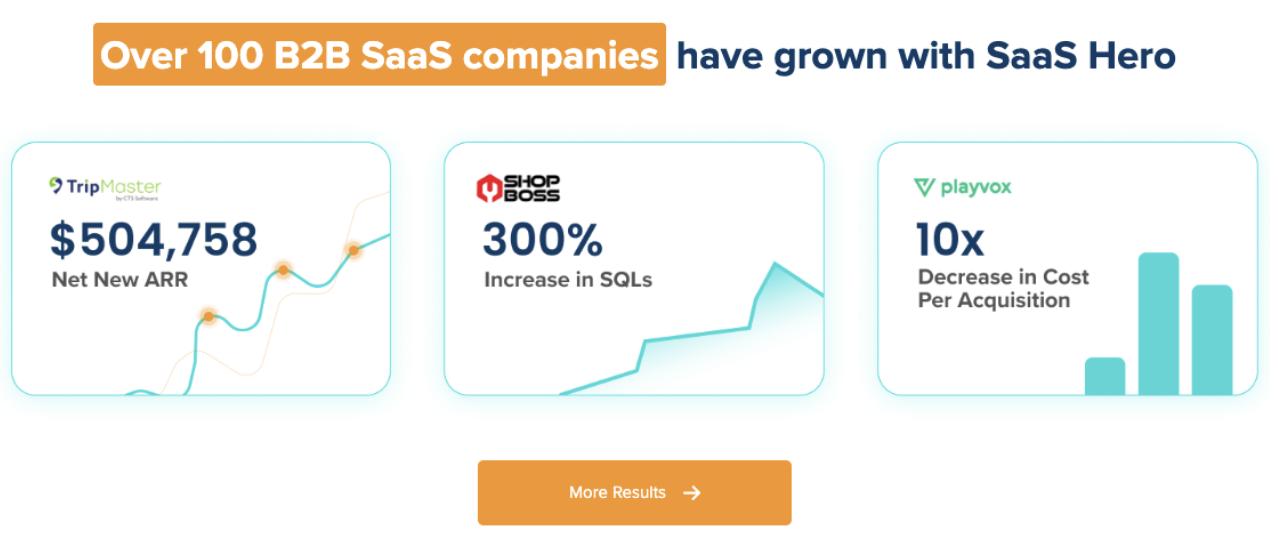
Use the ROAS formula of Net New ARR divided by Facebook ad spend to measure true return. B2B SaaS Facebook campaigns average 1.9 ROAS, while the top 25 percent reach 4.1 ROAS. TripMaster generated $504k ARR from $77k in spend, which equals 650 percent ROI. Watch for CAPI deduplication problems and confirm UTM parameters persist through multi-step funnels.

|
Metric |
Calculation |
Benchmark |
|
ROAS |
Net ARR ÷ Ad Spend |
1.9-4.1x |
|
Payback Period |
CAC ÷ Monthly Gross Margin |
<90 days |
|
Conversion Rate |
Trials ÷ Clicks |
10.63% |
How to Measure and Validate Facebook ARR
Track success by aiming for at least 20 percent of SQLs from Facebook, payback periods under 90 days, and steady ARR growth from paid social. Set weekly Looker Studio reports that compare net new ARR against your baseline and confirm multi-touch attribution accuracy. Watch for gaps where CRM numbers do not match Facebook reports, because those gaps usually signal tracking issues that need fast fixes.
Advanced ARR Attribution Tactics for SaaS
Increase sophistication with LTV-based audience targeting and competitor conquest campaigns to speed up growth. Add cohort analysis that tracks lifetime value by acquisition source and use automated bid changes based on downstream revenue. Book a discovery call to see results. SaaSHero’s full marketing team service has delivered outcomes like TripMaster’s $504k ARR through systematic attribution and ongoing campaign improvements.
Summary and Action Checklist
This 7-step framework turns Facebook ad spend into measurable ARR through pixel setup, UTM tracking, longer attribution windows, incremental testing, CRM integration, and ROI checks. Audit your current setup against these steps and start with pixel and CAPI verification. Move next to UTM standardization, CRM workflows, and dashboard reporting.
|
Step |
Completed? |
|
Pixel/CAPI Setup |
☐ |
|
UTM Parameters |
☐ |
|
Attribution Windows |
☐ |
|
Incremental Model |
☐ |
|
ARR Events |
☐ |
|
CRM Integration |
☐ |
|
ROI Validation |
☐ |
FAQs: Facebook ARR Attribution for B2B SaaS
What is the best attribution setting for Facebook ads SaaS?
The strongest attribution setting for B2B SaaS is a 28-day view-through and 7-day click window. This longer window reflects how B2B buyers research, see multiple ads, and convert weeks later into trials and paid plans. Facebook’s default 1-day view and 7-day click settings undercount SaaS conversions because they ignore most of that research period.
How long does Facebook ARR attribution setup take?
Expect about one week for implementation and 30 days for validation. Pixel and CAPI configuration usually takes 1 to 2 hours, UTM setup takes about 30 minutes, and CRM integration often needs 2 to 3 hours, depending on complexity. The 30-day validation window matters because long B2B cycles delay conversion data, so you need time before judging accuracy.
What are the risks of Facebook ARR attribution?
The biggest risk is over-attribution, where Facebook gets credit for conversions that would have happened anyway. Use incremental attribution models with holdout tests to measure real lift. Other risks include UTM loss in multi-step funnels, CAPI deduplication errors that double-count events, and CRM sync failures that create gaps. Regular audits and a 15 percent underreporting buffer help manage these issues.
What should I do if I am not seeing ARR data from Facebook ads?
Start by checking that UTM parameters work and persist from ad click through trial signup and paid subscription. Confirm that CAPI events fire correctly in Events Manager and that your CRM tags Facebook-sourced contacts. Review attribution windows and make sure they match your sales cycle, then confirm ARR calculations exclude expansions. If problems remain, trace the full data path from Facebook pixel through CRM to dashboards to find the break.
How can I get help implementing Facebook ARR attribution?
Book a discovery call with SaaSHero for done-for-you Facebook ARR attribution. Their flat-fee model covers pixel and CAPI setup, UTM standards, CRM integration, and automated dashboards. With documented wins such as $504k+ ARR for TripMaster and 80-day payback periods for TestGorilla, SaaSHero removes technical friction and delivers accurate attribution from day one.