





Key Takeaways
- B2B SaaS buyers in 2026 follow non-linear journeys with 70% dark funnel research, so ad creatives must match each stage from awareness to validation.
- Map ads to three psychological intent buckets for higher conversion rates: pricing, problem or complaint, and review or validation.
- Track revenue metrics such as Net New ARR, ROAS, and 80-day payback instead of vanity CTRs, with platforms like Bing delivering 253% ROI.
- Use competitor conquesting, founder-led videos, social proof, and mobile-first designs with 5-second clarity tests for stronger performance.
- Partner with SaaSHero by scheduling a discovery call to roll out intent-based strategies and connect ad spend to ARR.
Executive Summary and Intent Framework
Effective B2B ad design in 2026 rests on four pillars: journey stage mapping, revenue-focused metrics, psychological intent targeting, and competitor conquest campaigns. The modern buyer journey moves through Awareness and Research, Comparison and Pricing, Validation and Decision, and Purchase and Retention. Each stage needs its own creative approach and messaging structure.
Key performance indicators now extend beyond click-through rates to ROAS, Net New ARR, 80-day payback, and SQL conversion rates. Microsoft Bing Ads delivers 253% ROI for B2B campaigns, while LinkedIn Ads often reach 14% to 18% MQL-to-SQL conversion through stronger lead quality.
The Intent-Based Creative Engine groups searches into three psychological buckets. Pricing Intent covers cost-sensitive searches. Problem or Complaint Intent captures frustrated users who want alternatives. Review or Validation Intent focuses on risk-averse buyers who need social proof. This structure supports precise message matching that turns high-intent traffic into a qualified pipeline.
Non-Linear B2B SaaS Buyer Journey in Practice
Awareness and Research: Anonymous Problem Exploration
Seventy percent of the B2B buying journey happens in the dark funnel, where prospects research anonymously across many touchpoints before speaking with vendors. During this stage, buyers may consume up to 15 pieces of content while building mental availability and judging how serious their problem feels. Ad creatives should focus on problem agitation, education, and thought leadership instead of direct product promotion.
Comparison and Pricing: Structured Vendor Evaluation
The comparison stage covers solution exploration, vendor evaluation, and pricing sensitivity checks. Buyers look for proof through case studies, ROI calculators, and competitive comparisons while juggling multiple stakeholder needs. Ad design should highlight clear value propositions, feature differences, and transparent pricing details that match this analytical mindset.
Validation and Decision: Risk and Stakeholder Alignment
Multi-stakeholder consensus defines the validation stage, where technical validation, proofs-of-concept, and risk reduction matter most. Average buying groups now include about seven stakeholders from IT, Finance, Legal, and Operations. Each group needs tailored materials and objection-handling content. Creative strategies should address compliance, integration, and realistic implementation timelines.
Stage-Specific Ad Design That Matches Buyer Intent
Awareness-stage creatives should use problem-agitation headlines, founder-led video content, and educational carousels. Creator-led ads can improve efficiency by up to 32%, so founder or employee point-of-view formats work especially well for B2B services that scale spend. Video storytelling should center on industry pain points and strategic challenges, not product feature lists.
Comparison-stage ads benefit from pricing tables, competitor comparison visuals, and feature-benefit matrices. Dynamic retargeting messages such as “Still Comparing Vendors? See Why CMOs Choose Us” re-engage prospects who evaluate alternatives. Split-screen before-and-after workflows show clear value while speaking to specific use cases and ROI scenarios.
Validation-stage creatives should lean on social proof through G2 badges, customer testimonials, and security certifications. Conversation Ads for personalized inbox delivery and Single Image Ads with bold calls-to-action such as “Book a Demo” often perform best for bottom-funnel conversions. Messaging around migration incentives, contract buyouts, and implementation support reduces switching friction.

Design guidelines include 5-second clarity tests, visible trust signals above the fold, and mobile-first layouts. High-contrast designs with a single offer per ad resonate with executive audiences. Strategic color choices can lift performance by up to 40%. Frequency caps of three to four impressions per week protect against ad fatigue while keeping engagement steady.
From Creative Execution to Revenue Tracking
Revenue tracking starts with GCLID-to-CRM integration that connects ad clicks and landing page visits into systems such as HubSpot or Salesforce. This setup supports decisions based on closed-won revenue instead of surface-level engagement metrics. Looker Studio dashboards then show the full funnel from impression to ARR and reveal where to shift budget or refresh creative.
Campaign sequencing should prioritize heuristic fixes before A/B testing, so teams resolve basic usability issues before running statistical tests. Common mistakes include bait-and-switch messaging, weak mobile experiences, and an obsession with vanity metrics that hide real performance signals.
Negative keyword hygiene protects budgets from navigational or low-intent searches, while competitor conquest campaigns target high-intent modifiers such as “pricing,” “alternatives,” and “vs” queries. Book a discovery call to roll out tracking that connects early ad impressions to downstream CRM revenue data.
Buyer Archetypes and SaaSHero Case Outcomes
Three primary buyer archetypes gain the most from specialized B2B ad design. Overwhelmed Founders at around $500K ARR need cost-efficient conquest ads that highlight competitor weaknesses. Frustrated VPs of Marketing at Series B companies want ARR reporting that fits boardroom expectations and justifies budgets to CEOs who demand pipeline accountability.
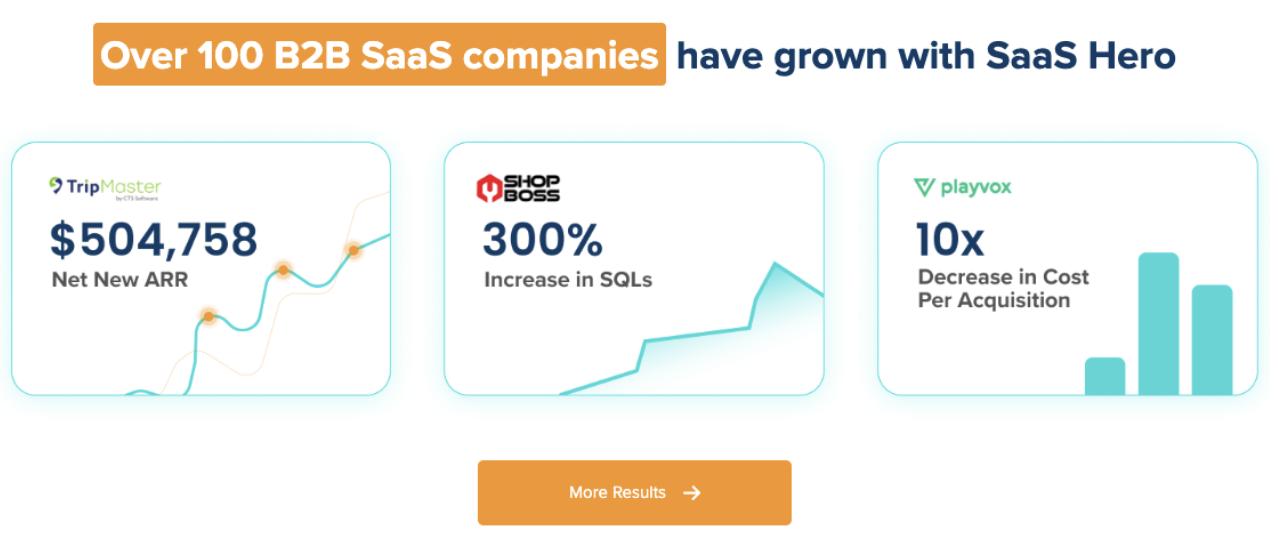
Post-Funding Scalers with aggressive targets use competitor conquest landing pages for fast market entry. TripMaster generated $504,758 in Net New ARR through focused paid search and social campaigns. TestGorilla reached an 80-day payback period that supported a $70M Series A raise. Playvox saw a 10x drop in Cost Per Lead after account restructuring and disciplined negative keyword work.

These outcomes show how flat-fee retainer models align agency incentives with client growth instead of ad spend volume. Month-to-month agreements create ongoing accountability that traditional 12-month contracts rarely match.
Frequent Mistakes and Current Best Practices
Many B2B display campaigns underperform because of weak creative, irrelevant placements, or broad targeting, which produce high impressions but few conversions. Poor device experiences and unclear goals make results worse, especially when teams use the display for lead generation instead of brand awareness.
Generic ad copy, such as “Transform your business,” ignores real pain points, personas, and workflows, so it fails with sophisticated B2B buyers. Incorrect platform choices and sloppy audience segmentation further drag down performance.
Current best practices include sequential retargeting for creator-led ads, three to five creative variations per audience, and rotation every two to three weeks. Teams should design intentional click paths that send traffic to landing pages tailored to each journey stage. Retargeting can deliver 40% to 60% lower cost per qualified lead for high-intent audiences when segments and messages align.
FAQs
What are the key stages of the B2B buyer journey in 2026?
The modern B2B buyer journey includes four main stages. Awareness and Research covers anonymous problem exploration and vendor discovery. Comparison and Pricing focuses on solution evaluation and competitive analysis. Validation and Decision handles stakeholder consensus and risk review. Purchase and Retention covers implementation and expansion. Buyers move non-linearly between these stages and often revisit earlier phases as new stakeholders join.
How should B2B ad design address Dark Funnel behaviors?
Dark Funnel behavior responds well to high-intent keyword strategies that focus on competitor names, pricing queries, and alternative searches. Ad creatives should deliver immediate value through educational content, comparison tools, and clear information that supports anonymous research. Retargeting campaigns should sequence content based on engagement depth instead of simple time windows, because buyers often consume many touchpoints before they reveal intent.
What is the difference between demo and trial ad creatives for B2B SaaS?
Demo-focused ads speak to validation-stage buyers who want human interaction to address stakeholder concerns, technical questions, and customization options. Trial ads appeal to self-service buyers who prefer hands-on evaluation and quick product access. Demo creatives should highlight expertise, consultation, and risk reduction. Trial creatives should stress ease of use, fast setup, and feature exploration.
Which metrics best measure B2B ad design success beyond CTR?
Revenue-focused metrics include Net New ARR, Customer Acquisition Cost, payback period, and SQL conversion rates. ROAS offers near-term performance feedback, while lifetime value informs long-term budget planning. Pipeline velocity and average deal size reveal how campaigns affect sales cycle speed and deal quality. MQL-to-SQL conversion rates show lead quality beyond simple volume.
What are the most common B2B ad design pitfalls to avoid?
Frequent pitfalls include generic messaging that ignores buyer stages, broad targeting that wastes budget, and mismatched goals that use awareness tactics for conversion objectives. Poor mobile experiences frustrate research-phase buyers. Feature-heavy copy often misses outcome-focused buyer psychology. Weak calls-to-action and cluttered layouts reduce conversions, especially for complex B2B decisions that need clear next steps.
Conclusion and Next Steps for SaaS Growth
B2B ad design success in 2026 depends on intent-based creative strategies that reflect non-linear buyer journeys instead of rigid funnels. Psychological targeting, competitor conquest tactics, and revenue tracking together create durable advantages in crowded SaaS markets.
Organizations that want capital-efficient growth should prioritize Net New ARR over vanity metrics, adopt reliable attribution models, and design creatives for specific journey stages. Book a discovery call to review your current B2B ad design and buyer journey strategy and unlock the revenue potential of intent-based creative.