




Written by: Aaron Rovner, Founder, Saas Hero | Last updated: July 7, 2026
Key Takeaways for 2026 B2B Pipeline Stacks
- Pipeline generation remains the top challenge for B2B SaaS teams in 2026, with only 16% of reps hitting quota and sales cycles 32% longer since 2021.
- Effective stacks combine four tool categories, Data, Intent, Engagement, and CRM, matched to company stage and budget instead of relying on all-in-one platforms.
- Signal-based outbound consistently outperforms volume tactics, delivering 8–25% reply rates versus 1–3% for generic cold outreach.
- Stage-specific recommendations range from Apollo + Instantly for Seed teams under $200/month to full ABM platforms like 6sense for Series B+ organizations.
- If your internal resources are constrained and you need senior-led execution without a long-term contract, schedule a discovery call to see how flat-fee, month-to-month engagement turns spend into Net New ARR.
Executive Summary: How Modern Pipeline Stacks Work
Pipeline generation is the systematic process of identifying, engaging, and converting target accounts into qualified sales opportunities. In 2026, effective pipeline stacks are organized into four categories:
- Data: Contact databases plus firmographic and technographic enrichment (Apollo, ZoomInfo, Clay)
- Intent: Buying signal detection across first-party, second-party, and third-party sources (Bombora, 6sense, G2 Buyer Intent)
- Engagement: Multi-channel outreach sequencing (Instantly, Lemlist, Outreach, Salesloft)
- CRM: Pipeline management and attribution (HubSpot, Salesforce, Pipedrive)
The stage and budget decision model stays simple. Seed teams prioritize affordable data and engagement tools. Series A teams layer in intent signals. Series B teams invest in AI-scored ABM platforms and full CRM attribution. No single tool owns the full funnel effectively, and specialized tools per category consistently outperform all-in-one platforms. This performance gap grows as buyers research more independently and expect tailored outreach.
How the B2B SaaS Buying Journey Works in 2026
Corporate Visions research shows 94% of buying groups rank their shortlist before ever contacting sales, and the top-ranked vendor wins approximately 80% of the time. The linear buyer journey has disappeared. ICPs now research anonymously across 8–12 touchpoints before surfacing to any vendor, and buying committees often include 11 or more stakeholders.
The market has responded with a structural shift from volume-based to signal-based outbound. Average cold email response rates have declined to approximately 3.43% in 2026 because of inbox saturation and stricter spam filters from Google and Yahoo. Signal-based campaigns, by contrast, often reach reply rates above 10%. These approaches can outperform spray-and-pray tactics in qualified meeting booking rates while requiring fewer total outbound activities.
AI features released in 2025–2026 have accelerated this shift. Platforms like 6sense RevvyAI and ZoomInfo Copilot now automate qualification and outreach recommendations instead of delivering static dashboards. The B2B intent data market reached $4.49 billion in 2026 and is projected to hit $20.89 billion by 2035 at 16.6% CAGR, with 91% of B2B marketers now using intent data to prioritize accounts. Negative-keyword hygiene in paid channels and competitor-conquest landing pages have similarly matured, and teams that ignore these levers bleed budget on navigational traffic and unqualified clicks. Given this mature, signal-rich landscape, your stack architecture choices now directly determine whether you capture or miss these buying signals.
Key Strategic Decisions and Trade-offs in Your Stack
Three decisions determine downstream CAC and payback period for every pipeline stack.
Build vs. Buy: Assembling a custom stack from best-in-class point solutions delivers precision but requires operational overhead. All-in-one platforms reduce complexity but are typically mediocre in each module. For teams that prioritize cost reduction over best-in-class features, consolidation can deliver immediate savings. The Census team reported reducing costs from $35,000 to $12,000 after consolidating their lead generation stack onto Apollo.
Signal vs. Volume: Volume-based cold outbound, with its sub-4% reply rates, consistently underperforms signal-based approaches. As noted earlier, signal-based tactics deliver significantly higher reply rates than volume tactics, and that gap translates directly into lower cost per meeting and shorter payback periods.
In-House vs. Outsourced Execution: Hiring an internal SDR team takes 3–6 months to ramp and carries fixed headcount costs regardless of pipeline output. Outsourced partners like SaaSHero provide immediate senior-led execution on flat-fee, month-to-month terms, which removes 12-month lock-ins that protect mediocrity and percentage-of-spend billing that rewards waste.

Representative Pipeline Tools by Category and Stage
| Tool | Category | Stage Fit | Indicative Monthly Cost |
|---|---|---|---|
| Apollo.io | Data + Engagement | Seed–Series A | Free–$49/user/mo |
| Clay | Data Enrichment | Seed–Series B | From $149/mo |
| Instantly.ai | Engagement | Seed–Series A | From $30/mo |
| Salesmotion | Intent / Signal | Series A–B | From $85/mo |
| HubSpot | CRM + Intent | Seed–Series B | Free tier; Breeze Intelligence credits for advanced features |
| Bombora | Intent (3rd-party) | Series B+ | $25K–$100K/yr |
| 6sense | Intent + ABM | Series B+ | $60K–$300K+/yr |
| Salesforce | CRM | Series A–B+ | Custom enterprise pricing |
Current Approaches by Stage and What Is Changing
Seed teams rely heavily on founder-led outbound, and founder outreach often drives a large share of pipeline. The typical stack uses Apollo.io for contacts plus Instantly for sending, with a total cost under $200/month. The primary risk is data decay, and contact data can decay by over 30% in a single year.
Series A teams start layering intent signals on top of that base. The minimum viable signal stack, Apollo, G2 Buyer Intent, and LinkedIn Sales Navigator, typically costs $20–$100 per seat per month or a few hundred dollars total per month. Hiring and funding signals deliver the highest early returns. Vendors contacting leads within 1 minute experience 391% higher conversion rates than those contacting after 30 minutes, and champion migration signals generate opportunities with 114% higher win rates and 54% larger deal sizes.
Series B teams invest in full ABM platforms and deeper analytics. Series B companies often adopt enterprise-grade platforms such as 6sense and Demandbase to coordinate multi-channel programs. Multi-channel orchestration becomes mandatory, and omnichannel outreach combining email, LinkedIn, and phone boosts results by over 287% compared to single-channel outreach.
Readiness, Maturity, and How to Sequence Implementation
Three maturity stages map directly to tool investment and execution model.
- Foundation (Seed / <$1M ARR): CRM plus a basic contact database and single-channel email. The goal is to establish ICP and validate messaging with 10–15 direct conversations before scaling.
- Scale (Series A / $1M–$10M ARR): Add intent signals such as G2, LinkedIn Sales Navigator, and Salesmotion, along with multi-channel sequences and bi-directional CRM sync. The goal is to reach the sub-$250 cost per meeting that signal-based outbound enables.
- Optimize (Series B / $10M–$30M ARR): Deploy a full ABM platform, AI scoring, revenue attribution, and multi-stakeholder sequencing. The goal is 6–12 month CAC payback and 3–4x pipeline coverage of the quarterly bookings target.
Sequencing matters for every stage. Intent data tools such as Bombora and Demandbase should be layered on only after establishing the core data and sending stack, because deploying ABM tooling before the CRM handoff is clean wastes the investment.
Common Pitfalls in Modern Pipeline Programs
Data accuracy decay. B2B data providers claiming 91% accuracy often deliver 63–85% in production, though multi-source approaches can reach 97%+ firmographic accuracy. This accuracy gap widens over time as contacts change roles and companies restructure, which is why decay accelerates without scheduled batch refreshes. To prevent this erosion, audit your CRM regularly and ask, when did you last check for stale contacts, and what is your re-enrichment cadence?
Over-automation and single-threading. Buying committees have expanded to 11+ stakeholders, so engaging only one contact per account causes deals to stall. The practical test is simple, confirm whether your sequences reach at least three contacts per target account for enterprise deals.
Weak CRM handoff. Sales-marketing handoff issues are a structural rather than interpersonal problem when shared pipeline metrics and handoff protocols are not defined at the system design level. Ask whether you can trace every SQL back to the signal or channel that sourced it, inside your CRM today.
Treating all intent signals equally. Applying identical follow-up to low-intent actions like ebook downloads and high-intent actions like demo requests wastes SDR time. Weighted scoring, with high-intent signals triggering immediate multi-channel outreach, solves this problem and protects SDR capacity.
Illustrative Scenarios for Stage-Specific Stacks
The Overwhelmed Founder ($500K ARR, team of 5). This founder runs Google Ads on weekends, has no dedicated SDR, and feels nervous about a $5K retainer and 12-month contract. The right move is Apollo free tier for contacts, Instantly at $30/month for sending, and HubSpot free CRM for pipeline tracking. Total tool cost stays under $100/month. The execution gap remains, and SaaSHero’s Dedicated Campaign Manager tier at $1,250/month covers senior-led paid search management on a month-to-month basis, at a lower cost than a junior hire and without lock-in.
The Frustrated VP of Marketing ($5M–$10M ARR, $50K/month budget). This VP receives agency reports on impressions and CTR while the CEO asks about pipeline and CAC. The right move is a stack with bi-directional CRM sync using HubSpot or Salesforce, plus Salesmotion for signal detection, and reporting anchored to Net New ARR. The execution gap closes when SaaSHero’s Full Marketing Team tier at $4,500/month replaces the percentage-of-spend agency with flat-fee alignment and boardroom-ready reporting.
The Post-Funding Scaler (Series A, $10M raised, aggressive Q1 targets). This team needs to deploy $30K/month efficiently without a 3-month hiring ramp. The right move is immediate deployment of competitor-conquest landing pages, signal-seeded outbound via Clay and Salesmotion, and multi-channel sequences. The execution gap narrows when SaaSHero activates as an instant team, with no ramp, no lock-in, and execution starting in days.

Get your stage-specific stack audit to map your current tools against your ARR and identify the fastest path to predictable pipeline.
Recommended Tool Stacks by Monthly Budget Band
| Budget Band | Data Tool | Engagement Tool | CRM / Intent |
|---|---|---|---|
| <$500/month | Apollo.io free–$49/user/mo | Instantly from $30/mo | HubSpot free CRM + Breeze Intelligence |
| $2K–$5K/month | Clay from $149/mo + Apollo Basic | La Growth Machine from €120/mo | Salesmotion from $85/mo + HubSpot Starter |
| $5K+/month | ZoomInfo from ~$15K/yr or 6sense from $60K/yr | Outreach or Salesloft (custom pricing) | Salesforce + Demandbase from $18K/yr |
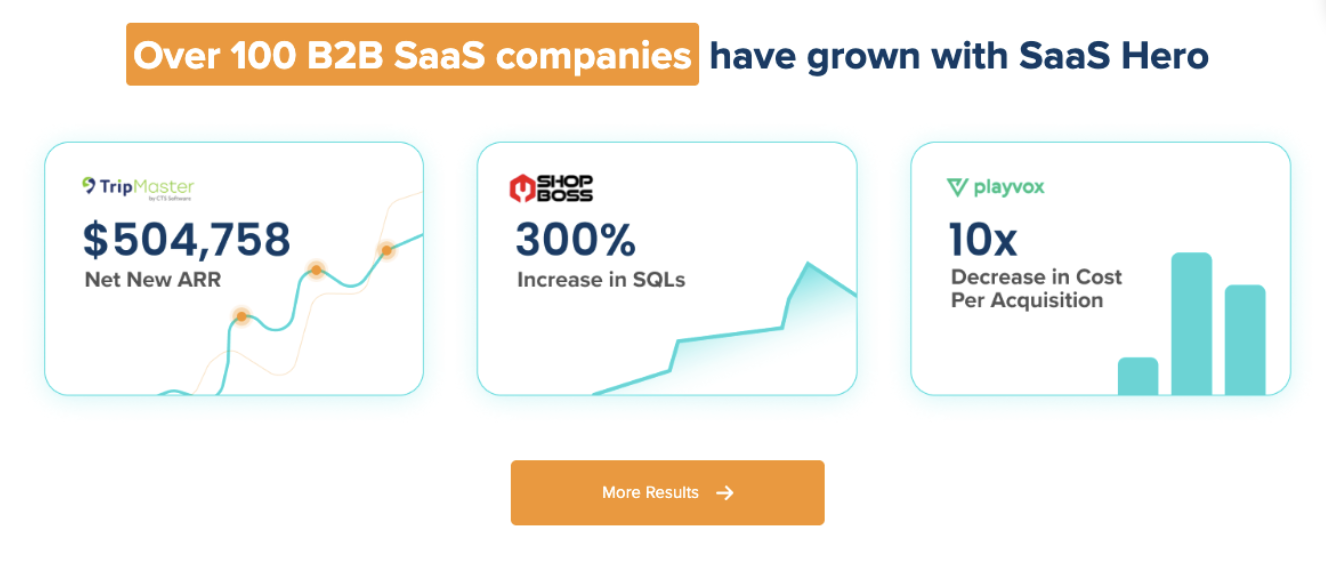
Outsourced execution recommendation: At every budget band, the tool stack only performs as well as the team operating it. SaaSHero provides senior-led, flat-fee, month-to-month pipeline execution for B2B SaaS teams from seed to Series B. Unlike percentage-of-spend agencies incentivized to inflate budgets, SaaSHero’s fixed retainer model aligns agency revenue with client outcomes. Unlike boutique shops that hand accounts to junior managers, SaaSHero caps client-to-manager ratios at 8–10 and keeps senior strategists hands-on. The result is clear, and clients like TripMaster added $504,758 in Net New ARR in one year, and TestGorilla achieved an 80-day CAC payback period, which is the metric that closes Series A rounds.

Frequently Asked Questions on Pipeline Tools and Strategy
How much should a seed-stage B2B SaaS company spend on pipeline generation tools?
Seed-stage teams can build a functional outbound stack for under $200 per month using Apollo’s free or basic tier for contact data and Instantly for email sending, with HubSpot’s free CRM for pipeline tracking. The more important constraint at seed stage is execution time, not tool cost. Founders who run ads and outbound manually on weekends will see diminishing returns quickly. A managed execution partner at a flat monthly fee often delivers better ROI than adding more tools without the operational capacity to run them.
What is the difference between signal-based and volume-based pipeline generation, and which is right for my stage?
Volume-based outbound sends high quantities of generic messages to broad lists and relies on sheer contact volume to generate meetings. Signal-based outbound monitors observable buying events such as funding rounds, executive hires, pricing page visits, and G2 review activity, then triggers personalized outreach only to accounts that show active buying readiness. Volume-based approaches can work for seed teams that validate ICP with limited budget. Signal-based approaches become essential at Series A and above, where CAC efficiency and sales cycle length are board-level metrics. The minimum viable signal stack costs $400–$600 per seat per month and typically delivers 2–4x better reply rates than volume outreach.
How long does it take to see pipeline results from a new tool stack?
Email deliverability infrastructure usually requires 4–6 weeks of warmup before high-volume sending. CRM integration and field mapping typically take 2–4 weeks for a clean bi-directional sync. Intent signal platforms require 30–60 days of baseline data before AI scoring becomes reliable. Realistically, a new stack produces qualified meetings in weeks 6–10 when configured correctly. Teams that skip the setup phase and go straight to volume sending often damage sender reputation and extend the timeline. Working with an experienced execution partner compresses this ramp significantly.
What CRM integration requirements should I prioritize when selecting pipeline generation tools?
The non-negotiable requirement is a native, bi-directional sync that reads and writes data to account and contact records in real time without overwriting human-gathered intelligence. Tools that require Zapier middleware add latency and failure points. For HubSpot users, prioritize tools with certified HubSpot integrations. For Salesforce users, verify that the data enrichment platform maps fields correctly and supports custom objects. Beyond CRM, your engagement platform must auto-enroll prospects into sequences based on CRM triggers, and your intent platform must push signal alerts to reps via Slack or Teams in real time, not in weekly batch reports.
When does it make sense to use an outsourced pipeline generation partner instead of building in-house?
Outsourcing makes sense when the cost and time of hiring, onboarding, and ramping an internal team exceed the cost of a managed partner, or when the internal team lacks the specific expertise to operate the chosen stack efficiently. For most seed-to-Series A teams, a senior-led outsourced partner on a month-to-month flat fee delivers faster time-to-pipeline than a 3–6 month SDR hiring cycle. At Series B, outsourced partners complement internal teams by owning specific channels such as paid search, competitor conquest campaigns, or LinkedIn ABM, while internal resources focus on strategic GTM decisions. The key criteria include flat-fee billing instead of percentage of spend, month-to-month terms instead of 12-month lock-in, and senior execution instead of junior account managers handling 30 or more clients simultaneously.
How do I measure whether my pipeline generation stack is working?
The primary metrics are cost per qualified meeting, MQL-to-SQL conversion rate, SQL-to-close rate, pipeline coverage ratio with a target of 3–4x quarterly bookings, and CAC payback period. Secondary metrics include reply rate by signal type, meeting show rate, and pipeline velocity measured as days from first touch to closed-won. Vanity metrics such as impressions, clicks, email opens, and MQL volume should be removed from executive reporting entirely. Every metric should be traceable to a specific channel, signal, or tool inside your CRM, not just inside the ad platform or outreach tool dashboard.
Conclusion: Turning Tools into Predictable Pipeline
Predictable pipeline in 2026 is a systems problem, not a tools problem. The framework stays consistent across stages, match Data, Intent, Engagement, and CRM tools to your current ARR and budget band, sequence the stack in the right order with data before signals and signals before ABM, and measure only metrics that connect to closed revenue. Volume-based outbound is structurally broken at scale, while signal-based approaches deliver 2–4x better reply rates and 30–40% lower cost per qualified meeting. The tool stack only performs as well as the team operating it.
SaaSHero exists for teams that have the right strategy but lack the internal bandwidth to execute it with senior-level precision. Flat-fee pricing, month-to-month accountability, and no percentage-of-spend conflicts keep incentives aligned. No junior handoffs and a focus on measurable Net New ARR keep attention on outcomes instead of activity.
Book a discovery call and get a stage-specific pipeline stack recommendation built for your ARR, budget, and growth targets.