




Last updated: January 19, 2026
Key Takeaways
- B2B SaaS buyers in 2026 complete 70% of research independently and need 20-30 touchpoints, so teams must run proactive, multi-channel demand generation.
- Core pillars include precise ICPs with intent data, SEO content authority, competitor conquesting, heuristic-based CRO, and Net New ARR tracking.
- Flat-fee, month-to-month agency models like SaaSHero’s outperform percentage-of-spend agencies by tying success to revenue instead of vanity metrics.
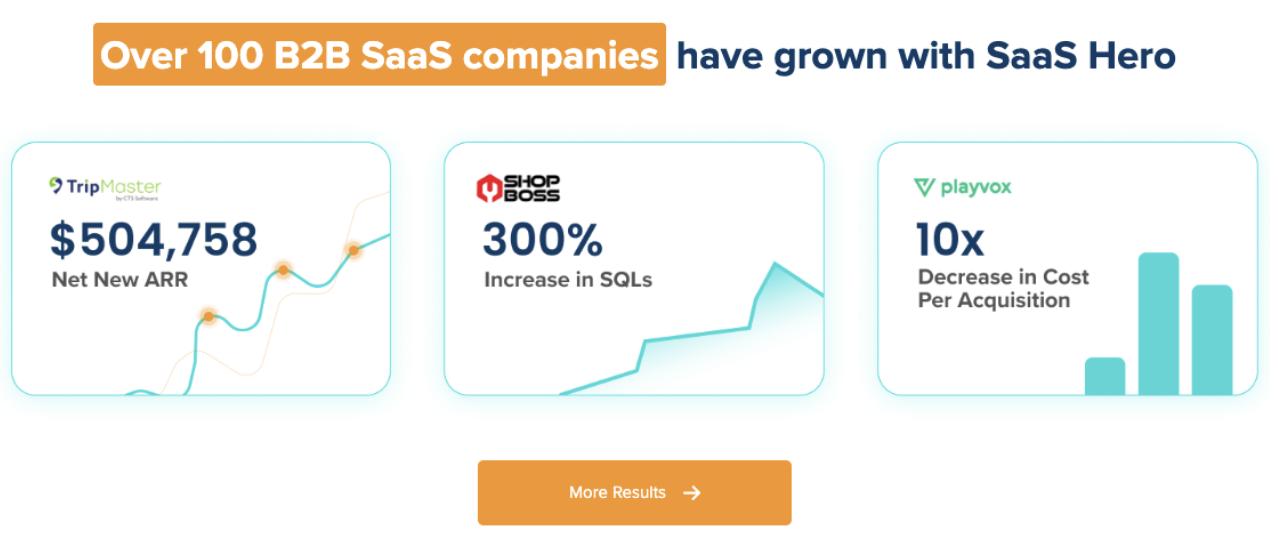
- Documented outcomes include $504,758 Net New ARR for TripMaster and 10x CPL reductions, with LTV:CAC ratios of 3:1-5:1 and 80-day paybacks.
- Teams ready to implement capital-efficient demand generation can schedule a discovery call with SaaSHero for revenue-aligned growth.
Revenue-First Framework for B2B SaaS Growth
Effective B2B SaaS demand generation in 2026 uses a structured framework that covers the full buyer journey and keeps revenue as the main goal. The strongest programs rely on five pillars: precise ICP definition with intent data, SEO content that builds authority, aggressive competitor conquesting, conversion rate optimization using heuristic analysis, and measurement that centers on Net New ARR. Healthy LTV to CAC ratios for B2B SaaS typically range between 3:1 and 5:1, and leading teams reach 80-day payback periods with capital-efficient campaigns.
SaaSHero’s methodology supports sustainable growth through deep ICP analysis, competitor conquesting, landing page improvements, CRO, and Net New ARR tracking with full attribution. This system has produced results such as $504,758 in Net New ARR for TripMaster and 10x cost-per-lead reductions for enterprise clients. Book a discovery call to see how SaaSHero’s performance-focused approach can accelerate your growth.

Why Specialized SaaS Agencies Now Outperform Generalists
The demand generation agency market now splits into two clear groups: generalist agencies with percentage-of-spend models and SaaS specialists with flat-fee retainers and revenue accountability. AI-driven search and zero-click results have changed buyer behavior, with more research happening through dark sharing in private channels like Slack groups. This shift favors agencies that understand SaaS metrics such as churn, MRR, and sales cycle length.
Traditional agencies struggle with misaligned incentives from percentage-of-spend billing, junior account teams after senior-led sales calls, and long contracts that reduce urgency. SaaSHero counters these issues with transparent flat-fee pricing, senior-led account management, and month-to-month agreements that keep performance pressure high. The team maintains strict client-to-manager ratios and works only with B2B SaaS in verticals such as HR Tech, Transportation, Procurement, and Cybersecurity.
Build vs Buy: Choosing Your Demand Gen Engine
B2B SaaS leaders must decide whether to build in-house demand generation teams or partner with agencies. Internal teams bring deep product knowledge but require months of hiring, onboarding, and platform training before they reach full output. Agency partners provide immediate access to proven playbooks and channel expertise, yet traditional models can create misalignment when agencies earn more from higher spend instead of better efficiency.
SaaSHero’s model removes common agency drawbacks with transparent pricing that starts at $1,250 per month for dedicated campaign management. Flat-fee structures remove incentives to inflate ad spend, and month-to-month agreements keep value delivery front and center. The focus on Net New ARR instead of impressions or clicks aligns the agency with client growth. Book a discovery call to compare SaaSHero’s performance model with traditional agencies for your current stage and budget.
Modern Tactics: Intent Data, Conquesting, and CRO
High-performing B2B SaaS demand generation combines intent data, content authority, and high-intent targeting into one coordinated system. Leading companies track buyer intent signals such as hiring spikes or competitor research, then launch tailored ads, emails, and landing pages before prospects raise their hands. This proactive motion has driven pipeline lifts of $3.5M for companies like Demandbase.
SaaSHero builds competitor conquesting programs that speak directly to pricing intent, problem or complaint intent, and review or validation intent. The team creates focused comparison pages for search terms such as “[Competitor] pricing” or “[Competitor] alternatives,” which convert at rates above industry norms. TripMaster’s $504,758 Net New ARR and Playvox’s 10x CPL reduction highlight how this approach captures in-market buyers.
Content programs now rely on stage-specific education that attracts organic traffic and positions brands as trusted advisors. Product-led growth with tiered pricing and in-app milestones increases expansion and engagement, which lifts customer lifetime value. SaaSHero ties these motions to CRO using heuristic frameworks that flag friction points and conversion blockers before large A/B test datasets exist.

How SaaSHero Implements and Scales Demand Gen
Strong demand generation programs follow a clear maturity path that starts with foundations and ends with scale. Teams first define ICPs and tracking, then launch pilot campaigns with a focus on competitor conquesting. Next, they refine performance through landing page testing and finally scale channels based on proven unit economics. SaaSHero’s $1,250 pilot program gives founder-led teams a low-risk starting point while still supporting enterprise-level growth later.
The operating model centers on embedded partnership instead of a distant vendor relationship. Clients receive weekly performance updates, bi-weekly strategy calls, and a dedicated Slack channel for real-time collaboration. This high-touch rhythm supports fast iteration, transparent reporting, and clear strategic guidance. Book a discovery call to see how this embedded model can speed up your demand generation maturity.
Costly Mistakes Even Senior Teams Still Make
Even experienced B2B SaaS marketing teams run into recurring issues that cap performance. Percentage-of-spend agency deals reward higher budgets instead of better efficiency. Junior account teams, despite senior sales pitches, create gaps between strategy and execution. Reporting that centers on impressions, clicks, and traffic hides the true impact on revenue and pipeline.
Dark funnel activity has become another major blind spot, as buyers now rely heavily on private communities and peer referrals that standard attribution cannot see. SaaSHero responds with flat-fee pricing, senior-led management, revenue-based reporting, and post-sale attribution surveys that capture dark funnel influence.
Real-World SaaSHero Engagement Models
Three client archetypes show how SaaSHero adapts to different stages and team structures. The “Overwhelmed Founder” profile covers bootstrapped SaaS companies around $500K ARR that need expert campaign management without long contracts. SaaSHero’s $1,250 monthly dedicated campaign manager service gives immediate support while keeping month-to-month flexibility.
The “Frustrated VP of Marketing” profile fits Series B companies with $5-10M ARR that feel stuck with agencies focused on vanity metrics instead of revenue. SaaSHero’s full marketing team service at $4,500 per month includes advanced CRM integration and board-ready reporting on pipeline and CAC. The “Post-Funding Rocket” profile reflects newly funded startups that must scale quickly to hit aggressive targets, as seen with TestGorilla’s 80-day payback periods and $70M Series A.
Across these scenarios, clients see structural wins such as TripMaster’s $504,758 Net New ARR, Playvox’s 10x CPL reduction with a 163% lead volume increase, and Leasecake’s $3M VC round supported by record growth. Book a discovery call to choose the engagement model that fits your current stage and goals.
Frequently Asked Questions: Demand Gen Decisions for B2B SaaS
What are the top B2B SaaS demand generation strategies for 2026?
Leading strategies focus on deep ICP analysis, competitor conquesting through content authority and targeted campaigns, landing page improvements with heuristic CRO, and Net New ARR tracking with full attribution. This system reflects how B2B buyers now complete 70% of research on their own and still need 20-30 touchpoints across channels before they talk to sales.
Should B2B SaaS companies build in-house demand generation teams or partner with agencies?
The right choice depends on growth stage, budget, and speed requirements. In-house teams bring strong product context but often need 3-6 months for hiring, training, and platform mastery. Agencies provide immediate specialist support, yet traditional percentage-of-spend models can misalign incentives. SaaSHero’s flat-fee, month-to-month structure removes those drawbacks while offering enterprise-level expertise at accessible prices starting at $1,250 per month.
How should B2B SaaS companies measure demand generation success in 2026?
Measurement should center on revenue, not surface-level engagement. Key metrics include Net New ARR, sourced and influenced pipeline, MQL to SQL to opportunity to close conversion rates, and full customer acquisition cost that includes all marketing spend. Healthy LTV to CAC ratios sit between 3:1 and 5:1, and leading teams reach 80-day payback periods with efficient campaigns. Accurate attribution tracks the path from ad click through CRM to closed revenue and uses post-sale surveys to capture dark funnel influence.
What makes competitor conquesting effective for B2B SaaS demand generation?
Competitor conquesting works because it reaches high-intent buyers during active evaluation. Strong programs segment search intent into pricing, problem or complaint, and review or validation categories, then send traffic to focused comparison pages instead of generic homepages. This approach relies on careful negative keyword management to avoid navigational searches and keep spend focused on evaluative intent that converts at higher rates.
How do dark funnels impact B2B SaaS demand generation attribution?
Dark funnels cover a large share of buyer research that happens outside visible channels, such as private Slack groups, peer referrals, and anonymous content consumption. This pattern breaks simple last-click models and calls for extra measurement methods, including post-sale attribution surveys, branded search trend monitoring, and multi-touch content engagement tracking. Effective demand generation strategies recognize dark funnel influence while still optimizing for measurable conversions.
Conclusion: Turn Demand Gen into a Revenue Engine
B2B SaaS demand generation in 2026 rewards teams that combine specialized expertise, revenue-based measurement, and capital-efficient execution. SaaSHero’s framework has supported more than $30 million in managed ad spend and produced outcomes such as $504,758 Net New ARR gains and 80-day payback periods. Transparent pricing, senior-led management, and month-to-month accountability create a performance partnership that matches modern SaaS expectations. Start your demand generation transformation with a discovery call and see how SaaSHero’s focused approach can accelerate your growth.