




Key Takeaways
- ConTech SaaS faces 45% CAGR growth and 20-30% CAC inflation, so you need revenue-first budget allocation with 70% proven channels (Google Ads, LinkedIn), 20% growth initiatives, and 10% experimental.
- Protect unit economics by keeping CAC below 3x LTV and aiming for 90-day payback periods, while tracking Net New ARR and SQLs instead of vanity metrics.
- Avoid percentage-of-spend agencies, missing negative keywords, and skipping competitor conquesting for high-intent traffic.
- Budgets scale from $10k (5-10% ARR), focused on core channels, to $50k+ that support full-funnel programs with ABM targeting procurement managers.
- Partner with SaaSHero for a discovery call to audit your ConTech marketing and roll out proven revenue-driven strategies.
Revenue-First ConTech Budget Framework
Effective ConTech marketing budgets follow four core principles that keep every dollar tied to revenue. These principles give you a clear benchmark, a simple allocation rule, and guardrails for unit economics.
- Revenue Benchmark: B2B SaaS companies allocate 15-20%+ of ARR to marketing, while ConTech companies typically target 5-15% at scale.
- Adapted 70/20/10 Rule: Allocate 70% to proven channels such as Google Ads and LinkedIn, 20% to growth initiatives like content and ABM, and 10% to experimental channels.
- Unit Economics: Keep CAC below 3x LTV and aim for 90-day payback periods to stay capital efficient.
- Revenue Focus: Prioritize Net New ARR and Sales Qualified Leads (SQLs) instead of impressions, clicks, or followers.
|
Monthly Budget |
% ARR |
70% Core Channels |
20% Growth |
10% Experimental |
|
$10k |
5-10% |
$7k (Google/LinkedIn) |
$2k (Content/ABM) |
$1k (Testing) |
|
$25k |
10-15% |
$17.5k |
$5k |
$2.5k |
|
$50k |
10-15% |
$35k |
$10k |
$5k |
SaaSHero focuses on revenue-driven ConTech marketing with tracking from ad click to closed-won deals. Book a discovery call to apply this framework with a team that already understands ConTech.

ConTech Market Dynamics and Buyer Behavior
The ConTech marketing ecosystem includes in-house teams, generalist agencies, and specialized partners that understand construction workflows. North America dominates the Web-Based Construction Management Tools market due to high technology adoption by both enterprises and SMEs.
Buyer behavior now favors integrated, cloud-native platforms instead of fragmented point solutions. LinkedIn dominates B2B channels and works well for reaching procurement managers and project directors, while Google Ads captures high-intent competitor research and solution evaluation searches.
Traditional percentage-of-spend agencies often push higher budgets to grow their own fees, not your revenue. SaaSHero uses a flat retainer model that removes this conflict and keeps recommendations aligned with client growth.
Channel Mix Trade-offs for ConTech Teams
ConTech marketing works best when you balance performance media, brand building, and experimentation. Most teams allocate 50-60% to performance media, 20-30% to brand programs, and 10-20% to experimental channels.
The choice between in-house execution and a specialized partner depends on team maturity, budget size, and growth targets. Smaller teams often move faster with expert partners, while larger organizations blend in-house strategy with specialist execution.
|
Approach |
Pros |
Cons |
SaaSHero Advantage |
|
%-Spend Agencies |
Quick scaling |
Incentive misalignment, waste |
Flat $1.25k-$5k retainer, month-to-month |
|
In-House Teams |
Direct control |
Expertise gaps, high overhead |
Senior-led, B2B SaaS vertical focus, including Construction |
|
Generalist Agencies |
Broad capabilities |
Lack of ConTech knowledge |
B2B SaaS case studies |
ConTech buyers research heavily before they talk to sales, so you need strong competitor conquesting and intent-based targeting. General contractors and procurement managers rely on peer networks and industry publications before they enter formal procurement.
Book a discovery call to compare SaaSHero’s B2B SaaS-focused approach with your current marketing setup.
Current Budget Patterns and 2026 Trends
Leading ConTech companies often allocate 40% of budgets to Google Ads for competitor conquesting and solution-specific searches. They put 30% into LinkedIn for ABM targeting by job title, 20% into content and review management, and 10% into retargeting and nurture campaigns.
2026 programs increasingly rely on AI-powered attribution and deeper CRM integration to track the full buyer journey from first touch to closed-won revenue. Social media acts as a key interaction channel but ranks lowest for buying decisions, while family and peer recommendations drive trust in the dark funnel.
TestGorilla reached an 80-day payback period through strict channel management and tight unit economic tracking. ConTech companies can aim for similar efficiency while accounting for longer sales cycles and investor expectations.

Readiness Checklist and Operating Model
ConTech marketing maturity usually moves through three stages that shift focus from surface metrics to revenue. Stage 1 tracks vanity metrics like impressions and clicks, Stage 2 tracks leads and MQLs, and Stage 3 optimizes around revenue outcomes and Net New ARR.
Use this checklist to support revenue-driven allocation.
- CRM tracking from ad click to closed-won revenue
- CAC benchmarks by channel and customer segment
- Monthly budget reallocation based on performance data
- Competitor conquesting campaigns for high-intent traffic
- ABM targeting for enterprise procurement teams
Budget bands shape execution complexity. Budgets of $10k-$25k per month require tight channel focus, $25k-$50k supports multi-channel testing, and $50k+ enables full-funnel programs with dedicated creative production.
Book a discovery call for a free ConTech marketing audit and a clear implementation roadmap.
Frequent ConTech Marketing Mistakes
Experienced ConTech teams still run into five recurring execution mistakes that quietly drain budgets. These issues usually appear in accounts that have scaled spend without tightening measurement.
- Impressions Over ARR: Building budgets around vanity metrics like website traffic and social followers instead of revenue impact.
- Missing Negative Keywords: Broad targeting that burns spend on navigational searches instead of evaluative intent.
- Long-Term Contracts: Twelve-month agency agreements that remove accountability and reduce performance pressure.
- Generalist Execution: Agencies without B2B SaaS expertise that miss ConTech-specific targeting opportunities.
- No Competitor Conquesting: Ignoring high-intent traffic from prospects researching alternative solutions.
Use these pitfalls as a self-audit checklist for your current approach. SaaSHero focuses on B2B SaaS-specific execution so you avoid these common traps.

Budget Scenarios Across Growth Stages
Bootstrapped Startup ($500k ARR): SaaSHero’s $1.25k monthly retainer supports a 60/40 Google and LinkedIn split with a strong focus on competitor conquesting. Limited budgets require precise targeting of high-intent procurement manager searches.
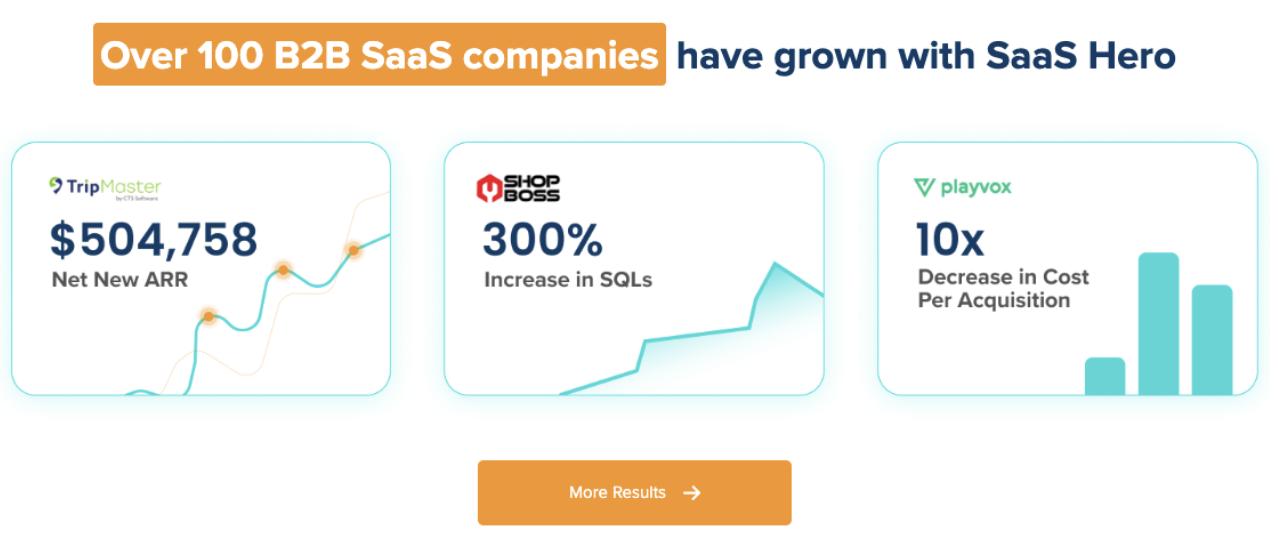
Series B Scale-Up ($5M ARR): These teams run full-channel optimization with $25k-$50k monthly budgets. Playvox achieved a 10x decrease in Cost Per Lead through account restructuring and negative keyword work, which shows the cleanup potential in under-managed campaigns.
VC-Backed Growth ($10M+ ARR): Leasecake raised $3M with strategic LinkedIn ABM that targeted real estate professionals. Enterprise ConTech can mirror this approach by targeting general contractors and project managers using job title and company size filters.
Each archetype needs a different execution plan but shares the same requirement for revenue-focused measurement and ConTech-specific expertise. Book a discovery call to review SaaSHero case studies that match your current stage.
Action Plan and Next Steps
ConTech marketing budgets perform best when they follow revenue-first thinking instead of chasing vanity metrics. The adapted 70/20/10 framework balances proven channels with growth investments while protecting capital efficiency through sub-90-day payback periods and CAC below 3x LTV.
Run a quick workshop with your team to audit CAC by channel, track Net New ARR attribution, and map competitor conquesting gaps in your market. Prioritize procurement manager and general contractor intent signals instead of broad construction audience targeting.
Book a discovery call with SaaSHero to roll out revenue-driven ConTech marketing backed by B2B SaaS expertise and transparent month-to-month accountability.
Frequently Asked Questions
How should ConTech companies adapt the 70/20/10 budget rule?
ConTech SaaS should allocate 70% to performance channels such as Google Ads for competitor conquesting and LinkedIn for ABM targeting. Another 20% should support growth initiatives like content marketing, review management, and industry publications, while 10% funds should be used for experimental channels such as emerging platforms and event sponsorships. This mix reflects longer sales cycles and multi-stakeholder decisions in construction procurement.
What are typical Cost Per Lead benchmarks for ConTech marketing?
ConTech CPL usually ranges from $200-500 across Google Ads and LinkedIn, with variation by target customer size and solution complexity. Enterprise-focused solutions that target large general contractors often see higher CPLs of $400-800 but justify these costs through larger contract values. Strong competitor conquesting and disciplined negative keyword management can reduce CPL significantly.
How do LinkedIn and Google Ads ROAS compare for ConTech?
LinkedIn often delivers 3-5x ROAS for ConTech through precise ABM targeting of procurement managers and project directors. Google Ads typically reaches 4-7x ROAS by capturing high-intent searches for competitor alternatives and solution evaluations. Together, these channels cover the ConTech buyer journey from awareness through decision.
What percentage of ARR should ConTech SaaS companies spend on marketing?
Early-stage ConTech companies below $2M ARR often invest 20-40% of revenue in marketing to build market presence. Growth-stage companies between $2M and $10M ARR usually allocate 15-25%, while mature ConTech SaaS companies settle in the 5-15% ARR range. VC-backed companies may exceed these levels during aggressive growth phases.
What constitutes an ideal payback period for ConTech SaaS?
ConTech companies should target payback periods under 90 days for strong capital efficiency, although longer sales cycles can stretch this to 120 days for enterprise deals. The key is to maintain CAC below 3x LTV while accounting for the extended evaluation cycles common in construction technology procurement.