Written by: Aaron Rovner, Founder, Saas Hero | Last updated: September 1, 2026
Key Takeaways
Static annual GTM plans fail because markets, buyer maturity, and competitor pricing shift faster than quarterly reviews can address.
Continuous GTM adaptation uses a structured operating system with weekly, monthly, and quarterly rhythms tied to real-time data.
Six core variables—ICP, positioning, offer, motion, channels, and lifecycle—need different review cadences to stay aligned with revenue goals.
A unified data baseline connecting CRM, marketing automation, product analytics, and billing systems removes guesswork and supports accurate decisions.
Book a discovery call with SaaSHero to implement this GTM Operating System for your B2B SaaS team.
What Continuous GTM Adaptation Means in Practice
Continuous GTM adaptation is a systematic process for updating your go-to-market strategy based on real-time data, customer feedback, and market changes. It runs on weekly, monthly, and quarterly rhythms that help you test, learn, and pivot quickly so your strategy stays aligned with revenue goals.
A static launch plan falls behind because markets, buyer maturity, and competitor pricing shift constantly. Treat your GTM plan as a living system to keep growth predictable. Companies that adopt a structured revenue cadence see a 20–35% improvement in pipeline conversion within two quarters, based on measurements across six engagements between 2021 and 2024.
The GTM Operating System: Six Variables to Continuously Adapt
Six variables drive your GTM strategy. Treat each one as a living model. Every variable has its own monitoring frequency and clear triggers for change.
Variable
What to Monitor
Revisit Frequency
ICP
Win/loss data, LTV:CAC by segment, churn by segment
Data quality is the binding constraint. Without a unified data baseline, every change becomes guesswork. Most companies review revenue metrics monthly—by then, problems are 30 days old and 30 days harder to fix. A tighter cadence costs discipline more than budget and often delivers the highest ROI of any GTM change.
See how SaaSHero implements this operating system for B2B SaaS teams that lack internal execution capacity—schedule a discovery call.
Building a Unified Data Baseline Across Revenue Systems
Accurate adaptation starts with measurement. A unified data baseline connects your CRM, marketing automation platform, product analytics, and billing into a single source of truth. With that foundation, performance conversations focus on decisions instead of debating which number is correct.
Core metrics to track:
Net New ARR (decomposed: New Logo + Expansion − Churn − Contraction)
CRM (Salesforce/HubSpot): System of record for pipeline and revenue. Lifecycle stage definitions here define what “qualified” means.
Marketing automation (Marketo/HubSpot/Pardot): Owns forms, scoring, and nurture. Its lifecycle stages distinguish a form fill from a qualified opportunity.
Product analytics (Amplitude/Mixpanel/Segment): Tracks activation, feature adoption, and engagement, showing what customers actually do.
Billing (Stripe/Chargebee): Source of truth for MRR movements, expansion, and churn.
A two-week sprint cycle creates the heartbeat for continuous GTM adaptation. Each sprint tests one hypothesis against one metric with clear, pre-defined kill criteria.
The hypothesis format, drawn from the GTM Playbook experimentation framework:
Real-time feedback loops connect frontline insights directly to GTM adjustments. These loops keep your operating system current instead of relying on stale data.
The weekly revenue standup (30 minutes, same time every week) uses five questions that surface 85–90% of pipeline issues within 7 days:
How much pipeline did we create this week?
How much pipeline moved forward?
How much pipeline stalled or died?
What is our forecast confidence for this month?
What is the one blocker we need to resolve this week?
The standup is strictly limited to the five questions, with no status updates or project reports.
The monthly revenue review (90 minutes, first week of the month) covers:
Actual vs. plan
Cohort analysis
Win/loss review
Forecast update
One strategic decision
The quarterly revenue planning session (half-day, last two weeks of the quarter) covers:
Cross-functional input strengthens the loop. For example, hold weekly syncs with sales to review buyer objections and messaging that works, and analyze product usage to track feature adoption. Then meet monthly with product, marketing, sales, and customer success to turn that collected feedback into concrete action.
Refining ICP and Messaging Quarterly
ICP and messaging stay effective when you refresh them quarterly based on revenue quality. Treat your ICP as a living model and recompute it using LTV:CAC, retention, and payback by segment.
The quarterly ICP review process:
Segment closed-won and closed-lost deals by firmographic and behavioral attributes.
Calculate LTV:CAC, payback period, and NRR by segment.
Identify which segments retain best and churn least.
Update the ICP definition to reflect the highest-quality revenue.
To calibrate these ICP and messaging decisions, you also need clear benchmarks for your core metrics. The next section outlines those GTM health benchmarks.
GTM Health Benchmarks: Rule of 40, 3-3-2-2-2, and Core Metric Thresholds
Talk to SaaSHero about operationalizing this system across your B2B SaaS company.
SaaS Hero: The client-friendly SaaS marketing agency that proves pipeline
Conclusion: Turning Adaptation into a GTM Habit
Companies that continuously adapt their GTM strategy outperform those that stay static. As noted earlier, top-quartile companies command far higher multiples, which reflects the payoff from sustained adaptation.
The GTM Operating System described here—weekly standups, two-week experimentation sprints, unified data baselines, and quarterly ICP refinement—turns adaptation into a repeatable habit. This system demands discipline, solid data infrastructure, and real execution capacity. Many marketing teams at $10M–$50M ARR have strong judgment but lack enough operators to run this cadence well.
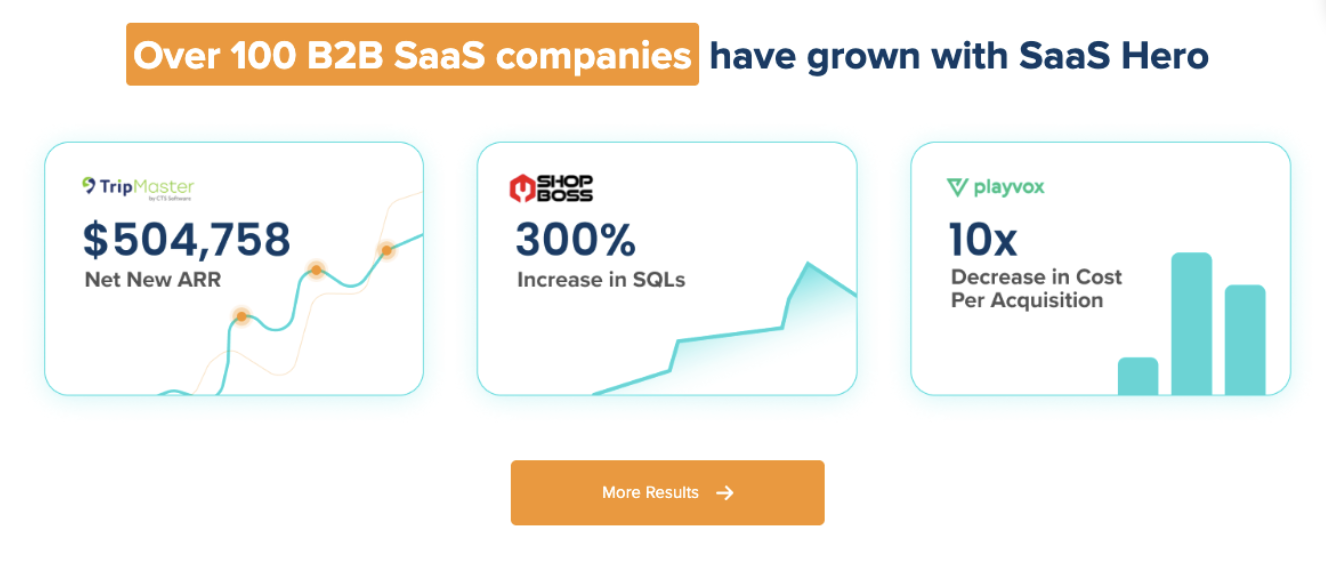
Over 100 B2B SaaS Companies Have Grown With SaaS Hero
That gap is where SaaSHero fits. SaaSHero operates as the outsourced inbound growth team for B2B companies, owning strategy and execution across paid media, creative, landing pages, and reporting, all tied to CRM revenue data rather than form-fill counts. The team has operationalized this system across 100+ B2B SaaS companies and managed over $60M in lifetime ad spend.
Over 100 B2B SaaS companies have grown with saas here
You need a partner who owns paid acquisition, not just someone who runs ads. SaaSHero steps into that owner role so you do not have to manage another vendor.
Start a discovery call to learn how SaaSHero can implement this GTM Operating System for your company.
Frequently Asked Questions
What is the difference between a GTM strategy and a GTM Operating System?
A GTM strategy is a plan that defines your ICP, positioning, channels, and motion at a point in time. A GTM Operating System is the ongoing mechanism that keeps that strategy current. It consists of weekly revenue standups, two-week experimentation sprints, monthly reviews, and quarterly ICP and messaging refinements, all running against a unified data baseline. The strategy sets direction. The operating system ensures you adjust course as conditions change. Most B2B SaaS companies have a strategy, but very few have a true operating system, which is why their plans often become obsolete soon after they are written.
How often should a B2B SaaS company update its ICP?
Quarterly works well for a formal ICP review, while inputs should be collected continuously. Every week, your revenue standup surfaces win and loss signals. Every month, your revenue review includes a cohort analysis that shows which segments retain best and which churn fastest. The quarterly ICP review takes those accumulated signals and recomputes your ICP definition based on LTV:CAC, CAC payback, and NRR by segment. The output is a refined ICP that reflects where your highest-quality revenue actually comes from. A strong ICP names a buyer in context, including role, company shape, trigger event, and current workaround, instead of a broad label like “B2B SaaS companies.”
What is the right hypothesis format for a GTM experimentation sprint?
What triggers should prompt a GTM motion change as a company scales from $10M to $50M ARR?
Several signals consistently indicate that the current GTM motion has reached its ceiling. First, CAC payback exceeds 18 months, which means the channel’s unit economics no longer justify scaling. Second, pipeline coverage drops below 3x forward quota, indicating that the top of funnel is insufficient for the committed number. Third, sales cycle length increases by more than 20% quarter-over-quarter without a corresponding increase in ACV, which suggests positioning or qualification has drifted. Fourth, a single channel accounts for more than 50% of pipeline at $30M+ ARR, which creates a concentration risk. Fifth, win rates decline despite strong pipeline volume, indicating that positioning has slipped relative to competitors. Sixth, NRR drops below 100%, which means the company is churning more revenue than it expands and is likely acquiring the wrong customers. Any one of these triggers warrants a GTM reset. Two or more in the same quarter require an architectural review rather than a tactical adjustment.
How does SaaSHero implement a GTM Operating System for B2B SaaS clients?
SaaSHero operates as the outsourced inbound growth team, owning strategy and execution across paid media, creative, landing pages, attribution, and reporting. The engagement begins with a detailed onboarding document that captures ICP, competitive landscape, positioning, pain points, and existing performance data. From that foundation, SaaSHero builds the unified data baseline: conversion tracking is rebuilt from scratch, CRM lifecycle stage events are connected to the ad platforms, and reporting is configured in Looker Studio and HubSpot to show pipeline, CAC, and payback period rather than form-fill counts. The operating cadence is fixed at the start, with weekly performance updates, bi-weekly strategy calls, monthly competitor analysis, and quarterly budget reviews. Experimentation runs continuously, and the Senior Account Strategist owns the test agenda instead of waiting for the client to supply it. The fee is indexed to total monthly ad spend rather than channel count, so channel-mix recommendations are never constrained by what the invoice can absorb. Everything built during the engagement—accounts, files, dashboards, and creative—belongs to the client throughout and at exit.
Includes unlimited revisions as well as custom written copy (from a human, not ChatGPT). We’ll send a first draft in Figma and you can request as many edits as you’d like. We won’t ever activate any landing pages until you give us the final OK