





Written by: Aaron Rovner, Founder, Saas Hero | Last updated: September 4, 2026
Key Takeaways
- DevTools marketing succeeds through technical credibility, documentation, and product-led growth, not traditional advertising or sales sequences.
- Developers evaluate tools through code, docs, and peer trust, so bottom-up adoption and activation metrics become the primary success indicators.
- This 90-day DIY playbook focuses on strong documentation, consistent technical content, community engagement, and coordinated launches on platforms like Hacker News.
- Key metrics include activation rate (20–40%), time-to-first-value (under 5–15 minutes), and trial-to-paid conversion around 17%, tracked server-side to bypass ad blockers.
- When organic traction proves the model, SaaSHero can scale your paid acquisition engine. Schedule a strategy session to see if your results justify investment.
Why DevTools Marketing Differs from Traditional SaaS
Developers are both the users and the buyers. They research independently, distrust vendor hyperbole, and evaluate through hands-on experimentation, not sales calls. The buying cycle runs bottom-up. Individual developers adopt a tool, then it spreads within the organization. This creates product-led growth (PLG), where the product experience, docs, onboarding, and time-to-first-success act as the primary marketing channel.
96% of developers assume marketing is dishonest before reading it, and peer recommendations and community discussions are the top ways developers discover new tools, outperforming search engines, ads, and social media combined.
| Dimension | DevTools Marketing | Traditional SaaS Marketing |
|---|---|---|
| Primary audience | Individual developers (bottom-up) | Business buyers (top-down) |
| Trust source | Code, docs, peer recommendations | Sales relationships, brand, case studies |
| Key content | Tutorials, benchmarks, migration guides | Whitepapers, webinars, ROI calculators |
| Core metric | Activation rate, time-to-first-value | MQLs, demo requests |
| Sales motion | Product-led, self-serve | Sales-led, demo-driven |
Build a Developer-First Foundation (Weeks 1–2)
Your first priority is a product that feels discoverable and usable from day one. Developers judge your tool by its docs before they ever talk to sales. Documentation is the single highest-converting surface in developer marketing. A docs site that converts at 8% on organic search can replace the need for an early sales team.
Documentation as your best marketing tool. Create clear, concise docs with quickstart guides, API references, and runnable examples. Developers who explore five or more documentation pages in their first session convert at 340% higher rates than those who view just one page. PostHog’s docs provide a strong model. They include interactive demos and clear setup instructions that take developers from zero to value in minutes.
GitHub presence. Open-source your repo where possible. Maintain a README that functions as a landing page with a clear value proposition, installation steps, and visuals. A great README, contribution guidelines, and responsive issue engagement signal an actively maintained product. GitHub stars and forks then act as social proof that compounds over time.
Time-to-first-success. Aim for a developer to go from signup to “aha” in under 5 minutes. Stripe and Twilio achieve this with sandbox accounts and test API keys available immediately after signup. Vercel enables deployment in under 60 seconds. When time-to-first-value stretches beyond 15 minutes for simple integrations, abandonment rates climb quickly.
Onboarding checklist for Weeks 1–2. Each item removes friction between a developer and their first success. Require only email or GitHub OAuth for signup, with no credit card and no sales call. Provide a copy-paste quickstart with a working code sample. Offer a sandbox or test environment immediately. Document the first-use path clearly. Track the activation event, such as the first API call or first deploy, so you can see whether onboarding works.
- Signup requires only email or GitHub OAuth, no credit card or sales call
- Copy-paste quickstart with working code sample
- Sandbox or test environment available immediately
- Clear documentation of the first-use path
- Analytics tracking the activation event (first API call, first deploy)
Content Marketing That Works (Weeks 3–6)
Technical content becomes your most durable channel for developer marketing. A well-written tutorial can drive signups for months or years. Focus on content that solves real problems and shows your tool in a realistic context.
Three content types consistently drive high-intent traffic:
- Tutorials and how-to guides: Step-by-step posts that use your tool to solve a common problem. Example format: “How to add authentication to a Next.js app using [your tool].”
- Benchmarks and comparisons: “Our tool vs. [competitor]” content attracts high-intent traffic from developers actively evaluating solutions.
- Migration guides: “Moving from [Competitor] to [Your Tool]” content captures high-intent users mid-evaluation.
One deep, original post per week outperforms five thin ones. Content should be written by engineers or technical marketers who speak the language. Developers quickly spot the difference between someone who shows up to add value and someone who shows up only to promote a product.
Distribution. Publish on your blog first, then repurpose across Dev.to, Hashnode, and relevant subreddits. One founder spent 8 hours writing a 3,400-word article and 2 hours repurposing it into a Twitter thread, Reddit post, and Hacker News submission. The piece was later translated by a Chinese publication and included in a coding curriculum.
DevRel on a Budget (Weeks 3–8)
Developer relations at this stage can run without a full-time advocate. A senior developer advocate costs $180K–$250K all-in annually in the US, and Docsio recommends pre-seed and seed-stage startups avoid that hire until product-market fit. During these early months, the founder acts as the advocate by writing, answering questions, and building credibility in the communities where target users gather.
Community engagement. Answer questions on Stack Overflow, Reddit (r/programming, r/webdev, r/devops), and relevant Discord or Slack communities. Follow the 20:1 ratio of helpful contributions to product mentions. One client spent six months answering Stack Overflow questions about database optimization without mentioning their product. When they launched, the community already recognized their expertise.
Newsletters. Sponsor or contribute to niche developer newsletters. Costs typically range from $500–$2,000 per issue for publications like JavaScript Weekly, Python Weekly, or Bytes. These reach highly targeted audiences of developers who actively read technical content.
Conferences and meetups. Speaking slots at events like KubeCon or Strange Loop can lead to sustained adoption. Virtual talks provide a lower-cost alternative that still builds credibility.
| Channel | Engagement Approach | Time Investment |
|---|---|---|
| Stack Overflow | Answer questions with technical depth | 2–3 hours/week |
| Participate genuinely and build karma first | 3–4 hours/week | |
| Discord/Slack | Join relevant communities and help members | 2–3 hours/week |
| Developer newsletters | Sponsor placements or contribute content | $500–$2,000/issue |
Launch Strategy Across HN, Product Hunt, and Reddit (Weeks 7–10)
A coordinated launch across platforms where developers congregate can multiply your reach. A multi-platform launch can bring 5–6x more users than a single-platform launch. Timing and engagement often matter more than the product alone.
Hacker News. Share your story, not just a link. Use the “Show HN” format with a literal, specific title under 80 characters. Post Tuesday through Thursday between 7–10 AM PT. Include a detailed first comment explaining the problem, what makes your approach different, and honest limitations. Respond to every comment within 15 minutes for the first 24–48 hours. A well-managed comment section can keep a front-page post visible for 18–24 hours, while a post where the founder disappears often fades in 4–6 hours. A successful launch can drive 5,000–30,000 unique visitors and 500–2,000 GitHub stars.
Product Hunt. Prepare a compelling listing with a demo video under 60–90 seconds and a benefit-focused tagline under 60 characters. Launch at 12:01 AM PT on Tuesday–Thursday. Early upvotes in the first hour carry about 4x more weight in the algorithm. Respond to every comment within 15–30 minutes. Product Hunt traffic often skews less qualified for devtools, so treat it as a visibility play while relying on HN and niche communities for deeper impact.
Reddit. A single well-crafted post in the right subreddit can lead to 200–500 unique installs within 48 hours. Follow the 90/10 rule, where 90% of your activity is non-promotional and 10% is product promotion. Post Tuesday–Thursday between 9 AM–12 PM EST.
Launch checklist. Each week builds toward a coordinated launch that feels prepared, not rushed. In Week 7, prepare your demo video, screenshots, and founder story as core launch assets. In Week 8, build an email list of early users and supporters who can upvote and comment on launch day. In Week 9, draft your HN title and first comment and prepare your Product Hunt listing. In Week 10, coordinate timing across platforms and respond to every comment to sustain momentum.
- Week 7: Prepare demo video, screenshots, and founder story
- Week 8: Build email list of early users and supporters
- Week 9: Draft HN title and first comment, prepare PH listing
- Week 10: Launch day, coordinate timing across platforms and respond to every comment
Metrics That Matter (Ongoing)
For devtools, activation and revenue matter more than vanity metrics like page views or raw signups. Developer tools average a 17% trial-to-paid conversion rate, nearly double the 9% for general SaaS, but only when you track the right signals.
Key metrics to track:
- Activation rate: Percentage of signups who complete a key action such as the first API call or first deploy. Healthy range: 20–40%.
- Time-to-first-value: Time from signup to first meaningful success. Target under 5 minutes for simple tools, 5–15 minutes for auth or API libraries, and 15–45 minutes for framework integrations.
- Trial-to-paid conversion: Aim to match the typical devtools average around 17%, which sits well above general B2B SaaS.
- Product Qualified Leads (PQLs): Users who hit usage thresholds. Datadog defines a PQL as sending 100+ monitoring events over 7+ days. PQLs convert at 3–5x the rate of MQLs.
- Retention and expansion: Developer tools often average 110–130% NDR, driven by usage growth.
Setting up analytics. Use product analytics tools like PostHog or Amplitude to track activation events server-side. Up to 70% of developers block client-side analytics with privacy browsers or ad blockers. Track documentation engagement such as scroll depth and code block copies as leading indicators. Measure your marketing by pipeline and closed revenue, not by form fills alone.
Budgeting for DevTools Marketing
Before you start, align your budget with your stage and this 90-day plan. Here are realistic cost ranges at different spend levels, mapped to the phases of this playbook.
| Budget Level | Allocation | Expected Outcomes |
|---|---|---|
| DIY ($0) | Founder time: content, community, SEO | 3–6 months to meaningful organic traction |
| $1,000/month | Newsletter sponsorships ($500–$2,000/issue), small ads on Reddit, SEO tools | 10,000–50,000 impressions, 50–200 qualified leads |
| $5,000/month | Part-time freelancer for content or DevRel, conference sponsorships, daily.dev ads | 100,000+ impressions, 500–1,000 leads |
| $10,000+/month | Full-service agency or in-house hire | Scaled multi-channel acquisition |
Specialized devtech marketing retainers typically range from $5,000 to $25,000+ per month depending on scope. Content-only support usually runs $5K–$12K monthly. Full-service support covering content, strategy, DevRel, and demand generation usually runs $12K–$25K+. Pre-revenue startups commonly budget $1,000–$5,000 monthly, while seed-stage companies often allocate $5,000–$15,000.
If you feel ready to scale beyond DIY, an outsourced growth team like SaaSHero can own your paid media, creative, and landing pages while optimizing against CRM revenue data. Talk with our team to see whether your traction supports a larger investment.
90-Day Action Plan: Week-by-Week Calendar
- Weeks 1–2: Foundation
- Set up docs site with quickstart, API reference, and one end-to-end tutorial
- Create GitHub repo with polished README
- Install product analytics tracking activation events
- Write first blog post in tutorial format
- Success metric: Docs live and 100+ unique visitors to docs
- Publish two technical posts, one tutorial and one comparison or benchmark
- Engage on Reddit and Stack Overflow for 2–3 hours each week
- Launch a newsletter for early users
- Success metric: 500+ organic visits and 20+ community contributions
- Create a benchmark or comparison post targeting competitor keywords
- Start a Discord community and invite 50–100 developers personally
- Reach out to five developers for product feedback
- Success metric: 50+ Discord members and three or more substantive feedback sessions
- Prepare Hacker News launch assets including title, first comment, and demo
- Create Product Hunt listing with demo video
- Build an email list of supporters for launch day
- Success metric: 200+ email subscribers and all launch assets ready
- Launch on Hacker News between Tuesday and Thursday, 7–10 AM PT
- Launch on Product Hunt at 12:01 AM PT
- Respond to every comment within 15–30 minutes
- Follow up with leads from launch traffic
- Success metric: 5,000+ visitors, 500+ GitHub stars, and 100+ signups
- Review activation rate, time-to-first-value, and trial-to-paid conversion
- Double down on channels that performed best
- Plan next quarter’s content and community calendar
- Evaluate whether traction justifies scaling paid acquisition with a partner
- Success metric: Clear understanding of what works and a documented plan for the next quarter
When to Get Help: Scaling Beyond DIY
After 90 days, you should see which channels move the needle. If traction looks promising, the next challenge becomes scaling what works while you keep building the product.
SaaSHero operates as an outsourced inbound growth team for B2B companies. One team owns strategy and execution across paid media, creative, landing pages, and reporting, so you avoid managing multiple vendors. They optimize everything against CRM revenue data rather than form-fill counts. With over $60M in ad spend managed for SaaS companies and Google Premier Partner status (top 3% of agencies), they have proven this model across 100+ B2B companies.

SaaS Hero: The client-friendly SaaS marketing agency that proves pipeline If you feel ready to invest in paid acquisition to accelerate growth, SaaSHero can take that work off your plate and arrive with ideas, testing plans, and creative. Get a personalized growth assessment to see whether your traction supports scaling.

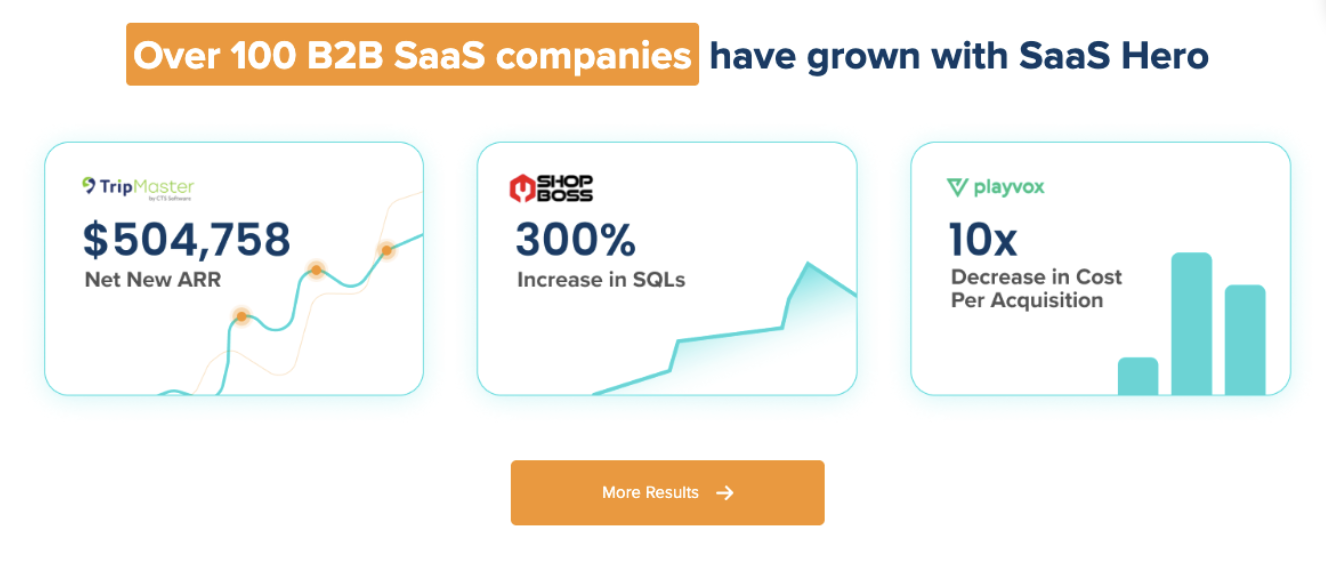
Over 100 B2B SaaS Companies Have Grown With SaaS Hero Conclusion: What You Have After 90 Days
By the end of this 90-day playbook, you will know which messages resonate and which channels bring real users. You will have baseline metrics for activation, time-to-first-value, and trial-to-paid conversion, along with a repeatable content and community engine.
Use these insights to refine your roadmap and decide how aggressively to invest. If organic traction and early revenue look strong, consider layering on paid acquisition with a specialist partner so you can focus on shipping product.
FAQ
How much does devtech marketing cost?
At the DIY level, costs stay limited to founder time. Expect 10–15 hours weekly for content, community, and launch activities. With a $1,000–$5,000 monthly budget, you can add newsletter sponsorships at $500–$2,000 per issue, SEO tools, and part-time freelance support. Full-service agency retainers for devtools marketing typically range from $5,000–$25,000+ monthly depending on scope. Pre-revenue startups commonly budget $1,000–$5,000 monthly, while seed-stage companies often allocate $5,000–$15,000. Content-only retainers usually run $5K–$12K monthly, and full-service support covering content, strategy, DevRel, and demand generation usually runs $12K–$25K+.
How long until results?
Paid acquisition can generate early pipeline within 30–60 days. Organic technical content and developer relations usually take 3–6 months to compound meaningfully. SEO often requires 6–12 months for significant traction. Most organic channels need 60–90 days of consistent effort before they produce repeatable results. Reddit can generate results within weeks, LinkedIn thought leadership often takes 30–60 days, and content marketing plus SEO typically take 3–6 months. Developer marketing rewards patience and consistency over quick wins.
Do I need a developer advocate?
Early on, founders can and should act as the developer advocate by writing content, answering community questions, and building credibility. A senior developer advocate costs $180K–$250K all-in annually in the US, and Docsio recommends pre-seed and seed-stage startups delay that hire until product-market fit. Consider hiring when you have 50–100 active users and budget for a full-time role. The first marketing hire should usually be a technical content marketer or developer advocate who can write code.
What is the best channel for devtools?
The right channel depends on your product, but content and community form the foundation. Technical content and SEO provide compounding returns with 3–9 month impact. Community engagement on Reddit, Discord, and Stack Overflow builds trust with 1–4 week time-to-results. Documentation remains the highest-converting surface and often produces more pipeline than your marketing site. For paid channels, newsletter sponsorships and developer-focused platforms like daily.dev often outperform LinkedIn and display ads, which many developers block or ignore. Dark social channels like Slack and Discord account for 52% of developer tool discovery, so community investment pays off even when attribution looks fuzzy.
How is devtools marketing different from traditional SaaS?
Developers act as both users and buyers, research independently, trust peers over salespeople, and evaluate through hands-on experimentation. The buying cycle runs bottom-up as individual adoption spreads within organizations. Documentation and product experience serve as the primary marketing channels. Metrics focus on activation and product usage instead of MQLs and demo requests. Generic B2B tactics such as gated content, cold outreach, and buzzword-heavy copy often damage credibility with technical audiences. Developers need to reach a working “hello world” in minutes. Any tool that inserts a sales call between them and the product will be abandoned quickly.
Read Next