





Written by: Aaron Rovner, Founder, Saas Hero | Last updated: September 6, 2026
Key Takeaways
- FleetTech ABM is a focused B2B marketing strategy that targets high-value fleet operator accounts with personalized, multi-channel campaigns instead of broad demand generation.
- Fleet-tech buyers are operations-focused, data-driven, and committee-driven, which makes account-based approaches 2–3x more effective than lead-centric tactics.
- A disciplined ABM program limits the target list to 50–300 accounts, maps the full buying committee, and delivers hyper-personalized content across LinkedIn, email, direct mail, and intent display.
- Success depends on sales-marketing alignment, clean CRM tagging, and measuring pipeline created, win rate, and revenue influenced instead of MQLs or form fills.
Schedule a discovery call with SaaSHero to build and execute a FleetTech ABM program that drives predictable pipeline.
The FleetTech ABM Opportunity And The Confusion
Search results for “FleetTech ABM” often highlight ABM Industries, the Fortune 500 facilities management company, and EV fleet electrification content. Neither helps a marketing leader at a telematics or fleet management SaaS company plan pipeline growth.
This article focuses on FleetTech ABM as account-based marketing for fleet technology vendors. The approach treats high-value fleet operators as markets of one and aligns sales and marketing around a defined account list. The goal is to compress long sales cycles and win deals that broad demand generation misses.
Fleet-tech SaaS deals involve 3–7 stakeholders, run 4–18 months, and carry ACVs that justify significant marketing investment. Nearly 80% of surveyed organizations in Demand Gen Report’s 2026 ABM Benchmark Survey run ABM, and 56% prioritize new account acquisition with it. For fleet-tech vendors, ABM provides a way to break through a crowded market where buyers are operations-focused, data-driven, and skeptical of new technology.
Talk to SaaSHero about your FleetTech ABM strategy.
What FleetTech ABM Is And How It Differs From ABM Industries
FleetTech ABM is a revenue strategy where marketing and sales align to target a defined list of high-value fleet operator accounts. Each target account is treated as its own market, rather than casting a wide net. The full buying committee is mapped, and hyper-personalized content, ads, and outreach reach each stakeholder.
The table below clarifies how this strategy differs from ABM Industries, which often appears in search results but serves a completely different purpose.
| Comparison | FleetTech ABM (Marketing Strategy) | ABM Industries (Facilities Management) |
|---|---|---|
| Definition | Account-based marketing for fleet technology SaaS vendors | Fortune 500 facilities management and EV infrastructure company |
| Industry | B2B software (telematics, fleet management, route optimization) | Facilities services, janitorial, parking, EV charging |
| Relevance to fleet-tech marketers | The strategy needed to win fleet operator accounts | A naming collision that confuses search results |
71% of B2B marketing practitioners use an ABM strategy, and 40% integrate it directly with demand generation. ABM aligns sales and marketing, shortens sales cycles, and increases win rates by focusing resources where they matter most.
Why ABM Matters For Fleet-Tech SaaS In 2026
Fleet-tech buyers share traits that make broad demand generation inefficient and make ABM a strong fit:
- Operations-Focused: Fleet managers oversee 25–35% of an organization’s operating budget in transportation and logistics. They care about uptime, cost per mile, and compliance, not feature lists.
- Data-Driven: Fleet managers use telematics data to shift from reactive to predictive maintenance. They test vendor claims against their own operational data.
- Committee-Driven: As noted earlier, these purchases involve multiple stakeholders across Fleet Management, Procurement, Finance, Sustainability, and Operations.
Buying-group-level targeting achieves 2–3x higher win rates than lead-centric targeting, based on an analysis of 1,452 tenants, 429,634 ad campaigns, and 9.7 million sales interactions. These characteristics make ABM a natural fit for fleet-tech, where the buying group is large and operationally diverse.
In 2025, 94% of B2B buyers used an LLM somewhere in their buying journey, and the average B2B buying cycle compressed from 11.3 months to 10.1 months as AI accelerated research. Buyers arrive more informed and more skeptical. ABM supports personalized education that builds trust, while generic messaging gets ignored.
Step-By-Step FleetTech ABM Framework
Step 1: Identify And Prioritize Target Accounts
Start by building the account list from firmographic and technographic criteria specific to fleet-tech. Every account on the list needs a clear, defensible reason for inclusion.
The table below shows how to score accounts as ideal or good fits across five key criteria.
| Targeting Criteria | Ideal Fit | Good Fit |
|---|---|---|
| Fleet size | 100+ vehicles | 50–100 vehicles |
| Industry vertical | Transportation, logistics, field services | Construction, utilities, government |
| Current telematics usage | No incumbent or contract expiring <12 months | Using competitor with known dissatisfaction signals |
| Revenue | $50M+ | $20M–$50M |
| Technology stack | Modern (CRM, ELD integration ready) | Legacy systems with integration pain |
Disciplined ABM programs operate at 50–300 named accounts per active program, allowing 3–6 hours of cumulative attention per account per quarter. Programs targeting 500+ accounts deliver roughly 40 minutes of attention per account per quarter, which functions as filtered paid acquisition rather than ABM.
Common Mistake: Targeting accounts too small to justify the effort. ABM is not an efficient model for organizations where the average deal size is below roughly $20,000–$30,000 annually, because the cost floor for personalization and data infrastructure stays relatively constant regardless of account size.
Step 2: Map The Buying Committee
A fleet software purchase involves distinct roles with different pain points. Map these roles and their needs before launching any campaign.
The table below outlines the primary pain points and resonant messages for each key role in the buying committee.
| Role | Primary Pain Points | Message That Resonates |
|---|---|---|
| Fleet Manager | Admin time, compliance risk, driver adoption below 60% | “Reduce weekly admin time by 8+ hours with automated reconciliation” |
| VP Operations | Efficiency, cost per mile, utilization | “Cut fuel costs 15% with AI-powered route optimization” |
| CFO | Needs a business case covering ROI, budget, and payback period before the purchase moves forward | “Payback in under 12 months with measurable ROI” |
| IT Director | Integration, security, data quality | “Native integrations with your existing stack, enterprise-grade security” |
Common Mistake: Aligning with sales on account selection only after the list is built. When marketing builds the account list without sales input and sales ignores the list, the coordinated surround effect breaks. To prevent this, build the list jointly, hold weekly ABM standups, and share CRM dashboards so both teams stay aligned on the same accounts.
Step 3: Develop Personalized Campaigns
Personalized content is the top ROI-driving ABM tactic, cited by 47% of practitioners. Tailor messaging and creative for each persona and account tier.
Role-based personalization yields a 2–3x higher open rate and 3–5x higher click rate compared to generic email. The practical approach uses 3–5 use-case templates per vertical instead of hand-crafting unique content for every account.
Even with templates, a common mistake is falling back on generic messaging. Common Mistake: Using generic messaging that fails to address fleet-specific pain points. “Real-time GPS tracking” is table stakes, not a differentiator. Instead, lead with operational wins such as reconciliation time saved, compliance risk reduced, and cost per mile improved.
Step 4: Execute Multi-Channel Outreach
FleetTech ABM works best with LinkedIn account-targeted ads, personalized email sequences, direct mail for Tier 1 accounts, and intent-triggered display. A 4-touch sequence beats a 12-touch blast on the same accounts, and the cheapest wins come from sequencing channels rather than adding new ones.
This sequencing is what separates true ABM from single-channel outreach. Single-channel “ABM” is just targeted outbound with a different label. True ABM requires a multi-channel surround effect where the economic buyer sees LinkedIn Ads, the champion receives outbound email, and the technical buyer finds technical content.
Common Mistake: Running conversion campaigns against cold audiences on LinkedIn. LinkedIn is the only paid social channel worth ABM dollars, but ad recall on company-list campaigns runs 2–3x higher than persona-only campaigns, and the account list is what makes it ABM.
Step 5: Measure And Improve Your Program
Define the metrics that matter before launch so the team aligns on success. Mature ABM programs convert marketing-qualified accounts to pipeline at a median rate of 22.33%, versus 14.19% for less-mature programs.
Track account engagement, buying committee coverage, and pipeline velocity instead of form fills. ABM accounts must be tagged in the CRM from day one by tier to enable win rate and velocity comparisons, and without clean tagging, these analyses are impossible to run later.
Even with clean tagging, teams often measure the wrong things. Common Mistake: Measuring ABM on demand gen metrics like cost per lead or click-through rate. Only 29% of ABM teams measure with ABM-aligned metrics, while the rest report MQLs. Pipeline created, win rate versus non-ABM accounts, and revenue influenced are the metrics that matter.
FleetTech ABM Vs. Demand Generation: Choosing The Right Motion
To decide between ABM and demand generation, compare how each approach handles goal, audience, tactics, metrics, and fit. The table below summarizes the key differences.
| Comparison | FleetTech ABM | Demand Generation |
|---|---|---|
| Goal | Win specific high-value accounts | Generate broad lead volume |
| Audience | Named account list (50–300 accounts) | Broad ICP-matched audience |
| Tactics | Personalized multi-channel campaigns | Scalable content, ads, email |
| Metrics | Pipeline created, win rate, revenue | Leads, MQLs, cost per lead |
| Best for | High ACV ($25k+), long sales cycles, defined ICP | Low ACV, self-serve motion, broad market |
ABM does not fit every business model. ABM is appropriate for deals above roughly $20,000–$30,000 annually with multi-stakeholder buying processes, which aligns with the ACV threshold discussed in Step 1. For fleet-tech SaaS with high ACV and a defined ICP, ABM usually provides the more efficient choice. For companies with a broad ICP and low ACV, demand generation may produce better unit economics. For a deeper look at demand generation execution for fleet-tech, see SaaSHero’s FleetTech lead generation resources.
Common Pitfalls And How To Avoid Them
Pitfall 1: Treating ABM As A Marketing-Only Initiative. This fails because ABM requires sales alignment from day one. Marketing-developed ABM programs that sales does not actively participate in produce “personalized advertising with a sales team that chose not to show up.” Refer back to the joint list-building and standup cadence described in Step 2 to keep both teams engaged.
Pitfall 2: Using Generic Messaging. Fleet-tech buyers are operations-focused and skeptical. Fleet managers do not leave tracking software for better features; they leave for fewer headaches. As noted in Step 3, lead with operational wins and fleet-specific pain points such as compliance, cost per mile, driver adoption, and integration gaps.
Pitfall 3: Ignoring Data Quality And CRM Hygiene. Poor data hygiene can reduce ABM campaign ROI by up to 30%. Validate contact data before launch, tag ABM accounts in your CRM from day one, and maintain a clean target account list with a named owner.
Pitfall 4: Failing To Measure Beyond Engagement. Engagement alone does not prove pipeline impact. A single MQL from a target account tells you almost nothing; it could be the economic buyer downloading a pricing guide or an intern filling out a form for a free ebook. That is why you should track the metrics outlined in Step 5 and compare them against a control group of non-ABM accounts to see the true impact.
How SaaSHero Executes Your FleetTech ABM Strategy
A successful FleetTech ABM program requires specialized skills in paid media, creative, landing pages, and CRM-connected reporting. SaaSHero serves as the outsourced inbound growth team for B2B companies, with one team owning strategy and execution across paid media, creative, landing pages, and reporting, and optimizing against CRM revenue data instead of form-fill counts.

Key capabilities for FleetTech ABM include:
- Paid Media Expertise: Strategy and management across LinkedIn, Google Ads, and other channels, with channel-mix recommendations based on evidence rather than agency convenience.
- In-House Creative Team: Concept, copy, and design produced by full-time specialists who understand B2B SaaS messaging, without reliance on a contractor bench.
- Landing Page Ownership: Design, build, and A/B testing of purpose-built pages so campaigns drive to destinations that convert.
- CRM-Driven Optimization: Attribution and reporting inside your CRM, optimizing toward qualified pipeline and revenue instead of form submissions.
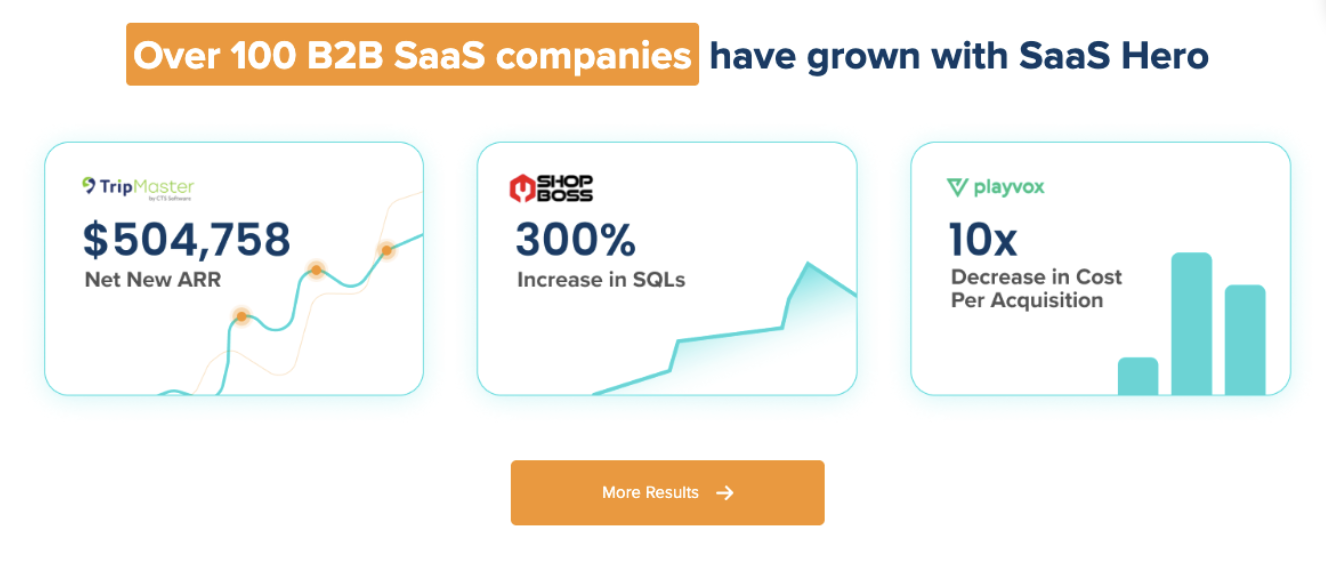
SaaSHero has managed over $60M in ad spend for B2B SaaS companies, including those in fleet-tech and adjacent verticals. Rather than hiring an in-house ABM team, you can use SaaSHero’s full-time specialists to own strategy, execution, and reporting.
Launch your FleetTech ABM program with a discovery call.
The Future Of FleetTech ABM
FleetTech ABM is a powerful strategy for fleet technology SaaS and works best with a clear definition, a structured framework, and the right execution partner. The confusion with ABM Industries distracts from the real opportunity, which lies in focusing sales and marketing resources on the accounts that matter most.
As AI continues to reshape both fleet management and B2B buying, ABM’s role will grow. In 95% of 2025 deals, buyers purchased from one of the vendors on their original shortlist, and a buying group’s early favorite went on to win the deal 77% of the time. The vendors who win will be those who map the buying committee, personalize every touchpoint, and measure against pipeline and revenue instead of vanity metrics.
Book a call with SaaSHero to turn your FleetTech ABM strategy into predictable pipeline.
Frequently Asked Questions
What Does ABM Stand For In Fleet-Tech?
In fleet-tech, ABM stands for account-based marketing, a B2B strategy that focuses sales and marketing resources on a defined set of high-value fleet operator accounts using personalized campaigns to drive pipeline and revenue. It does not relate to ABM Industries, the Fortune 500 facilities management company. The naming collision creates a search-result issue, not a strategic one.
How Is FleetTech ABM Different From ABM Industries?
FleetTech ABM is a marketing strategy for fleet technology SaaS vendors targeting fleet operators, including telematics companies, fleet management software providers, and route optimization platforms. ABM Industries is a Fortune 500 facilities management company operating in janitorial services, parking, and EV charging infrastructure. The two share no strategic overlap, and ABM Industries content does not help a marketing leader at a fleet-tech SaaS company searching for ABM guidance.
How Long Does It Take To See Results From A FleetTech ABM Program?
ABM programs typically need 3–6 months to show real engagement signals and 12–18 months for full pipeline impact. The first 30 days cover setup, including onboarding, tracking, campaign builds, and audience construction. Days 31–60 narrow the account list and begin landing page testing. Day 90 serves as a validation gate with enough data to judge whether the channel, structure, and messaging thesis are sound.
Mid-market ABM usually shows results faster than enterprise ABM. Judging a program on 30-day lead counts often kills programs prematurely. Fleet-tech sales cycles run 4–18 months, so the measurement window must match the buying cycle.
What Metrics Should I Track For FleetTech ABM?
Track account-level metrics instead of lead-level metrics. The core set includes buying committee coverage, account engagement score, pipeline created from target accounts, win rate versus non-ABM accounts, and revenue influenced. Pipeline velocity, which measures how fast target accounts move from first engagement to closed-won compared to non-ABM accounts, provides a strong leading indicator.
Avoid reporting MQL volume, cost per lead, ad impressions, and click-through rate to leadership. Those metrics measure activity rather than buying behavior and misrepresent ABM’s contribution in a multi-stakeholder, multi-month sales cycle.
Can SaaSHero Help With ABM For My Fleet-Tech Company?
SaaSHero supports fleet-tech companies with an outsourced inbound growth team that brings expertise in paid media, creative, landing pages, and CRM-connected reporting, which are the core capabilities needed to execute FleetTech ABM end to end. With over $60M in managed ad spend for B2B SaaS, SaaSHero owns strategy, execution, and optimization against CRM revenue data instead of form-fill counts.

The team includes in-house designers and copywriters, so creative production and landing page testing move without a contractor queue. Channel-mix recommendations rely on evidence, and the flat retainer structure means adding or shifting channels carries no fee consequence, which keeps budget allocation a purely strategic decision.