





Key Takeaways
- B2B SaaS teams need tight unit economics with CAC payback under 90 days and LTV:CAC above 3:1 in today’s capital markets.
- The 9-step full funnel GTM framework covers ICP definition, TOFU-MOFU-BOFU activation, revenue attribution, retention, and ongoing refinement for scalable ARR growth.
- Percentage-of-spend agency models clash with efficiency goals, while flat-fee, revenue-aligned partners like SaaSHero support sustainable growth.
- High-impact tactics include competitor conquesting, ABM nurturing, multi-touch attribution, and a metrics focus on Net New ARR instead of vanity metrics.
- Case studies show $500k+ ARR gains and 80-day paybacks; schedule a discovery call with SaaSHero to apply this framework to your SaaS growth.
9-Step GTM Framework for Capital-Efficient SaaS Growth
B2B SaaS GTM success rests on five pillars: data-driven ICP clarity, full-funnel orchestration across TOFU-MOFU-BOFU-Retention, revenue-first attribution, tight cross-functional alignment, and relentless efficiency gains. The framework centers on CAC payback, LTV:CAC above 3:1, and Net New ARR instead of surface metrics like impressions or click-through rates.
|
Stage |
Tactics |
Metrics |
SaaSHero Edge |
|
1. ICP Definition |
Data-driven profiling, intent signals |
ICP fit rate, conversion quality |
Vertical specialization (HR Tech, Cybersecurity) |
|
2. Account Selection |
Intent data, technographic scoring |
Account engagement, pipeline velocity |
Competitor conquesting prioritization |
|
3. TOFU Activation |
SEO, content, paid search |
Qualified traffic, engagement depth |
Competitor conquesting campaigns |
|
4. MOFU Nurturing |
ABM sequences, case studies |
MQL-to-SQL conversion, velocity |
Personalized landing pages |
|
5. BOFU Conversion |
Demo optimization, trial flows |
Trial-to-paid, sales cycle length |
CRO-optimized conversion paths |
|
6. Revenue Attribution |
Multi-touch tracking, CRM integration |
Net New ARR, pipeline attribution |
GCLID-to-CRM revenue tracking |
|
7. Retention Focus |
Onboarding, expansion campaigns |
NRR, expansion MRR, churn |
Deep SaaS lifecycle metric expertise |
|
8. Cross-Functional Alignment |
Shared KPIs, regular cadences |
Sales-marketing alignment score |
Embedded team integration |
|
9. Continuous Optimization |
A/B testing, performance analysis |
Efficiency improvements, ROI |
Weekly performance updates |
This framework translates theory into concrete playbooks and repeatable processes. Companies that adopt it often see sharp metric lifts, with some achieving $1M+ ARR generated in a single quarter through disciplined GTM execution. Book a discovery call to apply these frameworks through SaaSHero’s flat-fee, month-to-month partnership model.
Why Traditional Agencies Undercut SaaS Efficiency
The current B2B SaaS marketing environment exposes structural flaws in legacy agency models. Most agencies bill 10–20% of ad spend, which encourages higher budgets instead of better efficiency. That incentive structure conflicts with 2026 realities, where teams need CAC payback under 90 days and durable unit economics.
|
Model |
Billing |
Contract |
Reporting Focus |
Alignment |
|
Traditional Agency |
% of Spend (10-20%) |
6-12 months |
Vanity metrics (CTR, impressions) |
Misaligned |
|
SaaSHero Model |
Flat fee ($1,250+ entry) |
Month-to-month |
Net New ARR, pipeline value |
Revenue-aligned |
The shift to efficiency-first growth highlights how narrow, lead-only agencies fall short. Elite SaaS companies now prioritize customer expansion over new logo acquisition, which demands partners who understand the full lifecycle, not just TOFU. A crowded field of generalist boutiques adds risk, since many lack deep B2B SaaS experience and misread the metrics that matter.
Building a Precise ICP and Buyer Committee Strategy
Effective full funnel GTM starts with a precise, data-backed ICP instead of guesswork. Over 70% of B2B marketers now use intent data to define ICPs and prioritize accounts, shifting from simple demographics to behavioral and technographic signals. Modern buying journeys involve several stakeholders, so teams need account-based strategies that speak to each role.
|
ICP Criteria |
Data Source |
Qualification Method |
Priority Score |
|
Company Size (ARR) |
Technographic data |
Revenue range validation |
High |
|
Technology Stack |
Intent signals |
Integration compatibility |
High |
|
Buying Signals |
Content engagement |
Solution research activity |
Critical |
|
Geographic Location |
Firmographic data |
Market presence validation |
Medium |
ABM Playbook for Complex Buyer Committees
A strong ABM program maps and engages the full buyer committee. The template identifies decision-makers, influencers, and champions in each target account, then sequences tailored outreach for every role. SaaSHero’s vertical focus supports industry-specific messaging and use cases, which consistently outperform generic campaigns.
Full Funnel Demand Generation Tactics and Templates
High-performing demand engines coordinate tactics across every stage of the buyer journey. Modern attribution models now favor blended allbound views, since B2B buyers touch many channels before they convert.
Top-of-funnel programs use competitor conquesting around high-intent queries such as “[Competitor] pricing” and “[Competitor] alternatives.” These searches signal active evaluation and convert better than broad awareness terms. Middle-of-funnel programs rely on ABM sequences and tailored content that address each stakeholder’s concerns. Bottom-of-funnel work sharpens demo flows and trial activation paths, with CRO tests that steadily raise close rates.
Tactical execution covers negative keyword hygiene to cut wasted spend, landing page refinement for tight message match, and tracking that connects ad clicks to closed revenue. Teams that adopt comprehensive CRO programs have achieved 1,372% ROI and unlocked $463k in annual revenue without adding traffic.

Revenue Attribution and Metrics That Actually Matter
Last-click attribution breaks in complex B2B journeys and causes poor budget decisions. Modern revenue attribution uses multi-touch tracking that links early interactions to CRM closed-won data. This view shows each channel’s real impact on Net New ARR.
|
Vanity Metrics |
Revenue Metrics |
Strategic Impact |
|
Click-through Rate (CTR) |
Sales Qualified Leads (SQLs) |
Focuses on qualified pipeline |
|
Cost Per Click (CPC) |
Customer Acquisition Cost (CAC) |
Measures true acquisition efficiency |
|
Impressions |
Net New ARR |
Tracks actual revenue impact |
|
Website Traffic |
Pipeline Velocity |
Optimizes sales cycle speed |
SaaSHero’s approach connects GCLID data with HubSpot and Salesforce to attribute revenue across the full funnel. Clients have reached 80-day payback periods and LTV:CAC ratios above 3:1 using this method. A strict focus on revenue metrics keeps budgets tied to business outcomes instead of shallow engagement.
SaaSHero Case Studies and Results
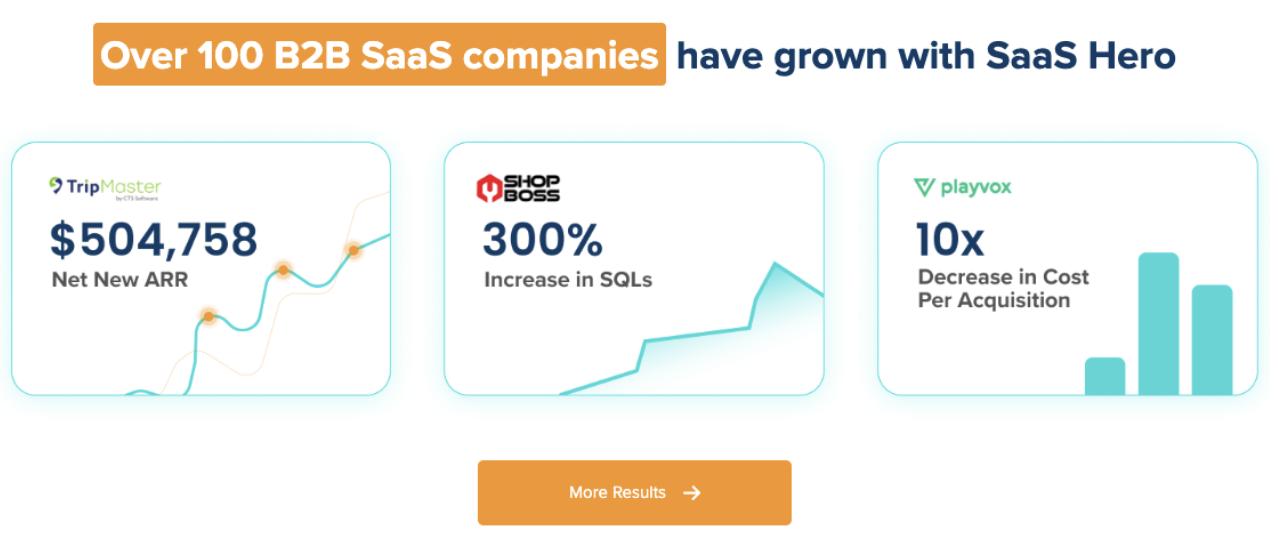
Client results demonstrate how the framework performs across stages and verticals. TripMaster, a transit software provider, generated $504,758 in Net New ARR from integrated paid search and social, with 650% ROI and a 20% conversion rate. TestGorilla, an HR tech startup, reached an 80-day CAC payback, which supported a $70M Series A by proving strong unit economics.

Playvox cut Cost Per Lead by 10x through account restructuring and negative keyword work. The 163% lift in lead volume at far lower cost shows how cleanup of existing campaigns can unlock major gains. These outcomes come from consistent use of the 9-step framework, not one-off tactics.
The case studies span transit, HR tech, and CX software, which confirms the framework’s flexibility across B2B SaaS categories. Every engagement centered on Net New ARR and sustainable unit economics, reflecting today’s capital-efficient growth standards. Book a discovery call to explore how these methods can accelerate your own growth.
Common GTM Pitfalls to Avoid
Many B2B SaaS teams fall into predictable GTM traps. Broad keyword targeting without negative terms burns budget on low-intent traffic. Misalignment between marketing and sales slows handoffs and clogs the pipeline. A focus on lead volume instead of lead quality inflates TOFU numbers while hurting conversion and sales productivity.
Attribution gaps often worsen these issues, since teams credit only last-click channels and ignore earlier touches. That pattern starves awareness and consideration programs that feed long-term pipeline. Neglect of retention and expansion further limits the compounding value of existing customers.
Agency selection also creates risk. Percentage-of-spend billing and long contracts can lock teams into underperforming relationships. A crowded market of generalist agencies without B2B SaaS depth increases the odds of poor strategy and misread metrics.
Next Steps for Your Full Funnel GTM
The 9-step full funnel GTM framework gives B2B SaaS companies a clear path to sustainable, efficient growth. A focus on revenue metrics, modern attribution, and cross-functional alignment supports CAC payback under 90 days and scalable ARR expansion. Data-backed ICPs, competitor conquesting, and retention programs ensure coverage across the full lifecycle, not just acquisition.
Execution requires specialized skills and consistent management across channels and touchpoints. SaaSHero offers month-to-month, revenue-aligned GTM execution that matches your growth and capital efficiency goals. Book a discovery call to upgrade your GTM strategy with proven frameworks and expert implementation.
Frequently Asked Questions
How does a full funnel GTM strategy outperform traditional marketing?
A full funnel GTM strategy coordinates activity across the entire lifecycle, from first touch through retention and expansion. Traditional programs often stop at lead generation, while full funnel strategies focus on revenue and lifetime value. This approach uses advanced attribution, tight sales and marketing alignment, and systematic conversion improvements at each stage. It also reflects how B2B buyers move across many touchpoints before purchase, so messaging stays consistent everywhere.
How can B2B SaaS teams reach a 90-day CAC payback?
Teams reach a 90-day CAC payback by improving acquisition efficiency and speeding onboarding. Core tactics include precise ICP targeting, competitor conquesting for high-intent traffic, and CRO across landing pages and demo flows. Faster time-to-value through better onboarding and thoughtful pricing also shortens payback. The strongest performers pair efficient channels with rapid activation and early expansion.
Which metrics matter most for full funnel GTM performance?
Revenue-focused metrics give the clearest signal. Net New ARR reflects real growth instead of traffic or impressions. CAC payback shows acquisition efficiency and cash impact. LTV:CAC highlights long-term profitability, with 3:1 or higher as a healthy benchmark. Pipeline velocity tracks how fast deals move, and Net Revenue Retention captures expansion and churn. These metrics should sit on top of solid attribution so teams can see which channels drive closed revenue.
Where does ABM fit within a full funnel GTM motion?
ABM acts as the coordination layer for full funnel GTM, especially with enterprise targets. It enables tailored engagement across the buyer committee, with specific messages for each stakeholder. Strong ABM programs start with intent-led account selection and technographic filters, then run coordinated, multi-channel campaigns. Tactics include personalized landing pages, targeted content streams, and shared sales-marketing focus on priority accounts. When executed well, ABM raises win rates, deal sizes, and speed to close.
What should B2B SaaS companies demand from a GTM partner?
B2B SaaS companies should choose partners with clear vertical expertise and revenue-based reporting. Percentage-of-spend billing usually misaligns incentives, so flat-fee, month-to-month models work better. The right partner reports on Net New ARR, pipeline attribution, and other revenue metrics instead of impressions or clicks. Strong agencies also integrate with internal teams and offer strategic guidance, not just channel execution. Deep knowledge of B2B SaaS metrics, sales cycles, and buyer behavior is non-negotiable.