




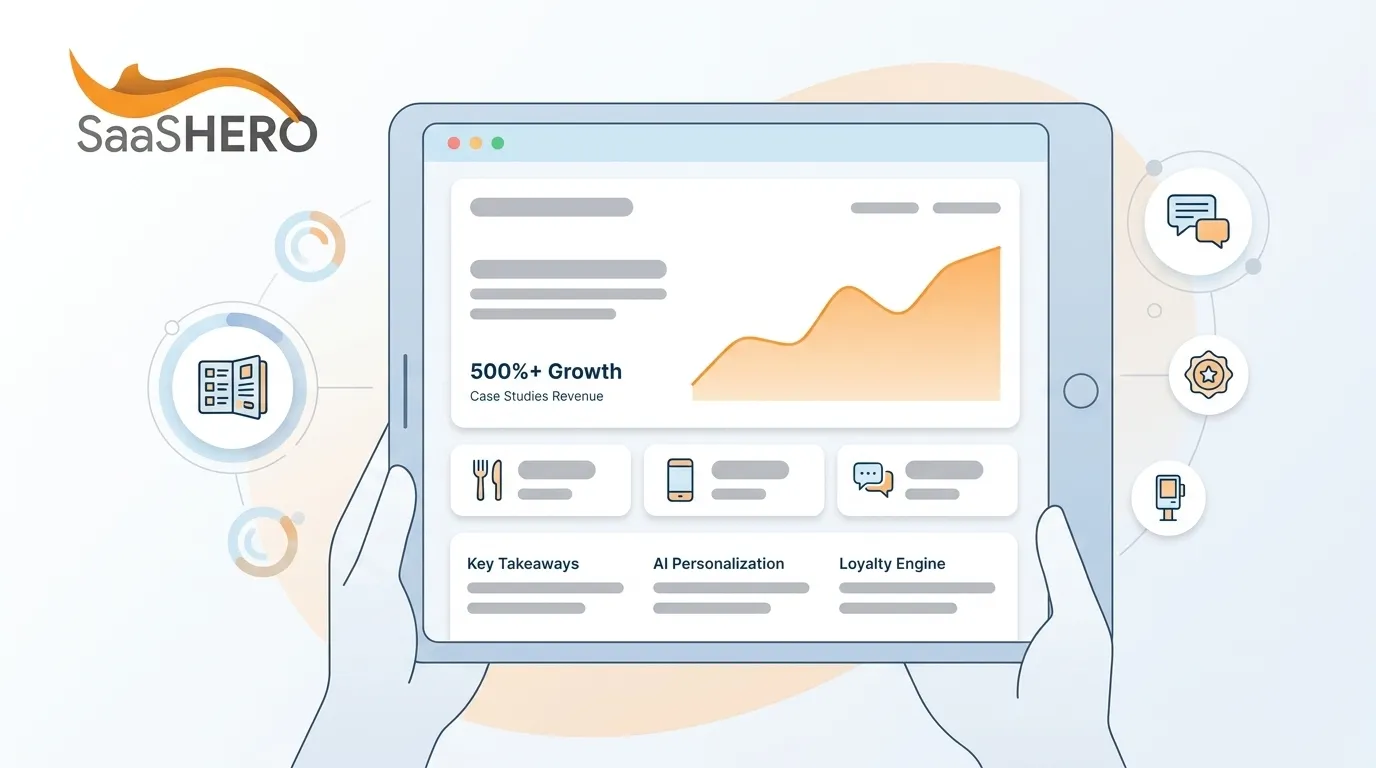
Key Takeaways
- Restaurant tech marketing can deliver 500%+ growth when AI personalization, digital menus, and integrated loyalty programs work together, as shown by Juice Press and major QSRs.
- Strategic tech selection requires choosing among integrated platforms, specialized tools, and AI-first solutions based on your locations, data, and internal resources.
- High-performing programs use gamification, kiosks, and app-centric ordering to lift engagement, average order value, and digital sales through specific, measurable experiments.
- Replication playbooks focus on POS and CRM integration, behavioral triggers, mobile-first experiences, and revenue attribution so teams avoid fragmented stacks and vanity metrics.
- Restaurant leaders can assess their tech maturity and apply proven playbooks with SaaSHero’s discovery call to unlock scalable growth in 2026.
Executive Summary: Top Restaurant Tech Marketing Wins
Restaurant tech marketing wins in 2025-2026 share three traits: smart technology choices, data-driven personalization, and connected customer journeys. The standout performance metrics include:
- 587% sales growth: Checkmate/Juice Press digital menu optimization
- $100M+ incremental revenue: Major QSR AI personalization platform
- 107% rewards redemption increase: KFC UK Rewards Arcade
- 15-30% AOV lift: AI-powered kiosk personalization
- 70% digital sales: Wingstop app-based ordering dominance
- Substantial revenue from loyalty: Average Thanx client performance
- 98% SMS open rates: Marketing automation workflows
These wins follow a repeatable pattern: choose technology with a clear revenue goal, implement with tracking in place, refine based on metrics, then scale the systems that consistently grow sales.
How Restaurant Tech Ecosystems Turn Data Into Revenue
Restaurant technology marketing now runs inside an ecosystem where operators, vendors, and guests share data across every touchpoint. The 2026 stack usually combines point-of-sale and ordering systems like Olo, Checkmate, and Toast with CRM platforms such as Paytronix, Thanx, and LoyaltyPlant, plus AI engines from partners like ZS Associates and GRUBBRR.
The shift to AI-driven experiences moves brands away from broad blasts and toward individualized journeys. Mobile applications already power a large share of restaurant takeout, and AI voice ordering now appears at chains including Taco Bell and Starbucks.
Winning programs connect online ordering, loyalty, CRM, and automation so every interaction feeds a single view of the guest. Teams then use that data to create specific offers that increase immediate orders and long-term customer value.
Strategic Technology Selection Framework for Restaurant Operators
Restaurant operators make high-stakes choices when they select technology partners, because those decisions shape campaign performance and revenue tracking. The comparison below shows how each approach trades simpler integration for deeper specialization, so you can match your strategy to your scale and technical capacity.
| Approach | Advantages | Limitations | Best Use Cases |
|---|---|---|---|
| Integrated Platforms | significant annual savings across multiple locations | Vendor lock-in risk | Multi-location chains |
| Best-of-Breed | Specialized functionality | more complex redemption tracking | Single-location operators |
| AI-First Solutions | strong marketing ROI | Higher implementation complexity | Data-rich environments |
Case Study 1: Juice Press Digital Menu Playbook
Juice Press struggled with fragmented ordering across locations, which limited digital sales and blocked menu insights. The rollout of Checkmate’s digital menu platform delivered the 587% growth mentioned earlier by streamlining ordering and surfacing data that guided menu decisions.
Replication Playbook: Create intent-based landing pages for each menu category, then add HubSpot tracking so you see which categories drive the most orders. Use that attribution data to build automated cart-abandonment emails that highlight top-performing items and popular bundles. Keep every step mobile-first and add one-click reordering so returning guests can complete purchases in seconds.

Case Study 2: Major QSR AI Personalization Blueprint
A leading U.S. quick-service chain shifted from broad campaigns to AI-personalized offers. ZS Associates’ Personalize.AI platform generated over $100 million in incremental revenue, and targeted guests saw a 70% lift in net revenue per customer.
Replication Playbook: Start with predictive analytics that segment guests by behavior and value, then serve dynamic content that reflects each segment’s purchase history. Layer in multivariate testing so you can compare offer types, timing, and channels. Connect loyalty data to your automation platform so every campaign learns from redemptions and repeat visits.
Case Study 3: KFC UK Rewards Arcade Gamification Model
KFC UK & Ireland used gamification to transform loyalty engagement with the Rewards Arcade program powered by Antavo. The initiative delivered a 107% increase in rewards redeemed, a 53% rise in app downloads, and higher weekly active users, and many guests now play the game regularly.
Replication Playbook: Build interactive loyalty mechanics with clear levels or milestones, then trigger push notifications when guests approach a reward or streak. Add social sharing incentives so players invite friends and showcase progress, which expands reach without heavy media spend.
Case Study 4: GRUBBRR Kiosk Personalization Revenue System
GRUBBRR’s AI-powered kiosks show how personalized ordering at the point of sale increases revenue. Average order values rise by 15-30% through intelligent upselling, and order errors drop by up to 90% as the system guides guests through tailored choices.
Replication Playbook: Begin with dynamic recommendations based on common order patterns to create a baseline personalization engine. Add weather and time-based suggestions to increase relevance for each visit. Finish by running structured A/B tests on upsell placements and copy so you can steadily improve both conversion and average check size. Book a discovery call to review kiosk integration options.

Case Study 5: Wingstop App-Centric Growth Engine
Wingstop’s digital channels generated more than 70% of sales in Q3 2025, supported by a 60 million member Club Wingstop database. Smart Kitchen technology cut delivery times for app orders from 45 to 30 minutes, which improved both efficiency and guest satisfaction.
Replication Playbook: Invest in a mobile app with simple, fast ordering flows, then add real-time order tracking so guests trust the experience. Run app-only offers that reward downloads and repeat use. Coordinate closely with operations so kitchen and delivery performance matches the promises made in the app.
Case Study 6: Thanx Loyalty Revenue Engine
Thanx clients show how consistent loyalty performance can support many restaurant concepts. Average Thanx customers generate meaningful revenue from loyalty programs, and brands like Velvet Taco rely on their Thanx-powered programs for a significant share of sales.
Replication Playbook: Define a clear reason to join at the first visit, then design tiered rewards that nudge guests toward more frequent trips. Use automated lifecycle campaigns to welcome new members, win back lapsed guests, and celebrate milestones with tailored offers.
Case Study 7: Paytronix AI Campaign Performance Model
Paytronix uses transaction data to personalize guest engagement at scale. Its AI-driven personalization improves message effectiveness, and brands like Smashburger and Peet’s Coffee see strong participation in targeted campaigns.
Replication Playbook: Connect POS data to your automation platform so every purchase updates guest profiles. Configure behavioral triggers for events such as first visit, second visit, and near-lapse. Use control groups to measure true lift from each campaign instead of relying on raw conversion counts.
Case Study 8: SevenRooms Email Automation Revenue Lift
SevenRooms shows how behavior-triggered email can outperform generic blasts. Its automated campaigns generate far more revenue than mass emails by targeting guests based on dining history and preferences.
Replication Playbook: Map key journey moments such as reservation confirmation, post-visit follow-up, and birthday outreach, then attach automated emails to each. Use dynamic content that reflects cuisine preferences and visit patterns. Segment audiences by frequency and spend so high-value guests receive tailored experiences.
Case Study 9: Spindl Unified Platform Efficiency Gains
Spindl’s all-in-one platform highlights the savings created by integrated restaurant technology. Operators using Spindl’s unified POS, CRM, and delivery tools report significant annual savings, and SMS campaigns reach 98% open rates because they draw on complete customer data.
Replication Playbook: Review your current stack to find duplicate tools and disconnected data, then consolidate where possible. Build unified customer profiles that collect orders, visits, and communications in one place. Set up automated workflows that handle routine tasks so staff can focus on guests.
Case Study 10: Industry Loyalty Impact Benchmarks
Industry-wide data confirms that strong loyalty programs consistently increase revenue. Members generate 12-18% more incremental revenue per year than non-members. This lift comes from two effects: more frequent visits and about 6% higher spend per visit in 2020. Members also tend to increase order size to maximize rewards, which compounds the impact.
Replication Playbook: Structure rewards so larger checks unlock better benefits, then add light gamification to keep members engaged between visits. Offer exclusive experiences or menu items for top tiers so your best guests feel recognized and stay loyal.
Implementation Readiness and Maturity Assessment
These ten case studies show what restaurant tech marketing can achieve, yet results depend on matching tactics to your current maturity. Restaurant success in this space rests on both organizational readiness and technical depth.
The model progresses through four levels. Level 1 covers basic digital presence and surface metrics. Level 2 adds conversion tracking and customer acquisition measurement. Level 3 introduces advanced personalization and lifecycle marketing. Level 4 reaches full revenue attribution and predictive analytics across channels.
Key readiness checks include POS integration with marketing tools, tracking of customer lifetime value, and the ability to tie specific campaigns to revenue. Teams ready for advanced work usually have clean data pipelines and at least one dedicated marketing owner.
Common Implementation Pitfalls and Diagnostic Questions
Restaurant tech marketing often fails when technology remains fragmented and vendor incentives focus on clicks instead of cash. Many operators work with agencies that chase vanity metrics while revenue stays flat. At the same time, teams overlook the “dark funnel,” where guests research, compare, and decide before any tracked interaction occurs.
These issues share a root cause: weak visibility into the full customer journey. To diagnose your situation, confirm whether your core metrics tie directly to revenue, whether you maintain unified profiles across channels, and whether you can follow guests from first touch through repeat purchase. Book a discovery call to review your stack and uncover specific improvement opportunities.
Team Archetypes and Restaurant Growth Scenarios
Restaurant tech strategies work best when they match team structure and growth stage. Single-location operators usually gain the most from integrated platforms that cut complexity and reduce admin work. Multi-location chains need stronger data management and centralized campaign control. Franchise systems require tools that protect brand standards while still allowing local offers.
High-growth groups often prioritize AI personalization and deeper analytics to expand customer lifetime value. Mature chains tend to focus on efficiency and cost control through automation and connected workflows.
Conclusion and Next Steps for Restaurant Leaders
The 2026 restaurant tech landscape rewards operators who connect their tools and act on guest data. The case studies above point to a shared pattern where smart tech selection, strong data foundations, and revenue-focused testing deliver repeatable gains.
The path forward stays consistent: assess your current maturity, connect customer data into a single platform, design personalized engagement across channels, and measure success with revenue-based metrics. Teams ready to move faster should prioritize AI-driven personalization, loyalty improvements, and tight operational integration.
SaaSHero brings proven restaurant tech marketing frameworks from the B2B SaaS world into your operation. Our flat-fee, month-to-month model aligns with growth while keeping accountability high. Book a discovery call to explore how we can accelerate your restaurant technology marketing.

Frequently Asked Questions
Steps to Approach Juice Press-Level Growth with Digital Menus
The Juice Press outcome came from a full digital menu overhaul and smoother ordering flows. Restaurants can follow a similar path by adopting mobile-first ordering, simplifying menu navigation, and tracking every order source. Core elements include one-click reordering, personalized menu suggestions, and loyalty benefits that appear directly in the ordering experience. Teams then refine the journey based on real behavior data.
Customer Acquisition Cost Benchmarks for Restaurant Tech Marketing
Customer acquisition costs vary by concept and market, yet strong programs often reach payback in about 80 days, similar to high-performing SaaS brands. Quick-service concepts usually see lower CAC because guests visit more often. Full-service restaurants may spend more upfront but recover that cost through higher lifetime value. The crucial step is accurate attribution that measures incremental revenue instead of simple conversions.
Highest-ROI Restaurant Marketing Campaign Types in 2026
AI-personalized campaigns continue to deliver strong returns, with documented cases showing high marketing ROI. Loyalty optimization and automated email programs also perform well, often beating generic blasts by a wide margin. The top performers combine channels, using personalized offers, behavioral triggers, and integrated technology to guide guests from first visit to loyal regular.
How Loyalty Apps Reach Revenue Contribution Levels Seen by Thanx Clients
High-performing loyalty apps drive revenue through clear value, smart structure, and tight integration. Programs that work best present a simple reason to join, use tiers to encourage more visits, and personalize outreach based on purchase history. Many also build emotional connection with light gamification and exclusive experiences while keeping operations manageable for staff.
Expected Cost Savings from Integrated Restaurant Technology Platforms
Integrated platforms can cut costs by reducing vendor sprawl and manual work, with case studies showing notable annual savings across multi-unit groups. Savings usually come from fewer systems to manage, smoother operations, and automation that replaces repetitive tasks. Teams also benefit from cleaner data, shorter training times, and easier troubleshooting.
How AI-Powered Kiosks Lift Average Order Value by 15-30%
AI kiosks increase average checks through targeted upsells and relevant recommendations. The system reads signals such as time of day, weather, and past orders to suggest add-ons that feel natural. Results depend on intuitive interfaces, thoughtful placement of upsell prompts, and ongoing testing of offers. Guests respond best when suggestions feel helpful instead of aggressive.