




Key Takeaways
- Follow a 9-step framework, starting with ICP definition and competitor conquesting, to lift MQL-to-SQL rates from 13% to 20% or higher.
- Build high-intent channels around pricing and review keywords, then connect them to intent-matched landing pages for fast conversion gains.
- Use a 100-point predictive lead scoring model with auto-decay and clear thresholds so only 75+ point, sales-ready SQLs reach your team.
- Set sales-marketing SLAs with 5-minute hot lead response times and layer in intent data to drive 47% better conversions and larger deals.
- Target 650% ROI and 80-day CAC payback like SaaSHero clients and schedule a discovery call with SaaSHero for expert implementation.
What You Need in Place Before You Start
Have your core tools ready before you roll out this framework. You need a CRM system such as HubSpot, Salesforce, or Pipedrive, active advertising platforms like Google Ads and LinkedIn Ads, and analytics tracking through Google Analytics 4 and Looker Studio. Make sure your team understands key concepts like Ideal Customer Profile (ICP), Marketing Qualified Leads (MQLs), Sales Qualified Leads (SQLs), Customer Acquisition Cost (CAC), and pipeline velocity.
Plan for 4 to 6 weeks for initial setup and expect measurable results within about 80 days. The biggest risk comes from weak marketing and sales alignment, which can waste up to half of your generated leads without clear handoff rules.
How the 9-Step Demand Gen Framework Fits Together
This framework follows a clear sequence: ICP Definition, High-Intent Channel Development, Conversion Optimization, Lead Scoring Implementation, Nurture Automation, Sales Handoff Protocols, Intent Data Integration, Performance Tracking, and Continuous Optimization. Each step builds on the last and turns raw demand into predictable, qualified pipeline.
The approach keeps revenue at the center. You track closed-won deals and payback periods instead of chasing click-through rates or impressions that do not move ARR.
The 9 Revenue-Proven Steps to Turn SaaS Demand Gen into Qualified Pipeline
1. Define ICP and map buyer journey touchpoints with behavioral scoring
2. Build high-intent channels using competitor conquesting and negative keyword strategies
3. Create intent-matched landing pages with heuristic CRO optimization
4. Implement predictive lead scoring model with 100-point scale and automated thresholds
5. Automate MQL nurture sequences with behavioral triggers and time-based decay
6. Establish sales-marketing SLAs with defined handoff criteria and response times
7. Integrate intent data platforms for real-time buying signal detection
8. Track pipeline metrics focusing on SQL velocity and ARR attribution
9. Improve performance through weekly reviews and continuous testing
Step 1: Define Your ICP and Map the Buyer Journey
Begin with a detailed Ideal Customer Profile built from your highest-value closed-won customers. Analyze firmographic data such as company size, industry, and revenue, along with technographic signals like current tools and integrations. Add behavioral patterns, including content consumption and feature usage, to round out the profile.
Document how these buyers make decisions, how long typical sales cycles last, and which stakeholders join at each stage. This foundation keeps every demand generation effort focused on prospects most likely to become qualified pipeline.
Step 2: Build High-Intent Channels with Competitor Conquesting
Run advertising campaigns that target prospects who actively research your competitors. Create keyword groups around “[Competitor] pricing,” “[Competitor] alternatives,” and “[Competitor] reviews” so you capture high-intent searches. Add strong negative keyword lists to block navigational searches and protect budget for evaluative queries.
Organize campaigns by intent type. Pricing-focused users see cost comparison pages, complaint-intent users see problem and solution messaging, and review-seekers see social proof and testimonials. This structure consistently outperforms broad, generic keyword strategies.
Step 3: Create Landing Pages That Match Search Intent
Send each traffic source to a landing page that mirrors its intent. Pricing-intent visitors go to detailed cost comparison pages, while complaint-intent visitors see content that addresses specific competitor gaps and pains.
Use heuristic analysis to tighten each page. Match ad copy and page content immediately, state a clear value proposition within 5 seconds, place trust signals above the fold, and keep forms as short as possible. Give each page one primary call-to-action that fits the buyer’s current stage.

Step 4: Implement a Predictive Lead Scoring Model
Build a 100-point lead scoring system where 75+ points indicate SQL readiness with 15-25% conversion rates. Combine firmographic scoring such as company size, industry fit, and revenue range with behavioral signals like page visits, content downloads, and feature usage.
Apply automatic score decay of 25% each month for inactive leads and reset scores when new engagement occurs. Use clear bands: 1 to 49 points for nurture, 50 to 74 for MQL status, and 75+ for immediate sales handoff. Add negative scoring for actions like unsubscribes or employment at disqualified companies.
Struggling with lead scoring implementation? SaaSHero’s flat-fee model has delivered TestGorilla’s 80-day payback results, so book a discovery call to see how we can refine your scoring model.
Step 5: Automate MQL Nurture Sequences by Behavior
Set up email sequences that react to specific prospect actions. Build separate nurture tracks for different lead scores and engagement levels so content always feels relevant. High-scoring prospects receive case studies and ROI calculators, while lower-scoring leads receive educational content and product awareness material.
Use time-based rules with engagement-based branching. Move inactive prospects to lighter sequences after 7 days without engagement and send more frequent, sales-focused content to active engagers. This structure keeps interested leads warm without overwhelming the rest of your list.
Step 6: Lock in Sales-Marketing SLAs and Feedback Loops
Agree on clear service level agreements between marketing and sales. Marketing commits to a volume of qualified leads that meet shared criteria, and sales commits to response times such as 5 minutes for hot leads and 2 hours for warm leads.
Companies with strong sales-marketing alignment achieve 32% year-over-year revenue growth. Build regular feedback sessions where sales rates lead quality and marketing adjusts scoring rules and qualification criteria based on that input.
Step 7: Use Intent Data Platforms for Real-Time Signals
Adopt intent data tools such as 6sense, Bombora, or G2 Buyer Intent to spot accounts that show buying signals across the web. Organizations using layered intent signals report 47% better conversion rates and 43% larger deal sizes.
Create workflows that trigger when target accounts spike on intent topics. Notify sales in real time when prospects research relevant themes, visit competitor sites, or interact with industry content. This timing supports outreach that feels timely and contextual instead of random.
Step 8: Track Pipeline Metrics and Connect to ARR
Track every key touchpoint from first click to closed revenue. Use GCLID and UTM parameters to connect ad clicks to CRM records and then to closed-won deals. Focus on SQL conversion rates above 20%, CAC payback under 90 days, and at least 3x pipeline coverage.
Build dashboards that highlight marketing’s contribution to Net New ARR instead of just lead counts. A 5-point improvement in MQL-to-SQL conversion can lift revenue by 18%, so accurate attribution directly supports better decisions.
Step 9: Improve Performance with Weekly Reviews
Run weekly performance reviews that cover lead quality, conversion rates, and pipeline movement. Identify which channels, campaigns, and content types create the strongest SQLs and shift budget toward those winners.
Feed sales outcomes back into your marketing tactics. If certain sources rarely close, refine targeting or tighten qualification rules. This rhythm keeps your system improving instead of stalling after launch.
How to Measure and Validate Success
Track SQL conversion rates above 20%, CAC payback under 90 days, and at least 3x pipeline coverage as your core success metrics. Use the median CAC ratio of $2 per $1 of new ARR as a benchmark for efficiency.
Use Looker Studio dashboards to visualize the full funnel from ad impression to closed revenue. Monitor leading indicators such as lead score distribution, nurture engagement, and sales follow-up compliance alongside lagging indicators like closed-won revenue and customer lifetime value.
Why SaaSHero Is a Strong Partner for This Framework
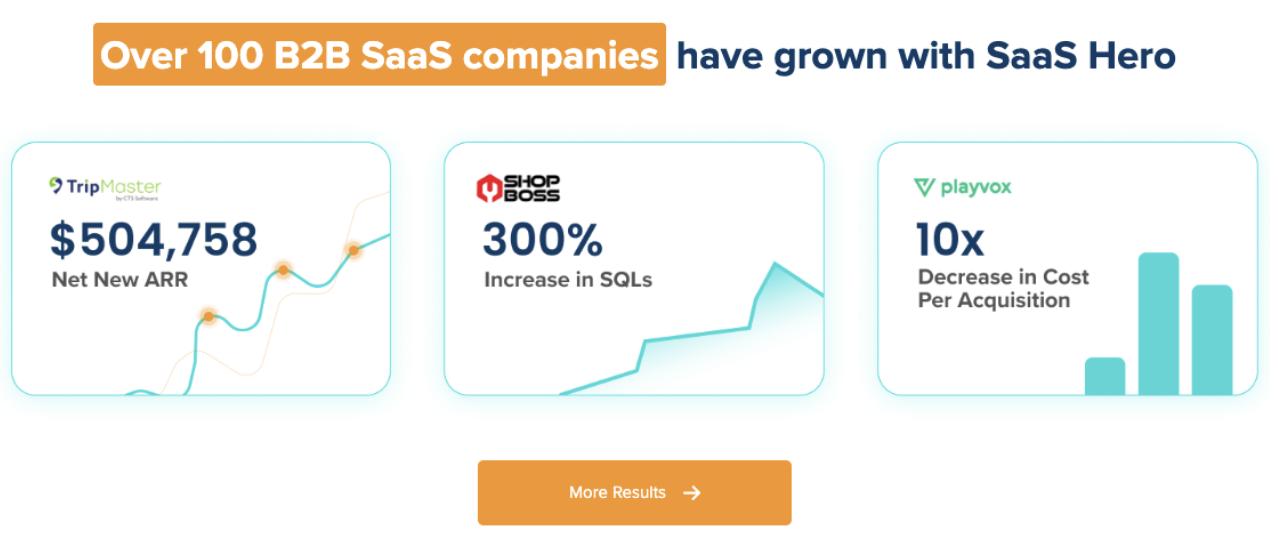
SaaSHero focuses only on B2B SaaS demand generation and has a track record of measurable outcomes. Our flat-fee retainer model, starting at $1,250 per month, removes the conflict that comes with percentage-of-spend pricing. We have helped clients like TripMaster add $504k in Net New ARR and TestGorilla reach 80-day payback periods.

Month-to-month contracts and senior-led execution give you expert support without long commitments. Ready to grow your qualified pipeline? Book a discovery call and see how we can apply this framework to your SaaS company.
Summary and Practical Next Steps
This 9-step framework gives you a clear path from demand generation to qualified sales pipeline. Start with ICP definition and buyer journey mapping, then roll out each step in sequence while you track results. Keep revenue metrics at the center of every decision.
Begin with an audit of your current lead qualification process and your marketing-to-sales handoff. Then implement each step in order and watch for improvements in SQL conversion rates and pipeline quality as your system matures.
Frequently Asked Questions
How long does it take to implement this complete framework?
Expect 4 to 6 weeks for initial setup and 60 to 80 days for clear, measurable results. The lead scoring model and intent data integration usually take the most time to calibrate. You can still see early gains in lead quality within 2 to 3 weeks by tightening ICP targeting and launching competitor conquesting campaigns. Focus on steady rollout instead of trying to deploy every step at once.
What team roles are required to execute this framework effectively?
Execution requires tight collaboration between marketing and sales. On the marketing side, you need someone to manage paid campaigns, configure marketing automation, and analyze performance data. Sales leadership must commit to agreed response times and provide feedback on lead quality. A marketing operations or CRM administrator helps with tracking and lead scoring setup. Many companies partner with specialized agencies for technical work while internal teams focus on strategy and closing deals.
Can this framework work for smaller SaaS companies with limited budgets?
This framework scales well for smaller budgets, including setups with about $1,000 in monthly ad spend. Smaller teams should start with competitor conquesting campaigns and a simple lead scoring model, which quickly improves lead quality. Better targeting often cuts wasted ad spend while lifting results. Many improvements, such as heuristic landing page updates and stronger sales-marketing alignment, require more time than cash.
What should I do if my SQL conversion rates remain below 20% after implementation?
SQL conversion rates below 20% usually point to weak scoring rules or inconsistent sales follow-up. First, compare lead sources and scores against actual closed-won deals and adjust your model based on that data. Review response times and follow-up quality, since leads contacted within 5 minutes convert far better than those contacted after 30 minutes. Tighten your ICP or add negative scoring to filter out poor-fit prospects so your pipeline favors quality over volume.
How do I keep up with AI and intent data changes in 2026?
Focus on intent platforms that integrate smoothly with your CRM and provide clear, actionable buying signals. Stay current through industry publications and vendor updates, but avoid constant tool switching that disrupts your data. Consistent data collection matters more than chasing every new feature. Many teams rely on specialized partners who track these changes and recommend smart updates to the tech stack when they truly add value.