




Key Takeaways
- SaaS startups in 2026 must run revenue-first marketing with 3:1 LTV:CAC ratios and sub-12-month payback periods for capital efficiency.
- Allocate budgets by ARR stage: <$1M emphasizes 40% paid search, $1-5M shifts to 25% LinkedIn, $5M+ boosts retention to 30%.
- Invest 45-55% of budget in high-intent channels like Google competitor conquesting and LinkedIn decision-maker targeting for immediate pipeline impact.
- Track Net New ARR and Sales Qualified Leads, not vanity metrics, and reserve 10-20% for AI-driven testing and improvement.
- Partner with SaaSHero for proven B2B SaaS execution via flat-fee retainers, and book a discovery call to improve your budget today.
Revenue-First Framework & Practical Budget Mix
Efficient SaaS marketing budgets follow four steps that tie every dollar to revenue instead of vague awareness goals.
Step 1: Assess Your Stage and Unit Economics
Calculate your current LTV:CAC ratio and CAC payback period. 76% of healthy SaaS companies maintain CAC payback periods under 12 months, and the strongest performers hit sub-3-month recovery through viral or product-led growth.
Step 2: Prioritize High-Intent Channels (45-55% of Budget)
Direct most spend to demand channels that capture buyers already searching for solutions. Use paid search, competitor conquesting, and LinkedIn campaigns that target specific job titles and pain-driven messaging.
Step 3: Maintain 10-20% Buffer for Testing
Hold back part of the budget for new channels and experiments. AI-driven ad tools in 2026 can cut acquisition costs by 20-30% when applied across existing campaigns with disciplined testing.
Step 4: Track Revenue, Not Generic Conversions
Judge success by Net New ARR, pipeline value, and Sales Qualified Leads instead of clicks, impressions, or form fills that never reach sales.
|
Stage |
Paid Search |
Content/SEO |
LinkedIn Ads |
Email/Retention |
|
<$1M ARR |
40% |
25% |
15% |
20% |
|
$1-5M ARR |
30% |
20% |
25% |
25% |
|
$5M+ ARR |
25% |
20% |
25% |
30% |
The classic 70-20-10 rule underperforms in B2B SaaS because it pushes too much spend into broad awareness. Successful SaaS teams instead commit 60-70% to proven high-intent channels that create pipeline now. Book a discovery call to roll out this framework with SaaSHero’s flat-fee, month-to-month model.
SaaS Budget Strategy by ARR Stage
<$1M ARR: Overwhelmed Founder Budget Plan
Bootstrapped founders at this stage usually work with $5,000-$15,000 monthly marketing budgets. Early-stage B2B SaaS startups commonly spend 20-40% of revenue on marketing, with venture-backed companies at the higher end and bootstrapped firms staying leaner.
|
Channel |
Percentage |
$10K Budget Split |
ROI Focus |
|
Google Ads |
40% |
$4,000 |
High-intent keywords |
|
Content/SEO |
25% |
$2,500 |
Long-term organic growth |
|
LinkedIn Ads |
15% |
$1,500 |
Decision-maker targeting |
|
Email/Automation |
20% |
$2,000 |
Lead nurturing and retention |
Founders at this stage often debate hiring in-house marketers versus outsourcing to specialists. SaaSHero’s $1,250 monthly retainer for dedicated campaign management delivers senior execution without the cost and risk of a full-time hire.
$1-5M ARR: Frustrated VP Growth Playbook
Companies in this range face scaling challenges and usually manage $15,000-$50,000 monthly budgets. Early growth stage SaaS companies typically allocate 35-50% of revenue to marketing, which demands tighter channel control and attribution.
LinkedIn advertising becomes a core growth lever at this stage. B2B SaaS companies typically allocate 28% of their digital ad budget to LinkedIn, and the focus shifts from traffic volume to Sales Qualified Leads.
AI-powered creative testing and strict negative keyword management keep efficiency intact as spend rises. Many teams discover that earlier “spray and pray” tactics wasted 30-40% of budget on unqualified or low-intent traffic.
$5M+ ARR: Post-Funding Scaling Blueprint
Mature SaaS companies shift toward Account-Based Marketing and retention-led growth. Beyond $2M ARR, efficient expansion motions drive 40-60% of new ARR, so customer success and upsell campaigns gain priority.
Companies at this level usually lower acquisition spend as a share of total budget and increase investment in retention, expansion, and enterprise sales enablement programs.
High-Intent Channels That Drive Pipeline
The strongest SaaS marketing budgets center on channels that capture buyers already in-market for a solution. Google competitor conquesting campaigns reach users searching for “[Competitor] pricing” or “[Competitor] alternatives”, which signals immediate purchase intent.
LinkedIn advertising works especially well for B2B SaaS when you narrow by job title, company size, and industry. LinkedIn delivers the best cost per company influenced at $200-250 with 113% ROAS when campaigns follow a clear ICP and offer.
AI tools in 2026 support deeper audience segmentation and faster creative testing than in previous years. Strong negative keyword hygiene blocks navigational or irrelevant searches, and automated bidding can optimize for revenue events instead of simple clicks.
Low-ROI traps include broad awareness campaigns, generic display ads, and social channels that drive engagement without purchase intent. These efforts may inflate vanity metrics but rarely move Net New ARR.
SaaSHero runs these high-intent programs with precise execution and month-to-month contracts, without percentage-of-spend fees that reward higher budgets. Book a discovery call to launch competitor conquesting and LinkedIn SQL generation campaigns.
Metrics Dashboard & Budget Mistakes to Avoid
Revenue-first allocation depends on tracking metrics that map directly to growth instead of surface-level activity.
|
Metric |
Benchmark |
Healthy Range |
Red Flag |
|
LTV:CAC Ratio |
3:1 minimum |
3:1 to 5:1 |
<3:1 |
|
CAC Payback |
<12 months |
6-12 months |
>18 months |
|
Monthly Churn |
<1% |
0.5-1% |
>2% |
|
Net Revenue Retention |
100%+ |
105-115% |
<95% |
Common pitfalls include bloated agency fees tied to ad spend, chasing impressions and clicks, and signing long-term contracts that weaken accountability. Companies that treat marketing as a fixed revenue percentage underperform those that budget by customer segments and payback periods.
SaaSHero’s flat retainer model removes the incentive to inflate budgets, and month-to-month agreements keep performance under constant review.
SaaSHero Case Studies: Revenue-First Results
Real-world examples show how revenue-first budget allocation works when executed by B2B SaaS specialists.
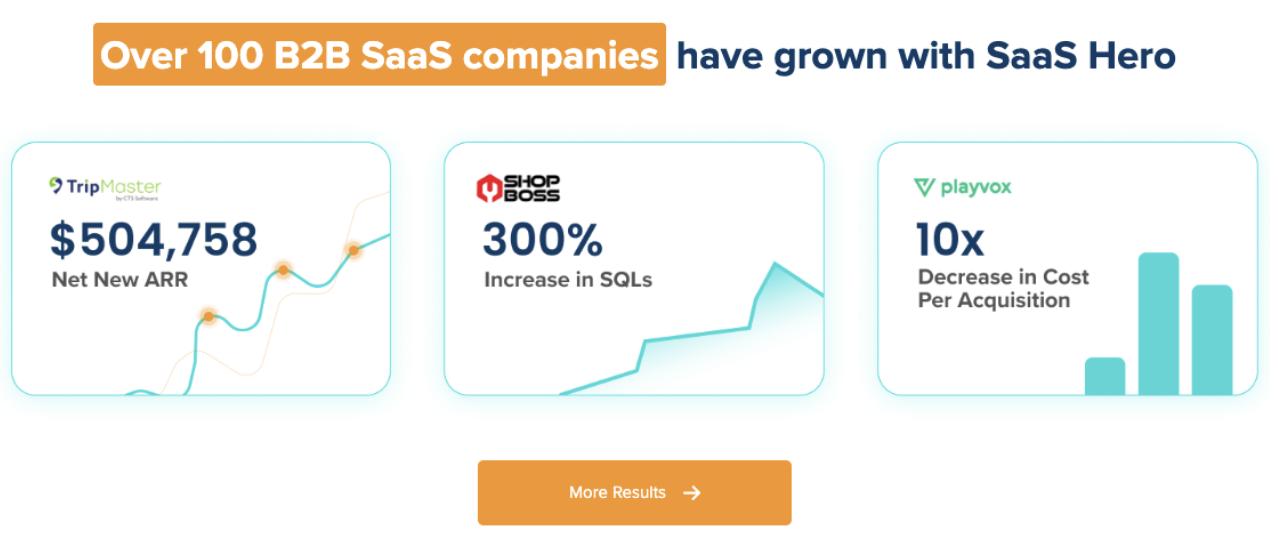
TripMaster (Transit Software): Generated $504,758 in Net New ARR through focused paid search and LinkedIn campaigns, with 650% ROI and a 20% conversion rate from paid search traffic.

TestGorilla (HR Tech): Reached an 80-day CAC payback period while adding 5,000+ new customers, which supported a $70M Series A by proving strong unit economics.
Playvox (CX Software): Cut Cost Per Lead by 10x through account restructuring and negative keyword work, while increasing lead volume by 163%.
These outcomes come from SaaSHero’s B2B SaaS-only focus, senior-led strategy, and transparent flat-fee pricing that starts at $1,250 monthly. Unlike generalist agencies that split attention across many industries, SaaSHero understands demo funnels, free trials, and subscription metrics that drive SaaS growth.
Turn your marketing budget into a predictable revenue engine with experienced SaaS operators. Book a discovery call to review your growth targets and budget opportunities.
FAQ & Next Steps for Your SaaS Budget
Recommended SaaS Marketing Budget Template for Startups
Use the four-step framework: assess unit economics, allocate 45-55% to high-intent channels like paid search and LinkedIn, keep 10-20% for testing, and track revenue metrics instead of vanity metrics. Adjust the mix by ARR stage, with early-stage teams leaning on paid search and mature companies increasing retention spend.
Typical Marketing Spend for SaaS Startups
Early-stage SaaS companies usually spend 20-40% of revenue on marketing, with venture-backed firms closer to the top of that range. The priority is healthy unit economics with LTV:CAC above 3:1 and CAC payback under 12 months. Focus on efficiency and payback, not just total dollars spent.
Highest-ROI Channels for B2B SaaS
Google Ads for high-intent keywords and competitor conquesting often deliver the fastest payback, followed by LinkedIn for decision-maker targeting. Content and SEO create compounding value but usually need 6-12 months before major results appear. Avoid broad awareness channels that do not align with purchase intent.
Agency Model That Works Best for SaaS
Choose agencies that focus only on B2B SaaS, use flat-fee pricing instead of percentage-of-spend, and offer month-to-month contracts. The right partner tracks Net New ARR and pipeline, not just clicks, and connects directly to your CRM for accurate attribution.
How to Confirm Your Budget Allocation Works
Watch your LTV:CAC ratio, which should stay at 3:1 or higher, your CAC payback period, which should remain under 12 months, and your Net New ARR trend. If these metrics slip while spend rises, your allocation needs a reset. Shift budget toward channels that create Sales Qualified Leads instead of raw traffic.
Efficient budget allocation separates durable SaaS companies from those that burn capital without lasting growth. A revenue-first approach favors high-intent channels, strict unit economics, and stage-specific planning. Apply this framework consistently, track the right metrics, and work with specialists who understand B2B SaaS dynamics.
Ready to align your marketing budget with ARR growth? Book a discovery call with SaaSHero to audit your current allocation and roll out a revenue-first strategy.